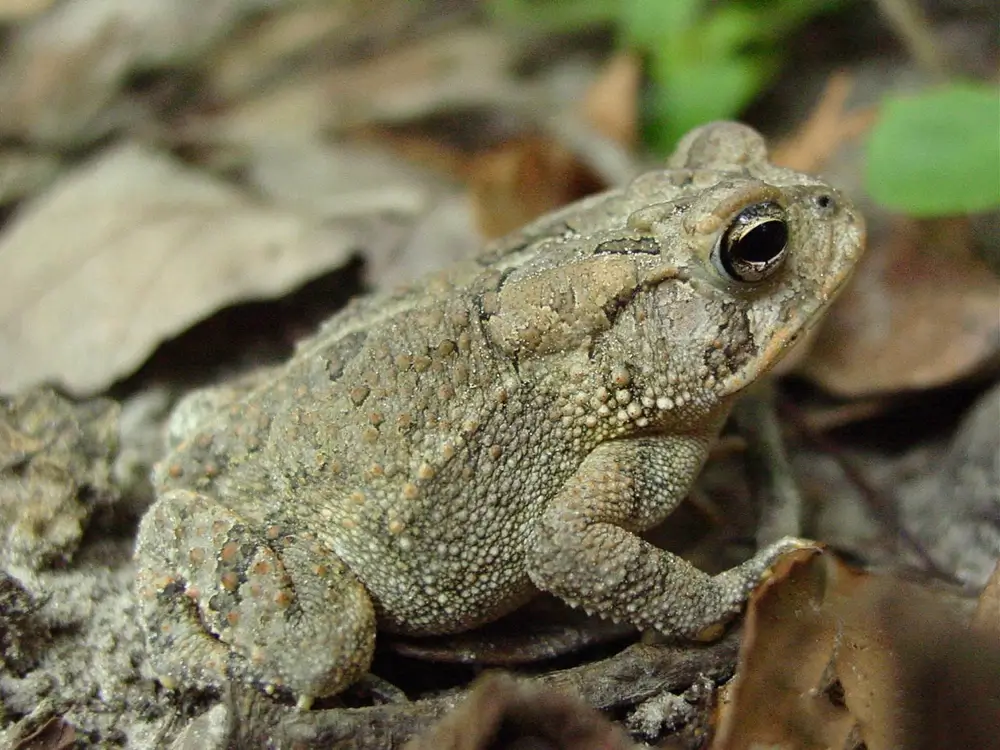
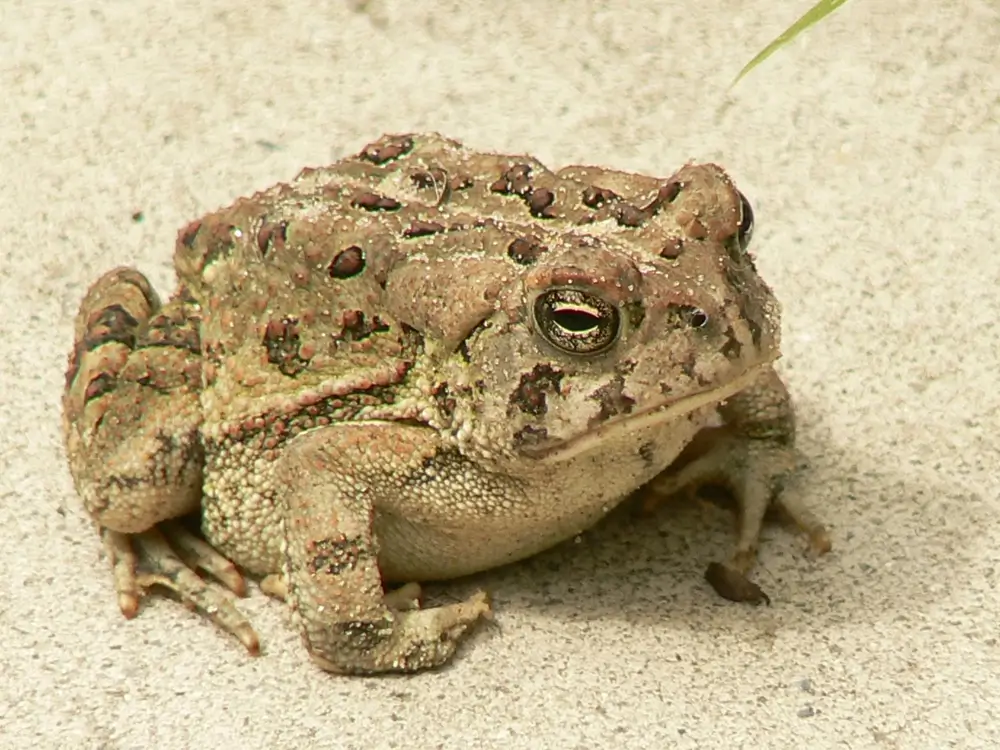
Fowler’s toad is 2-3 inches (5.1-7.6 cm) in length. Females are larger than males.
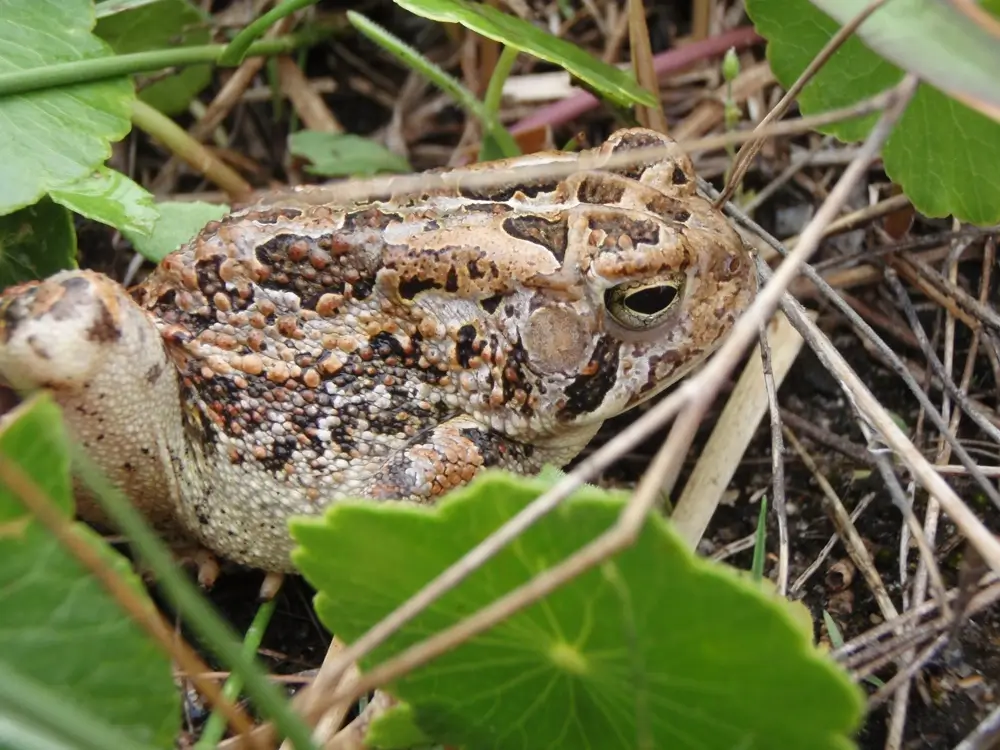
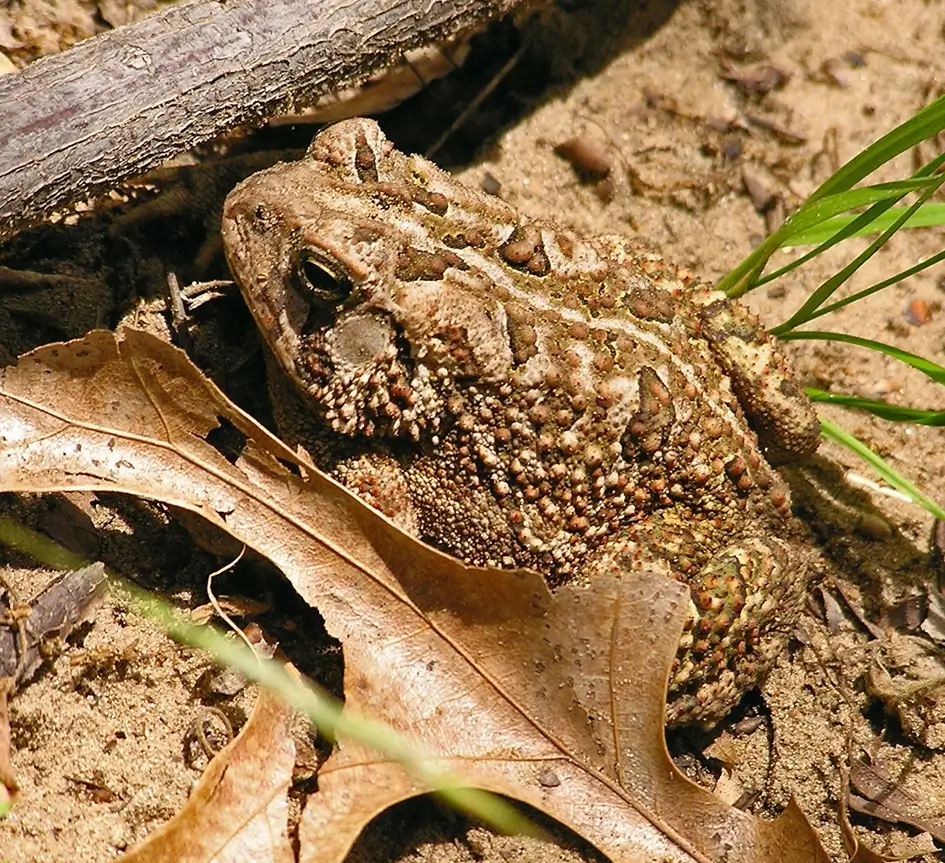
It has a short, rounded snout and a round body with a light stripe down the middle of its back. It is gray to brown on its uppersides and cream-colored on its undersides. Males have darker throats than females. It has dark brown spots and splotches that contain three or more warts on its upperside.
Habitat
Fowler’s toad is found in woodlands, meadows, prairies, ditches, roadsides, gardens, yards, sand dunes, and lake shores. It prefers areas with sandy or gravelly soil that it can easily burrow into.
Diet
Fowler’s toad uses its tongue to snap up insects and other invertebrates.
Life Cycle
Male Fowler’s toads migrate to their breeding grounds from March to June. Once they reach the breeding grounds, they call out to the females. They breed in shallow water in ponds, lakes, or marshes.
The female lays a string of eggs. There can be as many as 10,000 eggs in a string, although most strings have about 5,000 eggs. The male then fertilizes the eggs by discharging fluid with sperm in it onto the eggs. The eggs are attached to vegetation in the shallow water.
The tadpoles hatch in about a week and become toads in a few months. They reach breeding age when they are two years old.
Fowler’s toad has a life span of around 5 years.
.
Behavior
Fowler’s toad is mostly nocturnal. It spends daylight hours under cover. When cold weather arrives, it burrows into the ground and hibernates.
It has a distinctive sheep-like “whah, whah, whah” call. When it is attacked, Fowler’s toad can excrete a toxin on its back that can make small predators sick.
Did You Know?
Fowler’s toad is named for S.P. Fowler, a naturalist from Massachusetts who identified the toad in 1858.
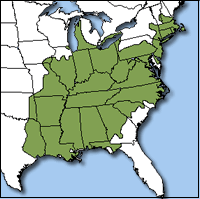
Fowler’s toad is found in most areas of the eastern United States from southern New Hampshire south to northern Florida and west to Michigan, eastern Oklahoma, and eastern Texas.
Fowler’s toad is also found in Canada on the banks of the Erie.