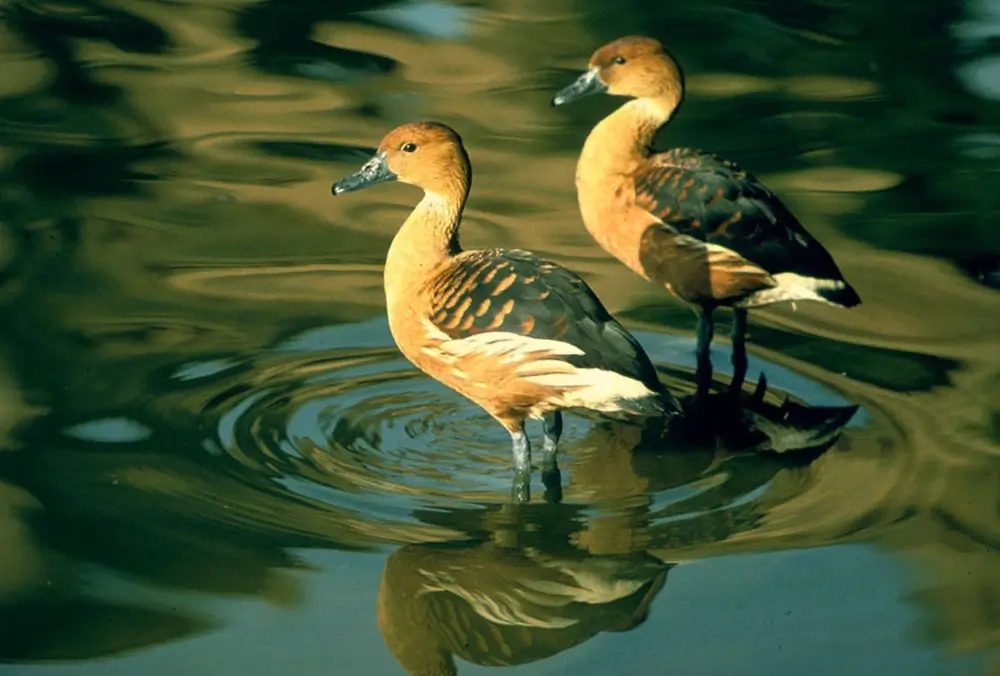
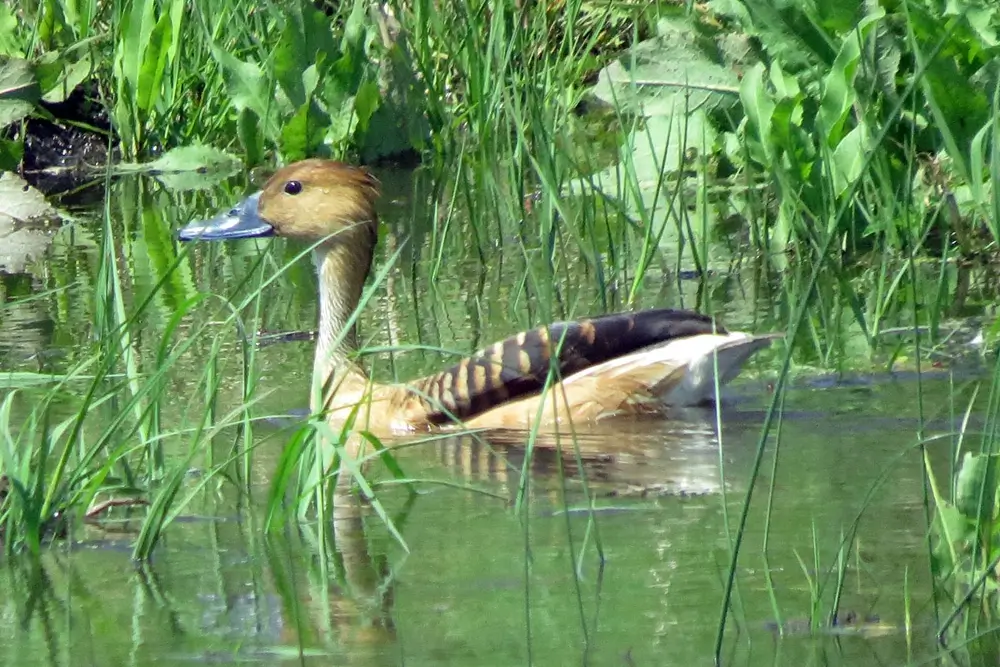
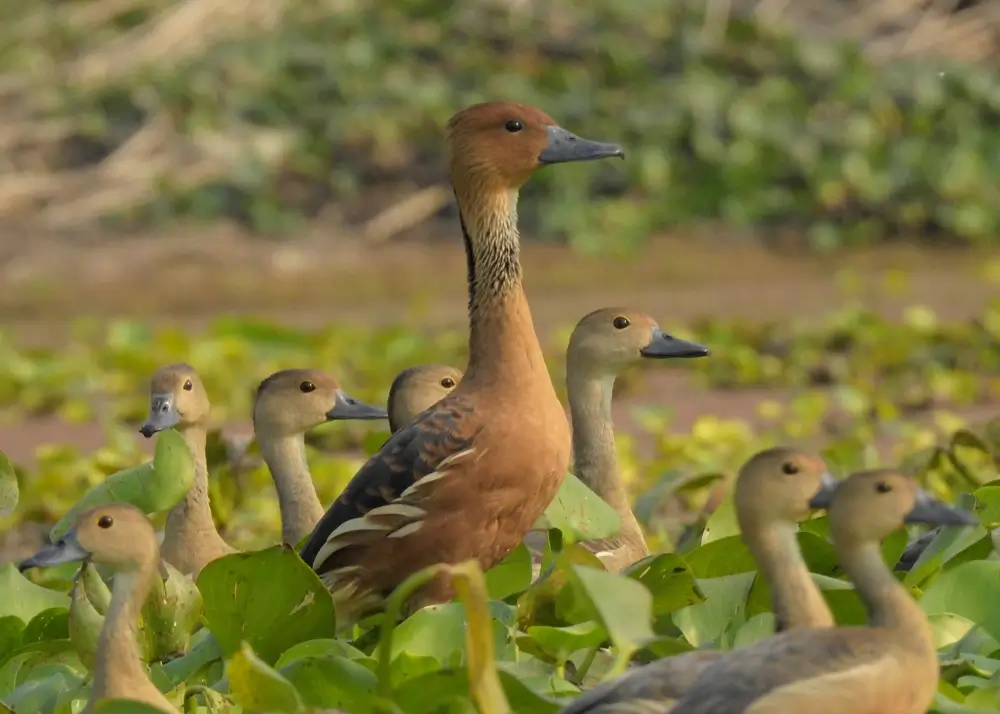
The fulvous whistling duck was once called the fulvous tree duck. It is 18-21 inches (45.7-53.3 cm) in length.
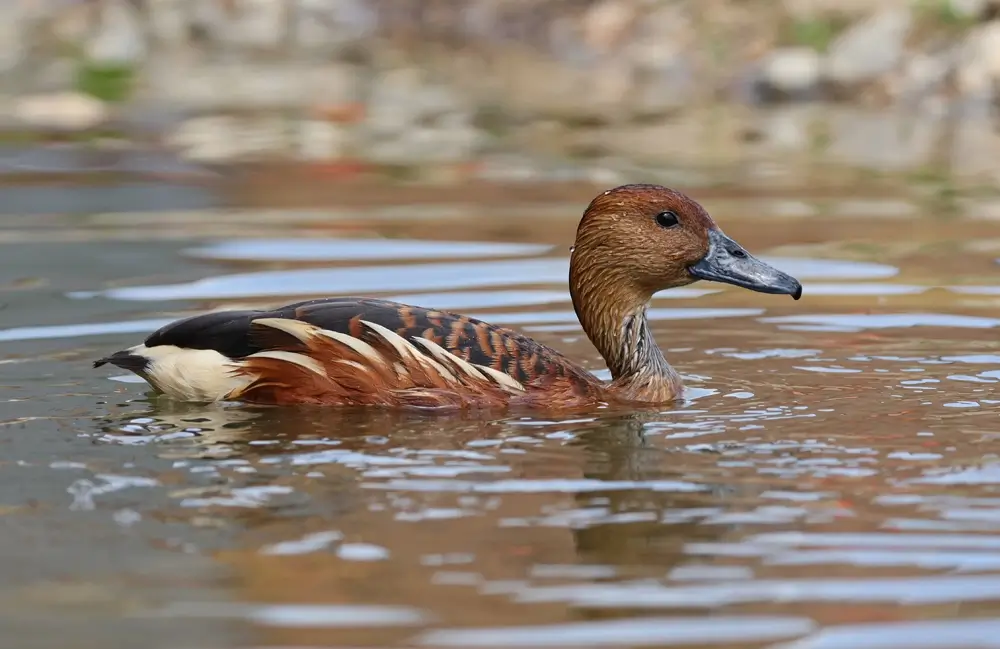
It has long, bluish-gray legs and a long neck. It has cinnamon-brown feathers and dark brown wings with a silvery-white stripe on the edges. It has a white rump and a blue-gray bill.
Males and females look the alike, although males are a little larger.
Habitat
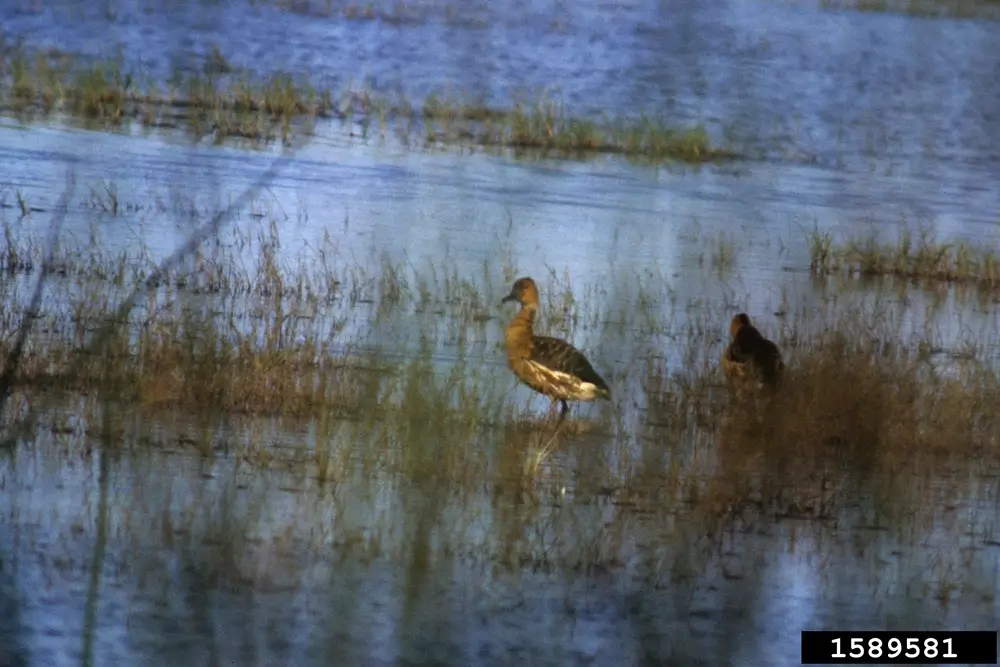
The fulvous whistling duck lives in marshlands, wet meadows, rice fields, flooded agricultural areas, and lagoons.
Diet
The fulvous whistling duck usually eats at night. It gleans seeds from grasses and weeds and forages for waste grain in cornfields and rice fields. It sometimes scoops up plant materials in shallow water.
Life Cycle
The female lays 12-15 eggs in a nest made from grass or reeds. The nest is usually located a few inches above the water and is often built in a rice field. It may also be built at the edge of a pond or swamp, in a clump of bulrushes, or in a clump of cattails or other vegetation.
Sometimes more than one duck uses the same nest. The ducklings hatch in 24-26 days, and both parents care for the young. The ducklings fledge in about 60 days.
The fulvous whistling duck can live up to 10 years in the wild.
Behavior
The fulvous whistling duck’s name comes from the hoarse whistling sound it makes and its distinctive coloring. Fulvous means tawny.
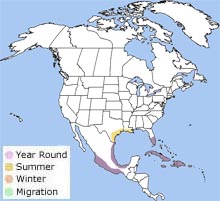
The fulvous whistling duck is found from central and eastern Texas and the Gulf Coast of Louisiana, south to Mexico, and in southern Florida and the Caribbean.
It is also found in Central and South America and in Africa, and in Asia.