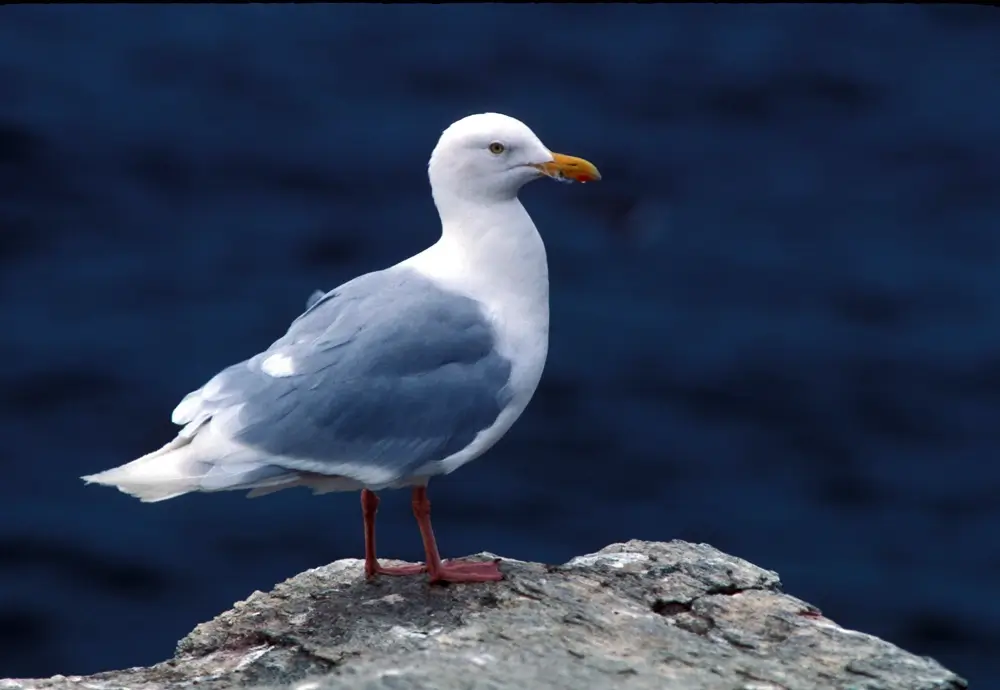
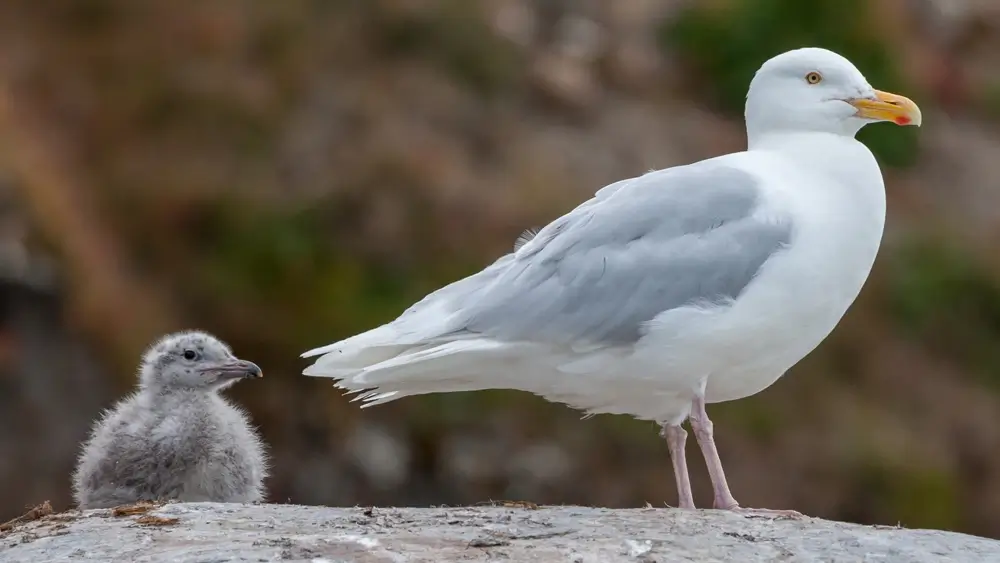
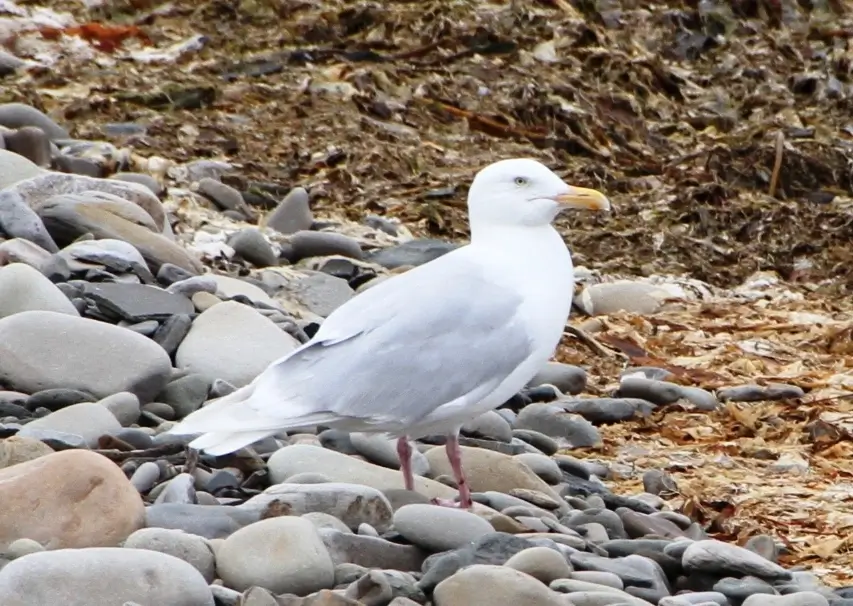
The glaucous gull is a large gull, 25-30 inches (63.5-76.2 cm) in length with a wingspan of 58.7-71.7 inches (149-182 cm).
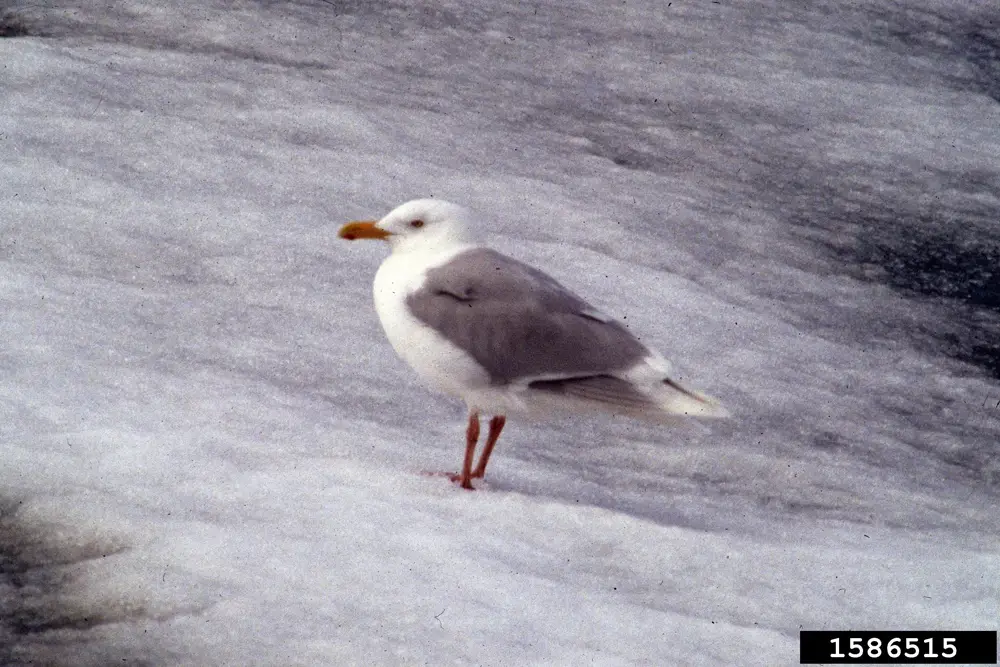
It has a white head, throat, breast, and belly, and a gray back and wings. It has pale pink legs and feet and a yellow bill with a red tip. Males and females look alike.
Habitat
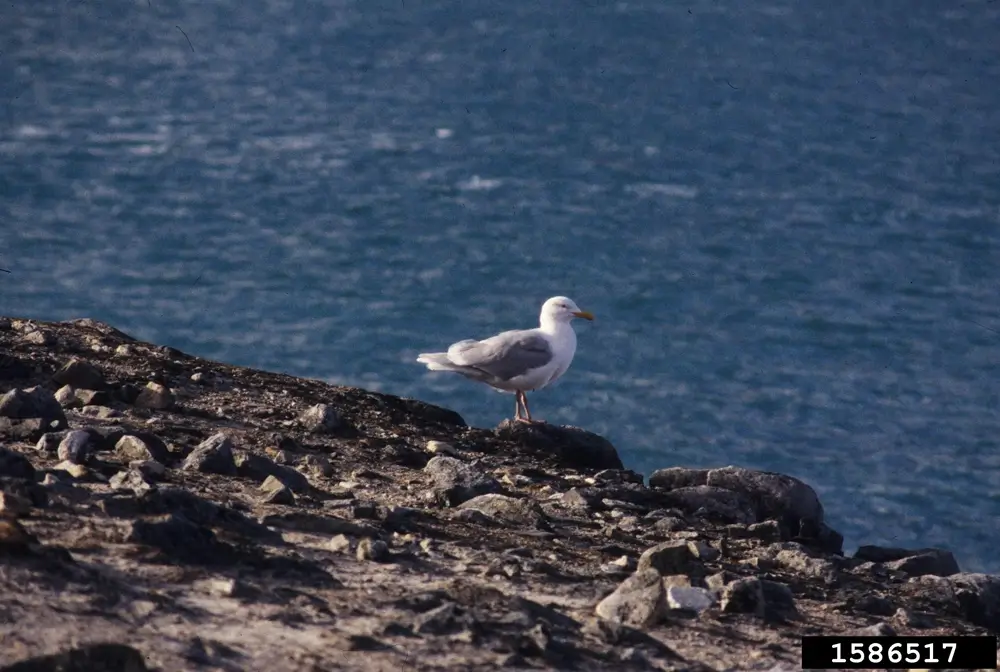
The glaucous gull is found on lagoons, sea cliffs, ice packs, coastal tundra, the shores of lakes and rivers, offshore islands, and the beach. It is also found in garbage dumps.
Diet
The glaucous gull eats a wide variety of food, including marine invertebrates, fish, the eggs and chicks of birds, and small birds and mammals. It also scavenges for carrion and garbage.
Life Cycle
The glaucous gull nests in colonies on islands, at the edges of cliffs, on the tundra, and on the beach at the edges of ponds and lakes. The male and the female build a nest of grass, twigs, moss, and sometimes feathers in a depression in the ground.
The female lays 1-3 eggs. Both parents incubate the eggs for 28 days. Both parents care for and feed the chicks. The chicks fledge when they are 45-50 days old, but may stay with their parents until they migrate in the fall.
Behavior
The glaucous gull is a predator and a scavenger. It hunts for bird eggs and chicks in nesting areas, and it steals food from other birds. It is also a common visitor to garbage dumps, harbors, fish-processing plants, and sewage ponds.
Did You Know?
Support for NatureWorks is provided by:
The Glaucous Gull in NH
The glaucous gull does not breed in New Hampshire, but can be found in the state in the non-breeding season.
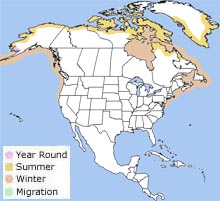
The glaucous gull breeds across the western and northern coasts of Alaska and across extreme northern Canada.
It winters in the southern part of its breeding range and along the Pacific Coast south to California and along the Atlantic Coast south to Virginia. It is also found in small numbers in the Great Lakes and along the Gulf of Mexico.
It is also found in Greenland, Iceland, and northern Europe and Asia.