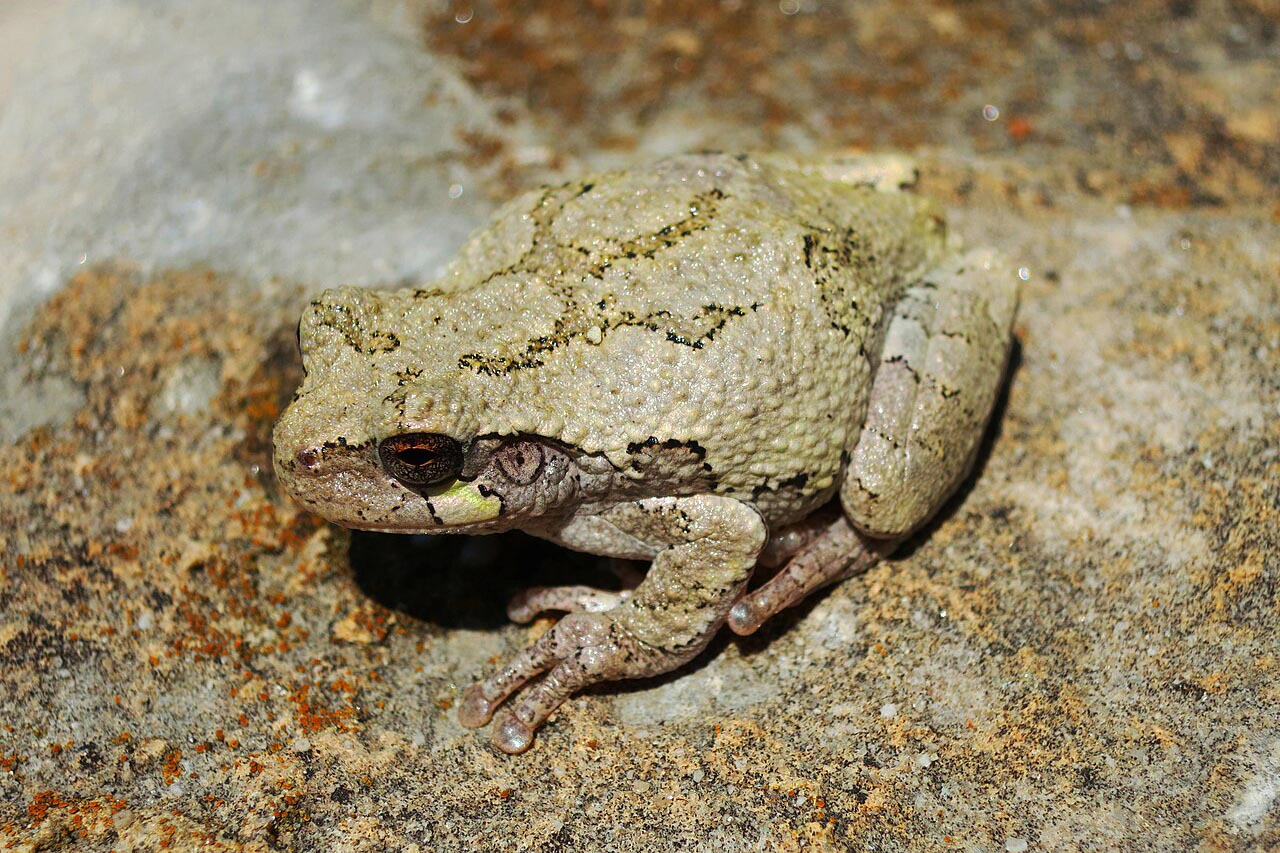
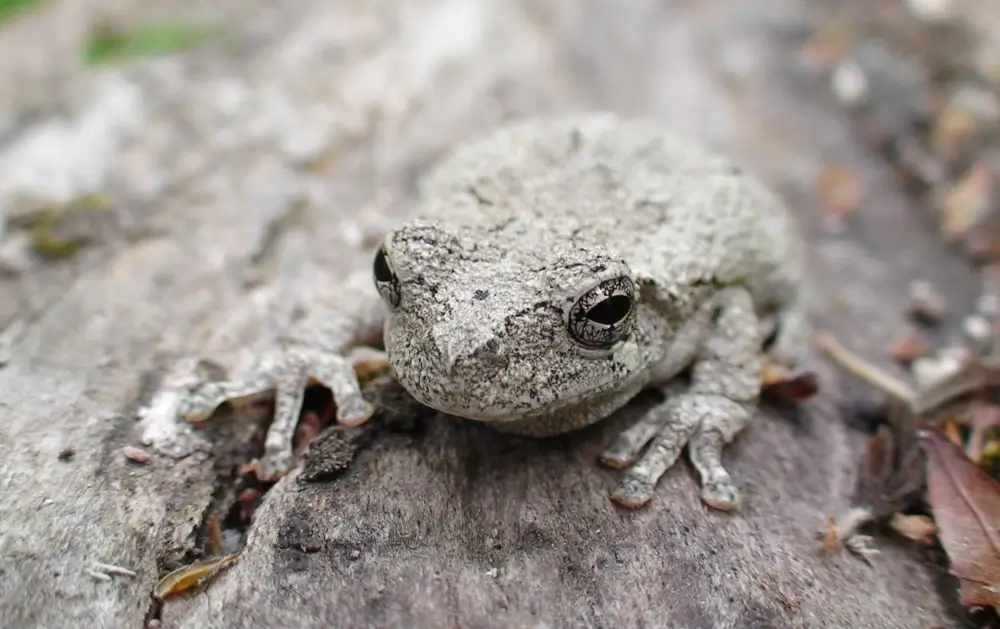
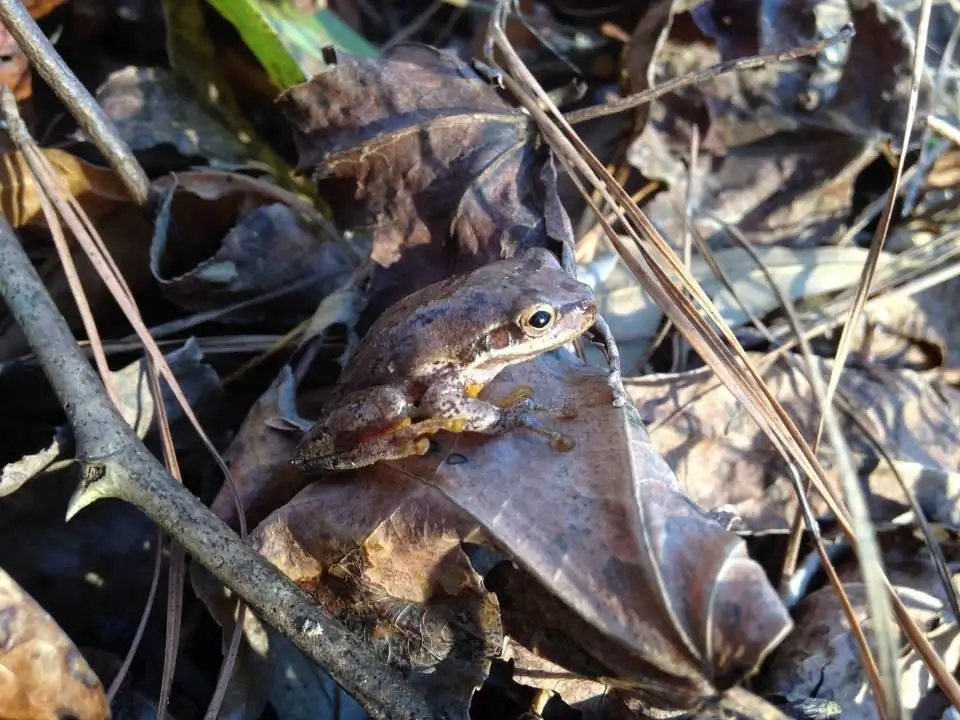
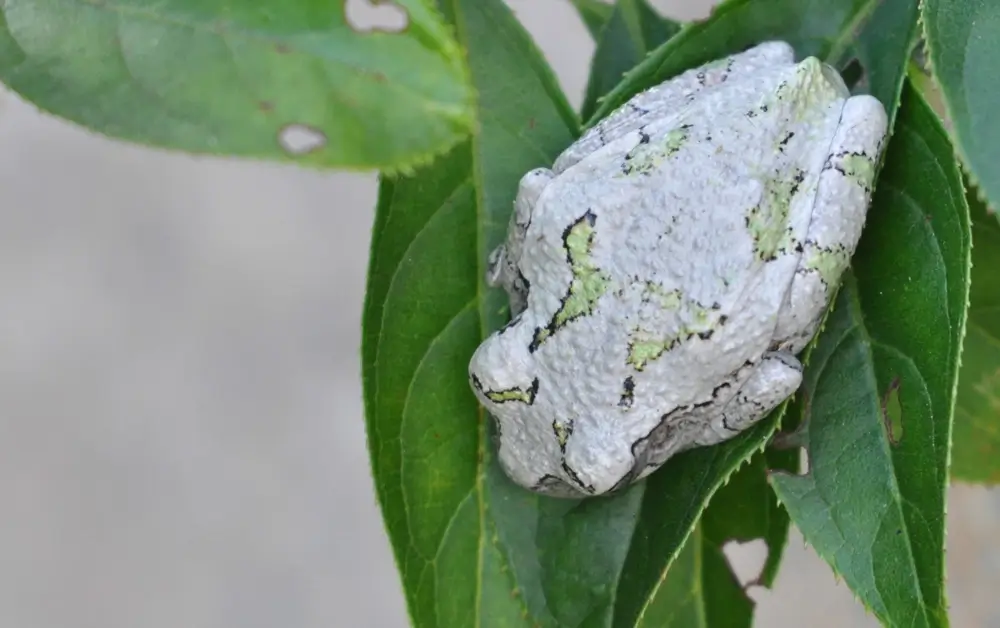
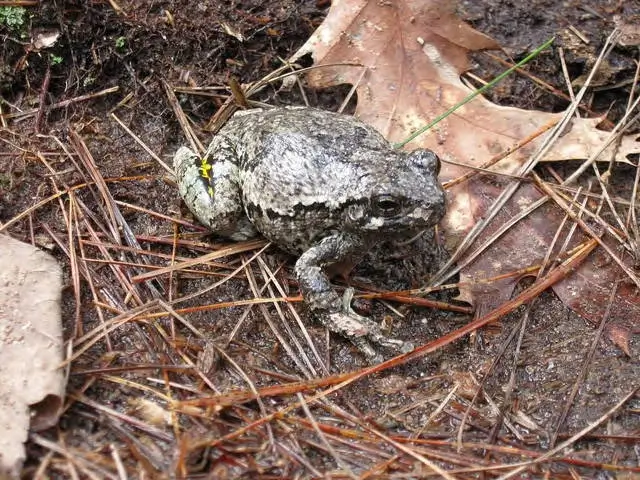
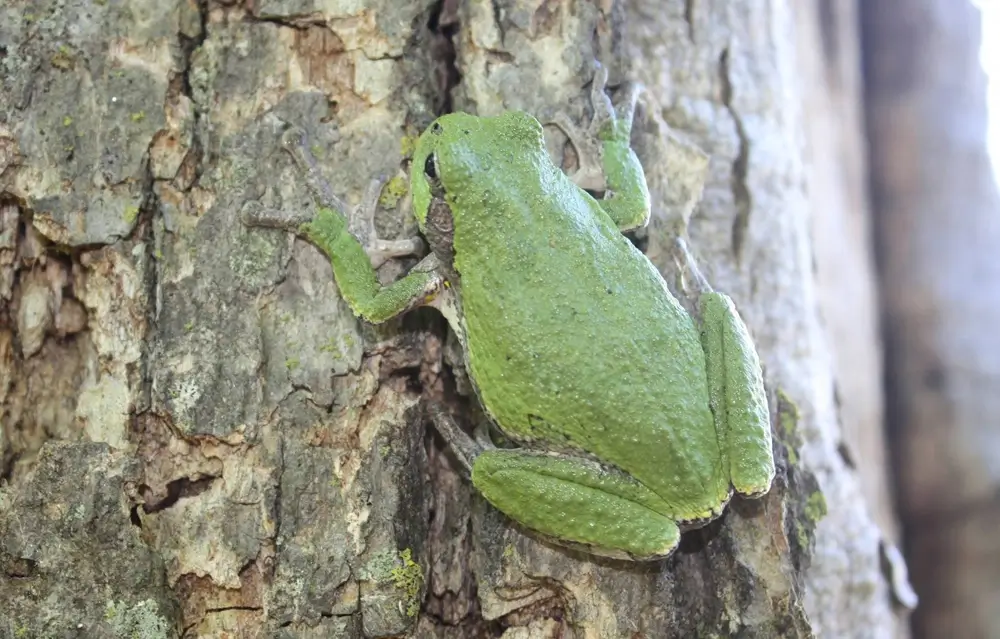
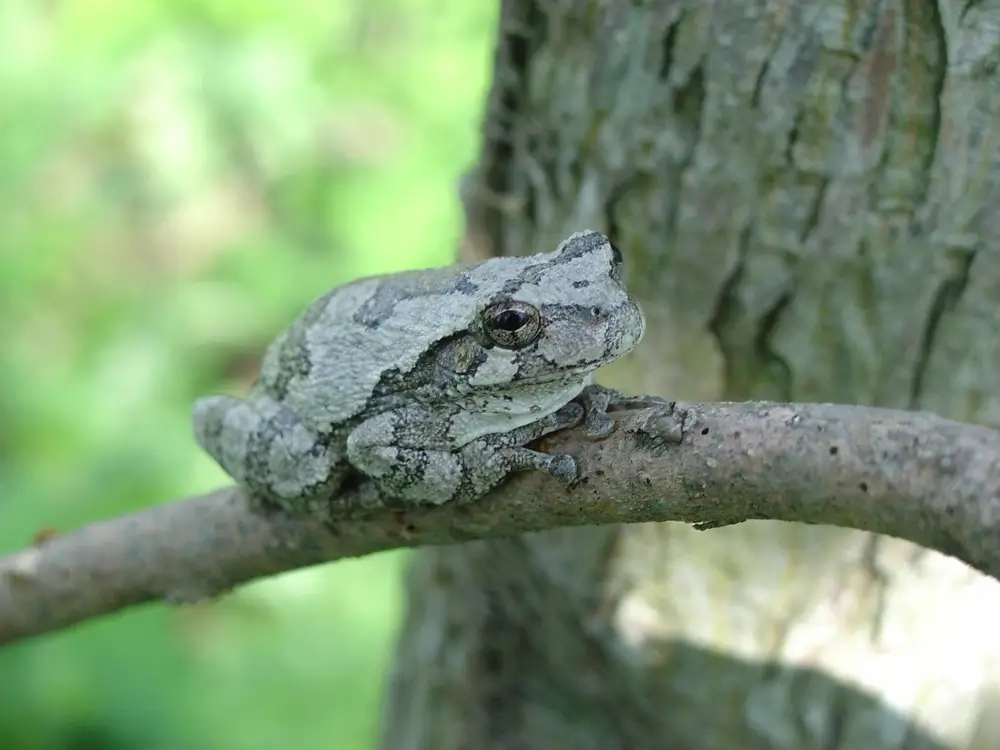
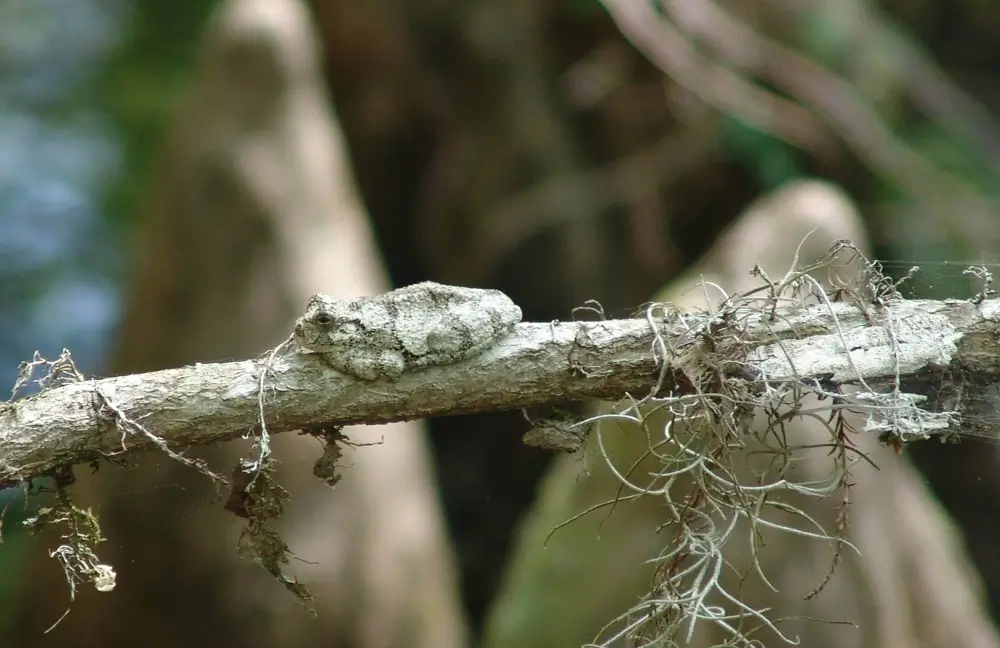
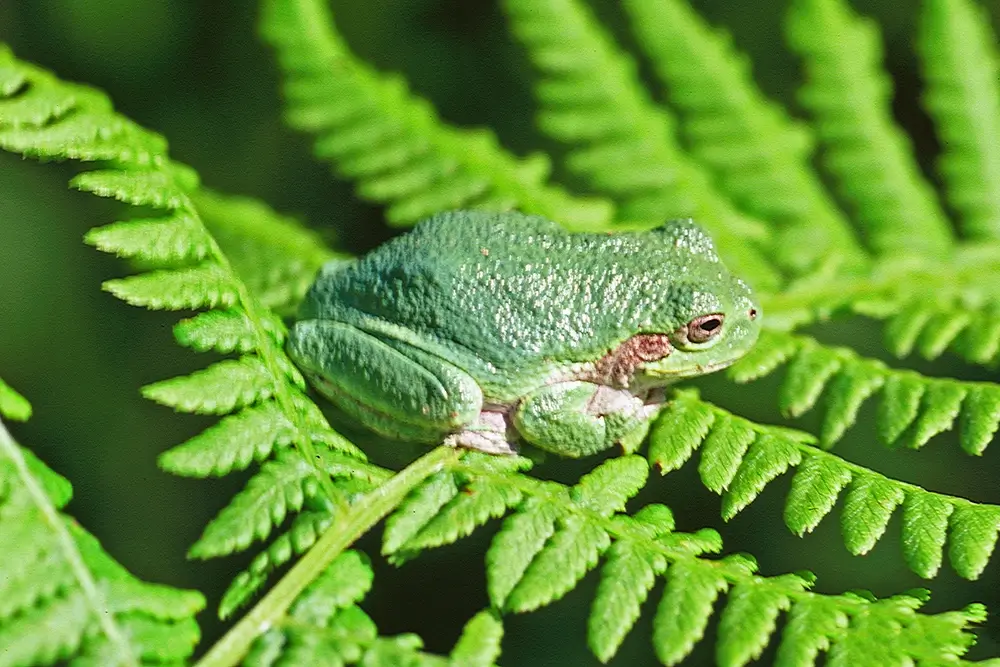
The gray treefrog is 1-2 inches (2.5-5.1 cm) in length. It is green, gray, or brown in color. It can be a solid color, or it can have blotches on its back.
It has a white underside and lots of warts. It has large, sticky toe pads that help it cling to tree bark and other surfaces. It has bright yellow to orange skin under its thighs.
The gray treefrog can change its color in seconds. It tends to become darker when it is cold or dark. Its coloring helps it blend in with tree bark.
The gray treefrog lives in moist, deciduous woodlands and swamps near water. It is also found in pine barrens.
The gray treefrog finds its food in trees and shrubs. It eats moths, tree crickets, ants, flies, grasshoppers, and beetles. It is very acrobatic and often jumps from branch to branch to catch its prey.
Breeding season runs from April to August. Males gather in trees and bushes next to breeding ponds and swamps and begin calling. The male aggressively defends its territory from intruders.
The female selects a mate based on his call. She lays her eggs on the surface of shallow water in ponds or swamps. She may also lay her eggs in standing water in tire ruts, vernal pools, or even swimming pools.
The eggs are attached to vegetation to keep them from floating away. The female lays as many as 2,000 eggs in groups of 10-40 eggs. The tadpoles hatch in 4-5 days and change into froglets in about two months.
The gray treefrog has a lifespan of 7-9 years in the wild.
The gray treefrog is nocturnal. It spends the day resting in trees and shrubs. At night, it crawls among the branches and leaves looking for food. It usually only emerges from the trees and bushes during the breeding season. In the winter, it hibernates under leaves, bark, or rocks on the forest floor.
The gray treefrog freezes in the winter. It produces large amounts of glycerol. The glycerol is changed to glucose, and then it is circulated through the frog’s cells. The glucose acts like antifreeze, preventing ice crystals from forming in the frog’s cells.
If ice crystals formed in the cells, they would rip the cells apart and kill the frog. The rest of the water and blood in the frog’s body then freeze, and its heartbeat and breathing stop. When the temperature warms up, the treefrog “thaws out” and returns to the trees.
There is another species of treefrog, Cope’s gray treefrog, that looks exactly like the gray treefrog. You can tell them apart by their calls.
The gray treefrog’s call has a slower trill that is more musical than the call of Cope’s gray treefrog. The gray treefrog is also slightly larger than Cope’s gray treefrog, and its skin is bumpier.
Scientists can tell the difference between the two species because the gray treefrog has twice as many chromosomes as Cope’s gray treefrog.

Support for NatureWorks Redesign is provided by:
The gray treefrog is found across New Hampshire, except north of the White Mountains.
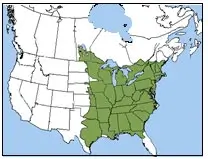
The gray treefrog is found from Manitoba east to Maine and south to northern Florida and central Texas.
NHPBS inspires one million Granite Staters each month with engaging and trusted local and national programs on-air, online, in classrooms and in communities.