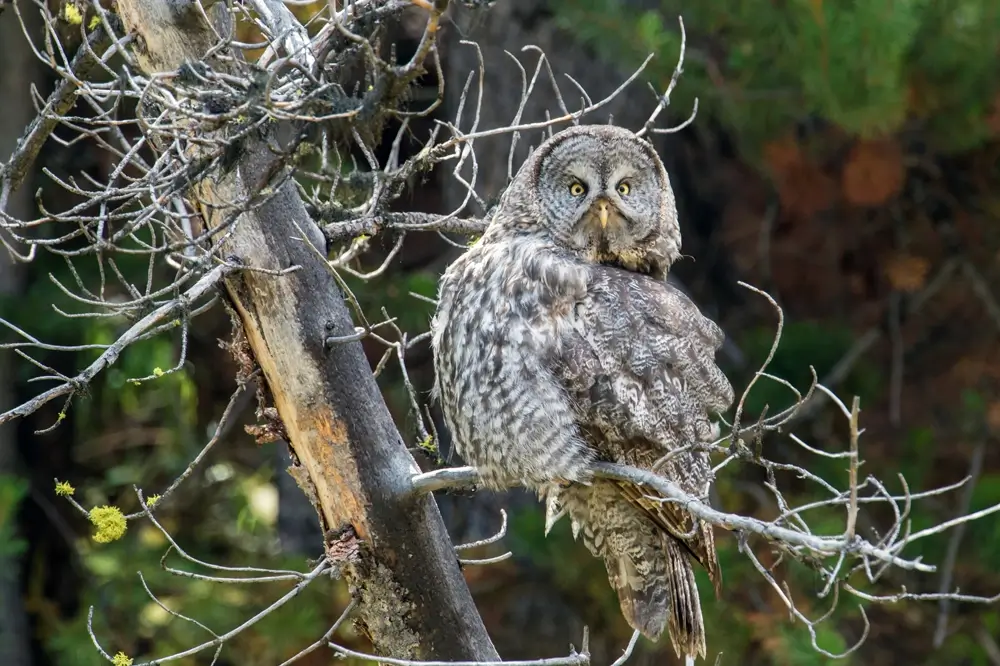
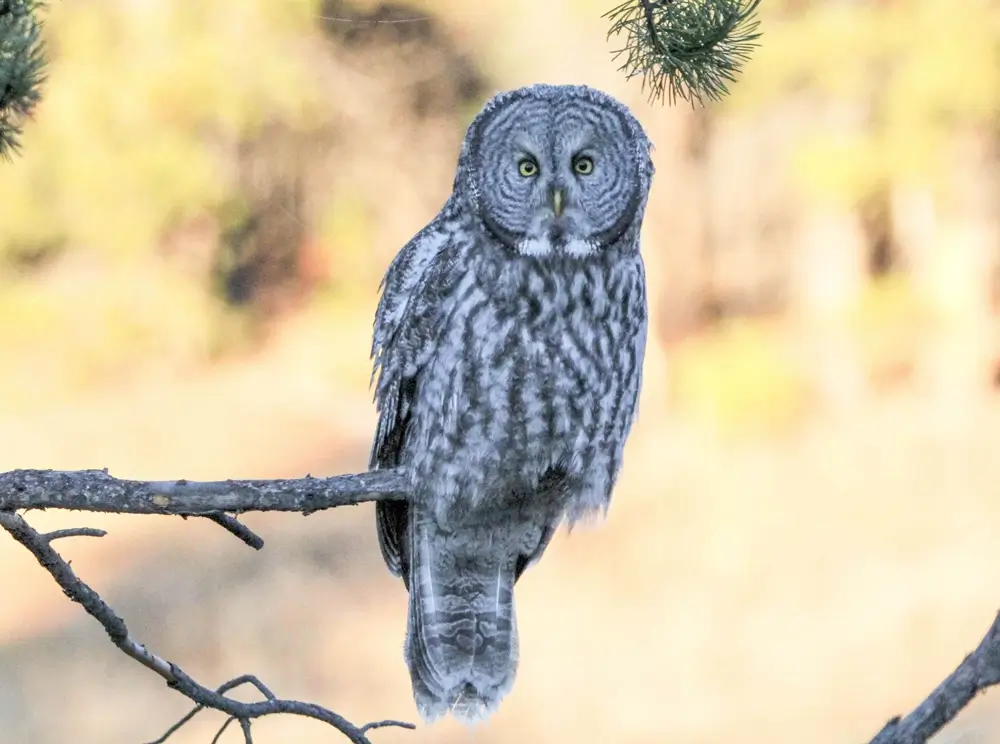
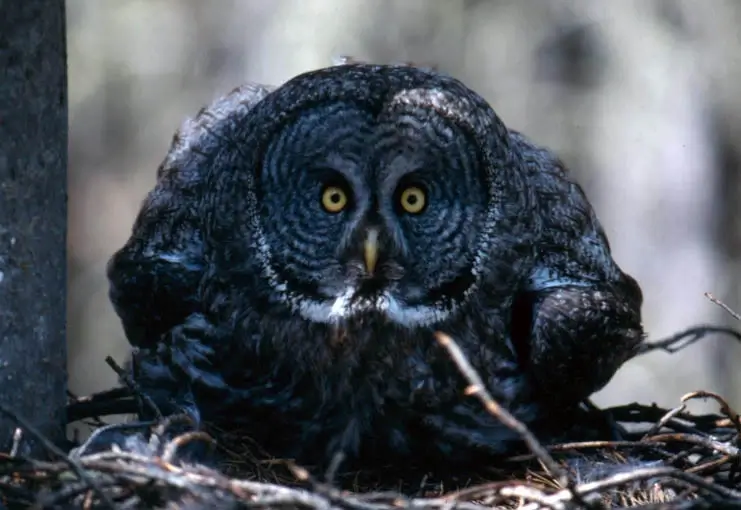
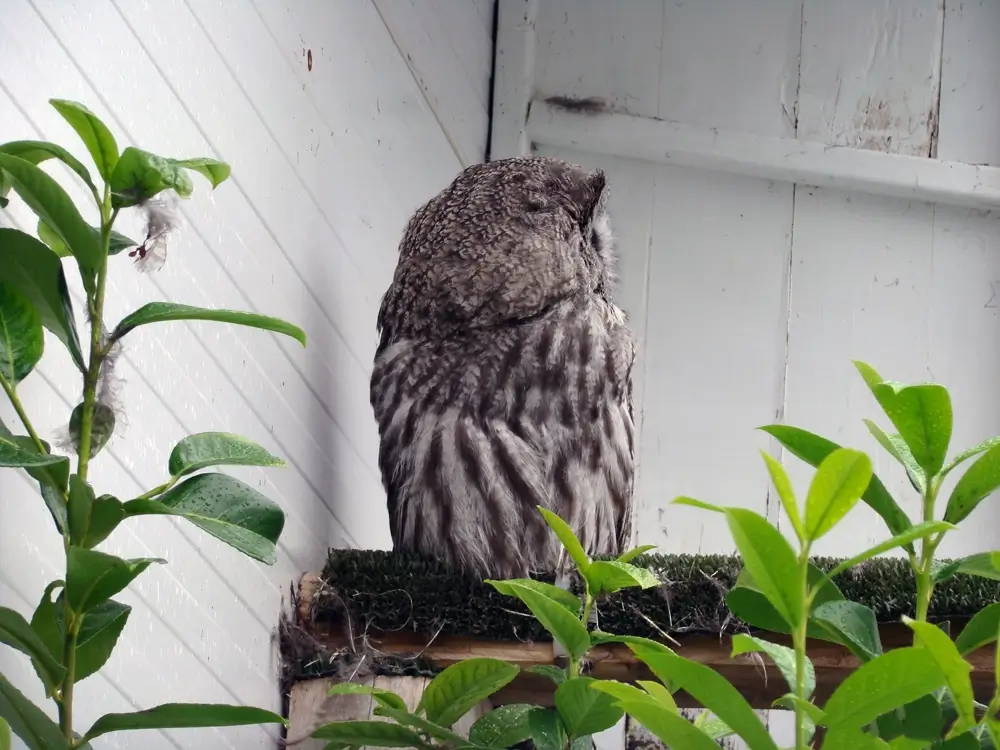
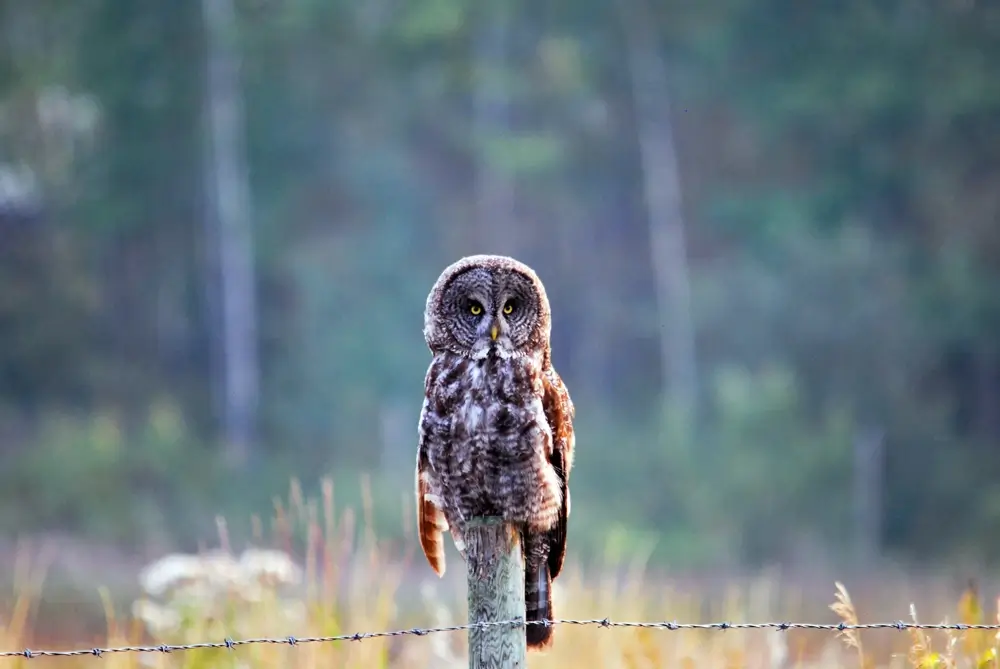
The great gray owl is the largest owl species in North America. It is 24-33 inches (61-84 cm) in length and has a wingspan of up to five feet (1.5 m).
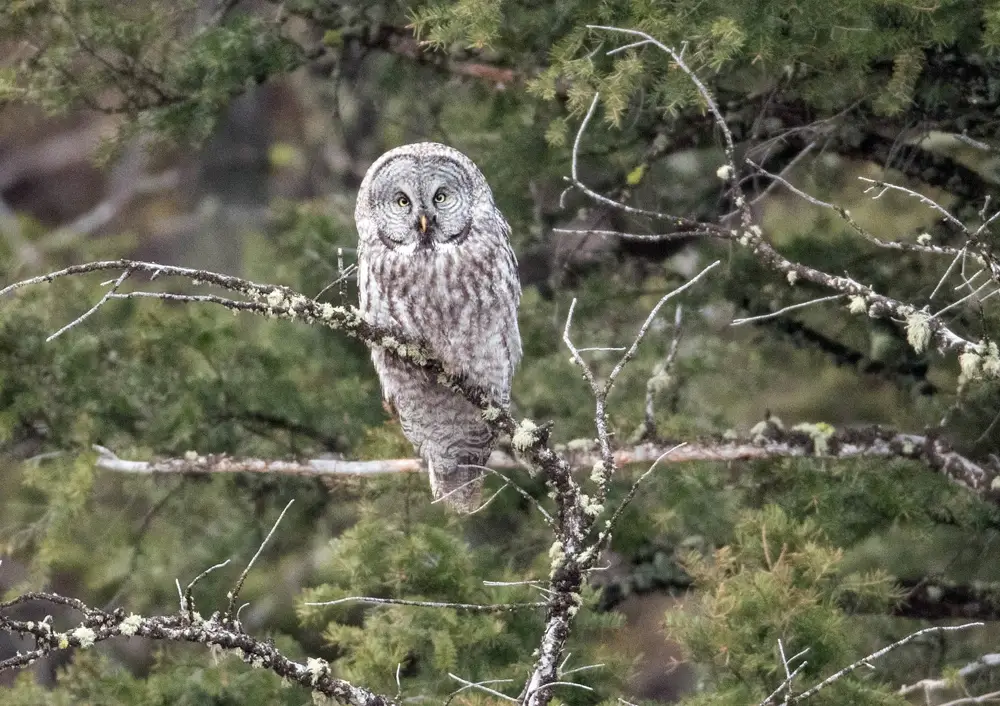
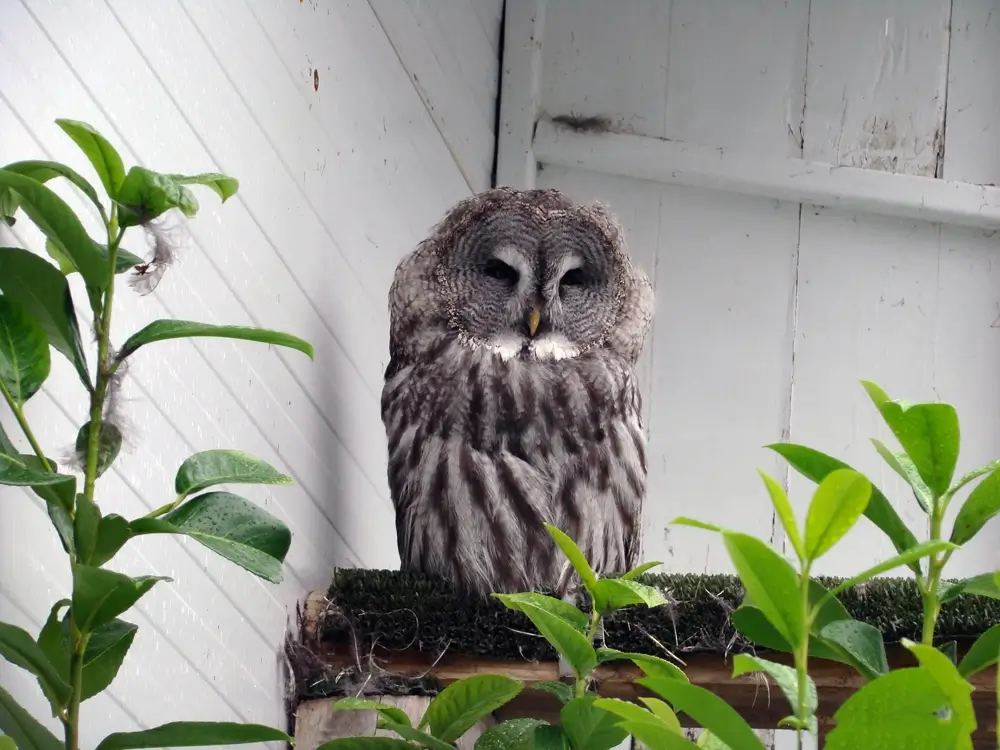
A dusty gray color, the great gray owl has a large, flat facial disk and no ear tufts.
A black spot on its chin surrounded by white marks on either side makes the great gray owl look like it’s wearing a bow tie.
Habitat
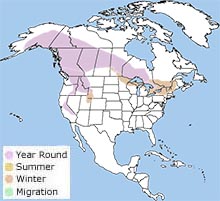
The great gray owl is found in dense, coniferous forests in Canada and in mountain forests in the western United States. It prefers to make a nest in large, old pine and fir trees in spots far from human development.
In the winter, the great gray owl may live on the edge of woodlands, bordering open fields on which to hunt. It may also live near brackish tidal meadows.
Diet
Most of the great gray owl’s diet is made up of small rodents like voles and pocket gophers. Sometimes, it will eat small mammals, such as shrews, and birds.
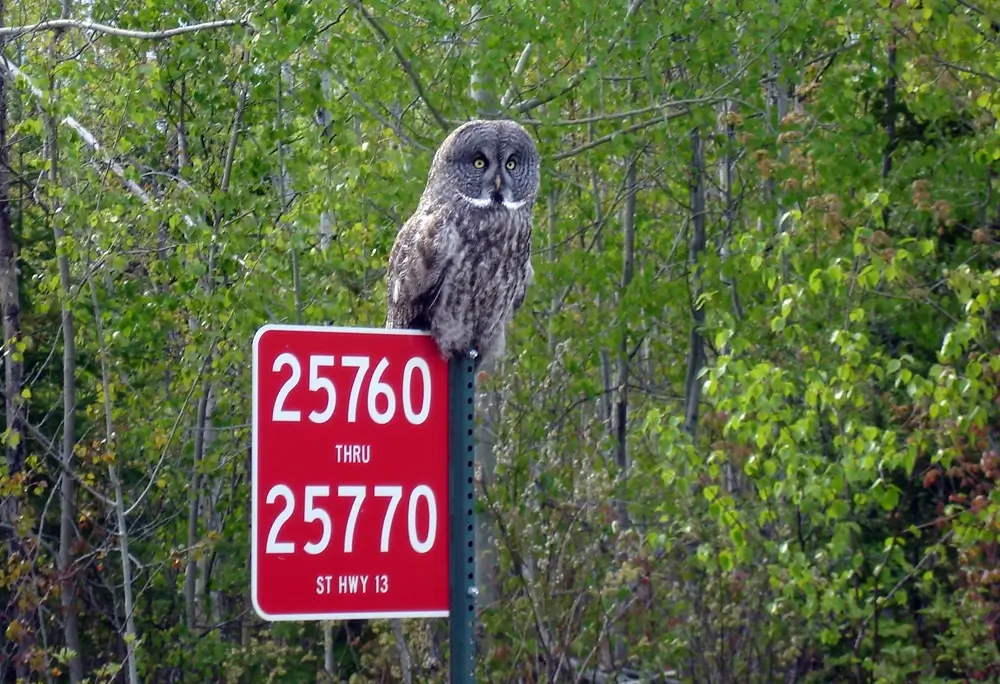
When it is hunting for prey, it perches on a tree overlooking an open area. Good hearing helps it locate prey under several feet of snow. From its perch, the great gray owl plunges into the snow to capture its prey.
Life Cycle
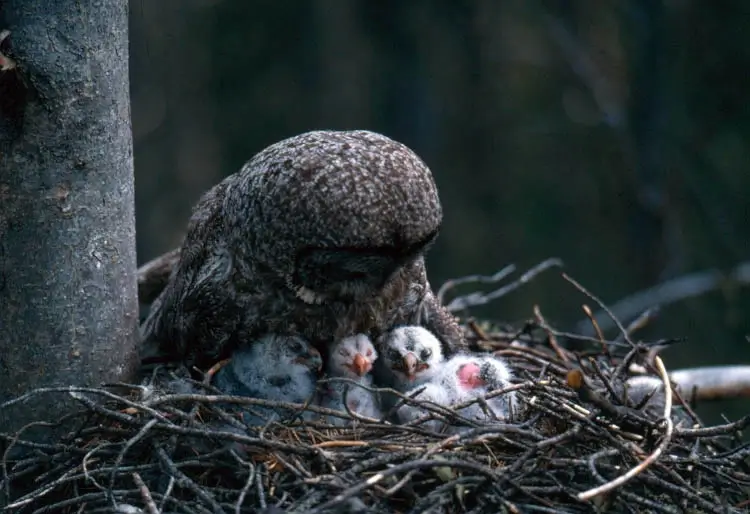
The great gray owl female lays her eggs from March to June, depending on the temperature in her habitat. She lays 2-5 white eggs in a nest made of sticks and incubates the eggs for about 28 days. Both parents feed their young owlets, tearing food into small pieces to make it easier for the owlets to eat.
Once the owlets’ down is replaced with feathers, the owlets will begin learning to fly. Owlets in this stage can be seen walking on the top of their nest, flapping their wings. After 3-4 weeks, the owlets leave the nest for good.
The great gray owl has a lifespan of 10–20 years in the wild
Behavior
The great gray owl is very shy and rarely seen by humans. Often, the only sign a great gray owl is in the area is a “plunge mark”, an imprint in the snow from which the owl has taken its prey.
Did You Know?
The great gray owl can turn its head 270 degrees.
Support for NatureWorks is provided by:
The Great Gray Owl in NH
The great gray owl does not breed in New Hampshire, but it is a very rare and occasional winter visitor.