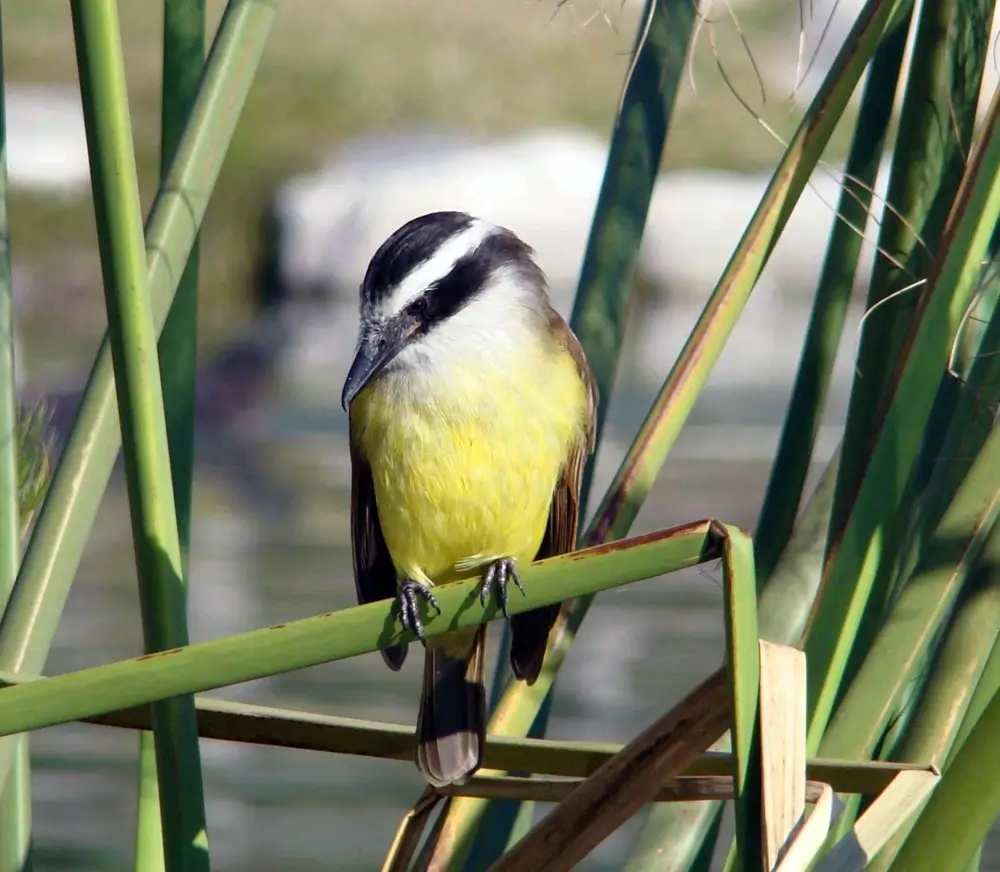
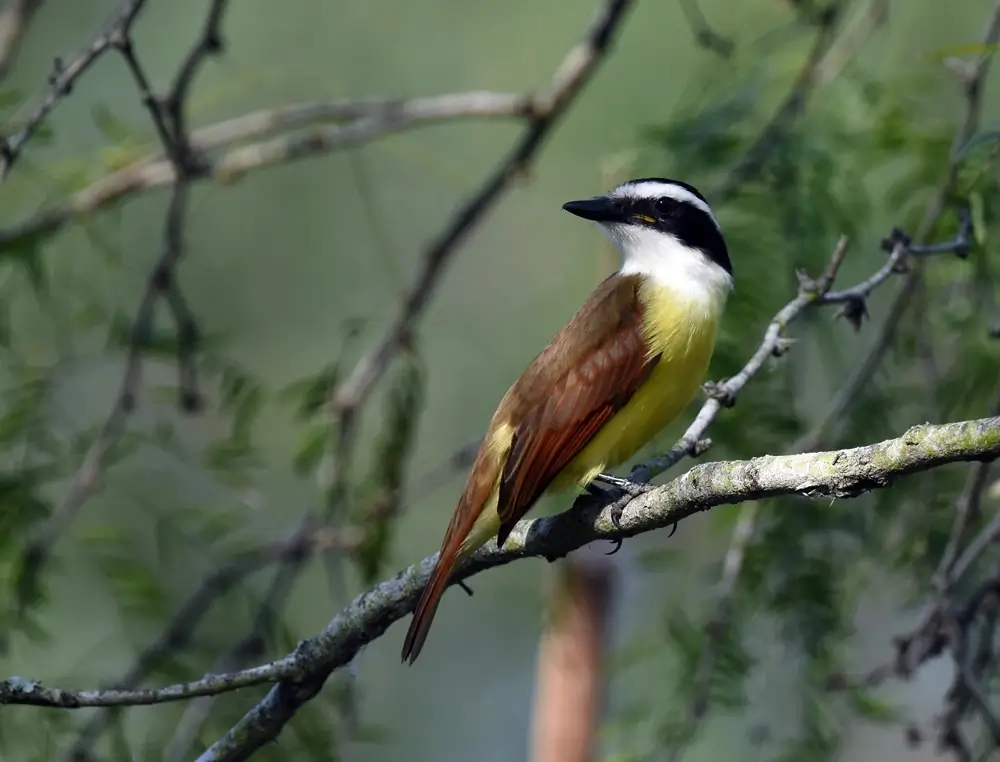
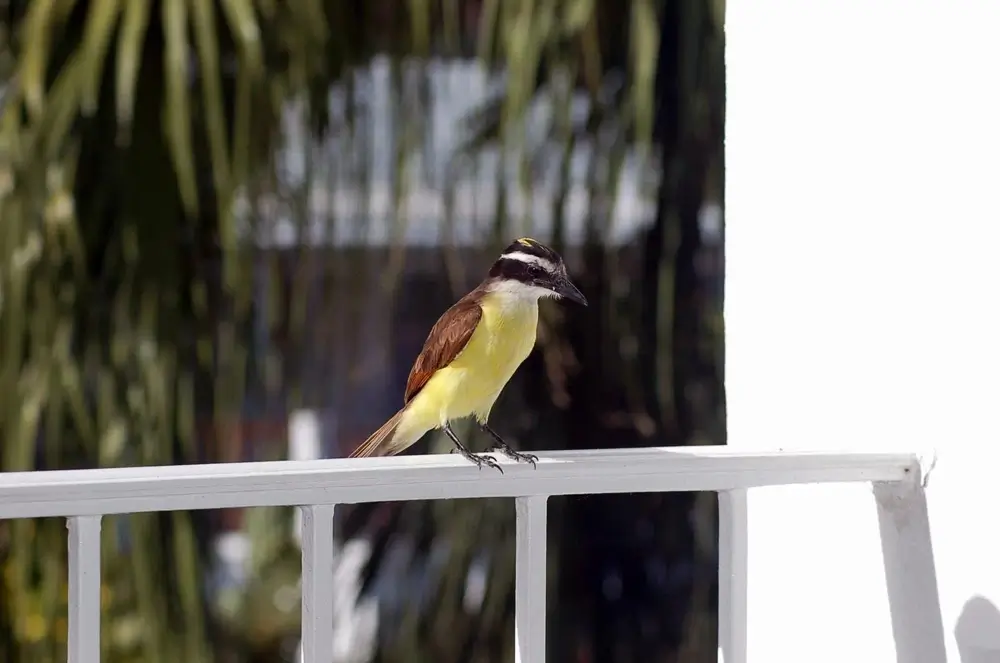
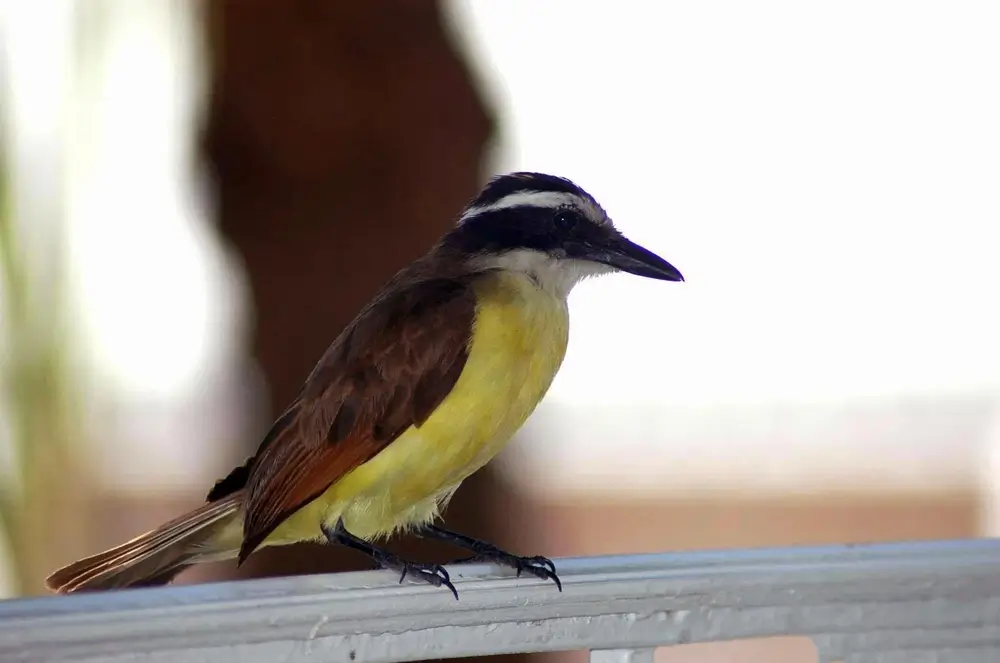
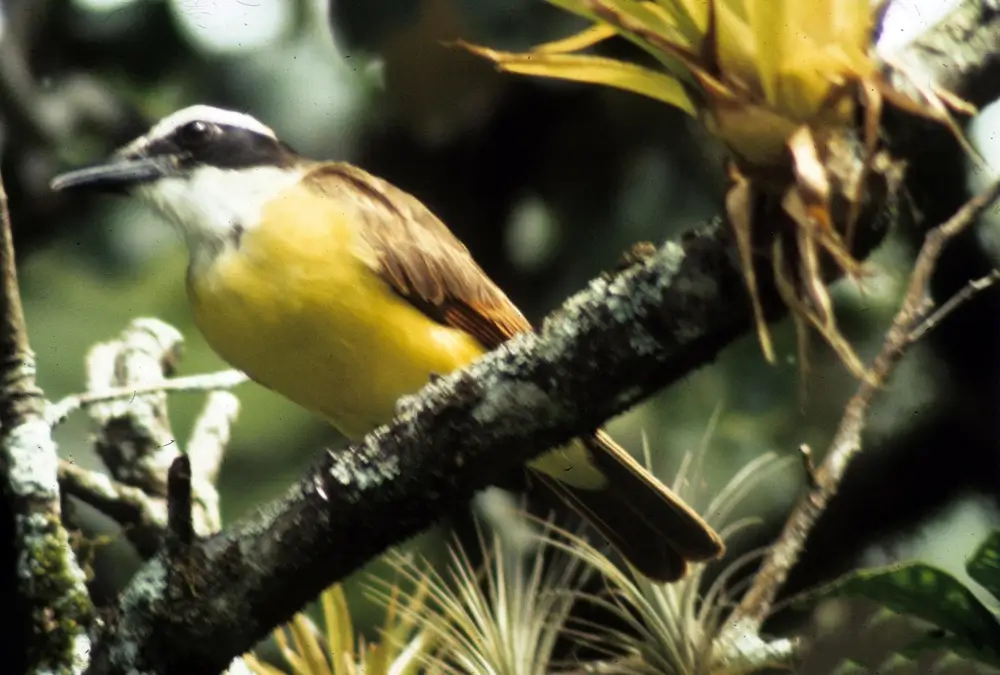
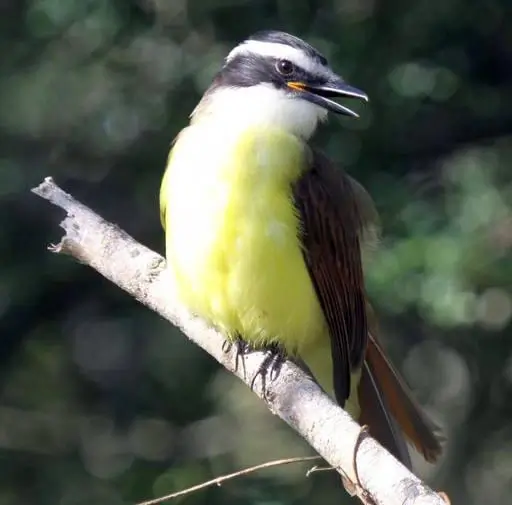
The great kiskadee is a large member of the flycatcher family. It is 9-10 inches (22.9-25.4 cm) in length with a wingspan of around 14 inches (35.6 cm).
It has black and white stripes on the crown and sides of its head. It has a white line above its eyes. Its chest and undersides are a bright yellow, and its throat is white. Its back and wings are brown, and its bill and legs are black.
Habitat
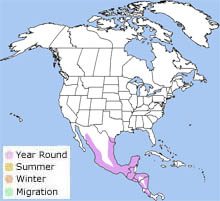
The great kiskadee lives in open woodlands, streamside thickets, groves, orchards, and parks.
Diet
The great kiskadee eats insects like beetles, wasps, grasshoppers, bees, and moths. Despite the fact that it is a flycatcher, it also eats berries, seeds, mice, frogs, and lizards. It also dives straight into the water to catch fish.
Life Cycle
Kiskadees are monogamous. A male will mate with only one female. Mating season begins in late March.
The female great kiskadee lays 2-5 creamy-white and brown-speckled eggs in a domed nest made of sticks, grass, moss, and bark. The nest has a single entry hole and is lined with soft materials like wool and feathers. The nest is usually built in a thorn tree or bush.
Both parents defend the nesting territory and care for the young.
The great kiskadee has a lifespan of around 7 years in the wild.
Behavior
The great kiskadee travels in pairs and aggressively protects its nesting territory. One of its most feared predators is the coral snake. The kiskadee will avoid anything with the same color pattern as the coral snake.
Did You Know?
The great kiskadee is named for its loud “kis-ka-dee” call.