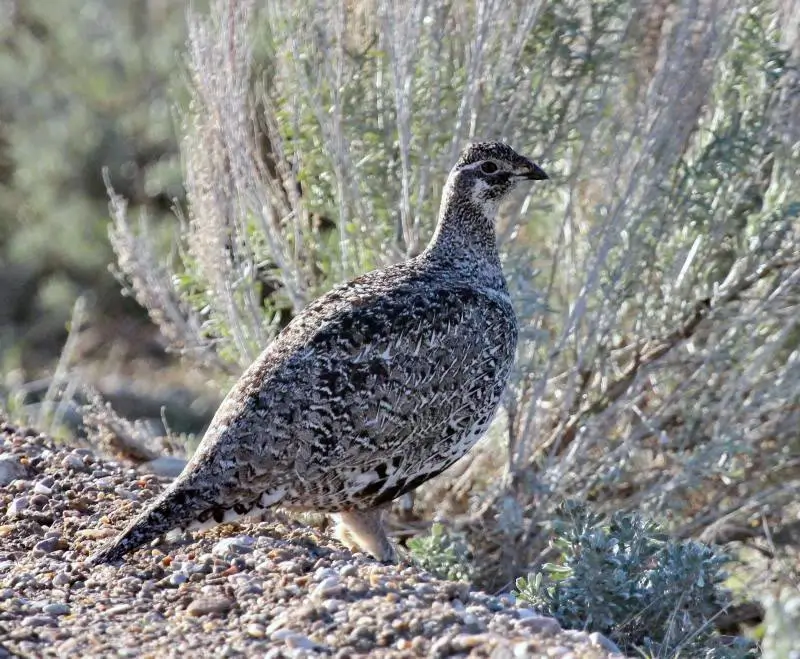
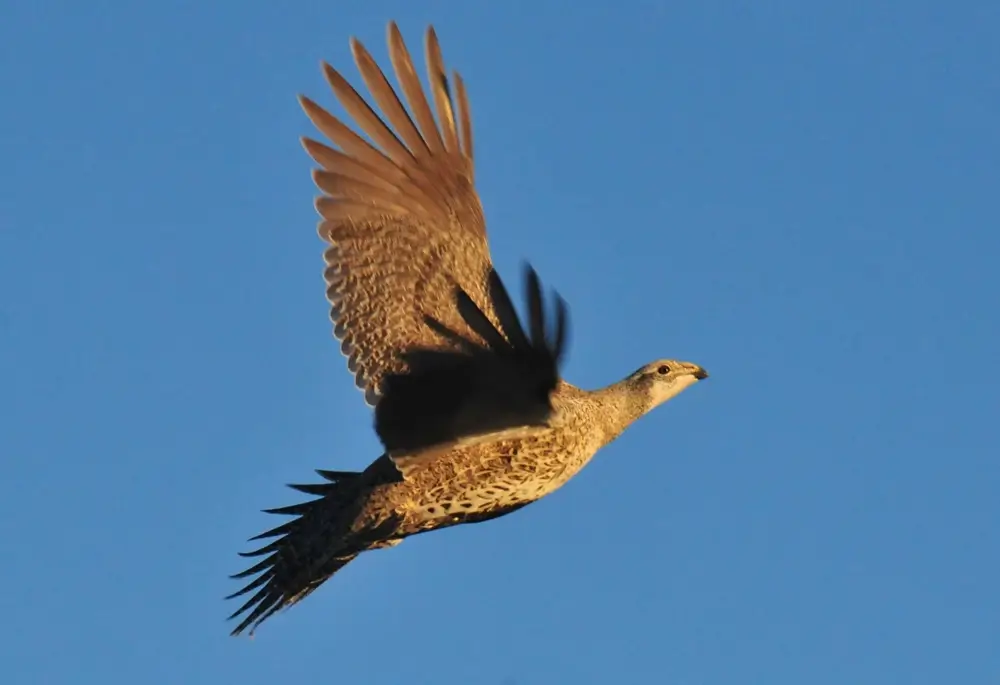
The greater sage grouse is the largest North American grouse species. They are 22.1-29.5 inches (56-75 cm) in length and weigh 4-7 pounds (18-3.2 kg). Males are larger than females.
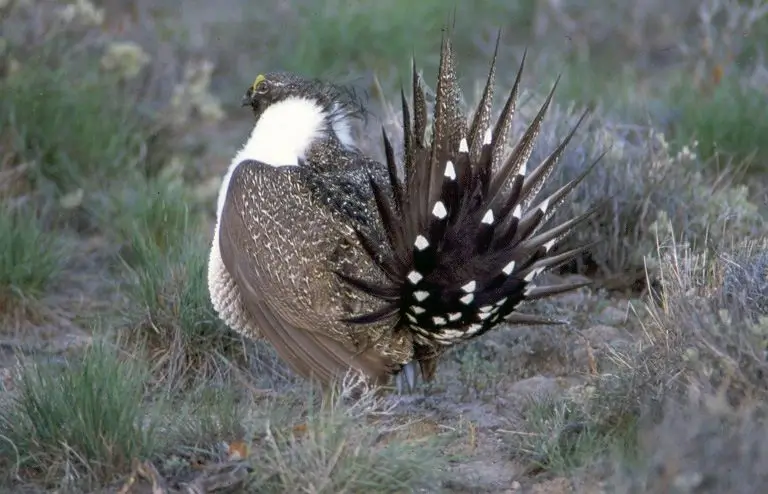
Both the male and female greater sage grouse are brownish-gray with gray and white speckles. They have a black belly, a yellow comb over their eyes, and a long tail with stiff, pointed feathers.
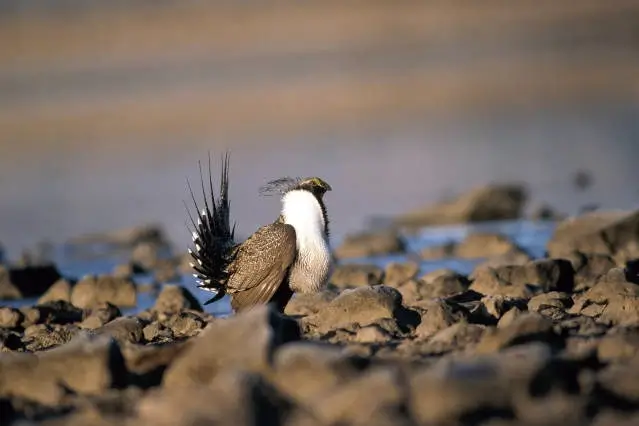
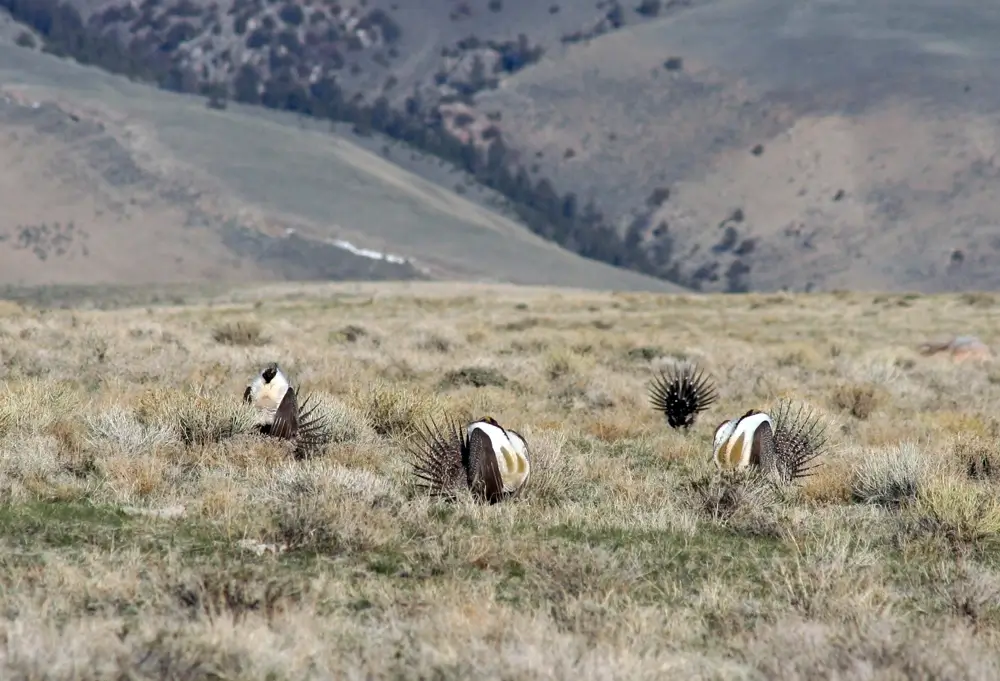
The male has a black bib on his throat and a white chest. He also has yellowish air sacs on his breast that push his neck and chest feathers up when the air sacs are inflated.
Habitat
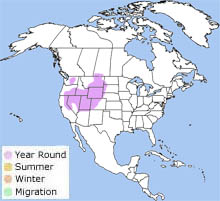
The greater sage grouse makes its home on open plains and sagebrush plains.
Diet
In the winter, most of the sage grouse’s diet is made up of the leaves and shoots of the sagebrush. In the spring, the greater sage grouse also eats weeds and grasses.
Life Cycle
During mating season, male sage grouses gather on a lek or a special display area. While they are there, they strut and display their plumage to attract a mate.
The female lays 6-9 eggs in a depression in the ground lined with grass. The nest is usually under a bush or other cover. The female incubates and cares for the chicks.
The chicks hatch in about three weeks and feed themselves soon after hatching. They eat insects for the first few weeks but soon move on to weeds, grasses, and sagebrush. The chicks fledge in about a week.
The greater sage grouse has an average lifespan of 1-1.5 years due to predation. They can live to be 6-9 years old in the wild.
Behavior
The greater sage grouse doesn’t have a muscular gizzard with grit in it, and it can’t digest hard foods like seeds.