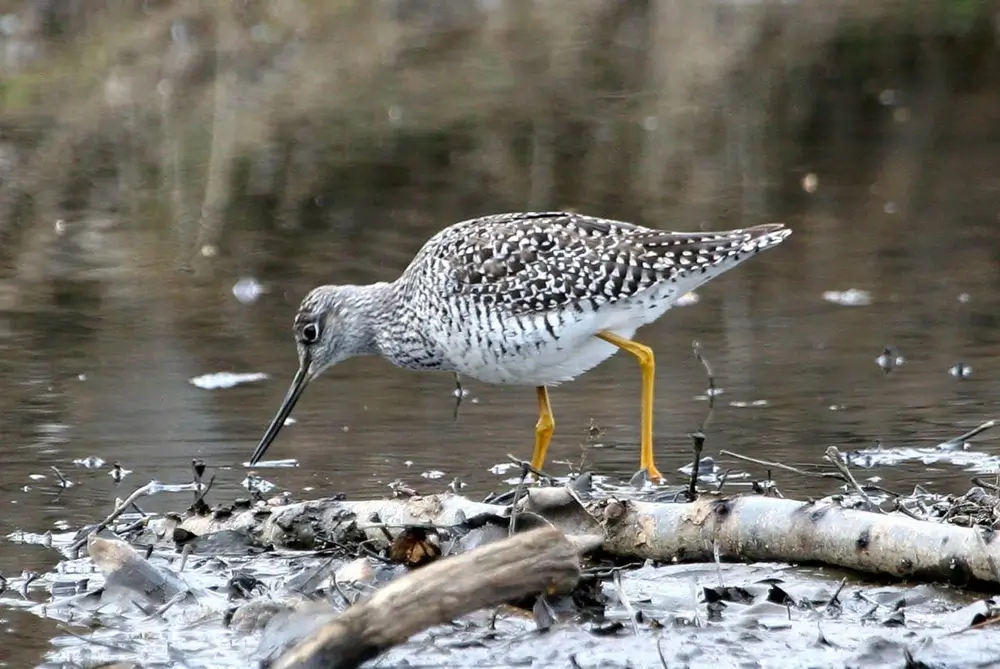
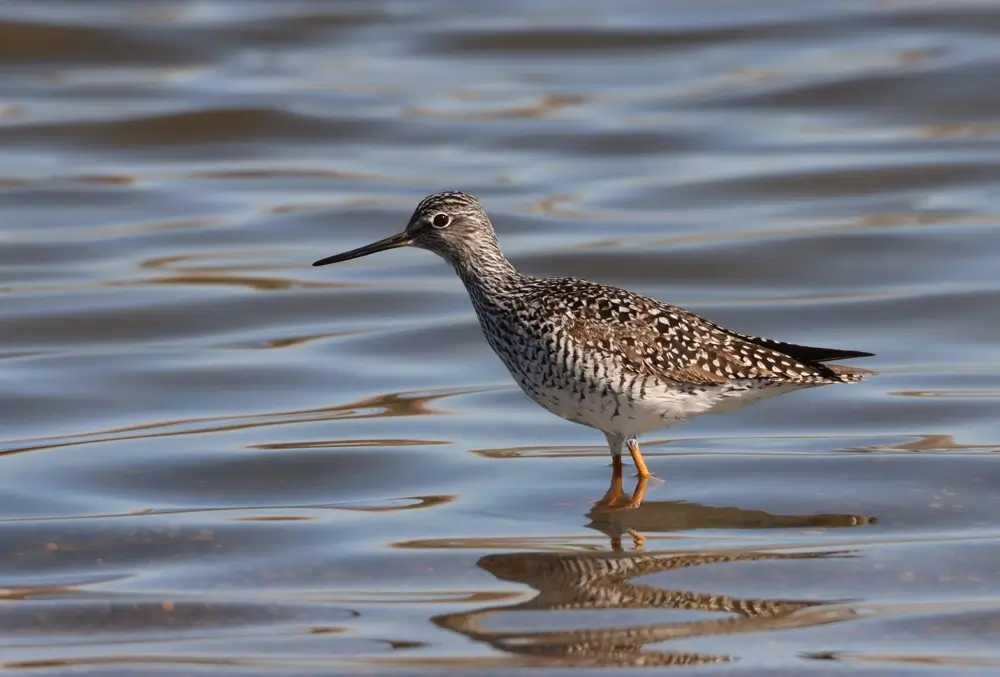
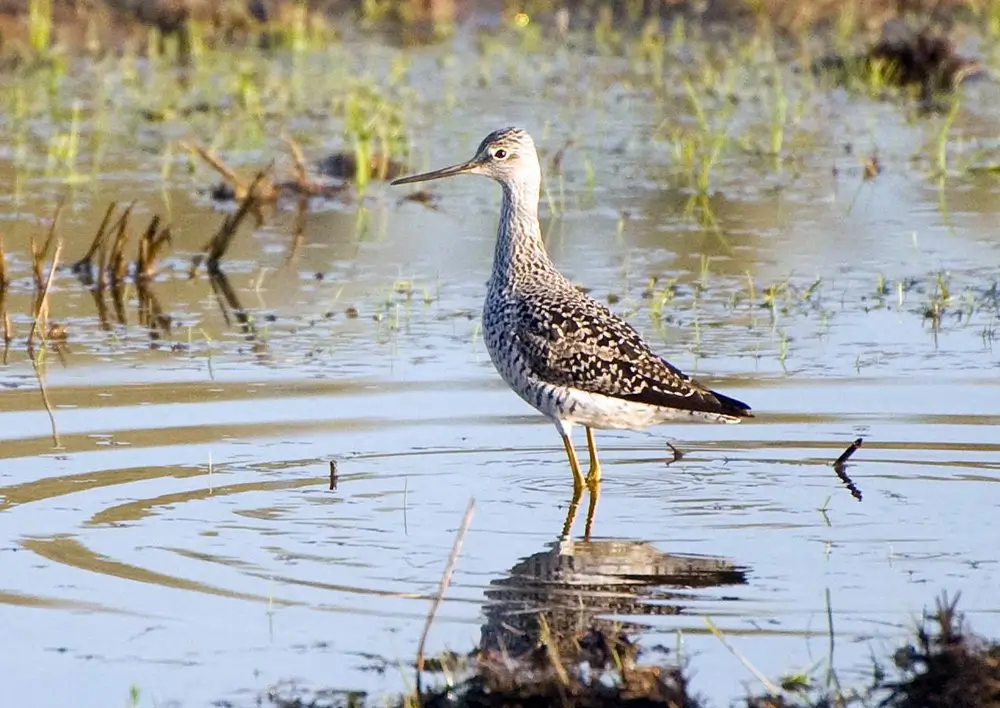
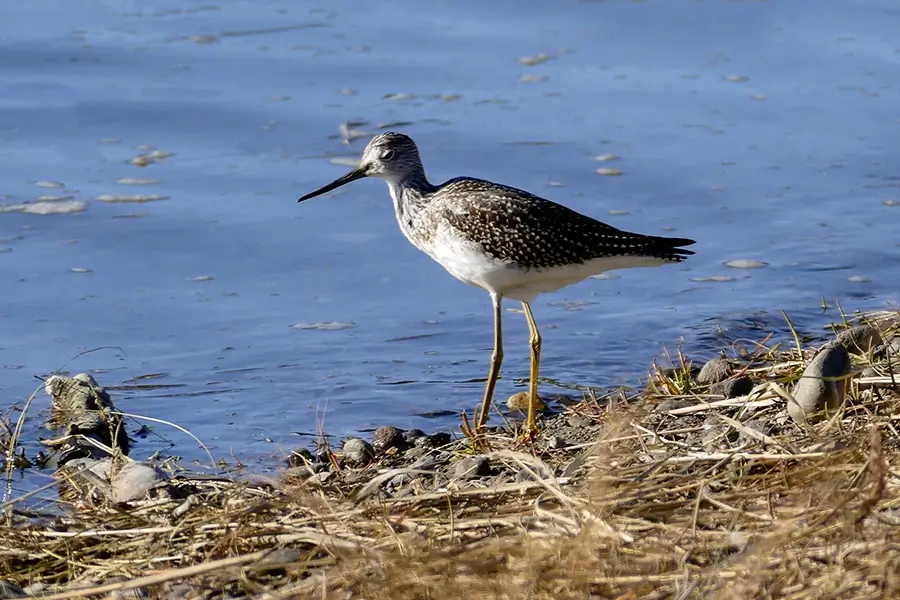
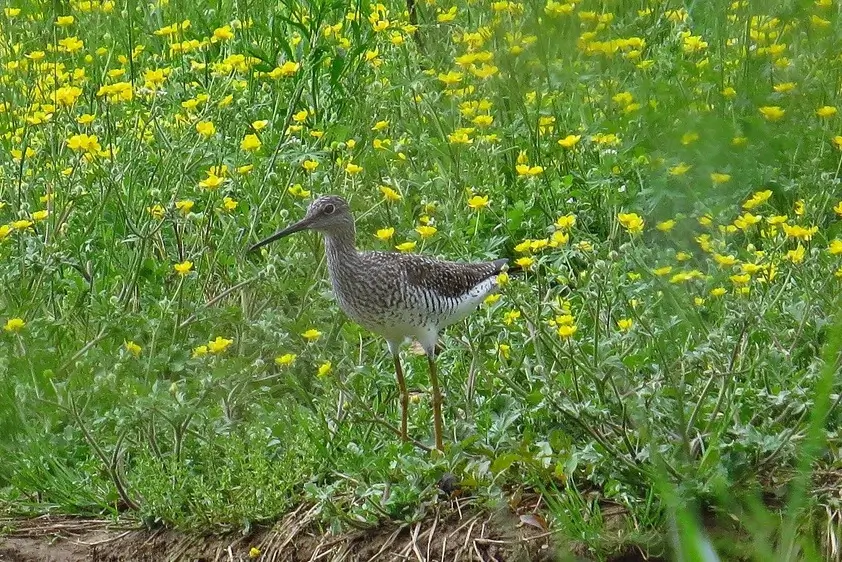
The greater yellowlegs is a medium-sized wading bird that is about 11-14 inches (29-36 cm) in length with a wingspan of around 23.6 inches (60 cm).
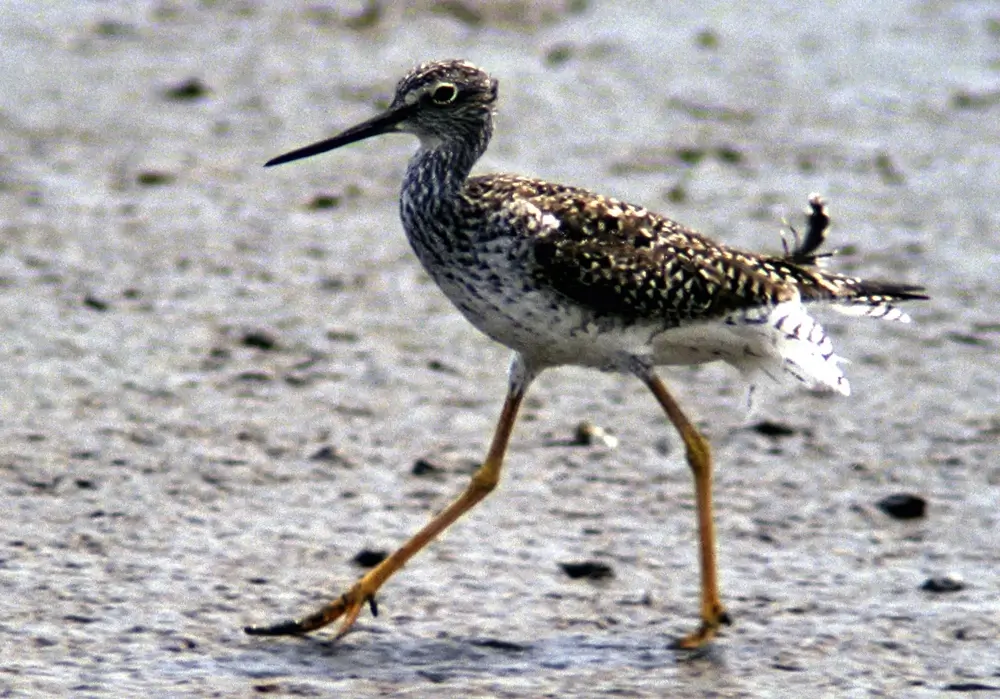
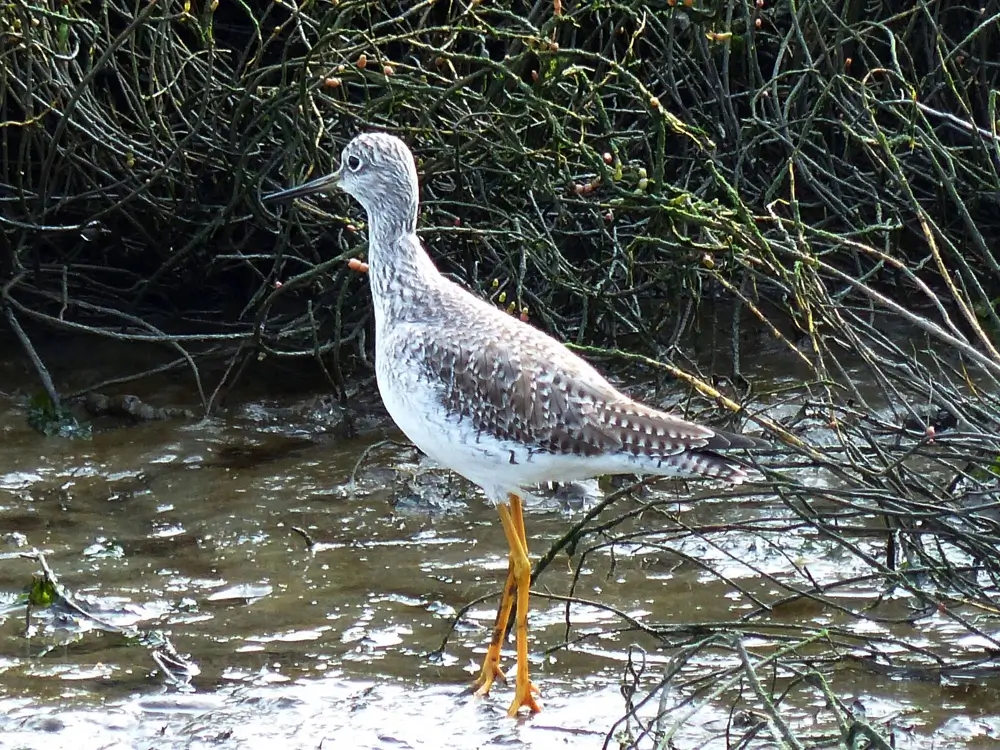
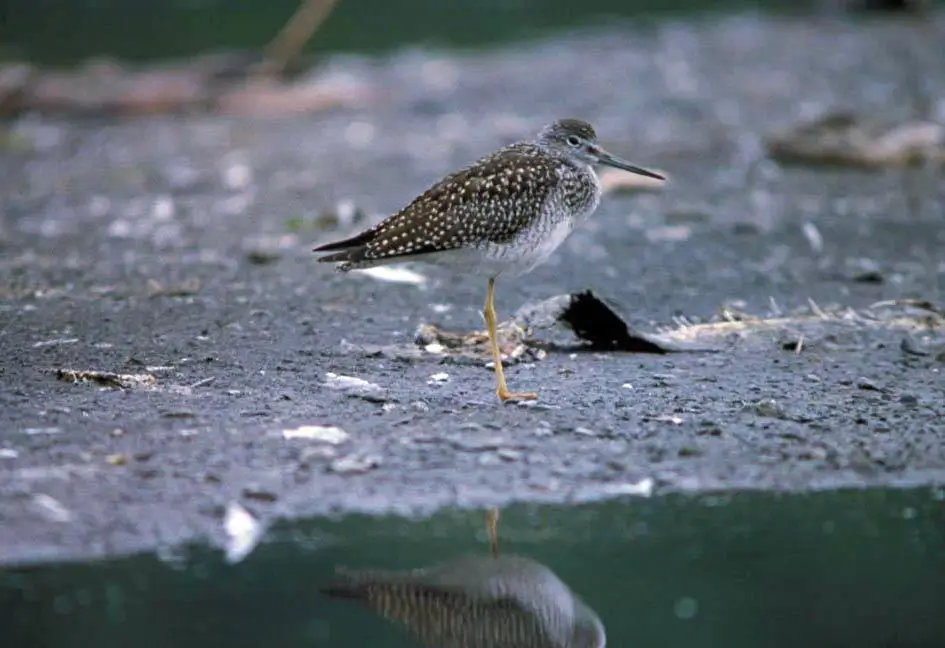
It has very long yellow legs and a long bill that is slightly turned up at the end. Its tail is marked with black bars. Its back and wing are streaked grayish-brown.
Its face, neck, chest, and belly are white with brown and gray speckles.
Habitat
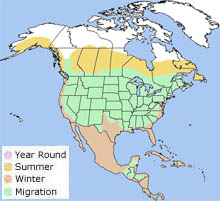
The greater yellowlegs breeds on the tundra and marshy areas. During migration and in the winter, it is found on lakeshores and tidal mudflats.
Diet
The greater yellowlegs wades through the shallow water with its long legs, sweeps its head back and forth, and skims up small fish and aquatic animals in its bill.
It also runs after fish and stabs them with its long, pointed bill. It swallows its prey whole. Sometimes it has to reposition a fish a couple of times before it can swallow it.
It feeds during the day and the night.
Life Cycle
To attract a mate, the male runs around a female in circles while holding up his wings.
The female lays 4 eggs in a depression in the ground on a damp, open spot. The chicks hatch in 23 days and fledge in 18-20 days.
Both parents incubate the eggs and feed the chicks.
The greater yellowlegs has a lifespan of 5-11 years.
Behavior
The greater yellowlegs’ call is a series of musical whistles. It is a very noisy bird. It often runs in shallow water and bobs its head up and down when it spots a potential predator.
It has a high-stepping walk and sometimes runs with its neck stretched out. It also swims on the water from time to time to get to shallow water or to escape from a predator.
Did You Know?
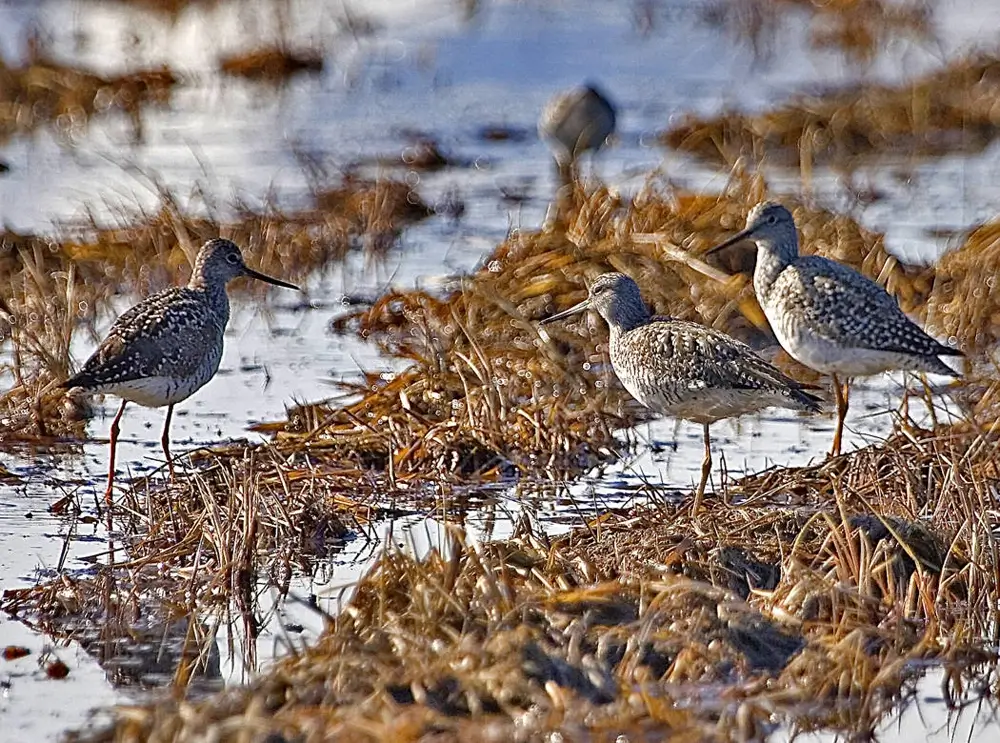
The greater yellowlegs is more solitary than most shorebirds, but it does migrate in groups.
Support for NatureWorks is provided by:
The Greater Yellowlegs in NH
The greater yellowlegs does not breed in New Hampshire, but in can be seen in the state during migration.