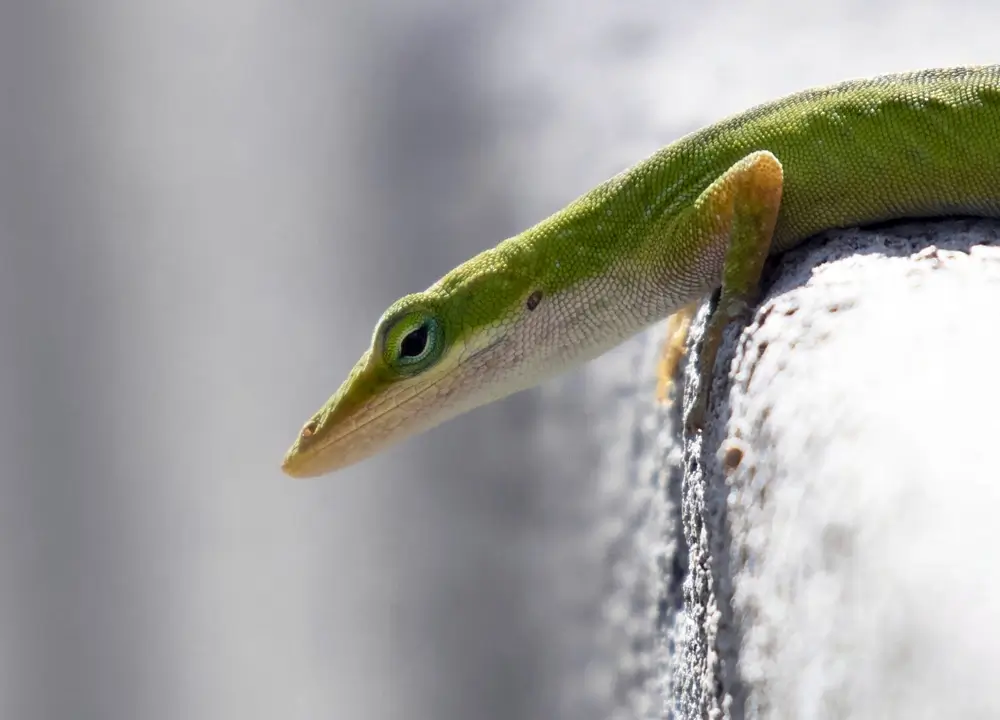
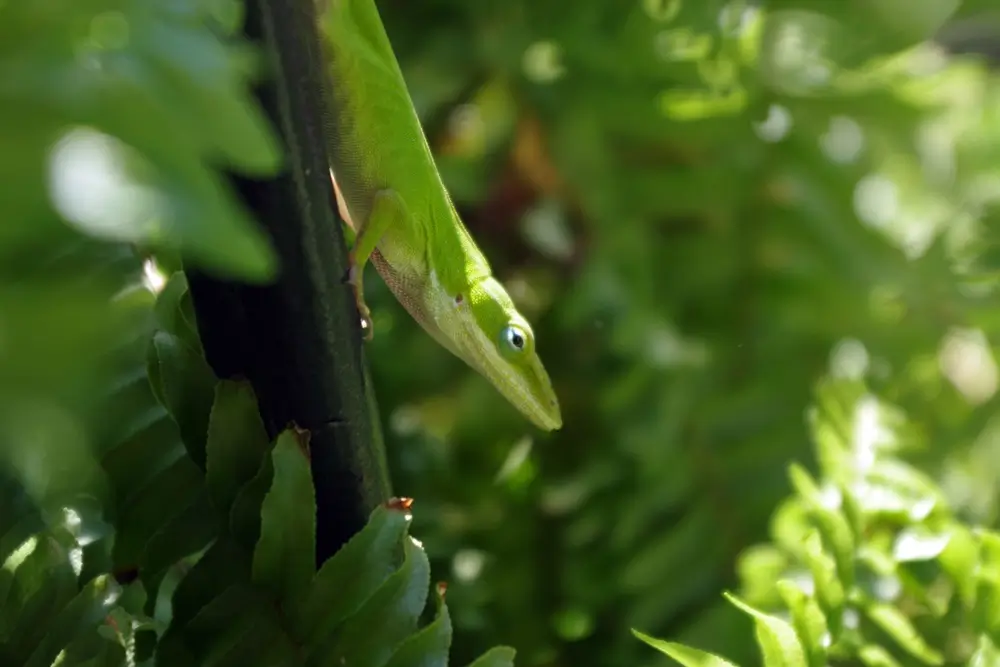
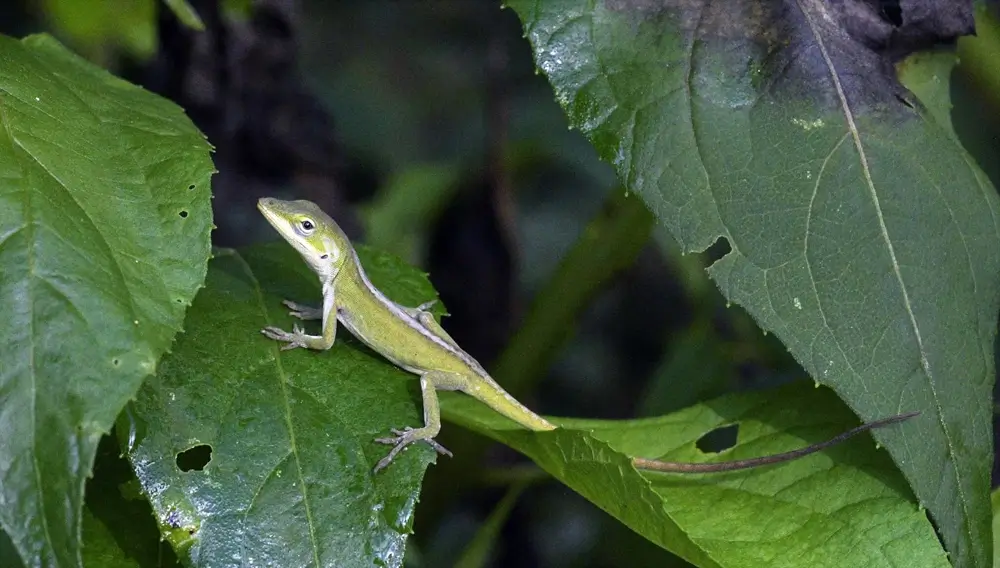
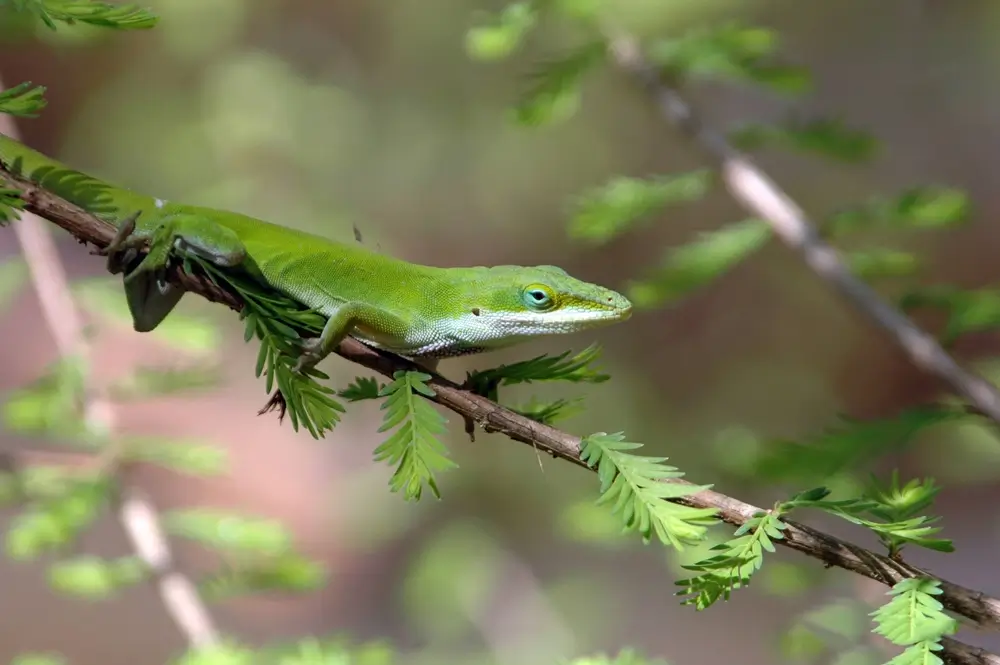
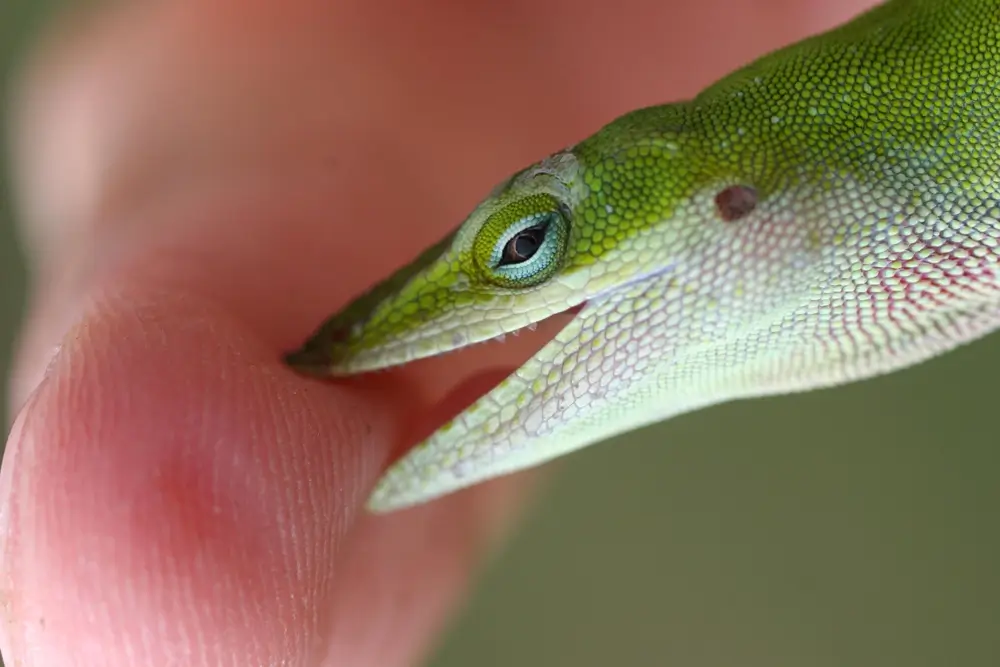
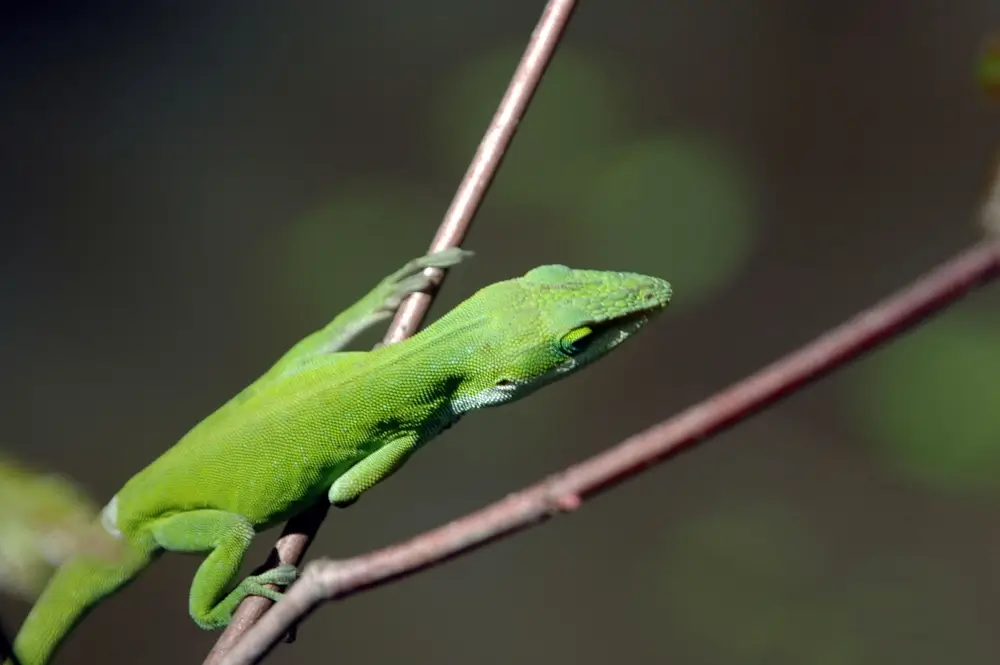
The green anole is five to eight inches (12.7-20.3 cm) in length. It has a long, skinny tail; a sharp nose; a narrow head; and a slender body. It has pads on its feet that help it climb, run on, and cling to a variety of surfaces. It has a white belly and lips, very long hind legs, and movable eyelids. Its eyes can move independently of each other.
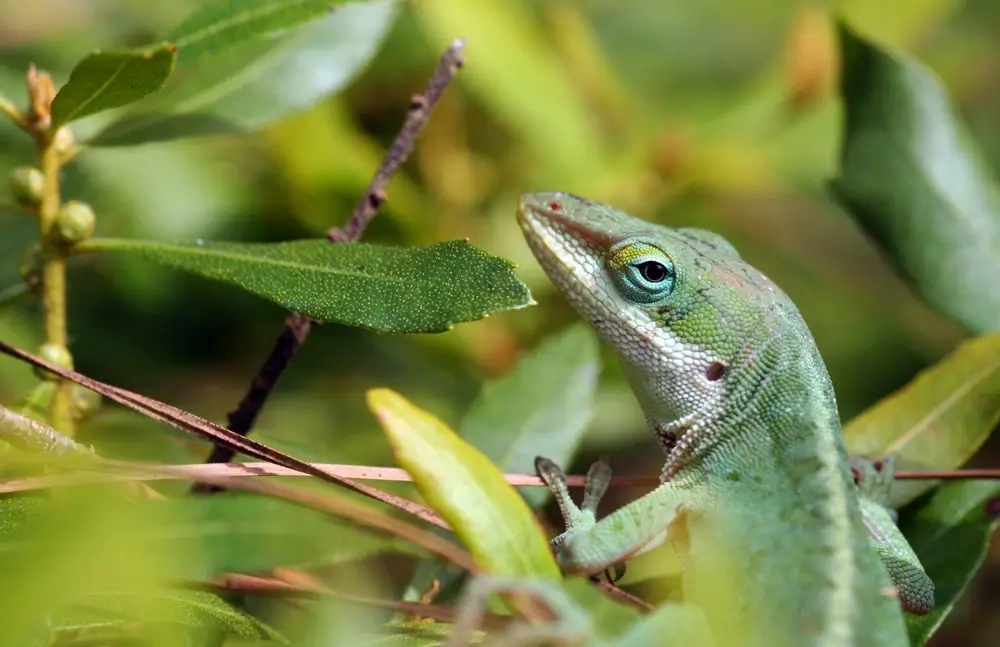
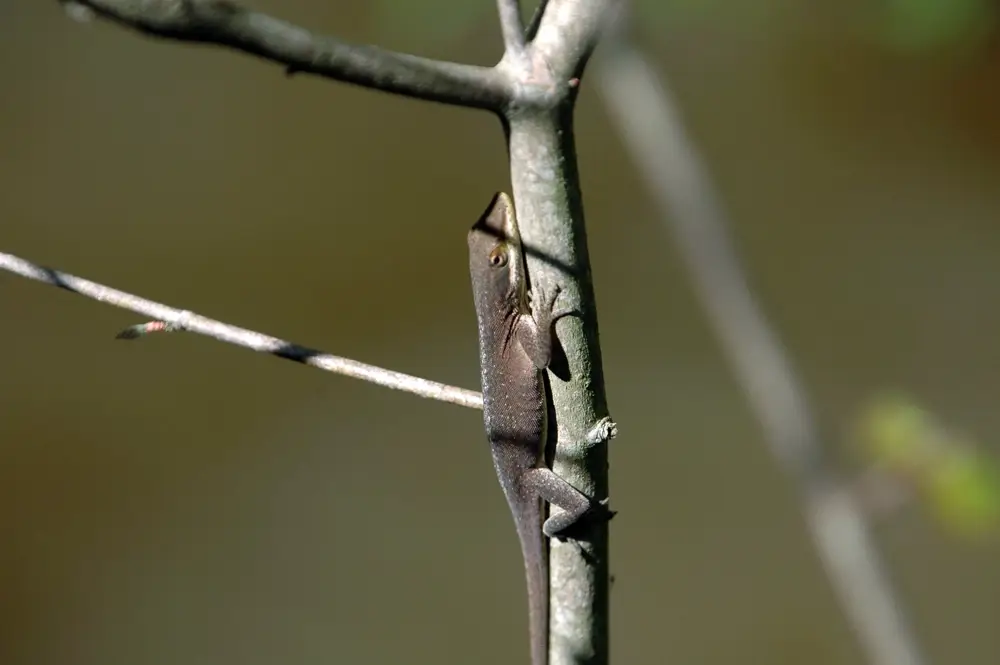
On most green anoles, the eyes are surrounded by a thin turquoise border. The green anole is normally bright green, but it can change its color to brownish-green or dark brown in seconds.
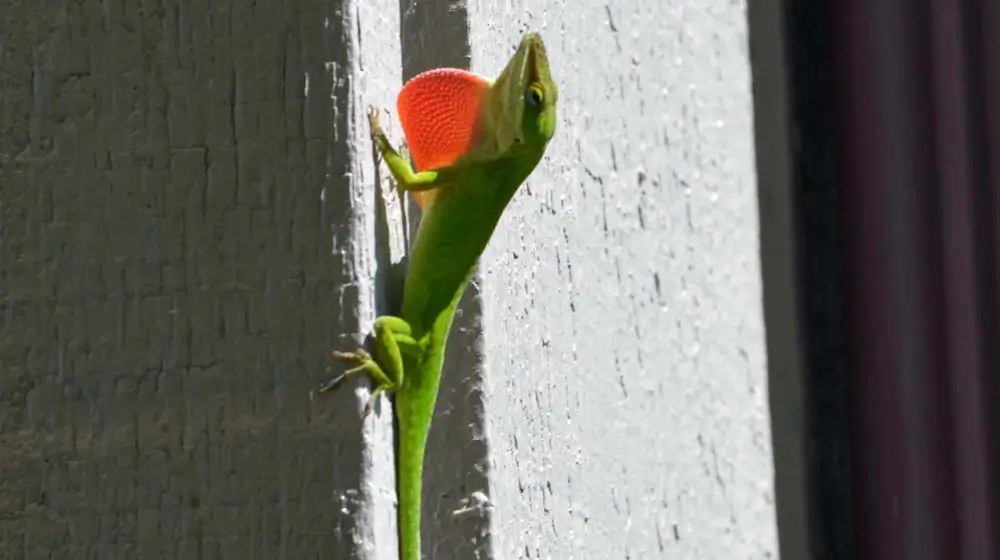
It is sometimes called the American chameleon because it can change color, but it is not a true chameleon. The green anole changes color because of changes in temperature, humidity, health, and mood, not to blend into its background. Males have a pink or red throat fan known as a dewlap.
Habitat
The green anole lives in habitats with very high humidity. It can be found in swamps, forests, wooded beaches, and other areas with trees. It may also be found in parks and yards. The green anole is often found basking in the sun as it clings to trees, shrubs, vines, palm fronds, fence posts, and walls.
Diet
The green anole eats spiders, flies, crickets, small beetles, moths, butterflies, small slugs, worms, ants, and termites. It only notices prey that is moving. It gets most of its water from the dew on plants.
Life Cycle
The green anole breeds from March to September. The male will establish a territory and patrol it. He will attract females by puffing out his dewlap. He mates with females in his area and aggressively defends his territory from other males.
When a female and male mate, the female stores the sperm. If she doesn’t mate with another male, the stored sperm will fertilize her eggs. The female lays a single egg and buries it in moist leaf litter, hollow logs, or the soil. She lays one egg every two weeks during the breeding season. She may lay up to 15-18 eggs during the summer.
The female does not stay with the egg or care for the young that hatch in 5-7 weeks. Young green anoles eat small insects such as mealworms, fruit flies, house flies, and termites.
The green anole has a lifespan of around three years in the wild. In captivity, they can live to be six years old.
Behavior
The male anole performs a series of visual displays to establish dominance and territory. To show dominance, it bobs its head up and down, does “pushups,” and flares its dewlap.
If it is threatened, it will also stretch out its throat, puff out its body, and turn sideways toward the threat.
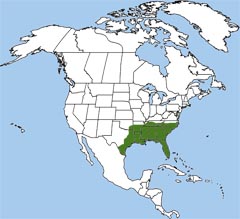
The green anole can be found in the Southeastern United States from southern Virginia to the Florida Keys and west to central Texas and Oklahoma. It has been introduced to Hawaii.