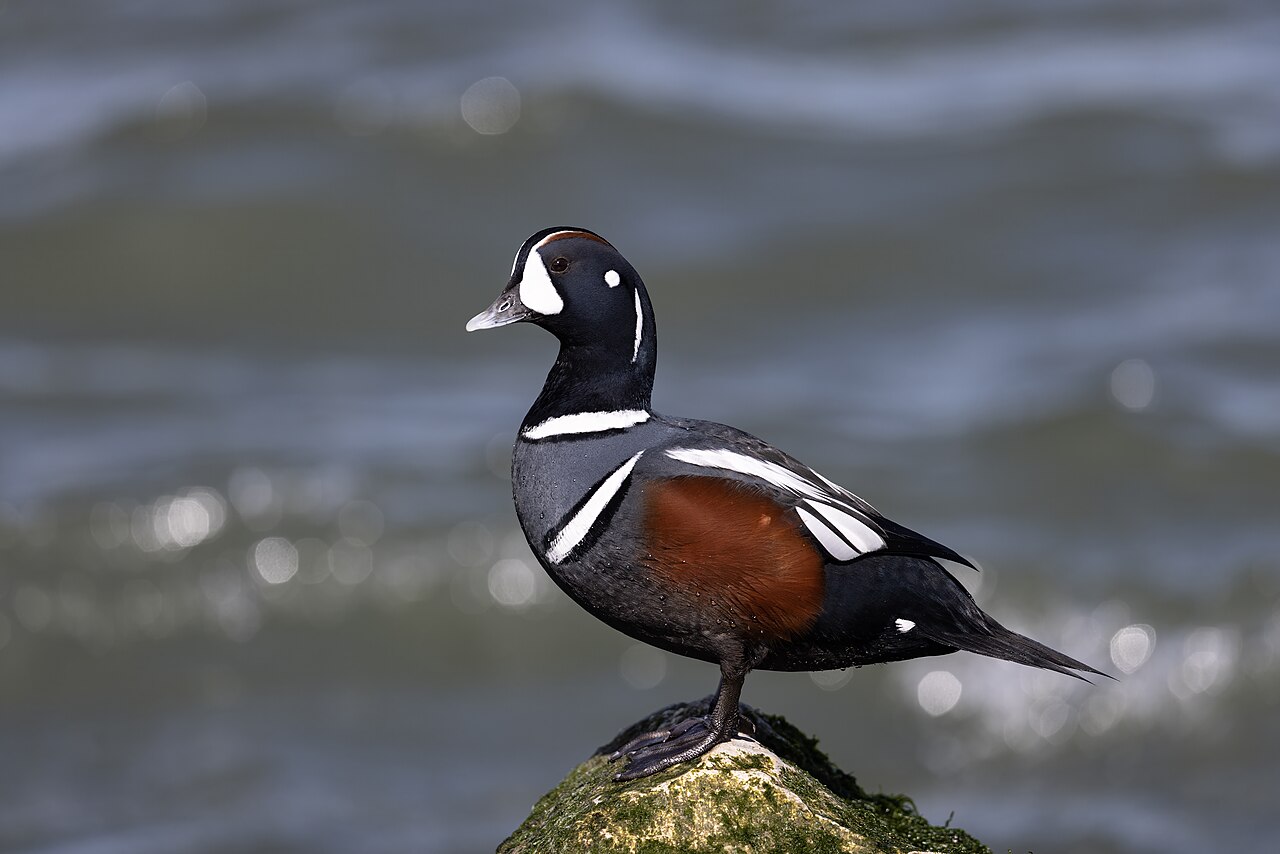
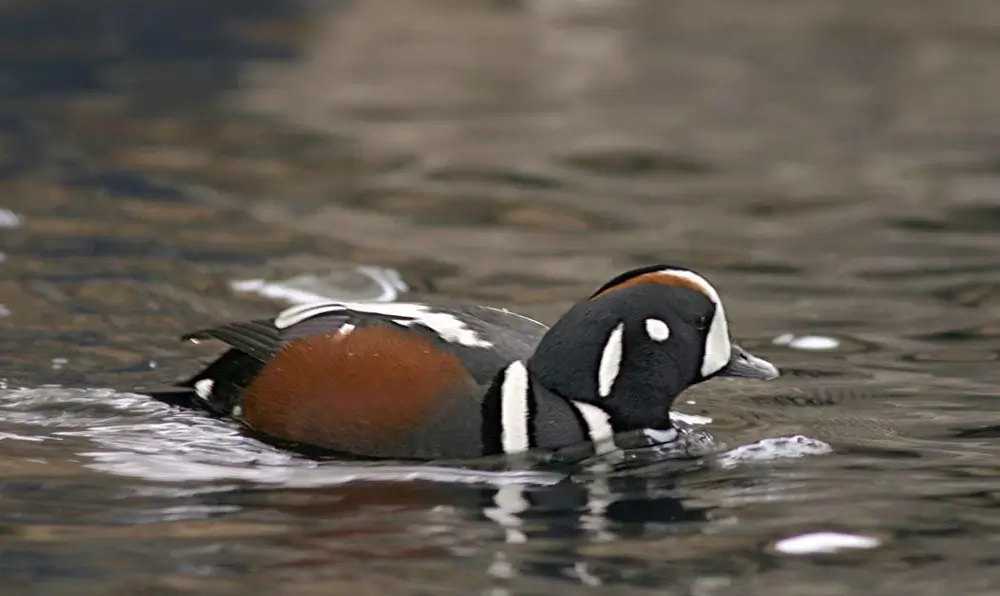
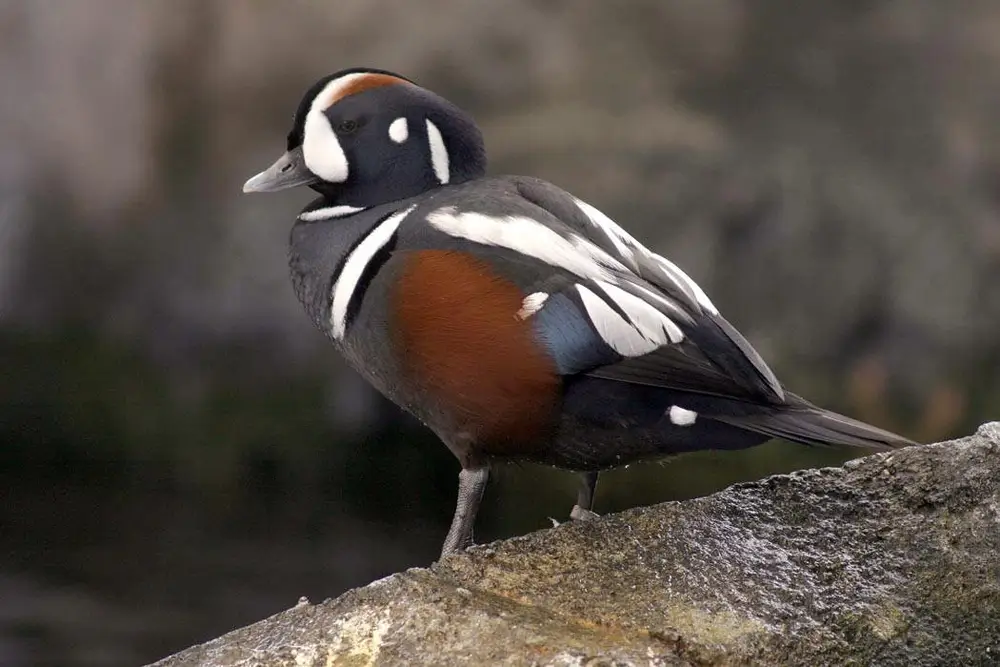
The harlequin duck is a small diving sea duck 13-20 inches (33-51 cm) in length with a wingspan of 22-26 inches (56-66 cm).
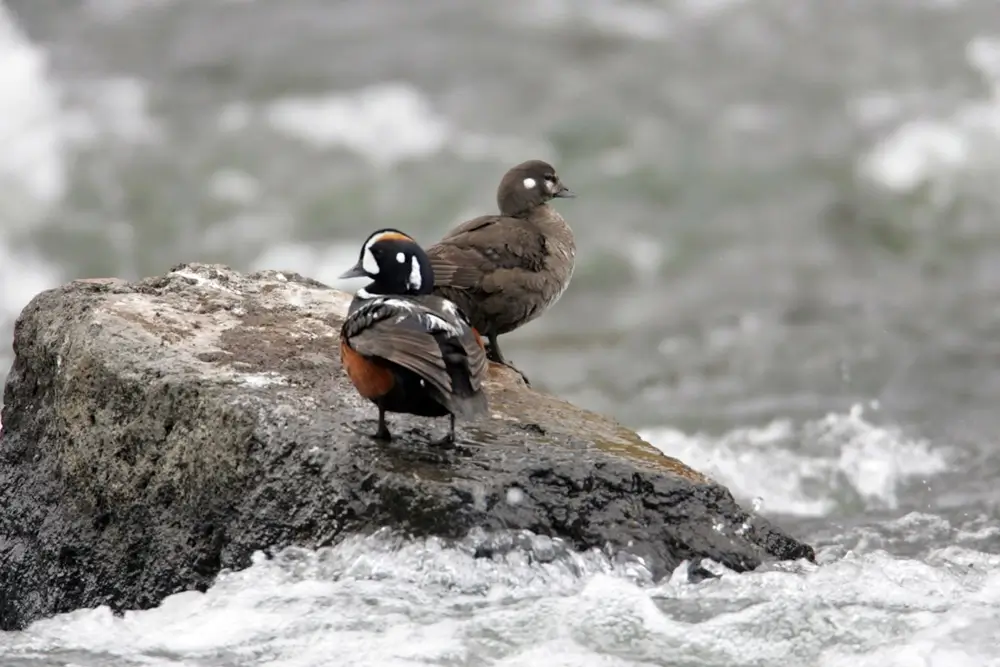
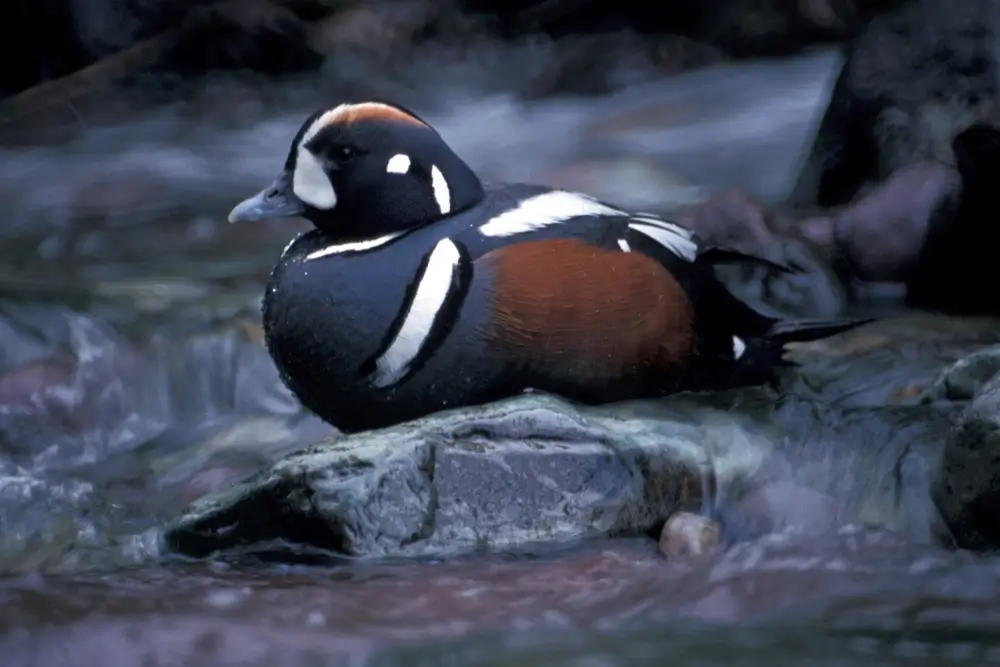
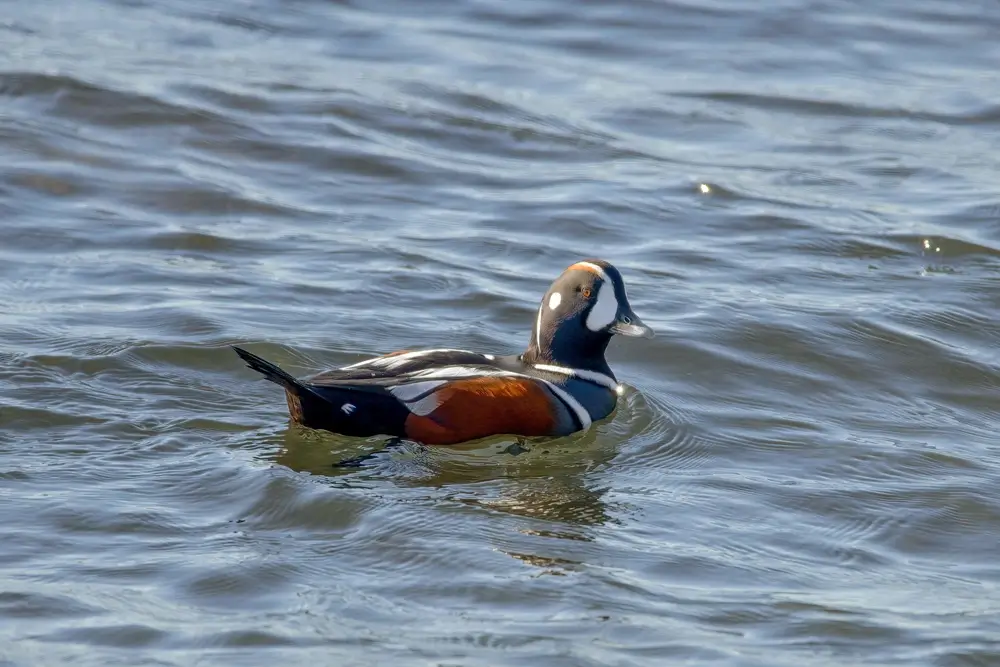
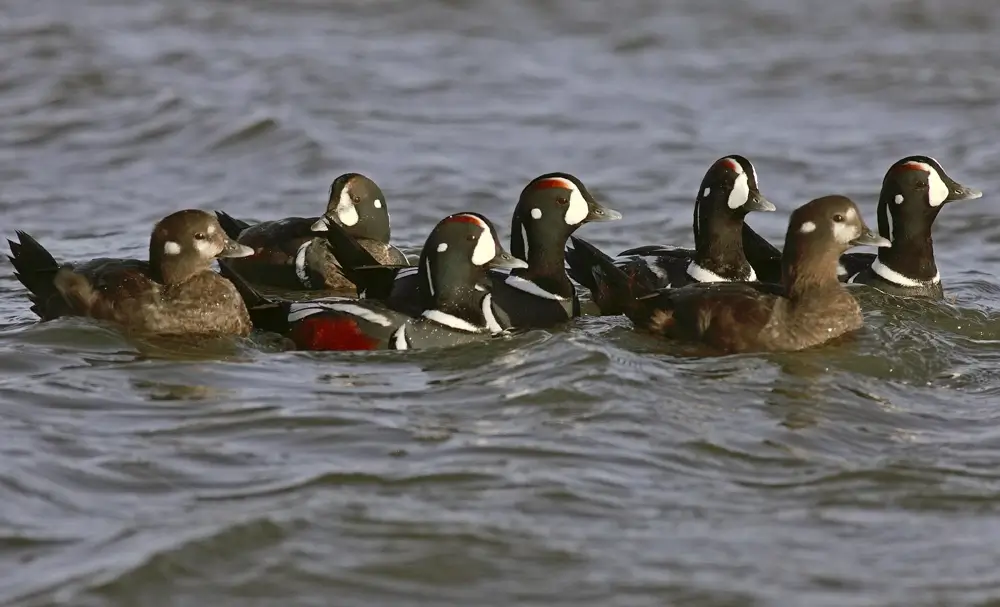
It has a small gray bill and round white spots on the sides of its face. The male has a slate-gray body with rusty-red sides and white streaks on his chest, neck, and wings. He has a white crescent-shaped mask on his face.
The female has a brownish-gray body and a pale cream belly with brown spots.
Habitat
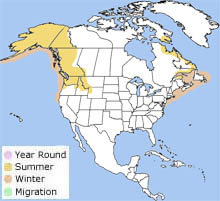
During the breeding season, the harlequin duck is found in fast-flowing mountain streams and rivers, usually in forested regions.
In the winter, it is found in rocky coastal waters.
Diet
The harlequin duck dives to the bottom of streams, rivers, and shallow coastal waters for its food. In the summer, it probes river and stream beds for the larvae of flying insects like black flies.
In winter, the harlequin duck eats snails, periwinkles, shrimp, small clams, crabs, mussels, and fish eggs. It dives for food and pries its prey out of rocky crevices.
The harlequin also uses a small hook at the end of its bill to pry limpets off of rocks. On warm days, the harlequin hauls out of the water and preens itself on rocks.
Life Cycle
The harlequin duck leaves its wintering grounds in late March and heads inland toward its summer breeding grounds.
The male and female court each other with head bobs and by shaking their heads and dipping their bills down. Male and female pairs may mate for more than one year.
The female usually chooses a nesting site near a fast-moving river or stream. The nest is made in a tree cavity, under a rocky ledge, under tree roots, or under a bush or log. The nest is lined with down, and the female lays 3-9 eggs.
The male leaves when the female begins incubating the eggs. The female incubates the eggs for 28 or 29 days. The mother leads the ducklings to water a day or two after they hatch. The chicks fledge at 40-50 days old.
The harlequin duck has a life span of 12-14 years in the wild. The oldest harlequin duck on record was 20 years, 9 months old.
Behavior
The harlequin ducks found in the coastal waters of the eastern United States are probably from a breeding population of about 1,800 harlequin ducks from southeastern Canada. These ducks winter as far south as Virginia, but as many as 1,000 winter in the Gulf of Maine, especially in Jericho and Penobscot Bay.
Did You Know?
The harlequin duck gets its name from its bright coloring, which looks like the costumes of the harlequins or clowns found in Italian theater.
You might know the word harlequin from the character Harley Quinn found in Batman comics.
Support for NatureWorks is provided by:
The Harlequin Duck in NH
The harlequin duck does not breed in New Hampshire, but it does winter off the coast of the state.