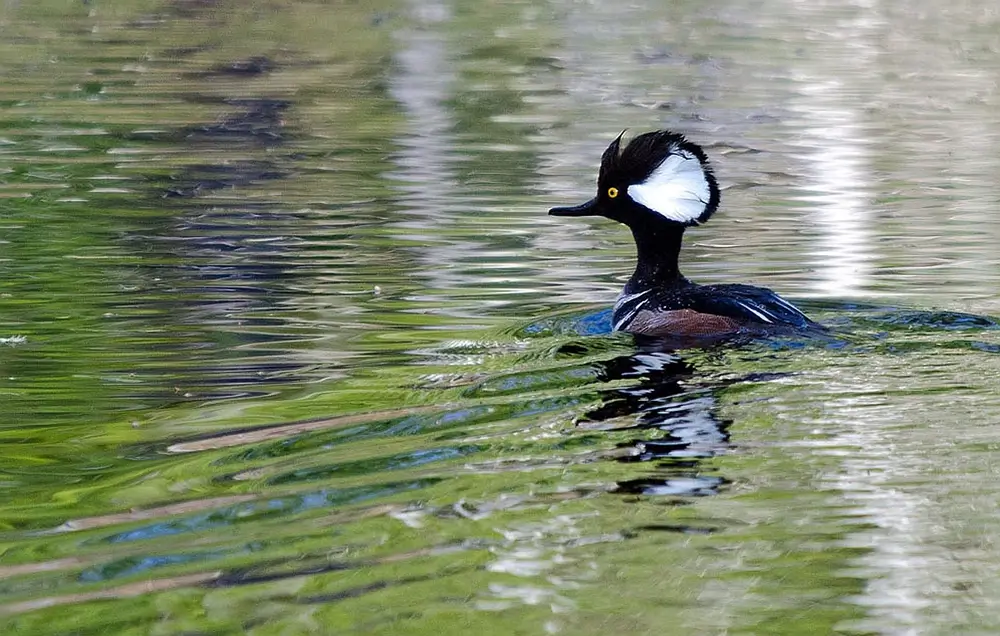
The hooded merganser is a small diving duck with a long, pointed bill. It is 15.8-19.3 in (40-49 cm) in length with a wingspan of 23.6-26.0 in (60-66 cm),
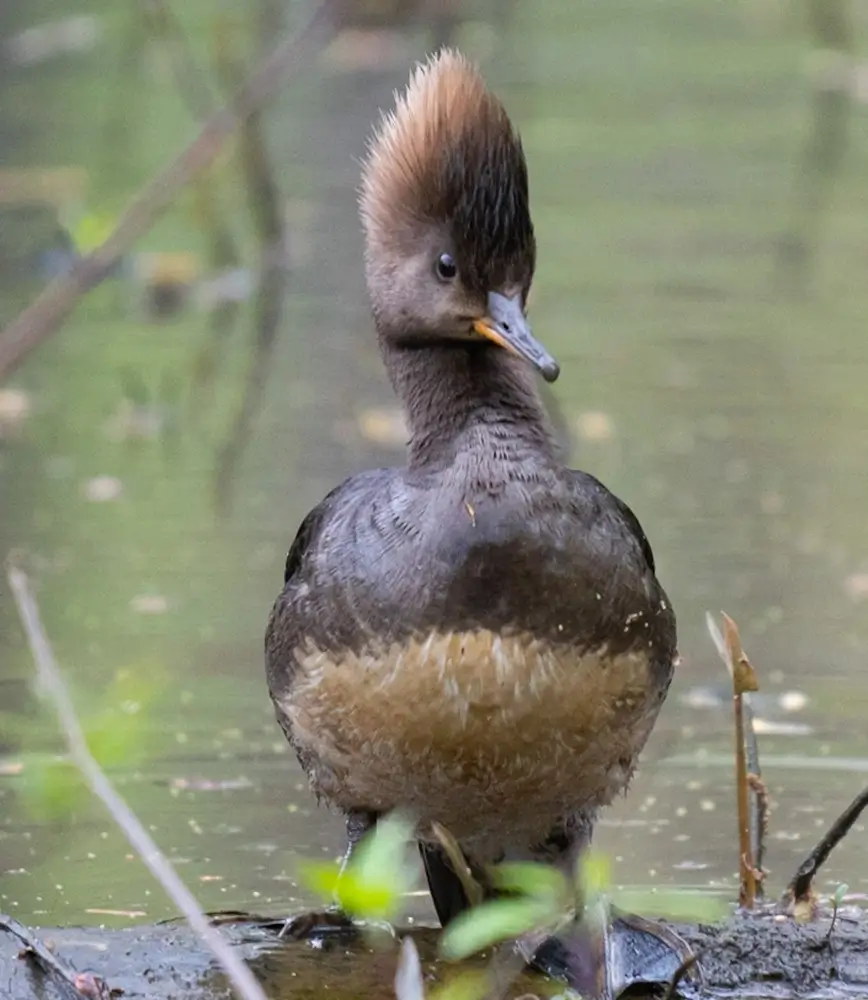
The female hooded merganser has brown eyes, a reddish crest, and grayish-brown feathers.
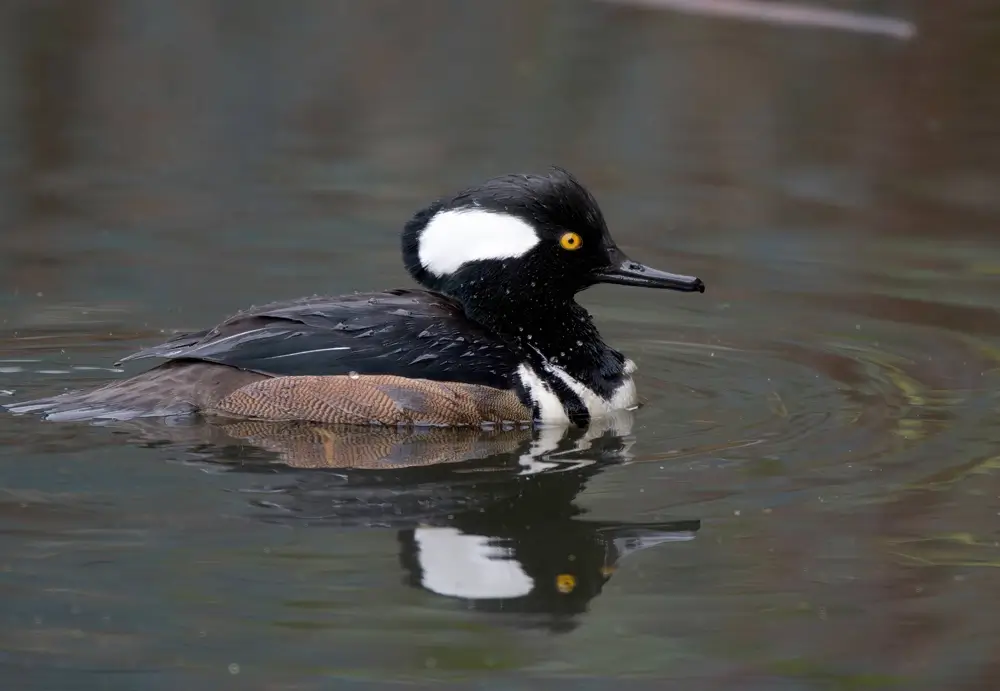
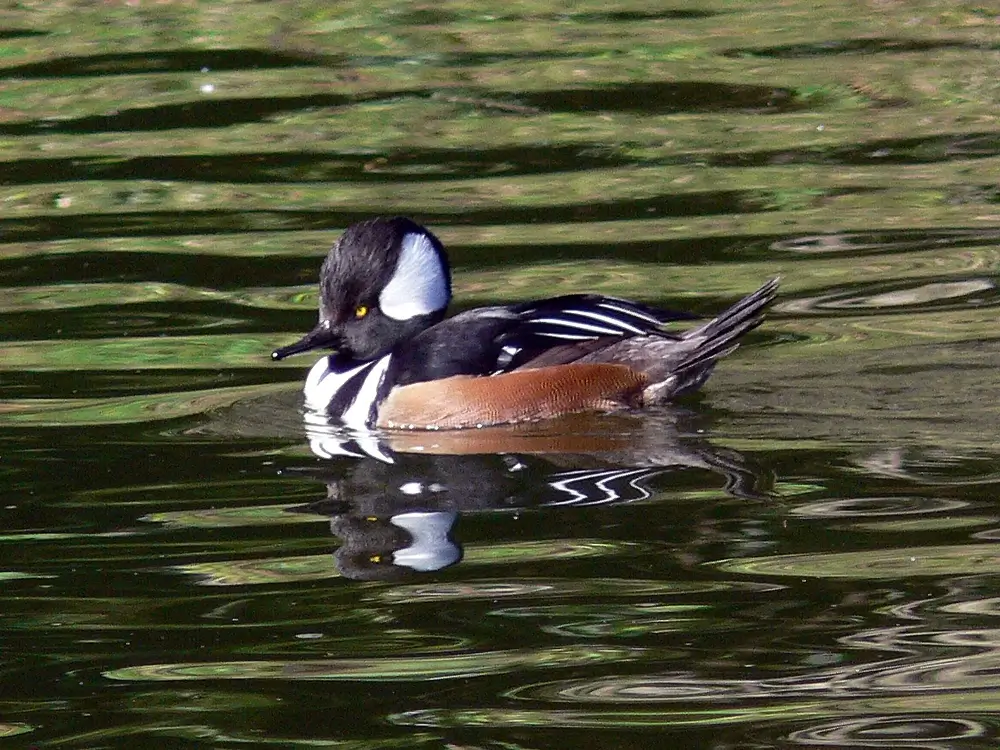
The adult male hooded merganser has a white fan-shaped crest on its head. He has bright yellow eyes, a black head, a white chest with two black stripes, a brownish-black back, rust-colored sides, and a grayish-brown rump and tail.
Habitat
The hooded merganser breeds on wooded ponds, lakes, and rivers and winters in these areas as well as on estuaries and inlets.
Diet
The hooded merganser feeds during the day. It dives and forages on lake, river, and pond bottoms for fish, crayfish, and other crustaceans. It also eats aquatic insects and some aquatic plants.
Life Cycle
Breeding season runs from March to May. Males court females in small flocks. The male raises his crest to attract a female, turns the back of his head towards her, and flaps his wings. The female points her bill to the sky and bobs her head up and down.
The female lays 6-12 eggs in a nest in a tree hole or in a log. The nest is lined with whatever is in the hole, including woodchips, leaves, and other debris, and then it is lined with down. The male leaves the female once incubation begins.
The eggs hatch in about a month. The day after the ducklings are born, the female leads them to water. They fledge in about 70 days.
The hooded merganser has a lifespan of 11-12 years in the wild.
Behavior
The hooded merganser usually gathers in small groups of no more than 10-12 individuals. When they are startled, they fly away. They are one of the fastest flying ducks.
Did You Know?
Support for NatureWorks is provided by:
The Hooded Merganser in NH
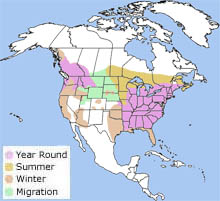
The hooded merganser is a year-round resident of New Hampshire.
The hooded merganser breeds from southern Alaska south to Oregon and Montana, and from Manitoba and Nova Scotia, Canada, south throughout much of the eastern United States.
It winters near coasts from British Columbia south to California and from New England south to Florida and Texas.