The hooded oriole is 7.1-7.9 inches (18-20 cm) in length with a wingspan of 9.1-11.0 inches (23-28 cm).
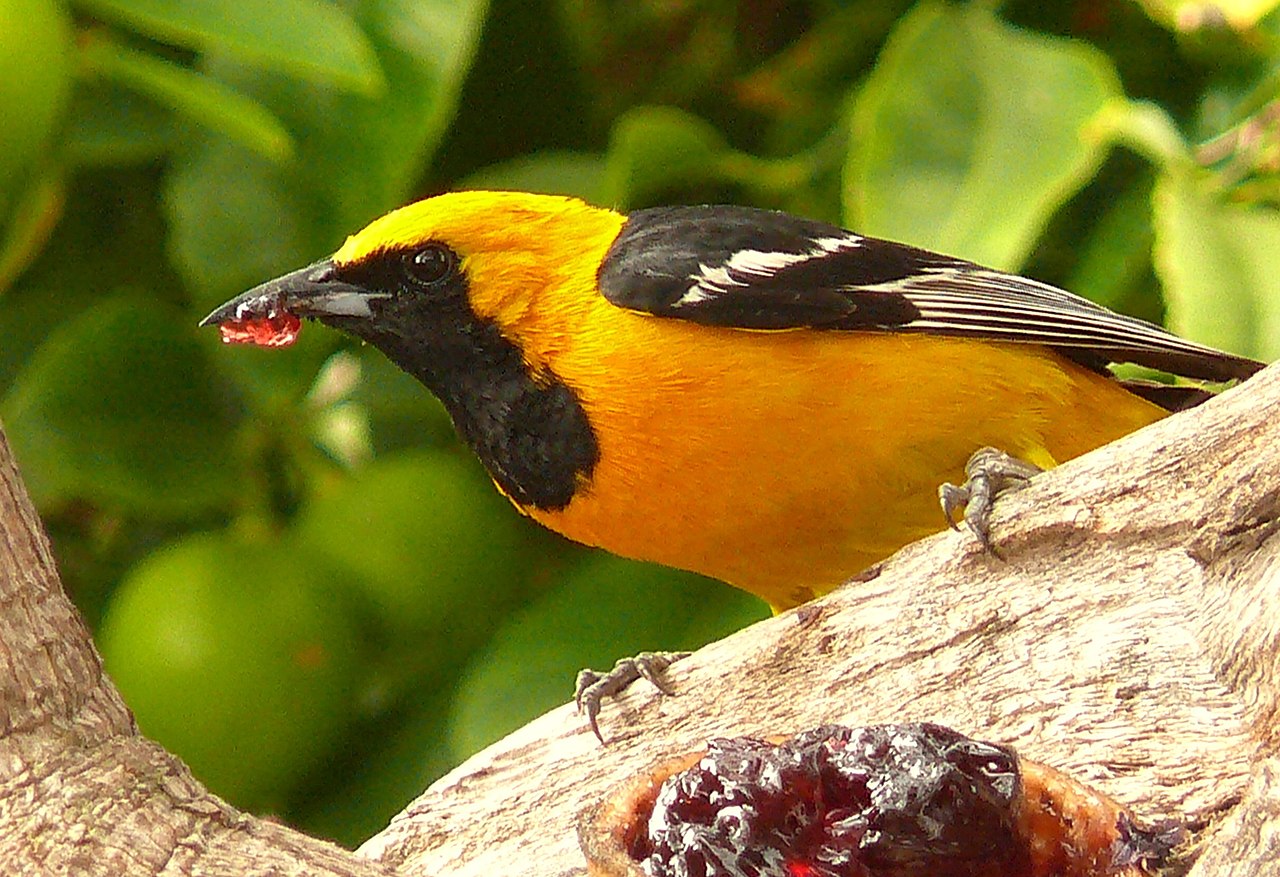
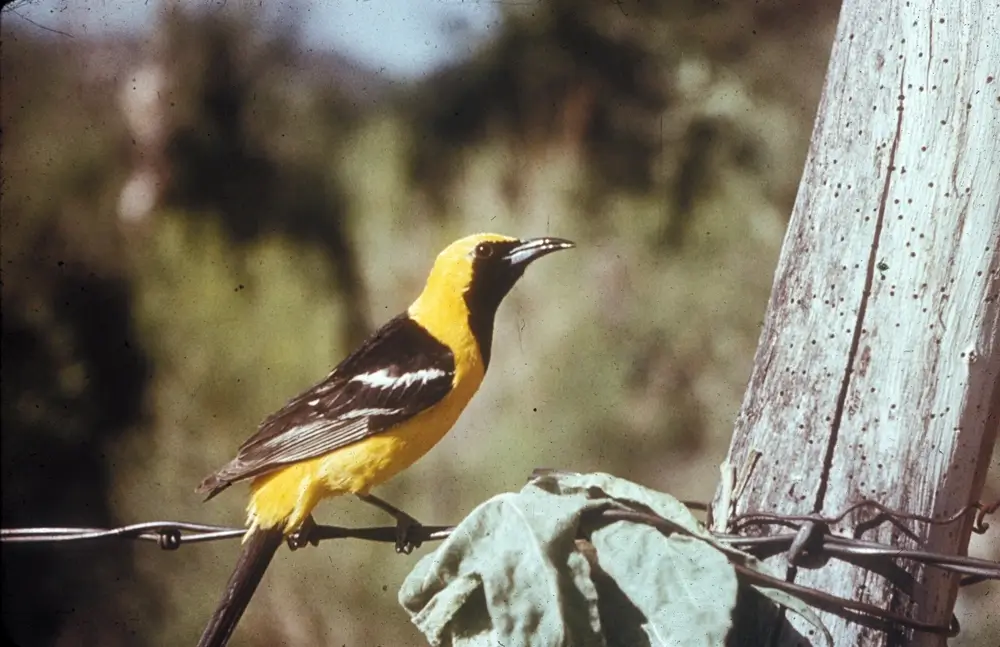
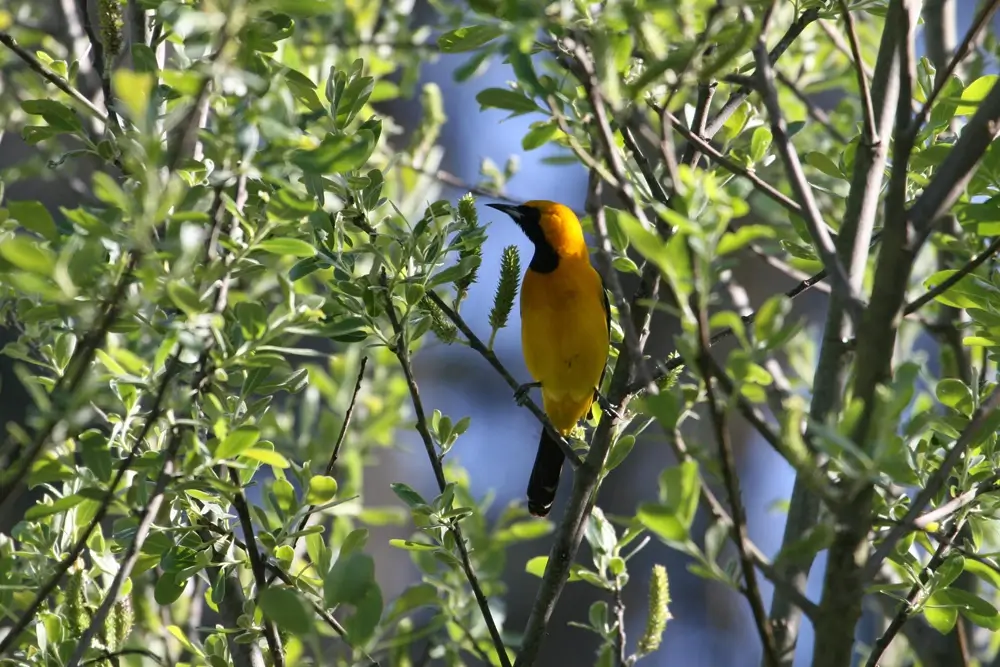
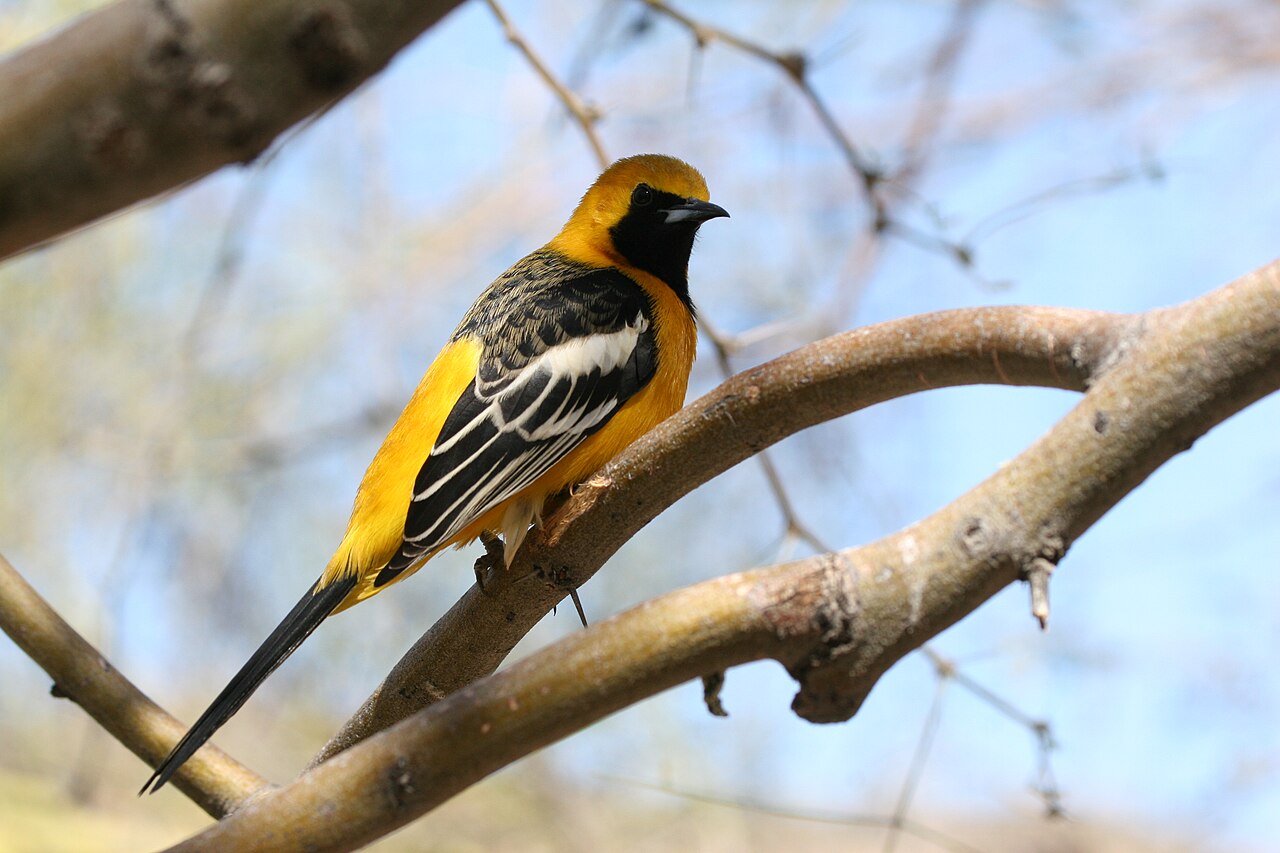
The male is yellow to orange with a black tail and black wings with two white bars on them. He has a black throat and face and a long, thin, curved black bill.
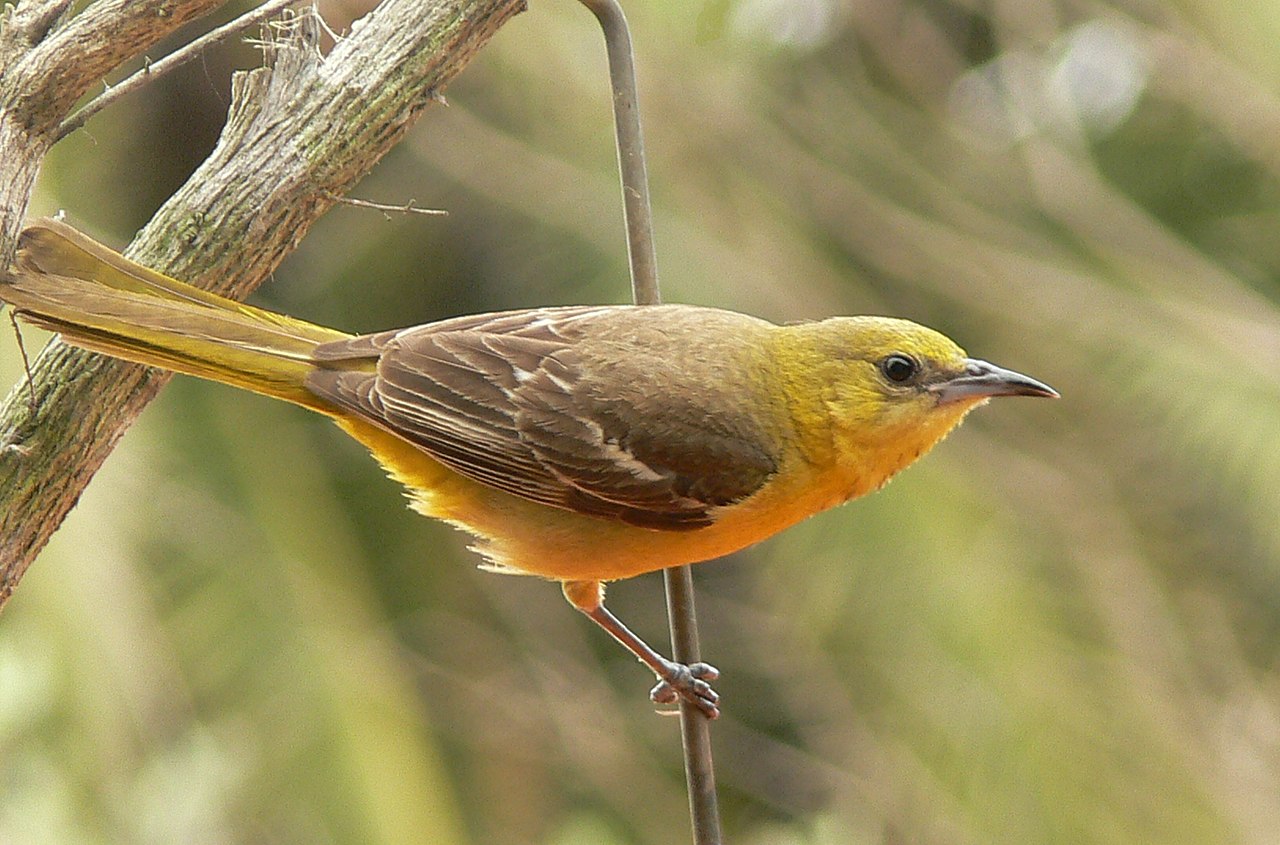
The female is greenish-gray above and yellow on her undersides. She also has two white bars on her wings.
Habitat
The hooded oriole is found in open woods and areas with palm trees, mesquite, or dry shrubs. It may also live in deciduous and riparian woodlands (woodlands near rivers) and is often found near ranches and towns.
Diet
Most of the hooded oriole’s diet is made up of insects, but it also eats fruit and nectar. It gets nectar by slicing into the bases of tubular flowers with its sharp bill.
Life Cycle
Breeding season begins in April to early May. The male flies around a female and tilts his head up, and sings.
The female hooded oriole lays 3-5 eggs in a woven basket nest made of plant fibers. The nest has an entrance at the top, and it hangs from palm fronds or the branches of a tree. The female incubates the eggs.
The chicks hatch in 12-14 days and fledge when they are 14 days old. Both parents care for the young. The female may lay 2-3 clutches each summer.
The hooded oriole has a lifespan of 3-5 years in the wild.
Behavior
The hooded oriole is a very social bird and often joins flocks of other birds, like Bullock’s oriole.