King Eider

Somateria spectabilis

Kingdom
Phylum
Class
Order
Family
Genus

Characteristics

The king eider is a large diving sea duck. It is 18-25 inches (46-64 cm) in length with a wingspan of around 3 feet (0.91 m). It weighs around 2.6-4.6 pounds (1.2-2.1 kg).

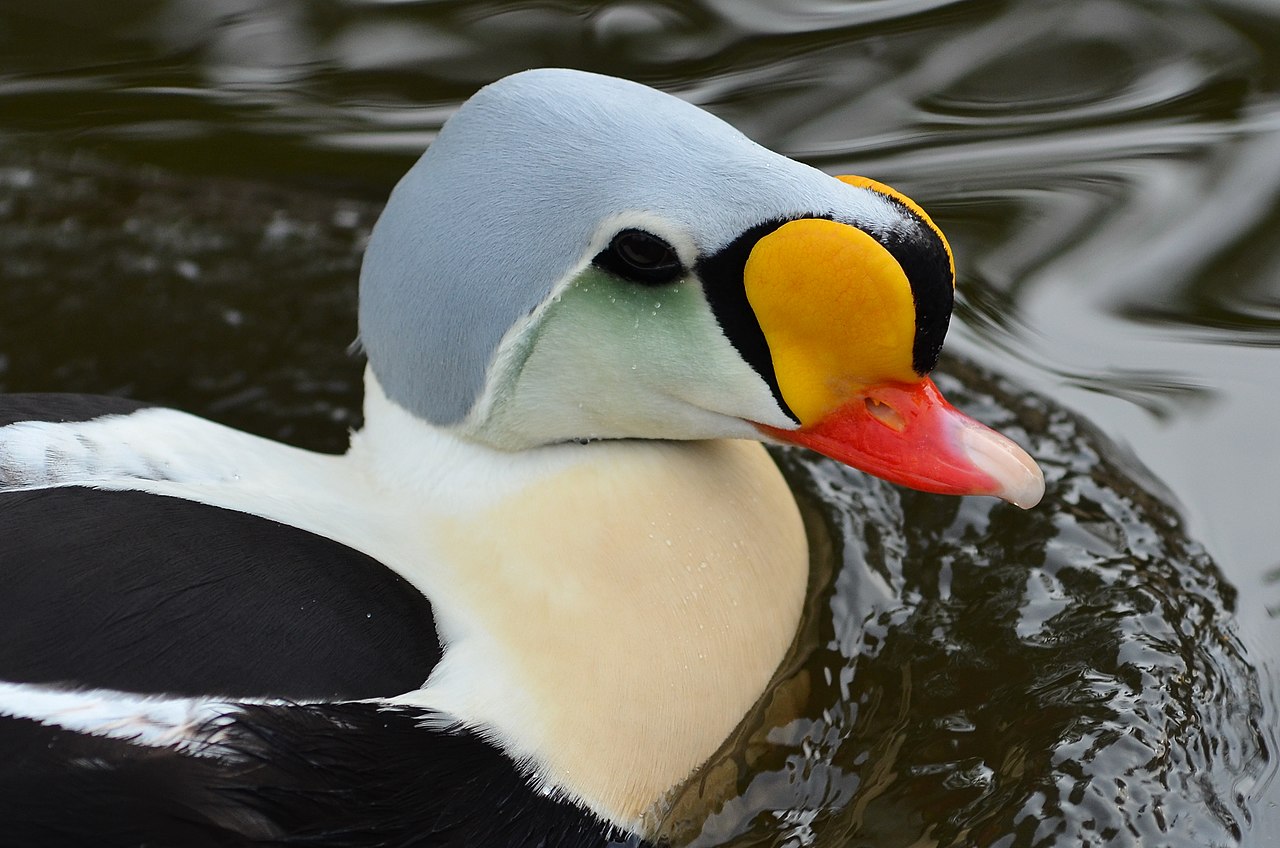
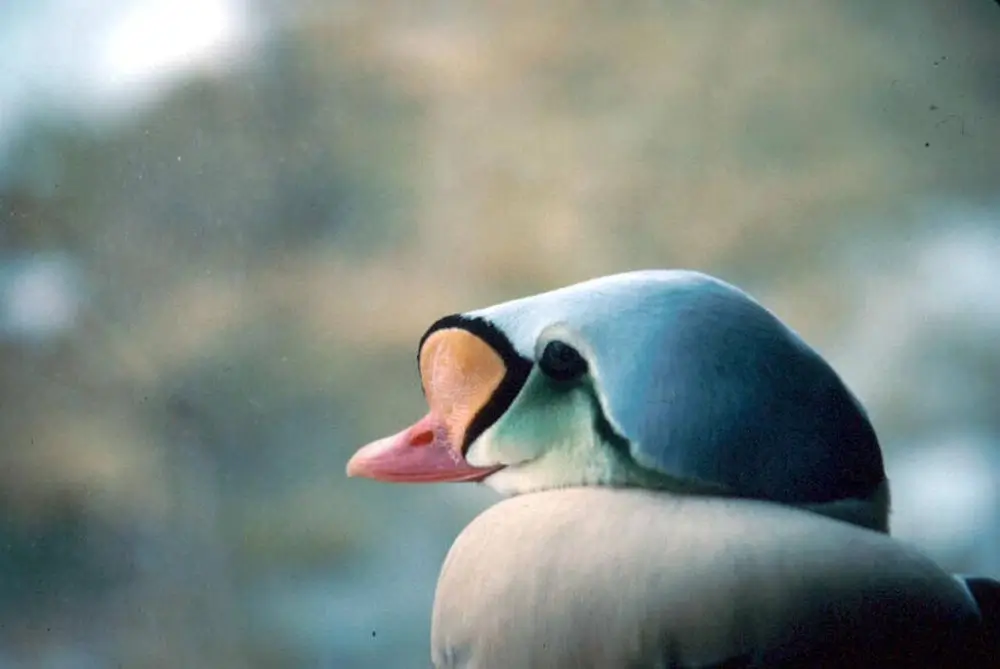
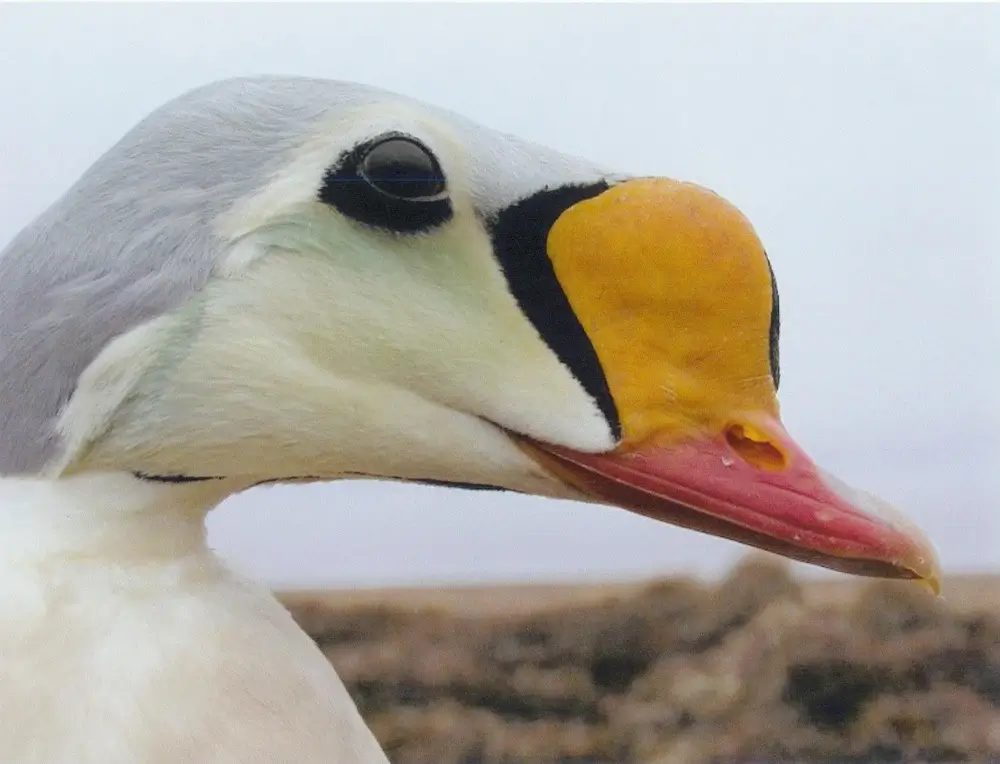
The male has a black back, a light blue head, pale green cheeks, and a white chest and belly. He has a reddish-orange bill with an orange plate outlined in black on his forehead.

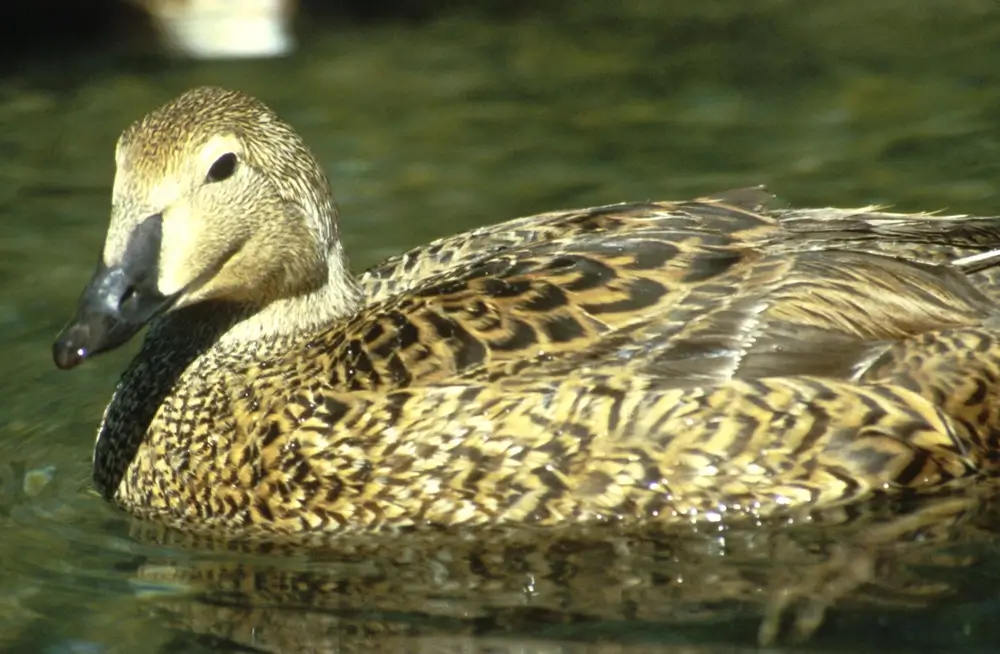
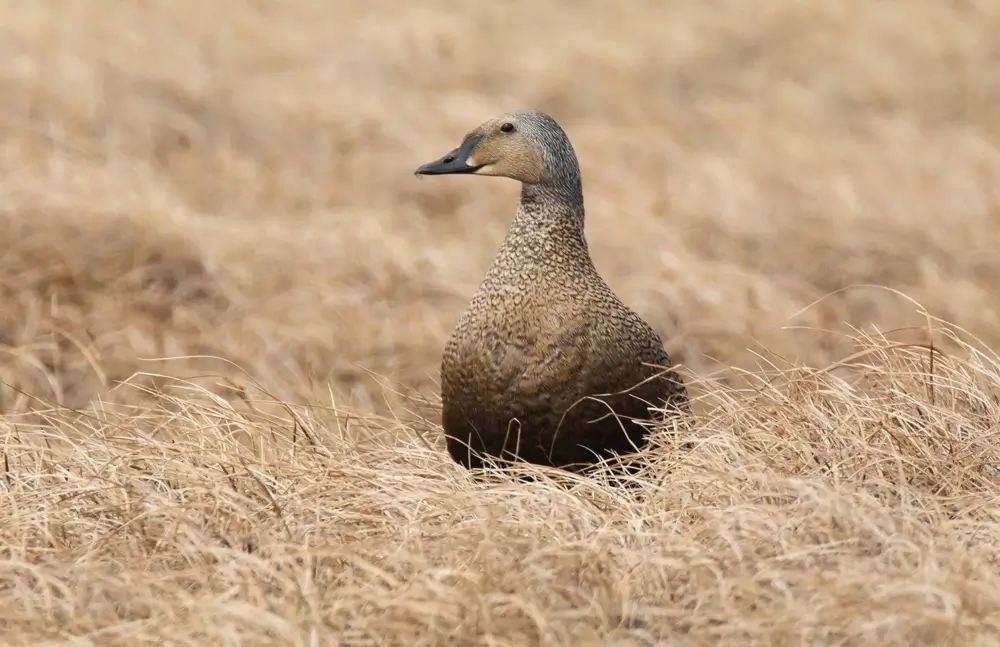
The female is cinnamon-brown with black bars. She has a black bill and no shield on her forehead. The female king eider looks very similar to the female common eider, but she doesn’t have the long, sloping forehead of the common eider.

Immature males look like females, but they have a white patch on their chest and an orange bill.

Habitat

The king eider is found in the tundra during breeding season. In the winter, it is found in shallow coastal areas.

Diet

The king eider is a diving duck and can dive over 100 feet (30.5 m) in search of prey. In the summer, the king eider eats aquatic insect larvae, crustaceans, and plant matter. In the winter, it eats mollusks, crustaceans, and echinoderms.

Life Cycle

The female king eider lays 2-7 eggs in a down and grass-lined depression on the tundra. The female incubates the eggs for 22 to 24 days. Once the female begins to incubate the eggs, the male leaves.

The female rarely leaves the nest during incubation. The female’s coloring is perfect camouflage. If she is threatened, she stretches out over the nest to try to blend in with her surroundings.

Behavior

The king eider migrates in huge flocks both during the day and at night. They can fly at speeds of up to 40 mph (64.4 kph).

Did You Know?

The down of the king eider is very soft and thick and is good insulation from cold ocean waters, but it is not collected and used in pillows and quilts like the down of the common eider because the king eider nests in remote locations that are hard to get to.


Support for NatureWorks Redesign is provided by: 

The King Eider in NH

The king eider does not breed in New Hampshire, but it winters in coastal waters in the state.

World Status: Least Concern

Listen Here

Stuart Fisher, xeno-canto.org
king eider

Range

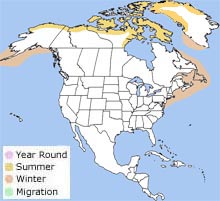
The king eider’s range is circumpolar, and it breeds all along the Arctic Circle. In North America, it breeds along the Arctic coast of Canada and Alaska.

On the East Coast, it winters from Labrador south along the Atlantic Coast.

On the west coast, it winters along the coast of Alaska.

The king eider is also found in Russia and Scandinavia.