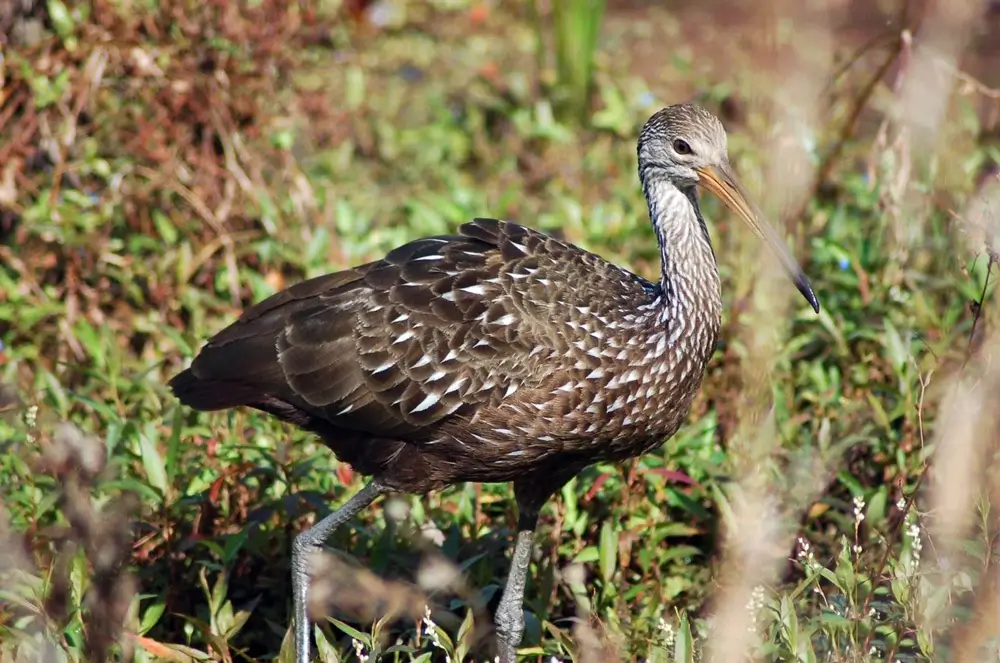
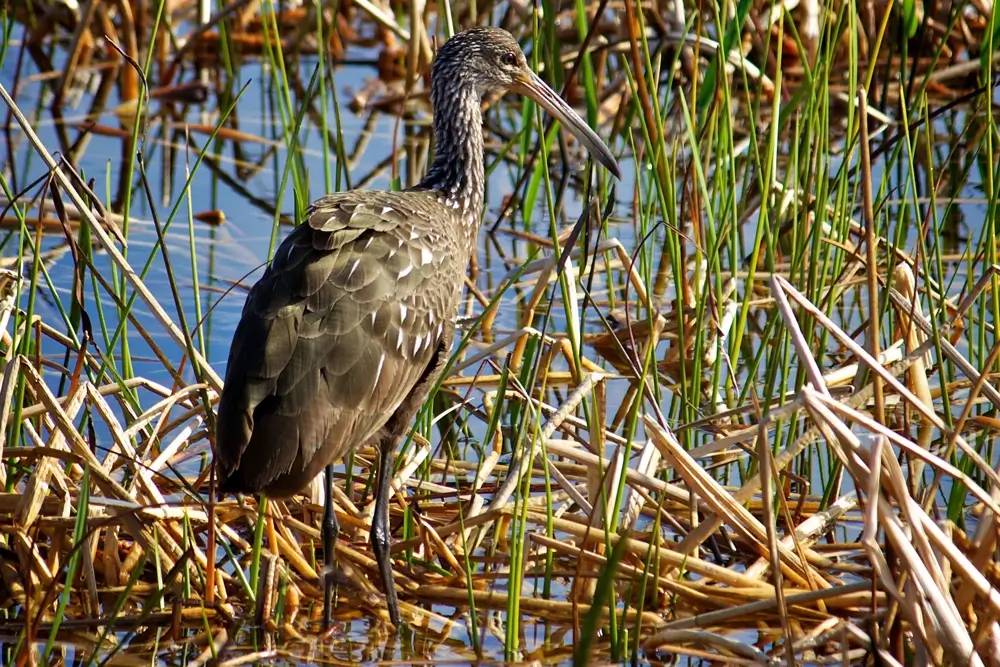
The limpkin is 25.0-28.7 inches (63.5-72.9 cm) in length with a wingspan of 39.8-42.1 inches (101-107 cm).
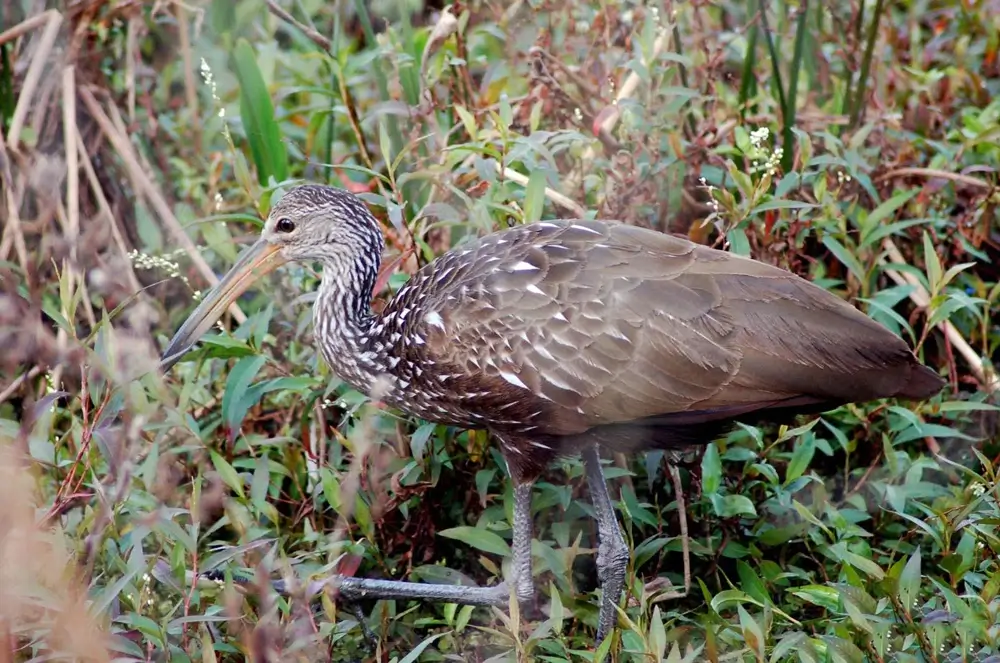
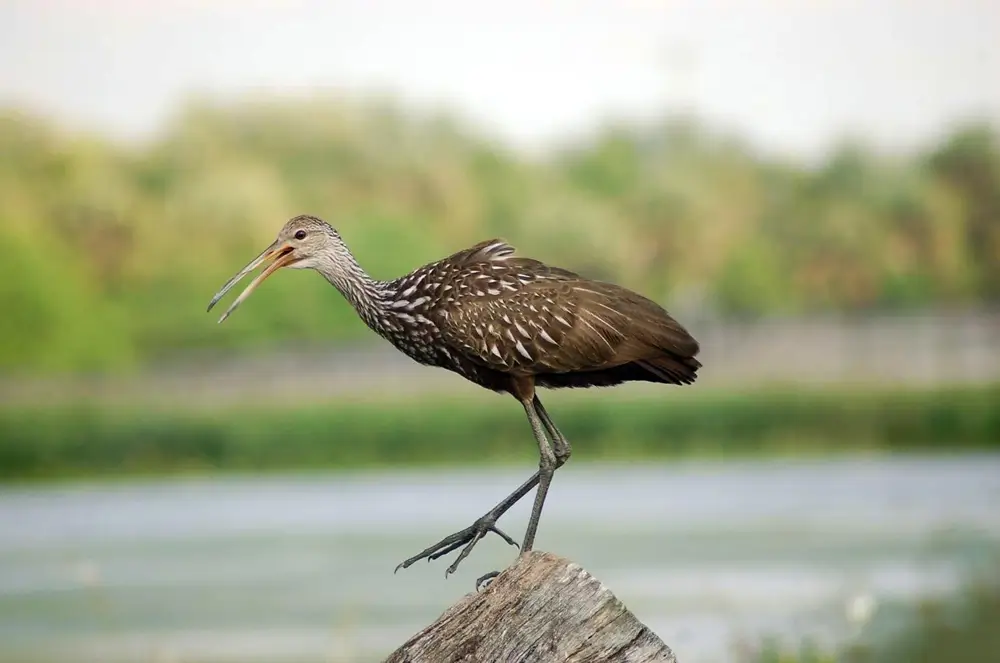
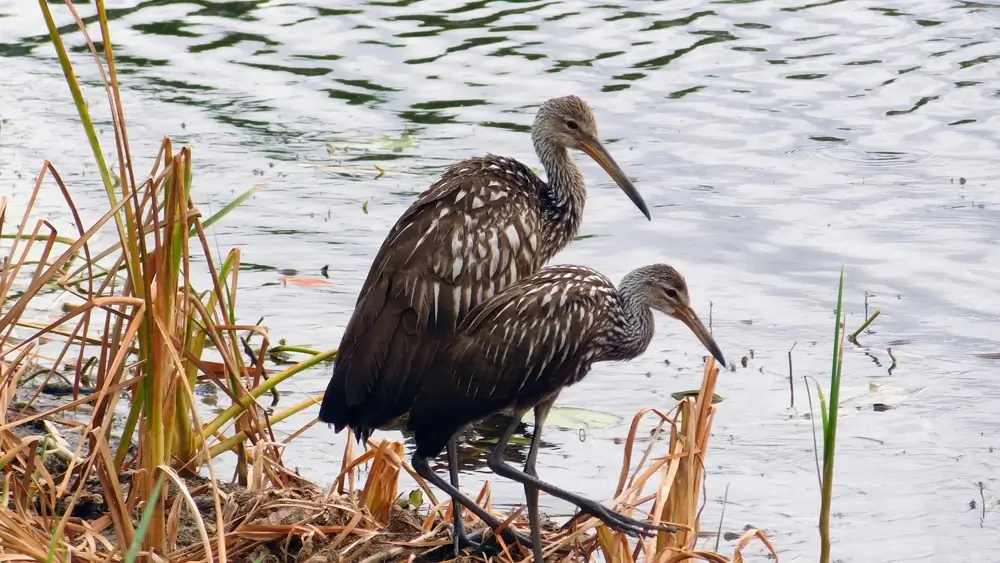
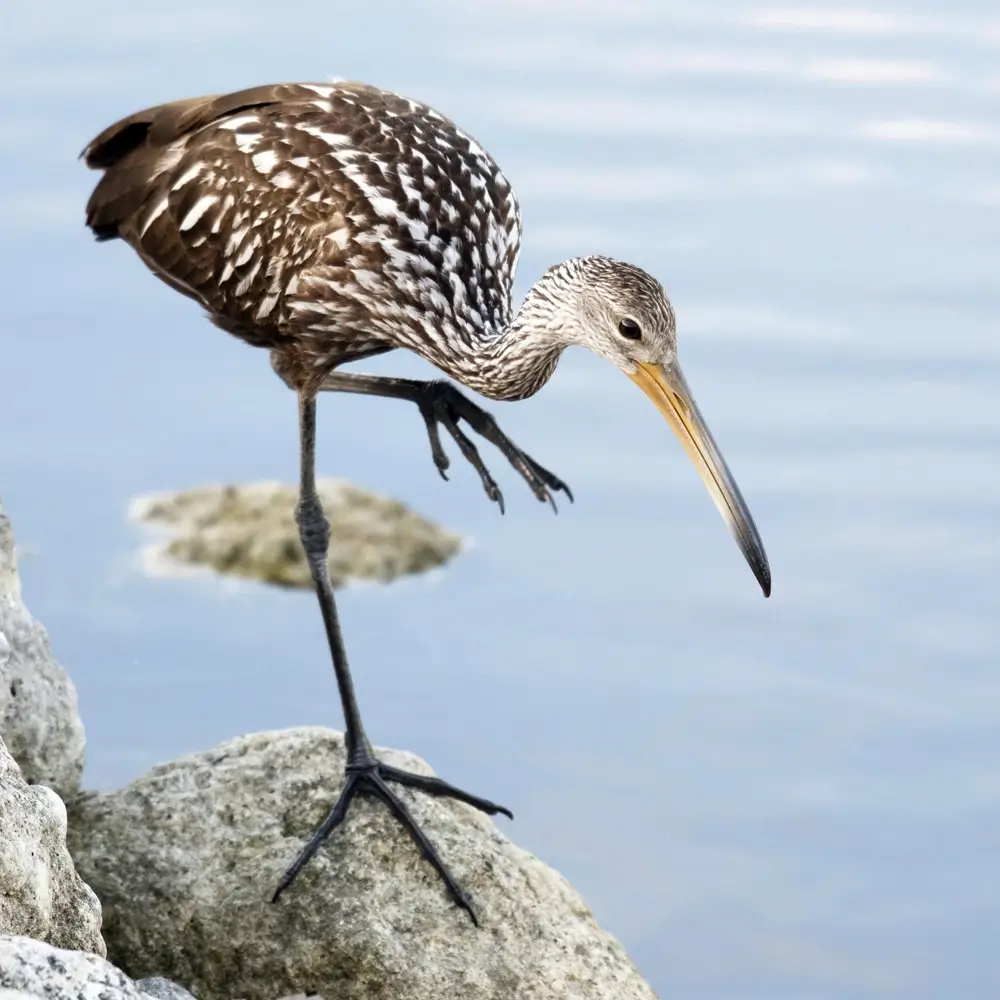
It has long legs and a long neck. It has brown and gray feathers with white spots and streaks. Its long, pointed bill is slightly curved and is yellow with a black tip.
The limpkin’s bill is perfectly adapted to helping the limpkin get to its favorite prey, the apple snail. When the limpkin’s bill is closed, there is a slight gap right before the tip that helps the limpkin use its bill like tweezers, making it easier for the limpkin to remove snails from their shells.
In some limpkins, the tip of the bill is also curved to the right just a bit to make it even easier for the limpkin to slide its bill into the shell of the apple snail.
The limpkin hunts at night. A large part of its diet is made up of apple snails, but it also eats frogs, tadpoles, and insects.
Life Cycle
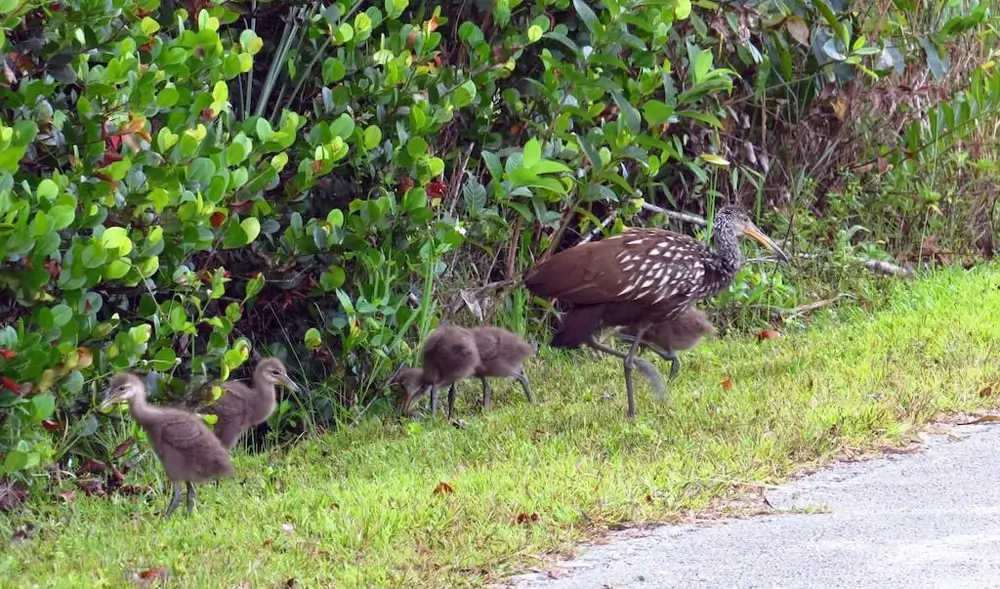
The female limpkin lays 5-8 eggs in a nest of marsh vegetation just above the water. The nest is made of rushes and sticks and lined with moss or grass.
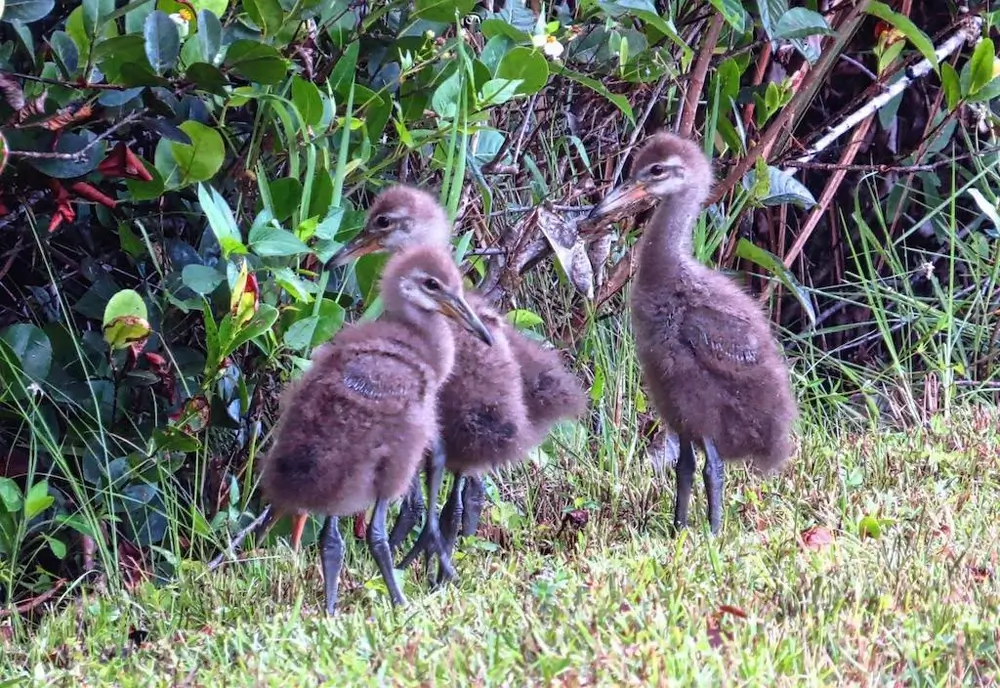
The chicks are precocial and leave the nest and forage for food on the day they are born.
The limpkin has a lifespan of 7-10 years.
Behavior
The limpkin is a good tree climber. It also uses its long toes to balance itself on floating vegetation. Males can be very territorial and will sometimes stab at rivals with their pointed bill or kick at them with their legs.
Did You Know?
The limpkin is also known as the crying bird because of the sound it makes. In fact, the screeching cry of the hippogriff in the movie Harry Potter and the Prisoner of Azkaban is the cry of the limpkin.