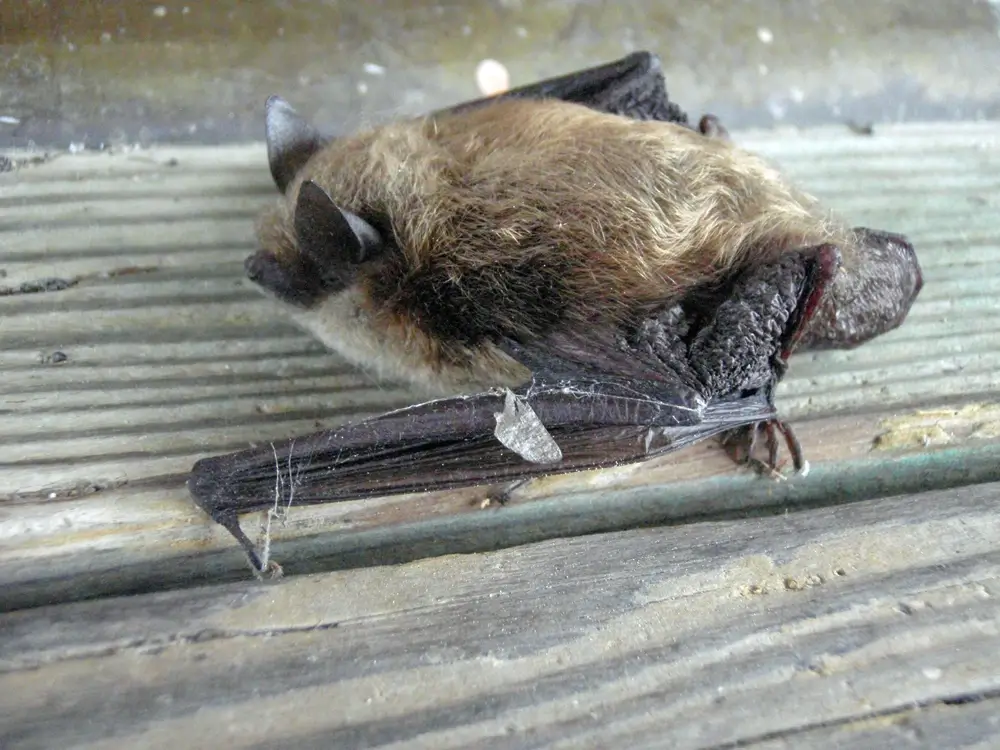
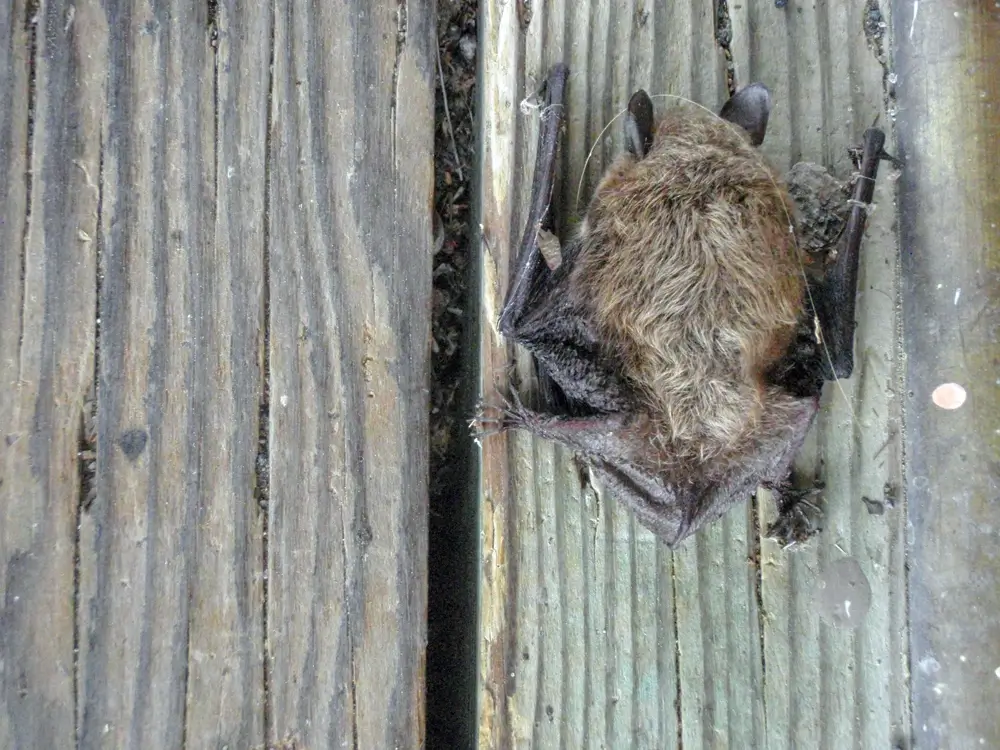
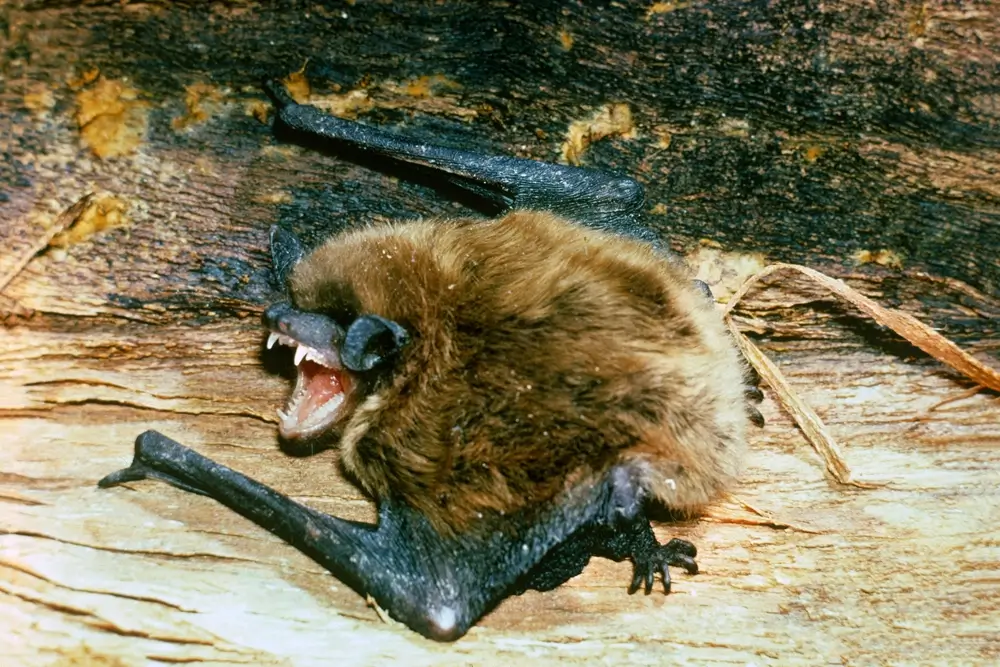
The little brown bat has glossy brown fur. It has hair on its toes and it has pointed ears. It is between three and five inches in length and weighs between 1/16 and 1/2 ounces. The little brown bat is also known as the little brown myotis.
The little brown bat eats insects like gnats, flies, moths, wasps, and beetles. The little brown bat hunts at dusk and at night. It uses echolocationto locate prey. It sends out a high-frequency sound. When the sound hits an object, it bounces back to the bat. The bat then can identify what the sound hit and where it is. When it finds its prey, it grabs it with its wings and tucks it into a pouch formed when it brings its wing and tail membranes together. It then grabs the insect with its sharp teeth and eats it.
Mating season is in the fall, but fertilization doesn’t happen until spring. In the spring, little brown bats form huge nursery colonies. A nursery colony may have thousands of bats in it. The female little brown bat gives birth to only one baby. During birth, the female hangs right-side up. The baby bat attaches itself to a teat. It nurses for about two weeks. It flies when it is three weeks old.
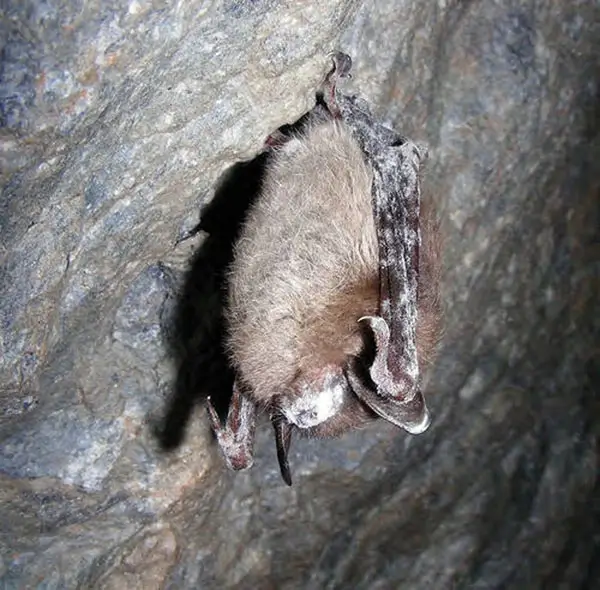
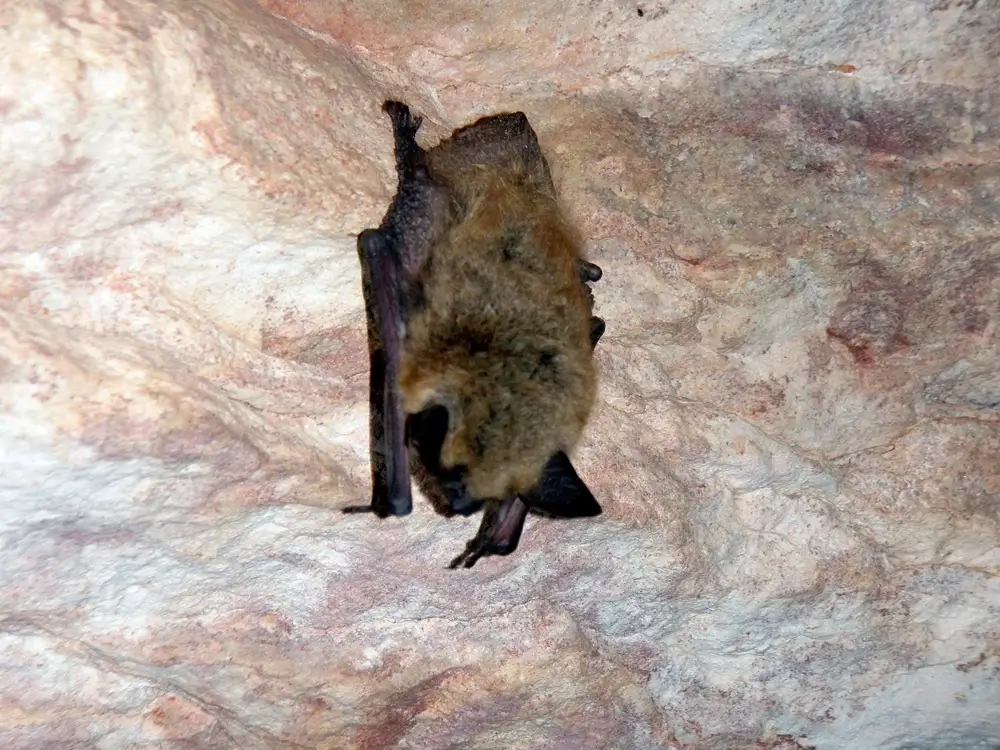
The little brown bat migrates to caves or mines in the winter to hibernate. It wakes up every couple of weeks during hibernation. It doesn’t feed when it wakes up, but it may fly around outside the cave on warm nights.
The little brown bat population has been severly impacted by a deadly fungal disease known as White-nose Syndrome caused by the fungus Pseudogymnoascus destructans. The fungus is found in cold, damp places like caves and mines where little brown bats like to hibernate. The fungas grows on bats and damages their skkin, waking them up during hibernation and making them waste the energy they need to survive in the winter. White-nose syndrome has killed millions of little brown bats since 2010.

Support for NatureWorks Redesign is provided by:
The little brown bat was once found in great numbers found New Hampshire, but since 2010 its population has been severely impacted by White-nose Syndrome, which affects hibernating bats, and it is now an endangered species in the state.
The little brown bat is found in most of the United States and Canada, except for the south-central and southeastern United States and northern Alaska and Canada.
NHPBS inspires one million Granite Staters each month with engaging and trusted local and national programs on-air, online, in classrooms and in communities.