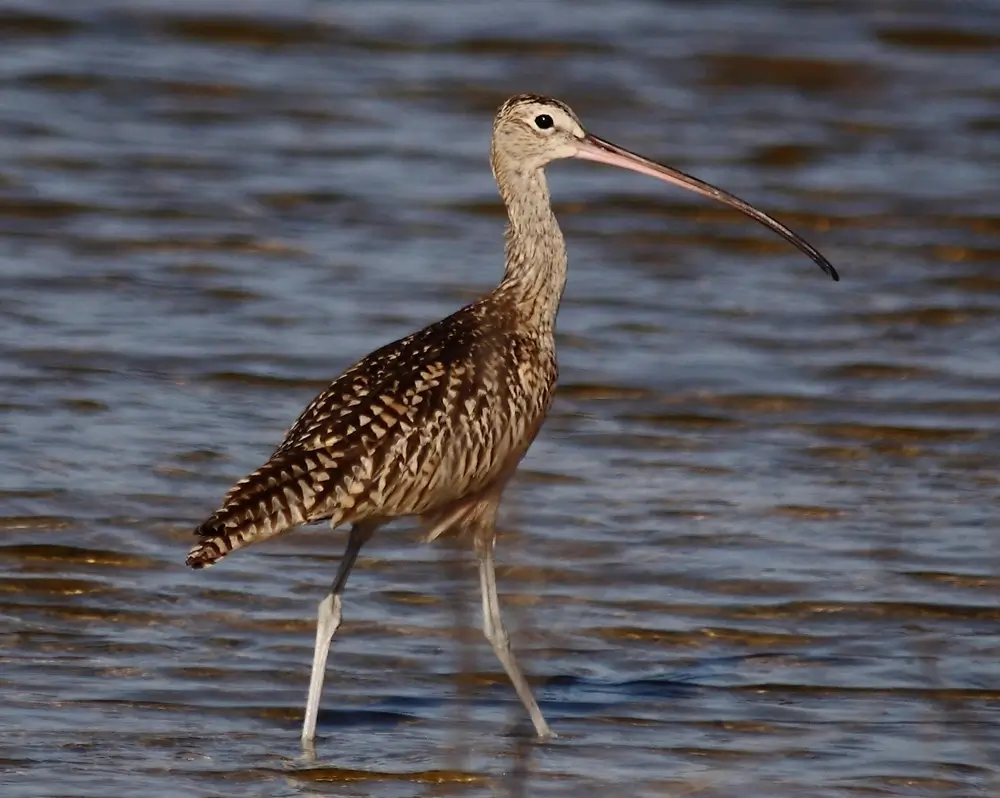
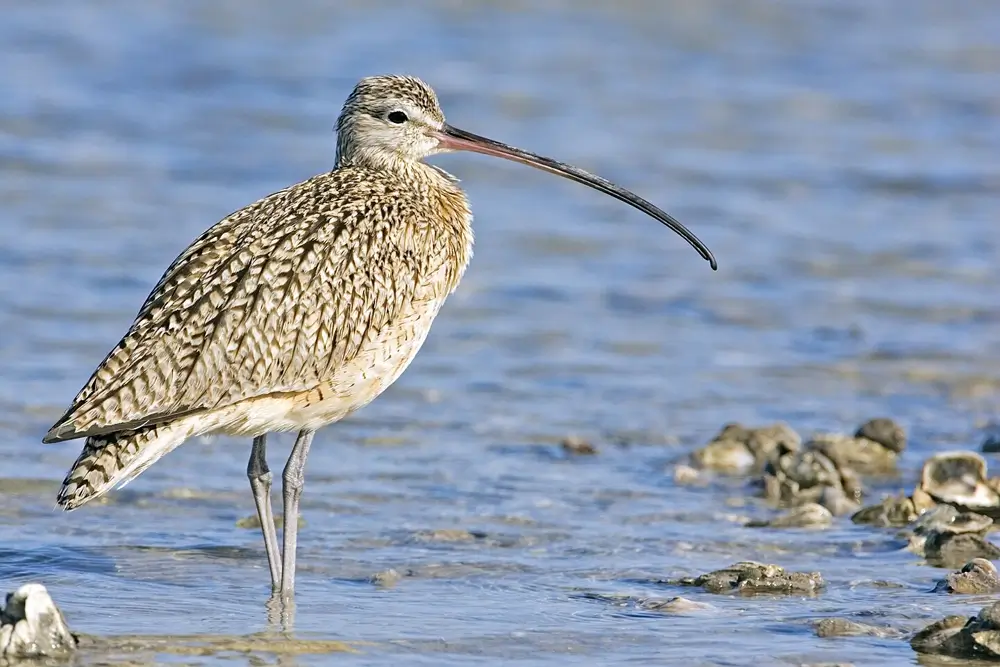
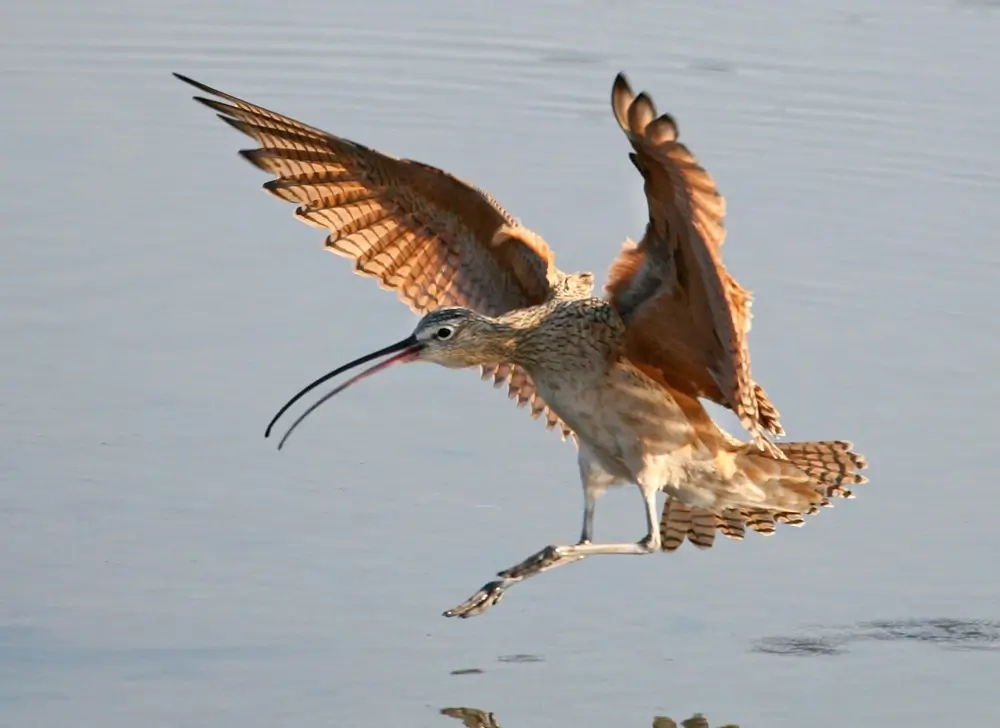
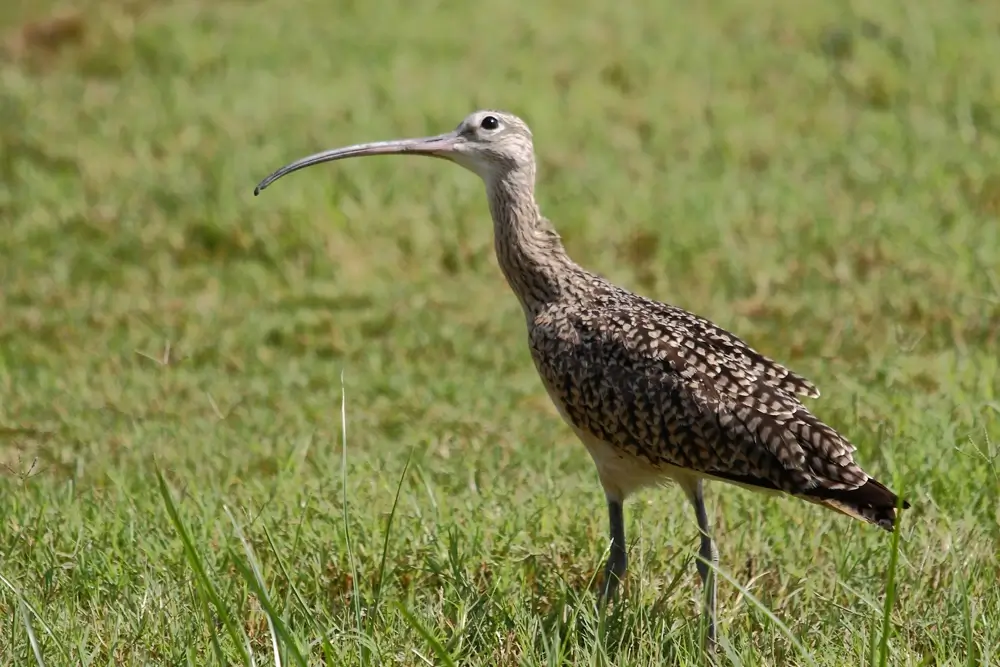
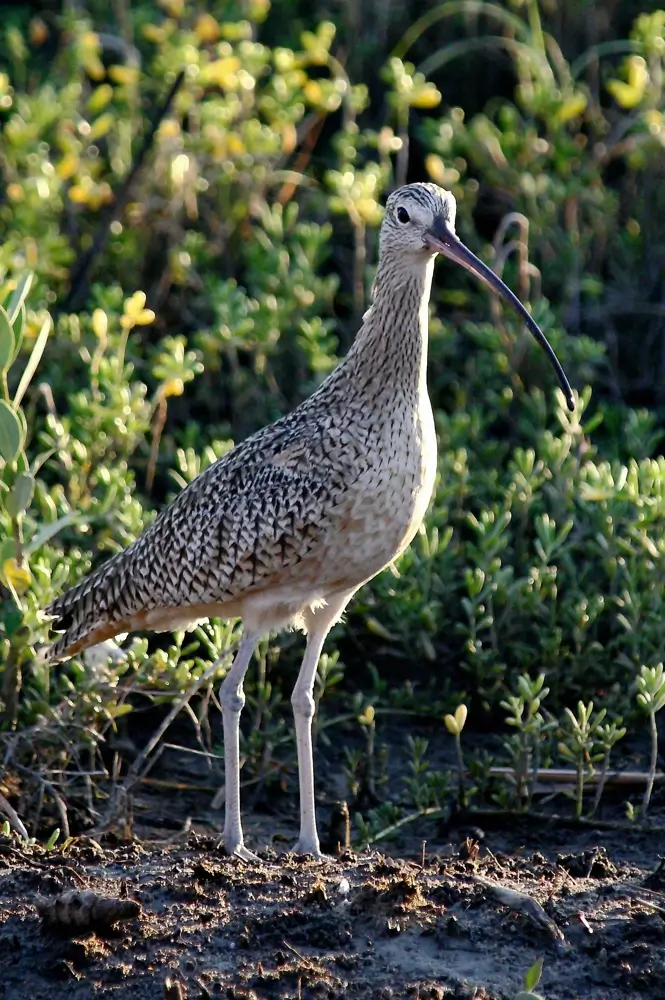
The long-billed curlew is the largest shorebird in North America. It is 20-26 inches (50–65 cm) in length with a wingspan of 2-3 feet (0.61-0.91 m).
It has speckled brown wings, a lighter brown head and chest, and a very long, curved bill. Both the male and female long-billed curlew look alike.
Habitat
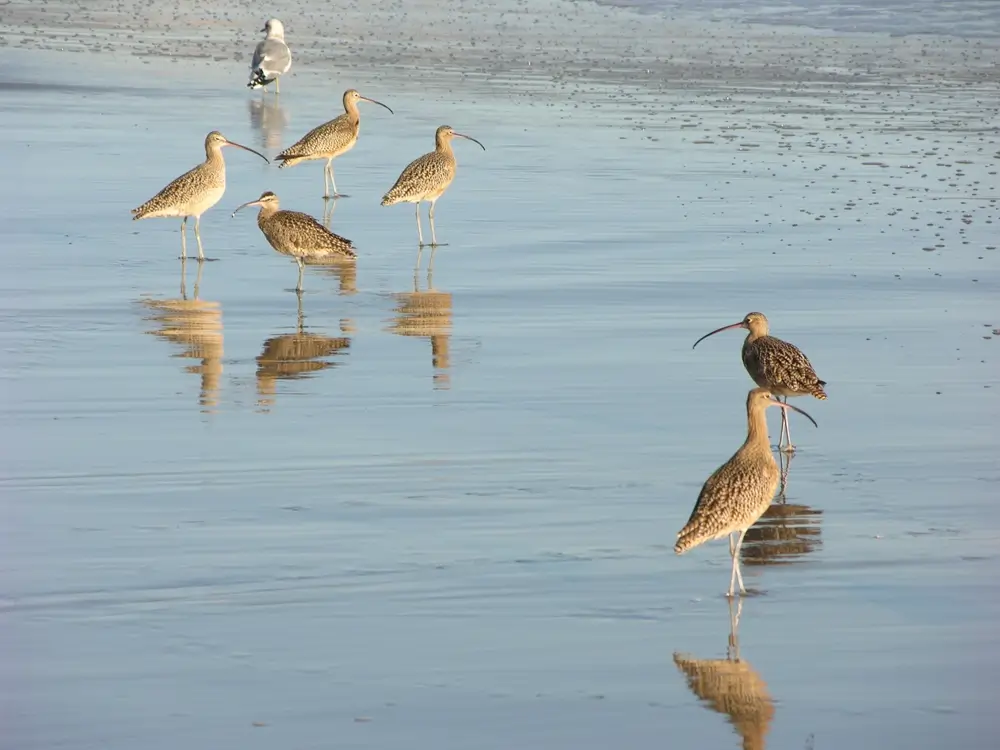
The long-billed curlew breeds on plains, grasslands, and prairies. It spends the winter on lake and river shores, marshes, mudflats, and sandy beaches.
Diet
When it is in grasslands, the long-billed curlew eats grasshoppers, beetles, and crickets. It may also eat small amphibians.
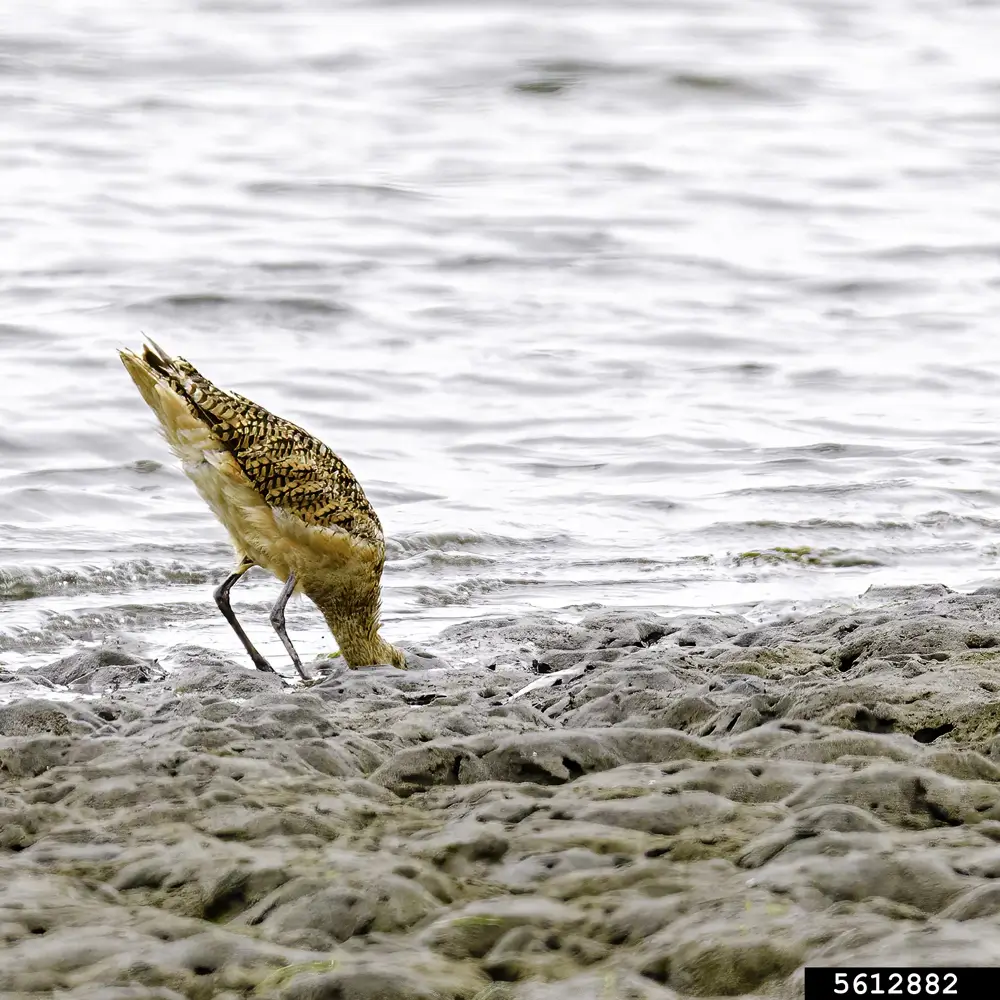
When it is in its winter habitat, it eats small crustaceans, mollusks, berries, and seeds.
Life Cycle
The female long-billed curlew lays four eggs in a grass-lined nest in a hollow on the ground that is near rocks, bushes, or shrubs. The eggs take about a month to hatch, and both parents incubate them. The deceptive coloration of the long-billed curlew helps it to blend in with its surroundings and avoid predators.
When predatory birds are in the area, the long-billed curlew crouches down low on its nest. Adult curlews actively defend their eggs and young by pretending to be injured and leading the predator away. They also use vocalizations to drive away a predator and sometimes dive at predators.
The chicks are precocial (can move around and feed themselves shortly after birth). Shortly after birth, their parents lead them to the feeding ground where they hunt for invertebrates like grasshoppers.
Both parents care for the chicks, but the female leaves after two to three weeks, leaving the male to care for the chicks until they fledge at 32-45 days old.
The long-billed curlew has a lifespan of 8-10 years.
Behavior
The long-billed curlew flies in formation and feeds in flocks.
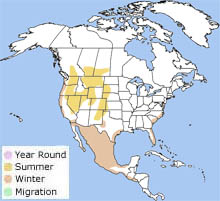
The long-billed curlew breeds from southern Canada to northern California, Utah, northern New Mexico, and Texas.
The long-billed curlew winters in Mexico and Central America. It occasionally winters in the United States in California, Texas, Louisiana, and from South Carolina to Florida.
The long-billed curlew population was once much larger than it is today. It was found in large numbers on the Great Plains and in eastern prairies.
Its breeding range has shrunk and is still shrinking due to agriculture and livestock grazing.