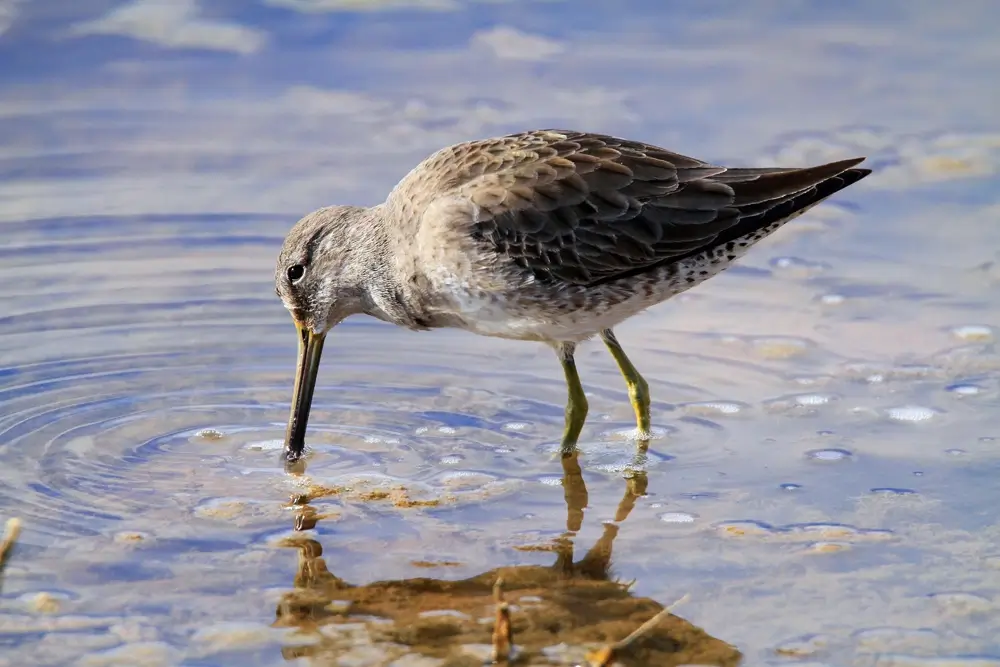
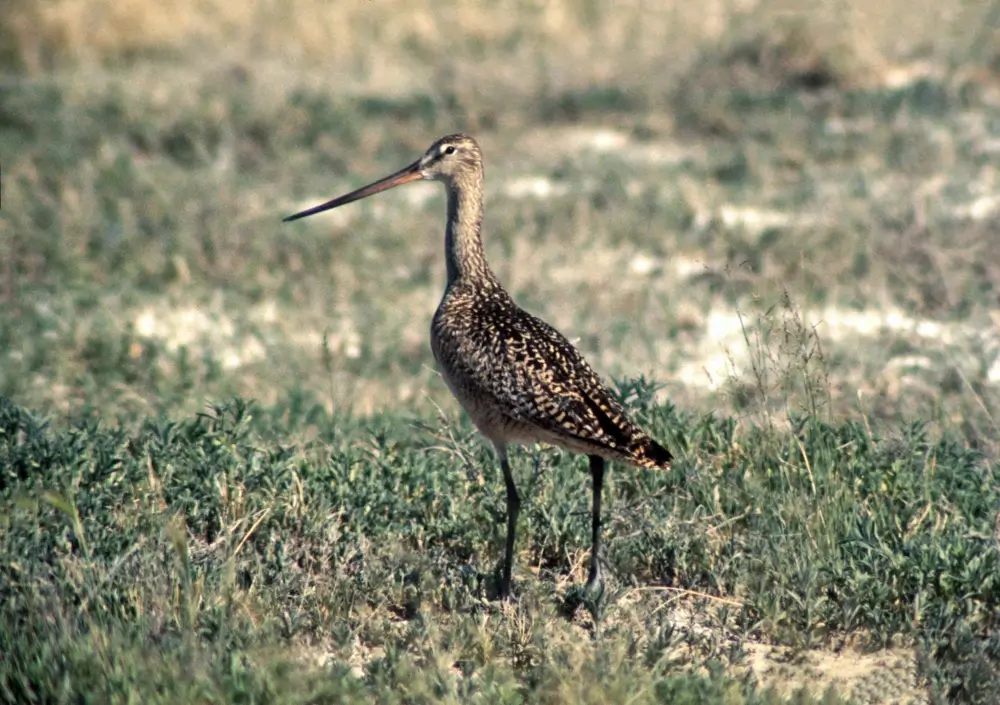
The long-billed dowitcher is 11-12 inches in length (28-30.8 cm) with a wingspan of 18.5-19.3 inches (47-49 cm).
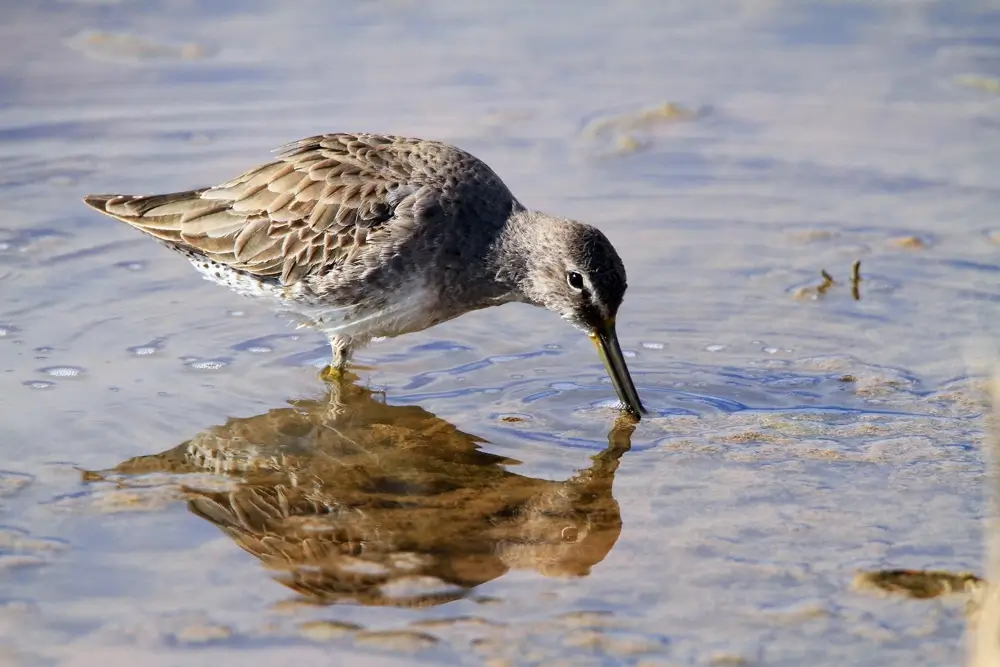
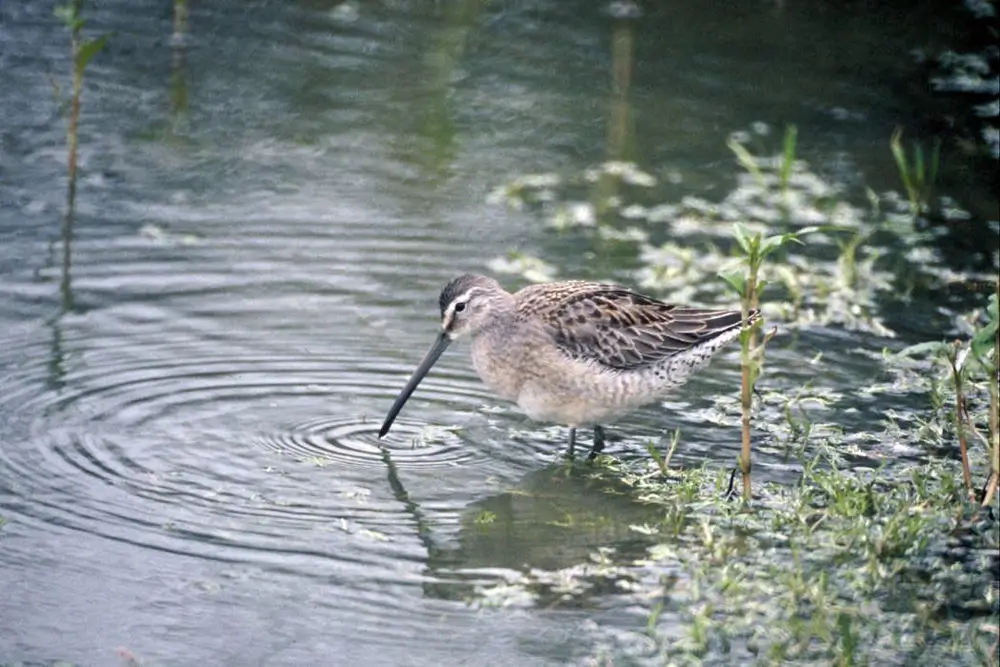
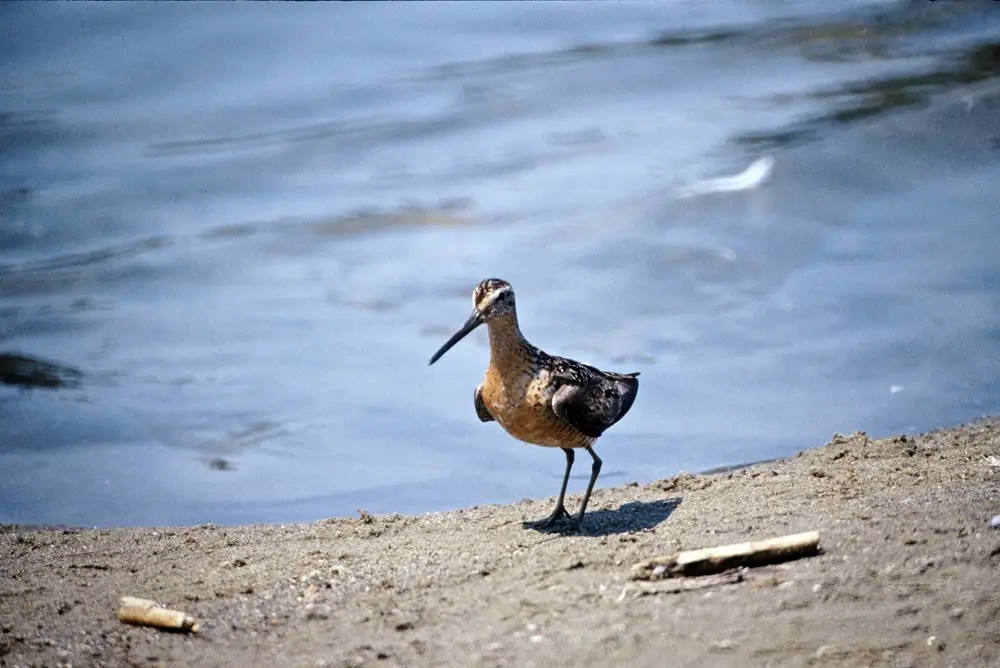
It has a long, straight black bill; long, green legs; a white lower back and rump; and white eyebrows. In the summer, adults have reddish underparts, bars on their breasts and sides, and reddish edges on the feathers on their uppersides. Winter dowitchers are gray.
Males and females look alike, but females are slightly larger and have a longer bill.
Habitat
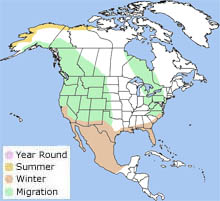
During the breeding season, the long-billed dowitcher lives on the tundra. During migration and in the winter, the long-billed dowitcher is found on mudflats, marshes, and at the edge of freshwater ponds and marshes.
Diet
The long-billed dowitcher uses its long bill to poke in the mud and find food. It looks like a sewing machine as its long bill probes up and down in the mud.
Its diet includes insect larvae, earthworms, crustaceans, moss, plant parts, seeds, and snails.
Life Cycle
The female long-billed dowitcher usually lays 4 eggs in a grass or leaf-lined nest on the ground. Both the male and female incubate the eggs.
The female starts incubating the eggs while the male chases off intruders. Later, the male takes over and incubates the eggs up until the time they hatch three weeks after being laid. He then takes care of the chicks until they fledge.
The oldest recorded long-billed dowitcher was at least 8 years, 4 months old.
Behavior
The long-billed dowitcher can be very aggressive when defending its territory.
Did You Know?
Support for NatureWorks is provided by:
The Long-Billed Dowitcher in NH
The long-billed dowitcher does not breed in New Hampshire, but it is an occasional vagrant in the state.
The long-billed dowitcher breeds in western Alaska and northwestern Canada. It winters along the Atlantic and Pacific coasts from California and Virginia south to the Gulf Coast and Mexico.