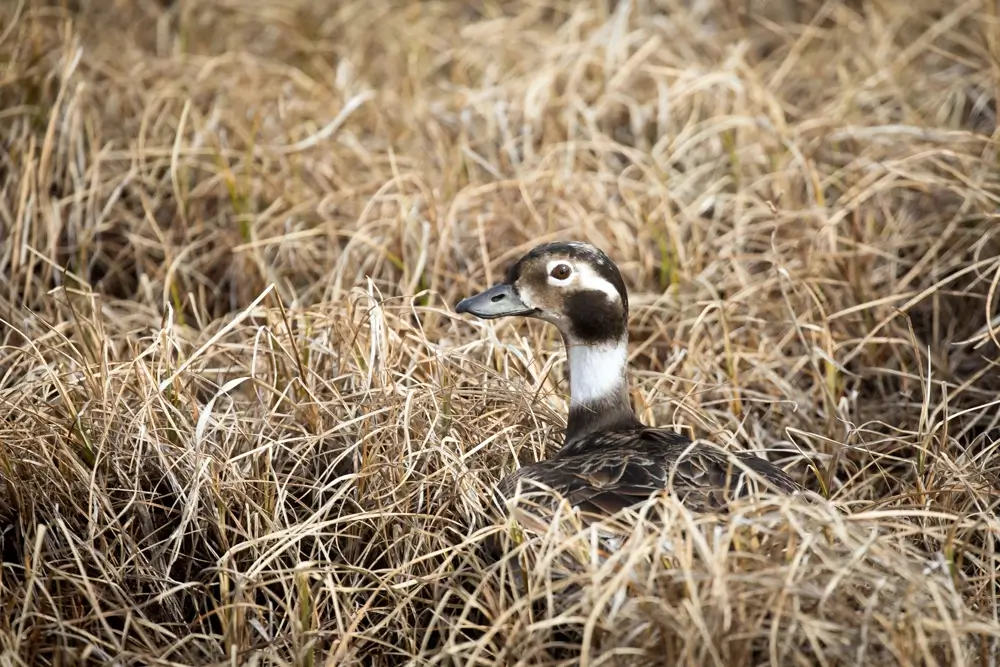
The long-tailed duck is a medium-sized diving sea duck. It is 15-18 inches (38-45.7 cm) in length with a wingspan of 27.9-28.4 inches (71-72 cm). Males are larger than females.
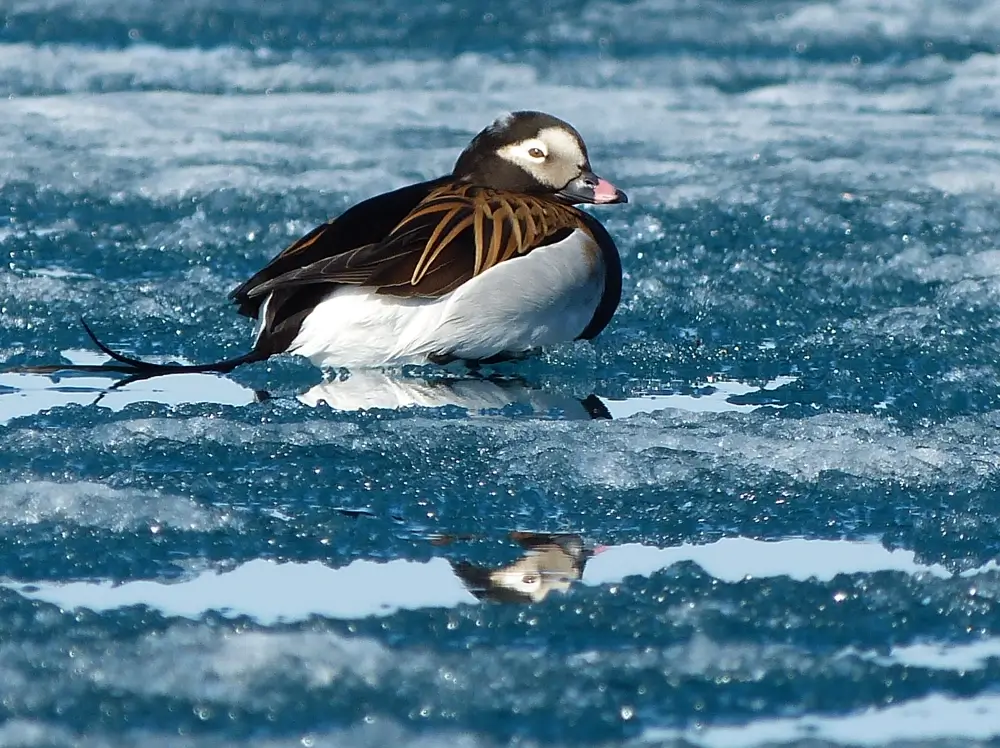
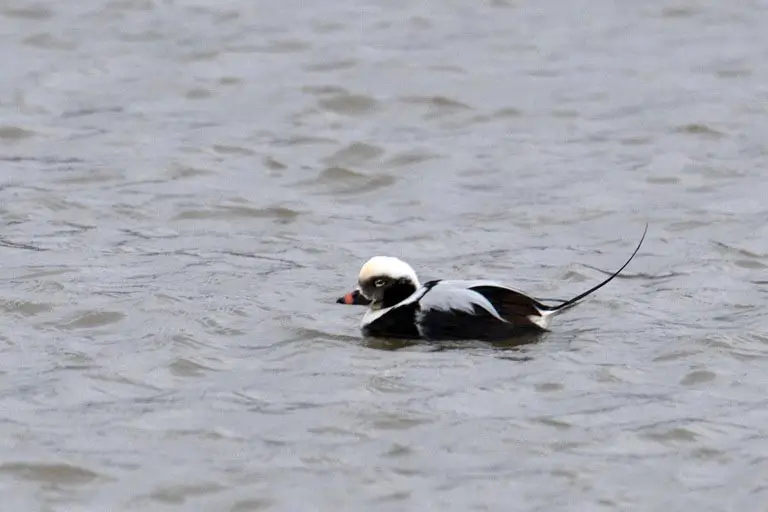
It has short, black, pointed wings; a round head; a stubby bill; and a stocky body. The male has a black and white face and long, black central tail feathers during the breeding season.
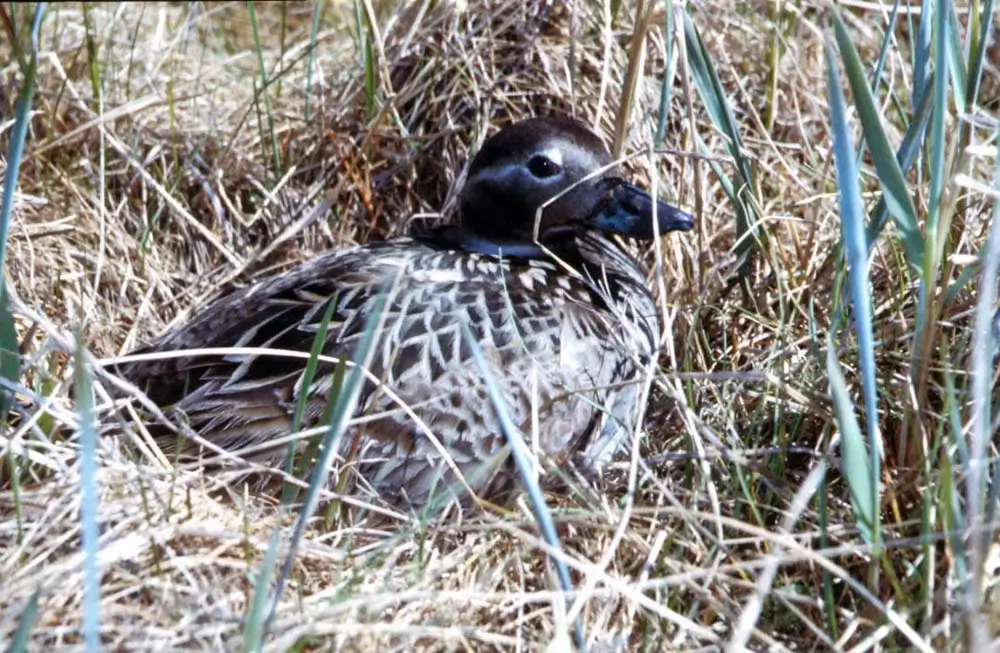
The female is a mottled brownish-gray and doesn’t have long tail feathers.
Habitat
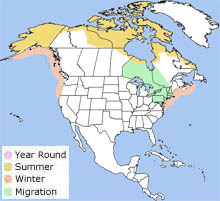
The long-tailed duck breeds on ponds, streams, and wetlands in the tundra. It winters on ocean shores and inland lakes. It is sometimes found away from shore on the open ocean.
Diet
The long-tailed duck dives from the surface of the water for mollusks and crustaceans. During the breeding season, it may also eat fish, plants, insects, and insect larvae.
Life Cycle
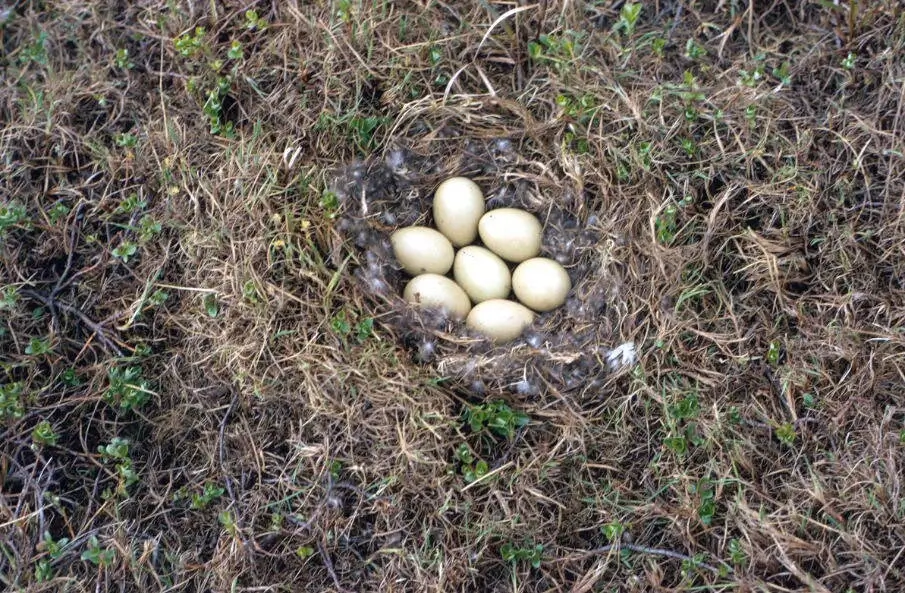
Male and female pairs form before or during migration. The female lays 6-11 eggs in a depression in the ground that is close to water and well hidden by vegetation. The male leaves the female once incubation begins.
The eggs hatch in 25-30 days. The chicks are precocial and feed themselves shortly after hatching. The chicks fledge when they are a little over a month old.
The long-tailed duck has a lifespan of around 15 years in the wild. The oldest long-tailed duck on record lived to be 22 years old.
Behavior
The long-tailed duck uses its wings to propel itself under the water and can dive to depths of up to 200 feet (61 m).
Did You Know?
Support for NatureWorks is provided by:
The Long-Tailed Duck in NH
The long-tailed duck winters off the coast of New Hampshire and may also be seen in the state during its migration.