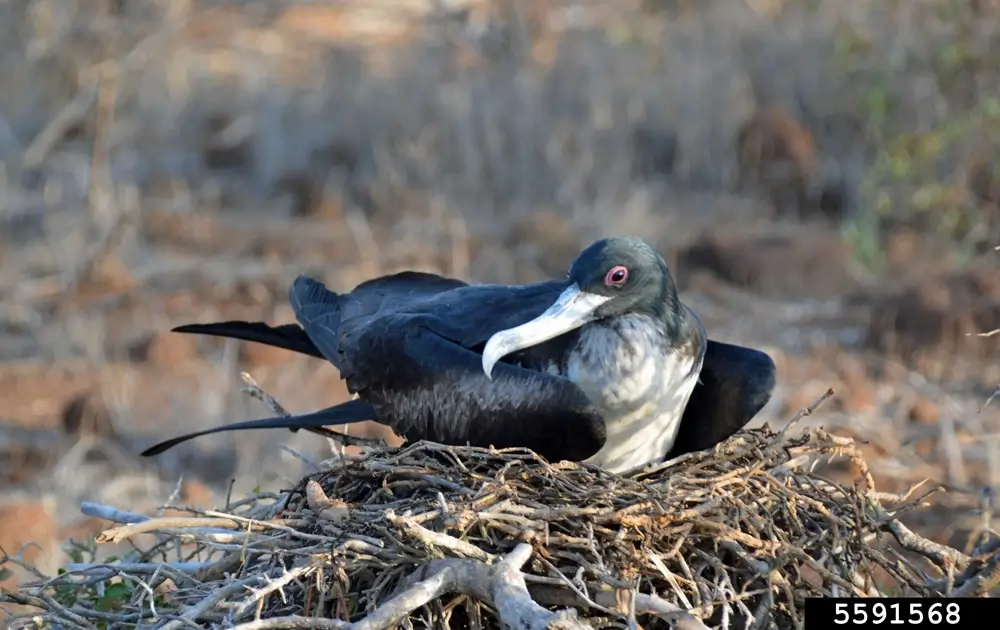
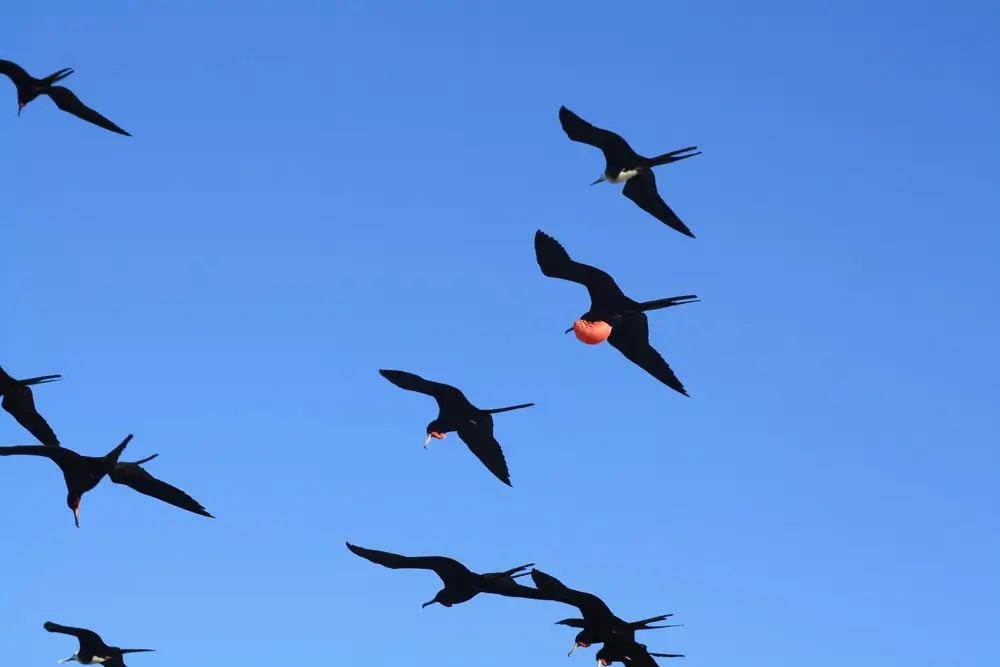
The magnificent frigatebird is a large black bird. It is 3.1-3.9 feet (0.94-1.2 m) in length and has a wingspan of 7- 8 feet (2.1-2.4 m).
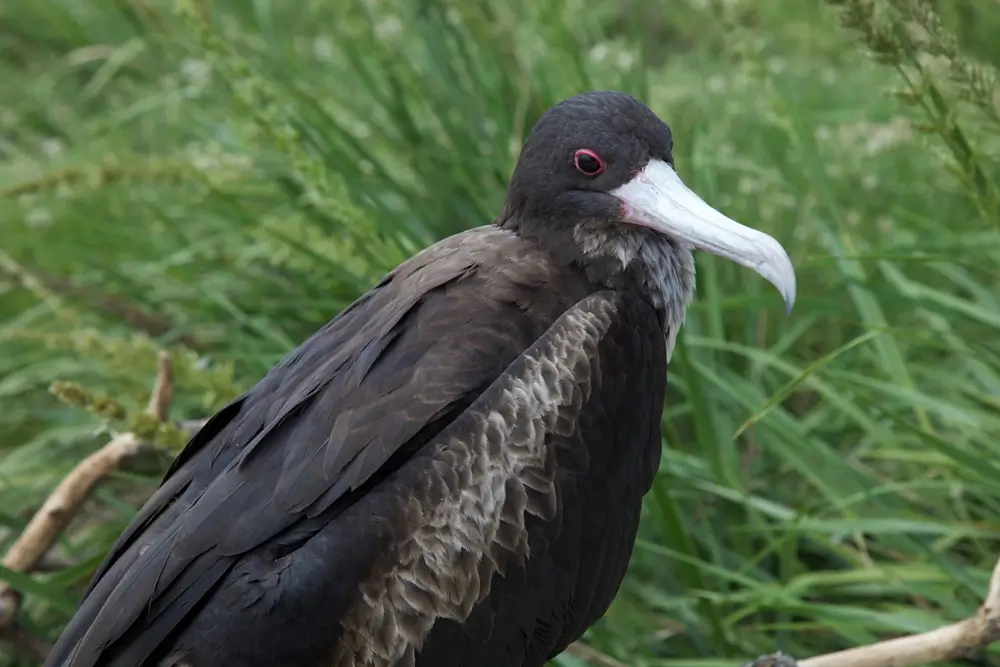
The magnificent frigatebird has a long gray bill with a hooked tip. It has a deeply forked, scissor-like tail and sharply pointed wings.
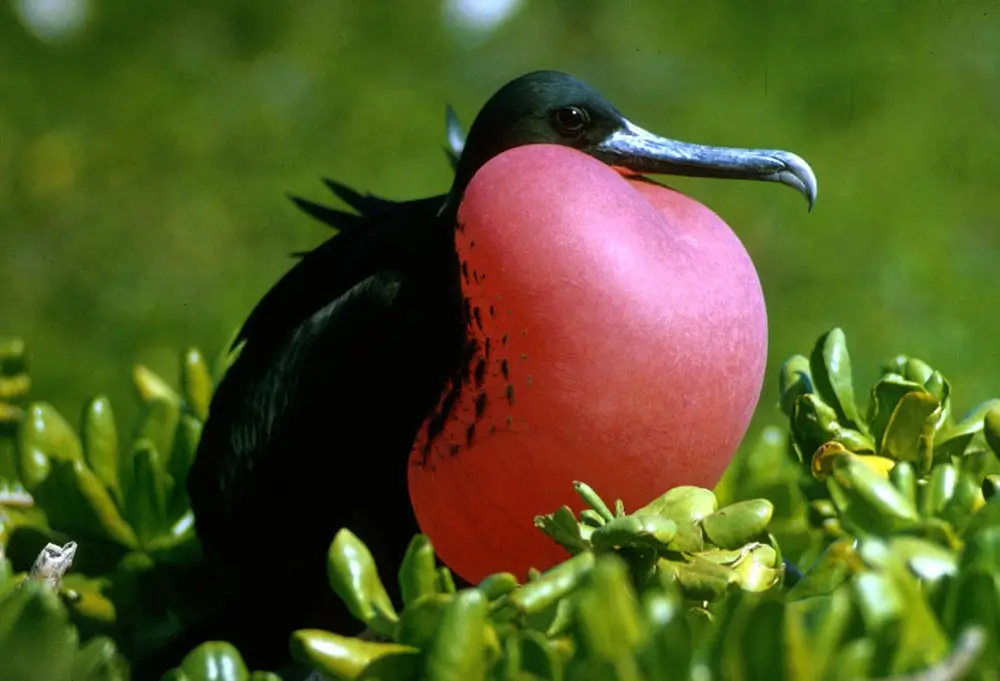
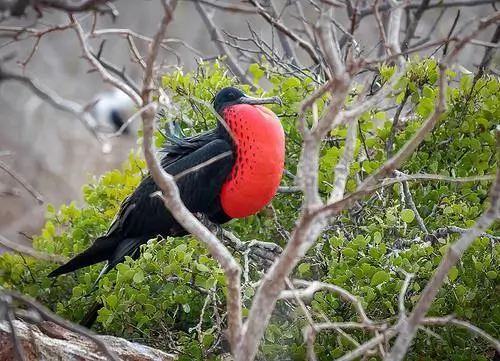
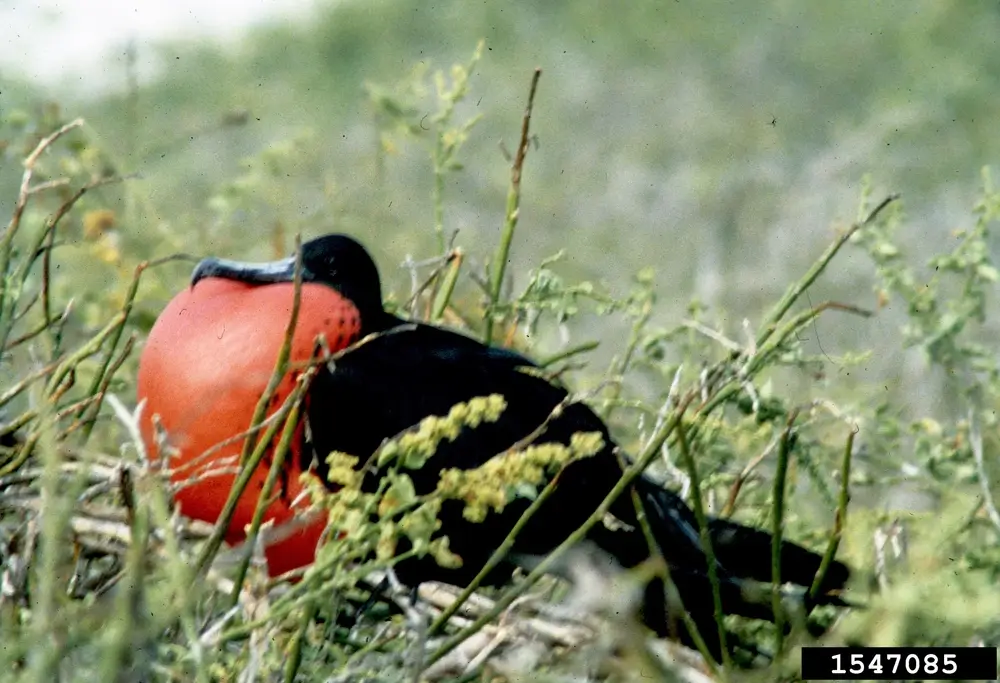
In the breeding season, male magnificent frigatebirds have a bright red throat pouch that they puff out to attract a mate. Females have white throats and bellies.
Habitat
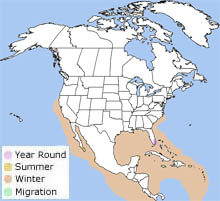
The magnificent frigatebird lives on ocean coasts and islands. In breeding season, the magnificent frigatebird lives on mangrove islands.
Diet
The magnificent frigatebird eats small fish, squid, jellyfish, and crustaceans. It may also take young turtles, birds, and eggs.
Life Cycle
Frigatebirds nest in colonies. Male frigatebirds inflate their red throat pouches to attract a mate. The female frigatebird lays one egg in a nest built of sticks, usually in a clump of mangroves. Sometimes the nest is built in a tree, bush, or on the ground. The nest is built by the female. The male brings the materials.
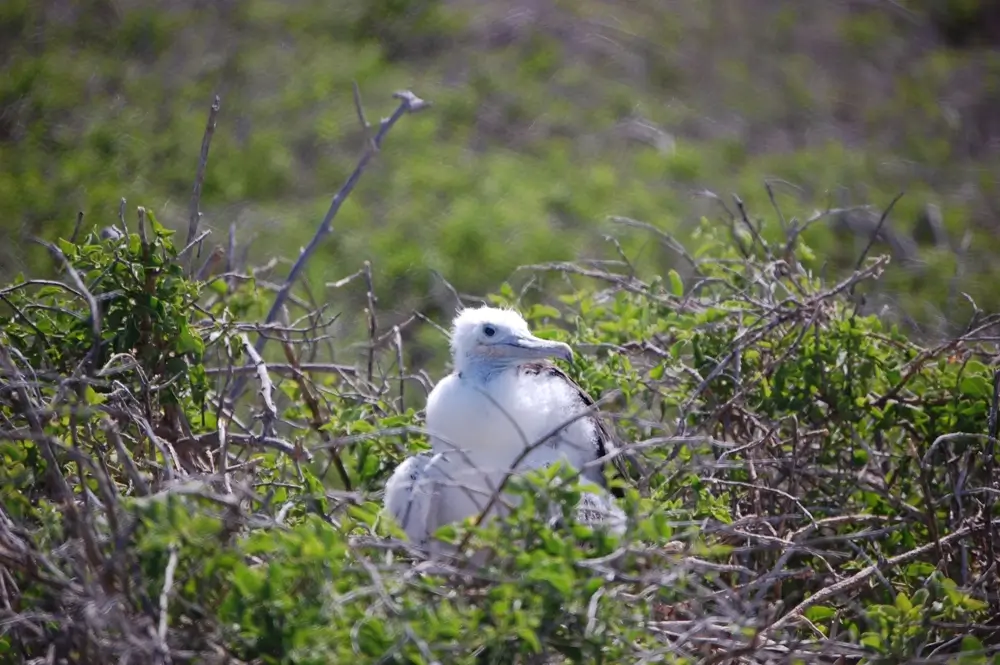
It takes about 50 days for the chick to hatch. Both the male and the female incubate the egg, and both parents feed the chick. When the chick is young, one parent is always with it to protect it from the other frigatebirds.
The male leaves when the chick is about 12 weeks old. The chick fledges when it is about 5-6 months old. The female will continue to feed the chick for another four months.
Behavior
The magnificent frigatebird is an excellent flyer and glider. It can swoop and grab a booby chick from its nest. It often chases and snatches other prey while in the air.