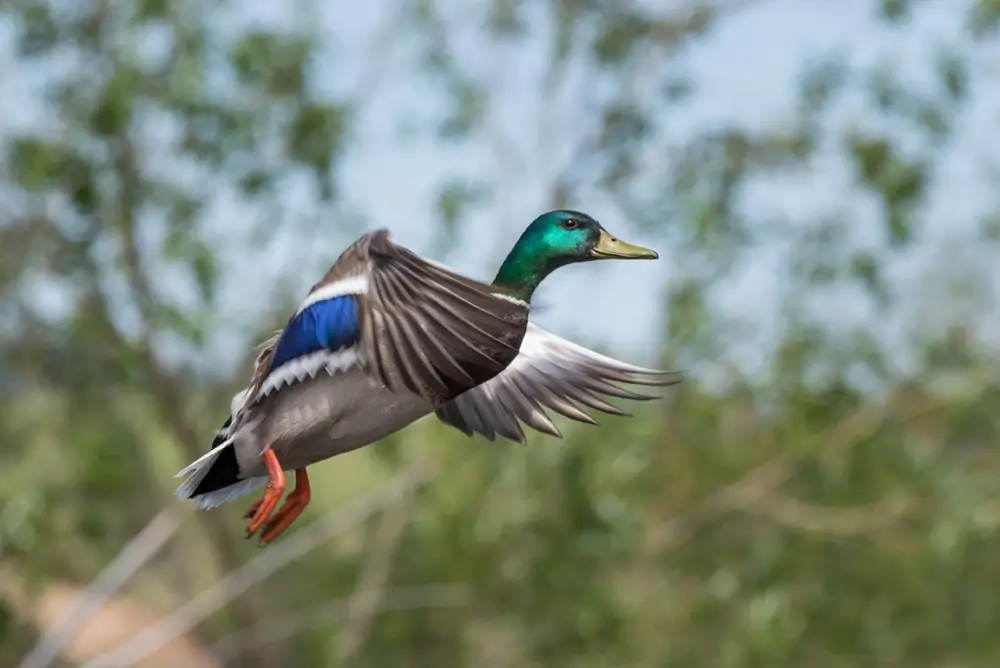
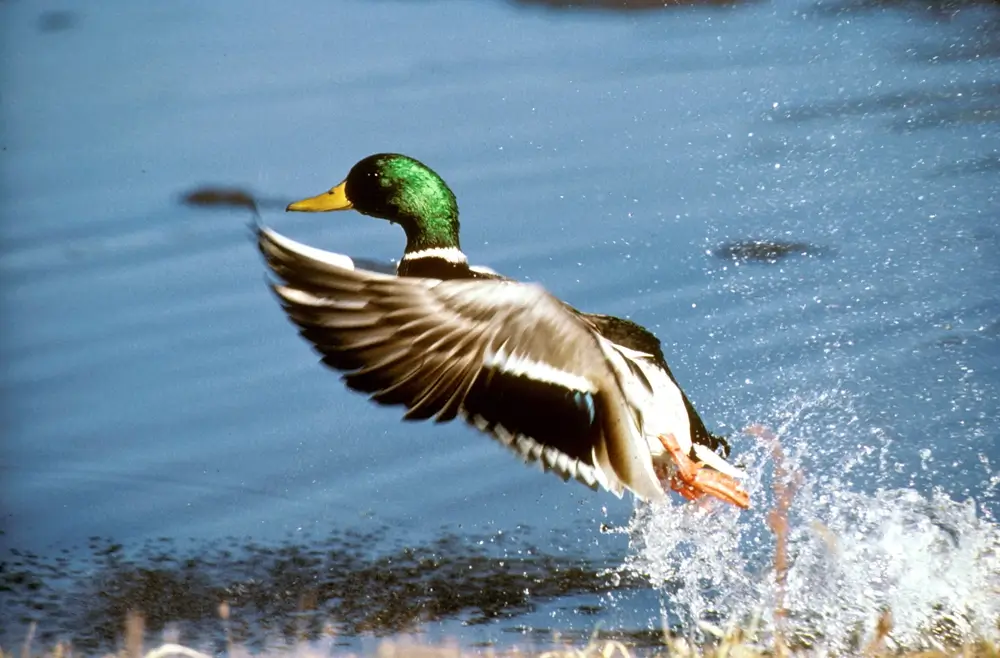
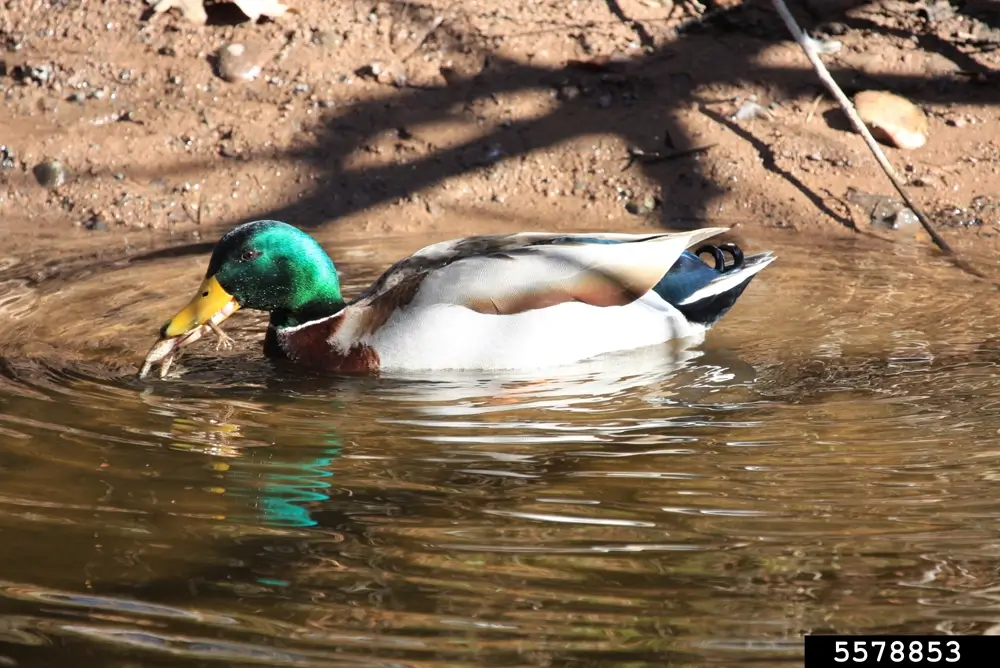
The mallard is 19.7-25.6 inches (50-65 cm) in length and has a wingspan of 32.3-37.4 inches (82-95 cm).
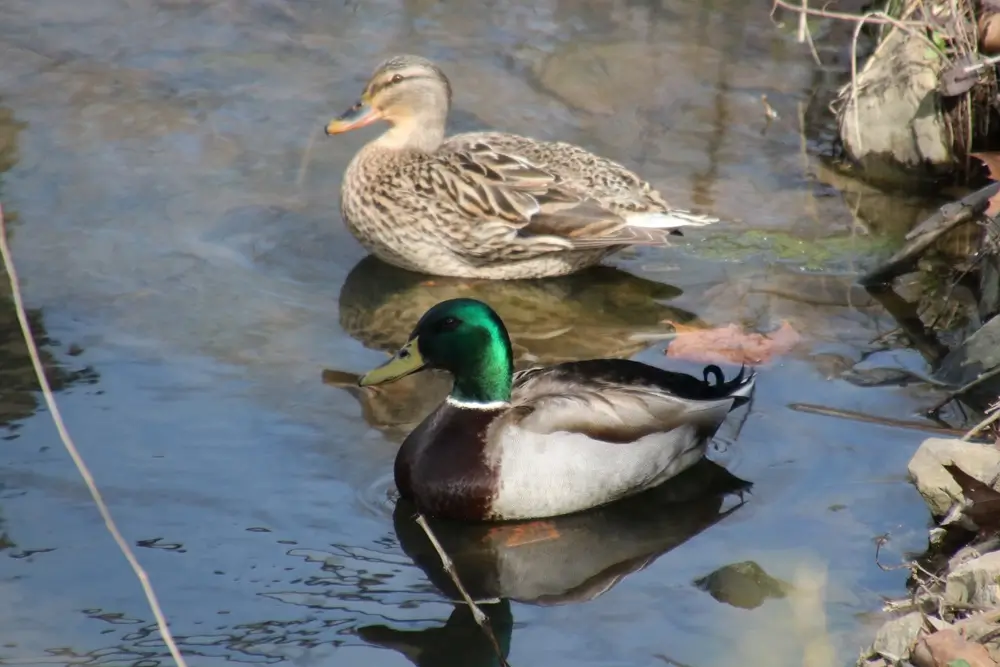
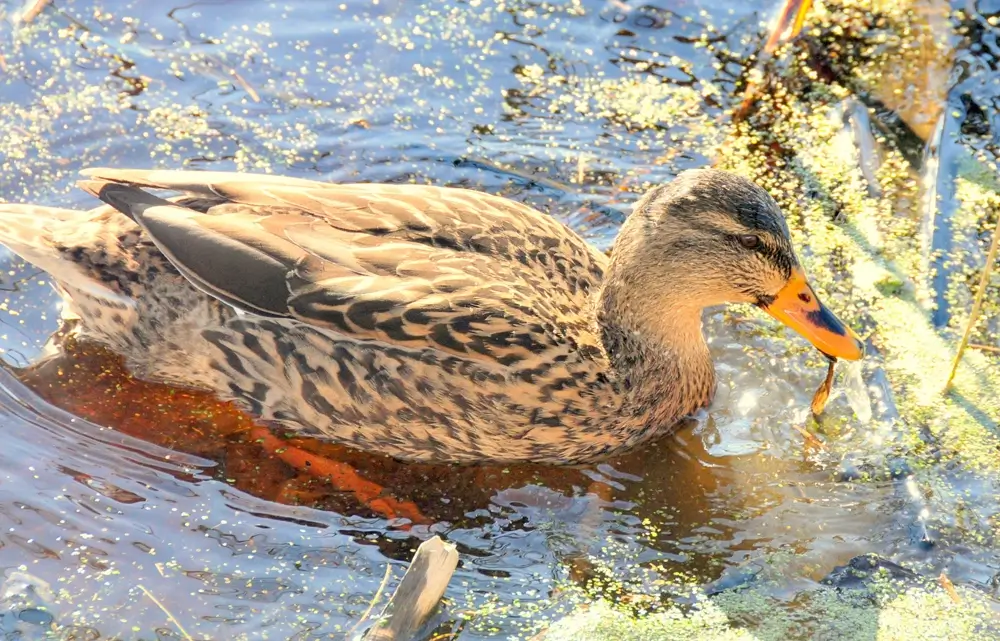
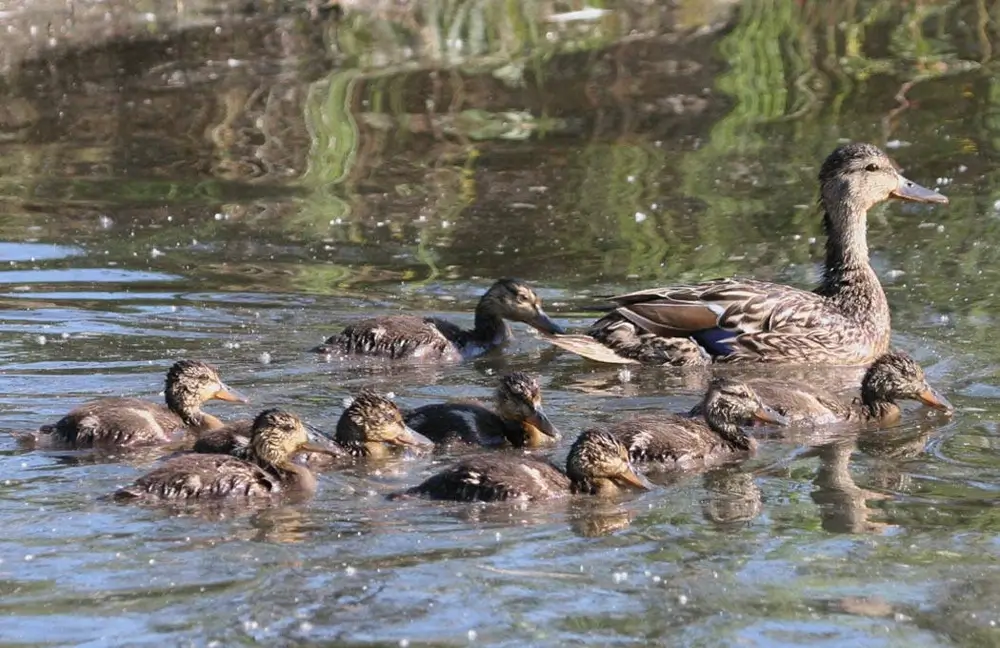
It has a blue patch on the top side of its wings with a white line around it. The female mallard is mottled brown and tan with a white tail and an orange bill.
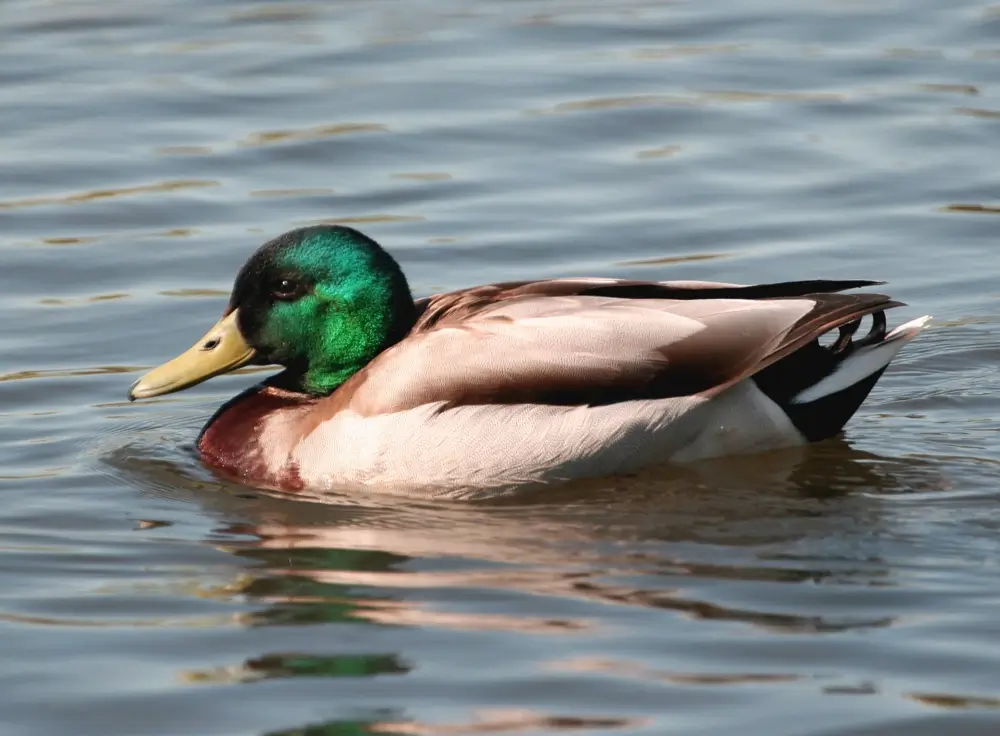
The male mallard has a green head and neck with a white ring at the bottom. It has a brown chest, whitish-gray undersides, brown wings, and a yellow bill.
Most of the mallard’s diet is made up of plants. It eats the seeds of grasses and sedges and the leaves, stems, and seeds of aquatic plants. It occasionally eats insects, crustaceans, and mollusks – especially when it is young.
It prefers to forage in water that is less than 16 inches (41 cm) deep, so it can duck its head down and reach plants at the bottom.
The mallard sometimes forages on farmland for grains like rice, corn, oats, wheat, and barley.
Life Cycle
Mallard courtship begins in the fall, and by winter, pairs have formed. If a pair is part of a migrating group, the pair migrates to the female’s territory.
The female mallard lays 8-10 eggs in a nest on the ground. Nests are depressions in the ground and are usually no more than 100 yards from water. The nest is lined with down and is usually hidden in tall grass.
The female incubates the eggs. The male leaves once incubation has begun. The eggs take about a month to hatch.
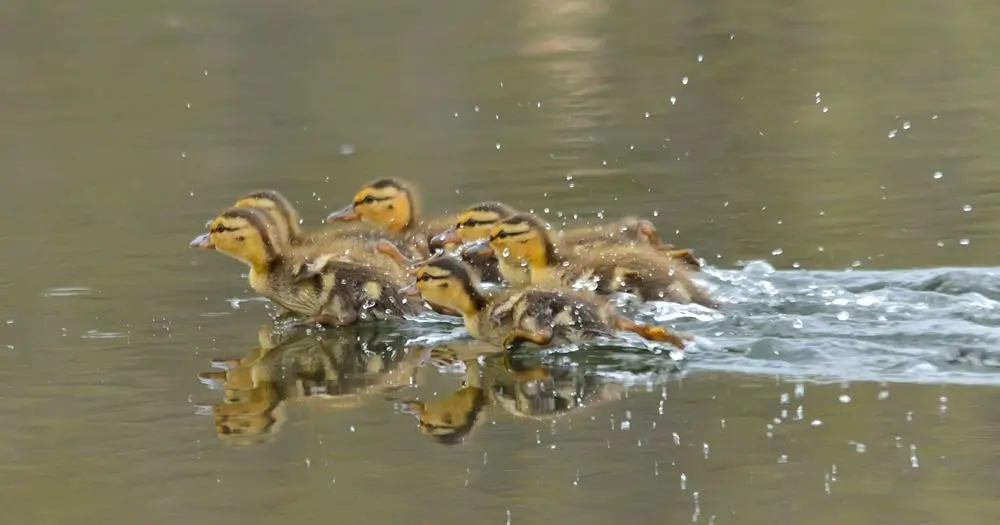
Within a day of hatching, the mother leads the chicks to water for their first swim. The chicks fledge when they are about eight weeks old.
The mllard has an average lifespan of 5-10 years in the wild.
Behavior
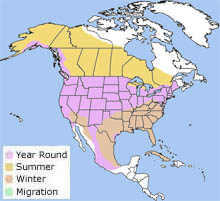
After the mating season is over, some mallards in colder climates migrate in flocks to their wintering grounds. Other mallards in warmer areas where there is plenty of food stay year-round.
The mallard is the ancestor of almost all breeds of domestic ducks. It breeds with feral domestic ducks. The offspring of these mismatched pairs exhibit a wide variety of color patterns.
The mallard also mates with other duck species like the American black duck and the northern pintail. In fact, there is some concern that the black duck species is in danger from hybridization with the mallard.
Did You Know?
Support for NatureWorks Redesign is provided by:
The Mallard in NH
The mallard breeds across NewHampshire, and in some parts of the state, it is a year-long resident.