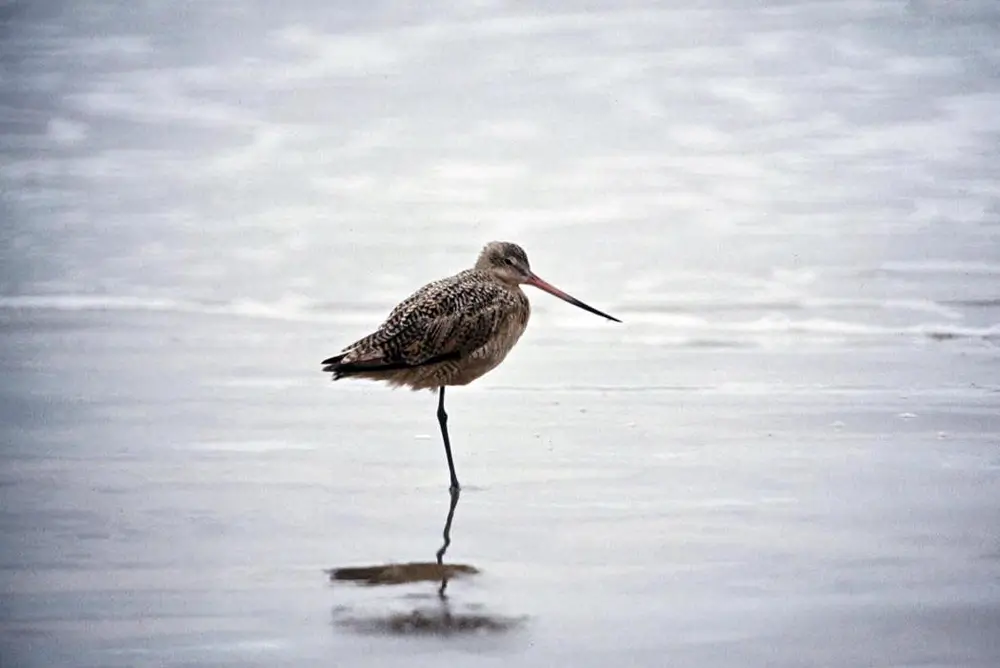
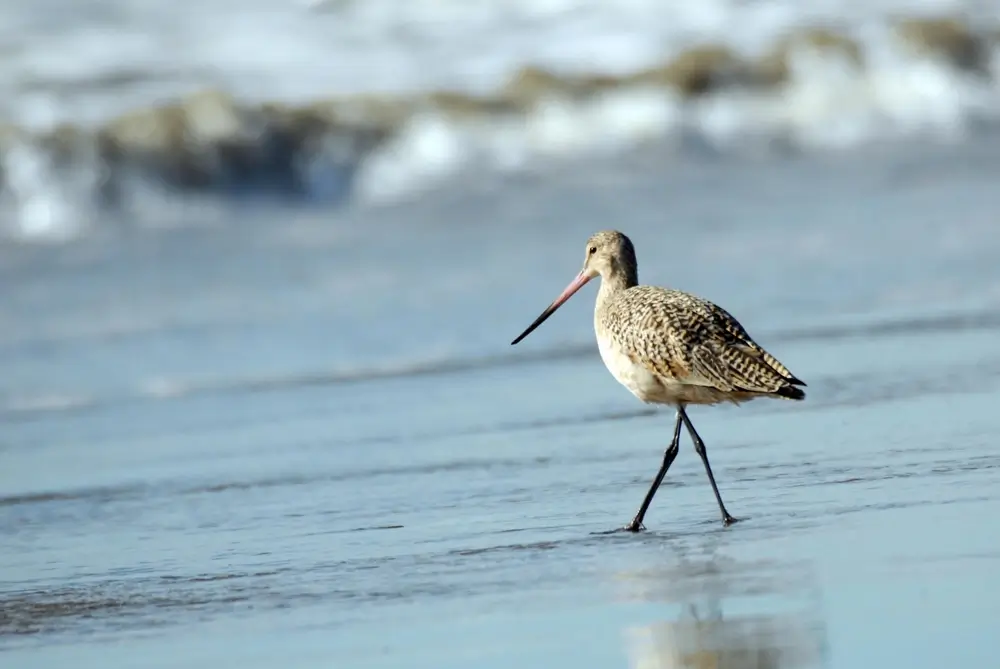
The marbled godwit is 16.5-18.9 in (42-48 cm) in length with a wingspan of 27.6-31.9 inches (70-81 cm).
It has mottled gray, black, and brown feathers on its upperside and is lighter on its underside. The undersides of its wings are rusty-cinnamon brown.
It has long legs and a very long, upturned bill that is pink at the base and darker towards the end.
Males and females are similar in appearance, but the male is a little smaller.
Habitat
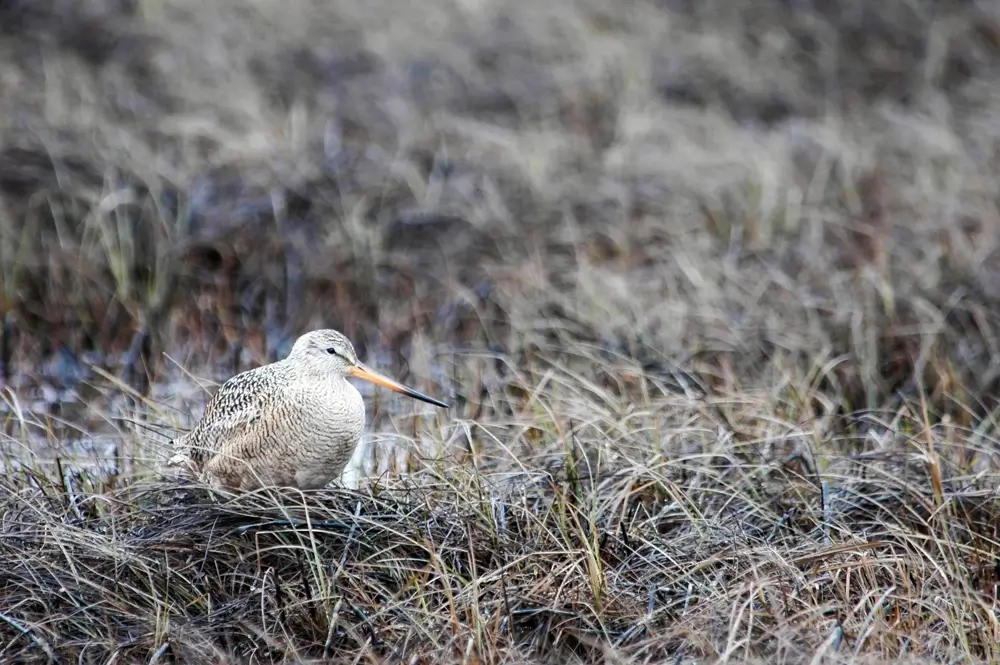
The marbled godwit breeds on grassy plains, wet meadows, and prairie potholes, usually near rivers or streams.
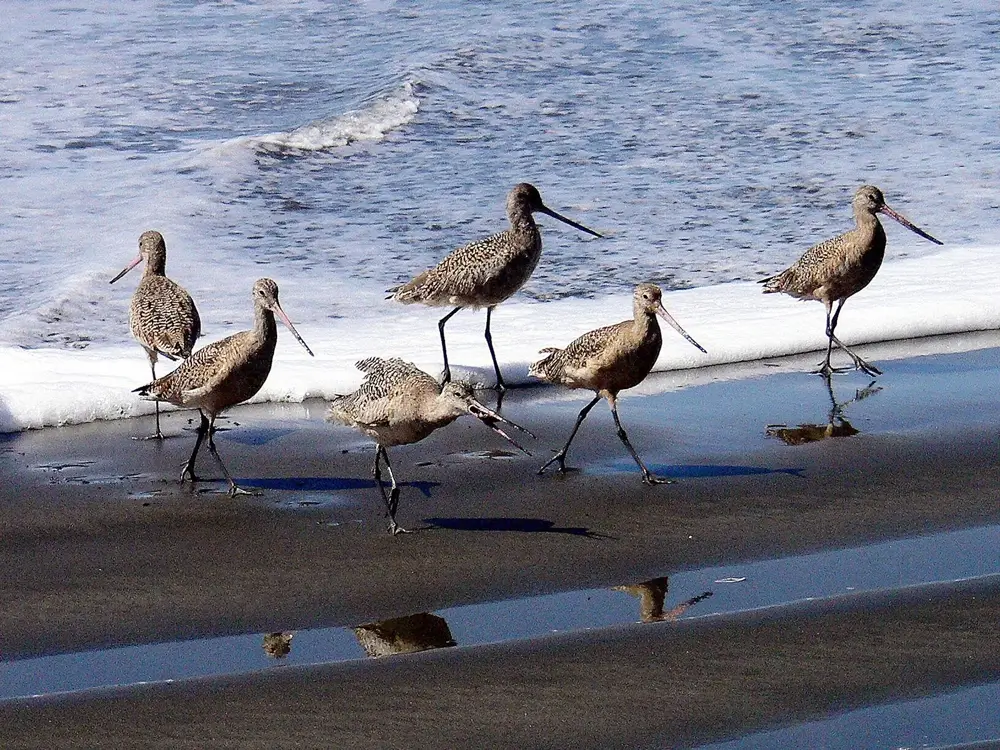
During migration, it is found on coastal beaches and along lake shores. In the winter, it is found in estuaries, salt marshes, tidal creeks, mudflats, and ocean beaches.
Diet
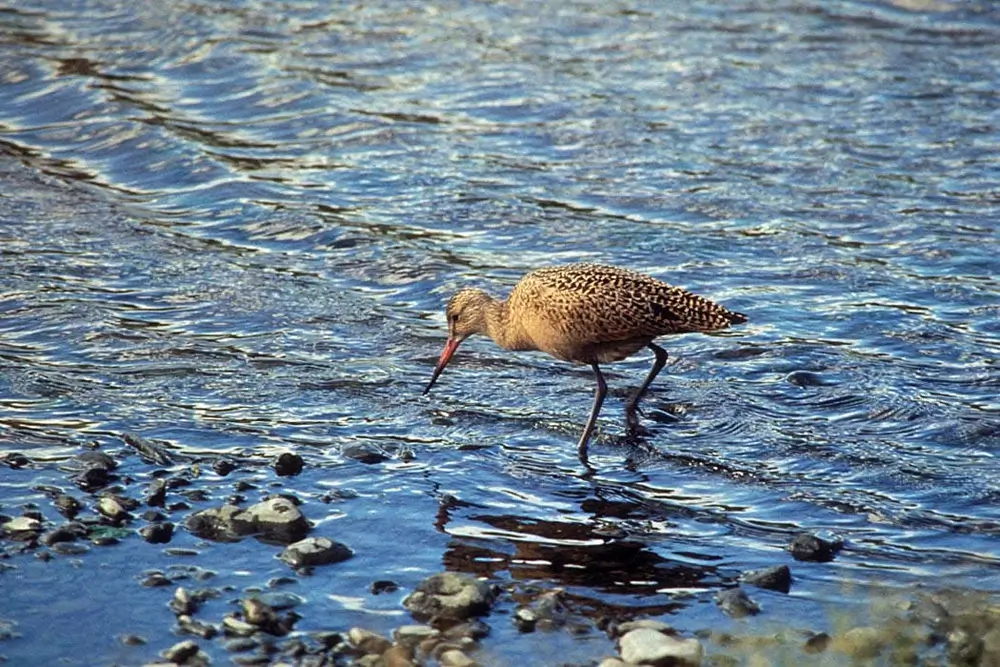
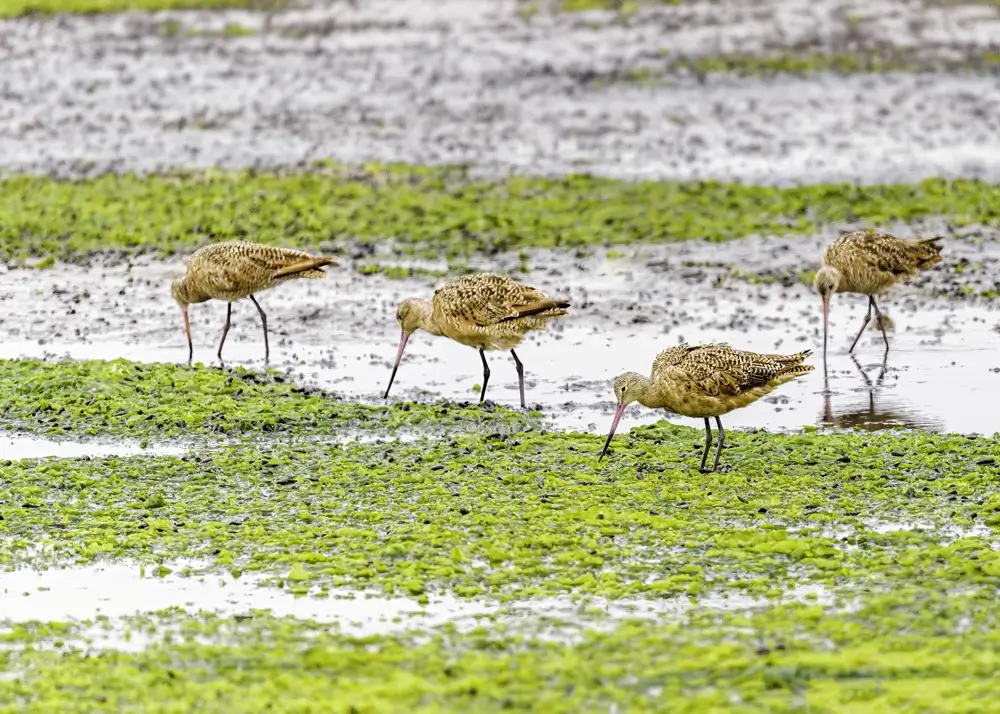
The marbled godwit forages for food by probing in shallow water and soft mud for aquatic insects and mollusks.
It also catches grasshoppers and other insects in grassy areas. It may also eat snails, small crustaceans, insect larvae, worms, and leeches.
Life Cycle
The female marbled godwit lays 4 eggs in a depression lined with grass. The female incubates the eggs.
The chicks hatch in 20-22 days. Both males and females care for the young.
The marbled godwit has a lifespan of 20-30 years in the wild.
Behavior
Marbled godwits fly in large, noisy groups over the Great Plains in the spring. Males chase each other and perform elaborate figure-eights in the air.
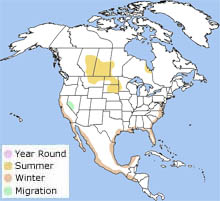
The marbled godwit breeds in the Central Plains region of North America from central Alberta through central Manitoba and along St. James Bay south through Montana, North Dakota, east central South Dakota, and north central Nebraska, and east to north-central Minnesota.
It winters along the Pacific Coast from California south to Central America, from Virginia south to the Caribbean on the Atlantic Coast, and along the Gulf Coast south to Central America.