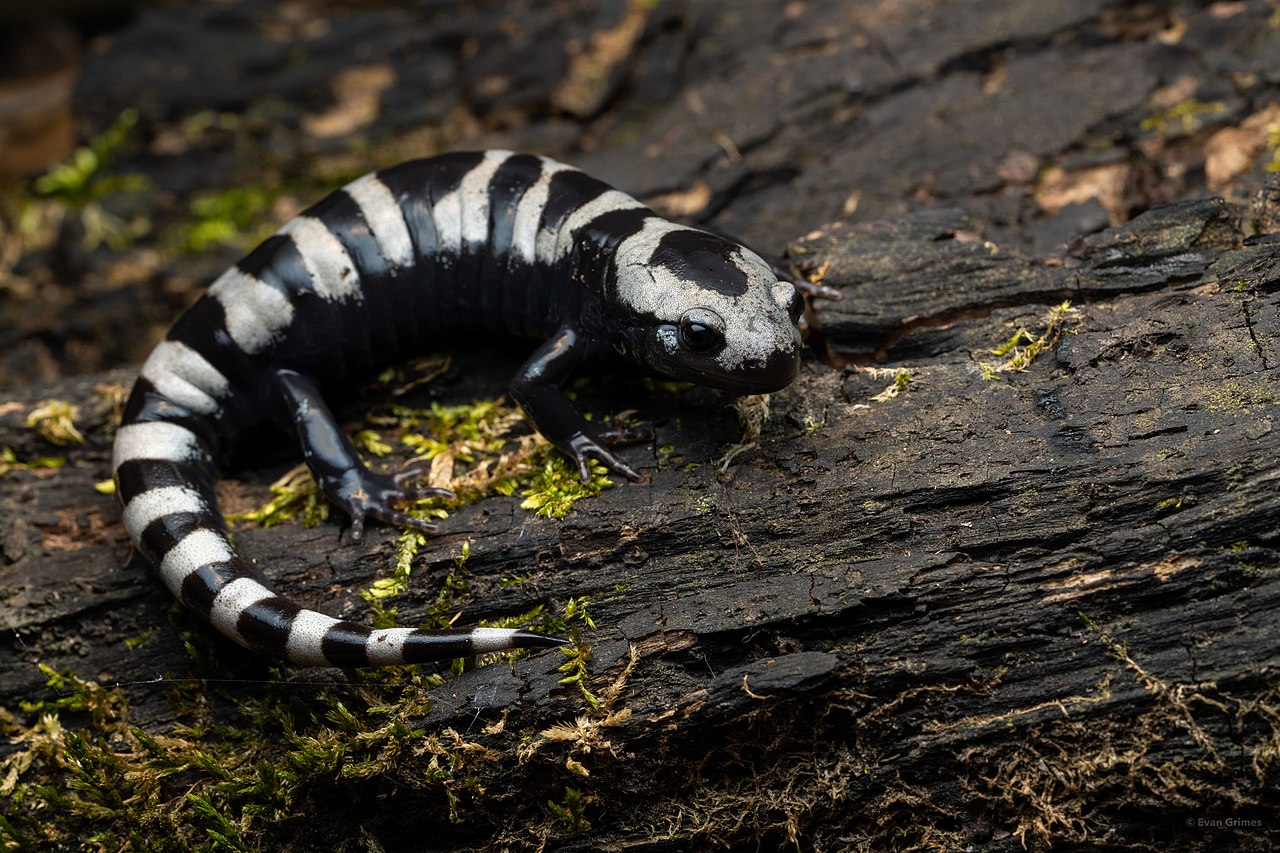
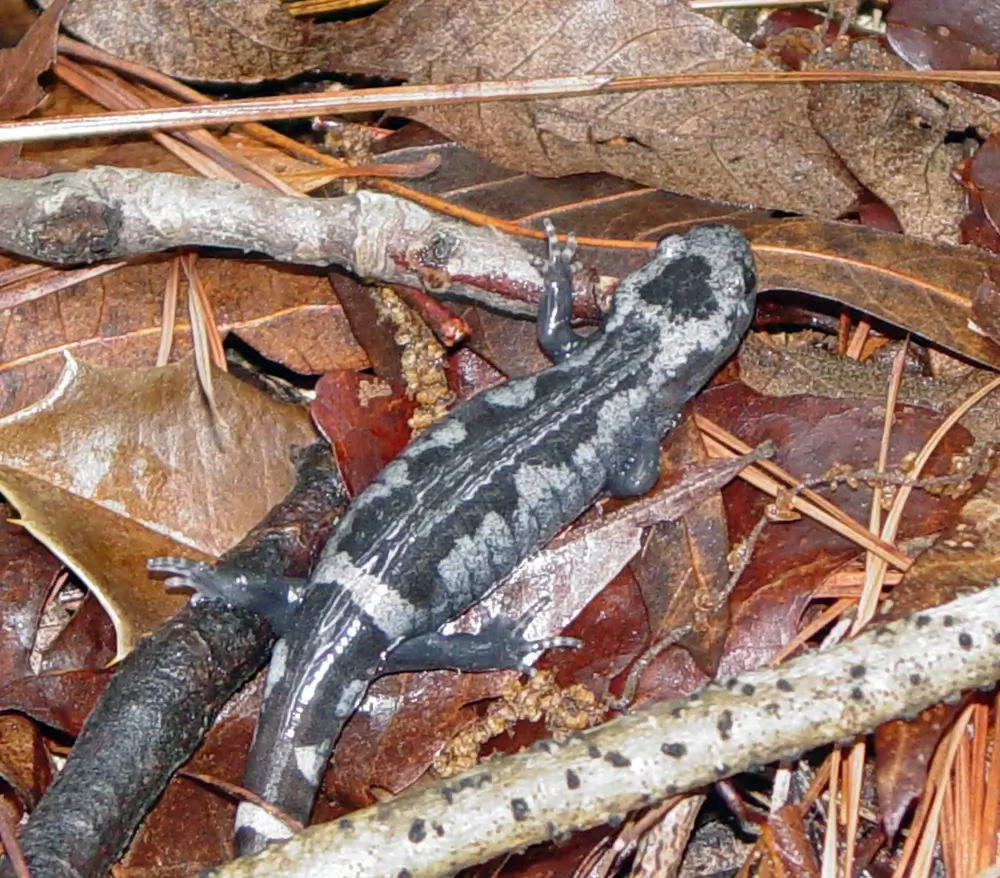
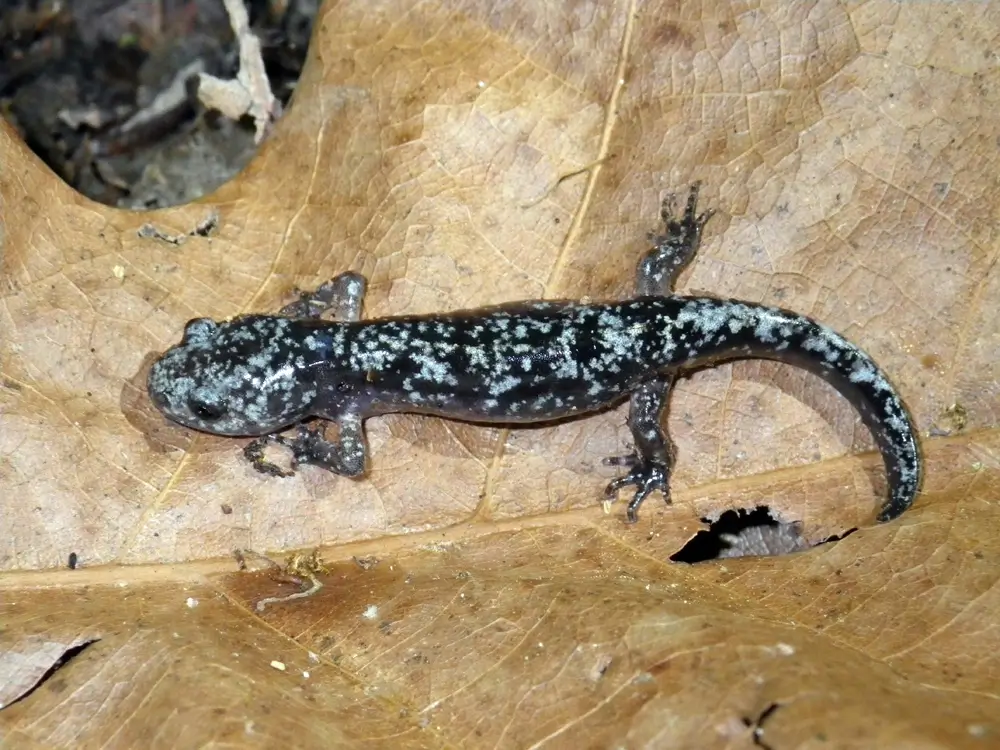
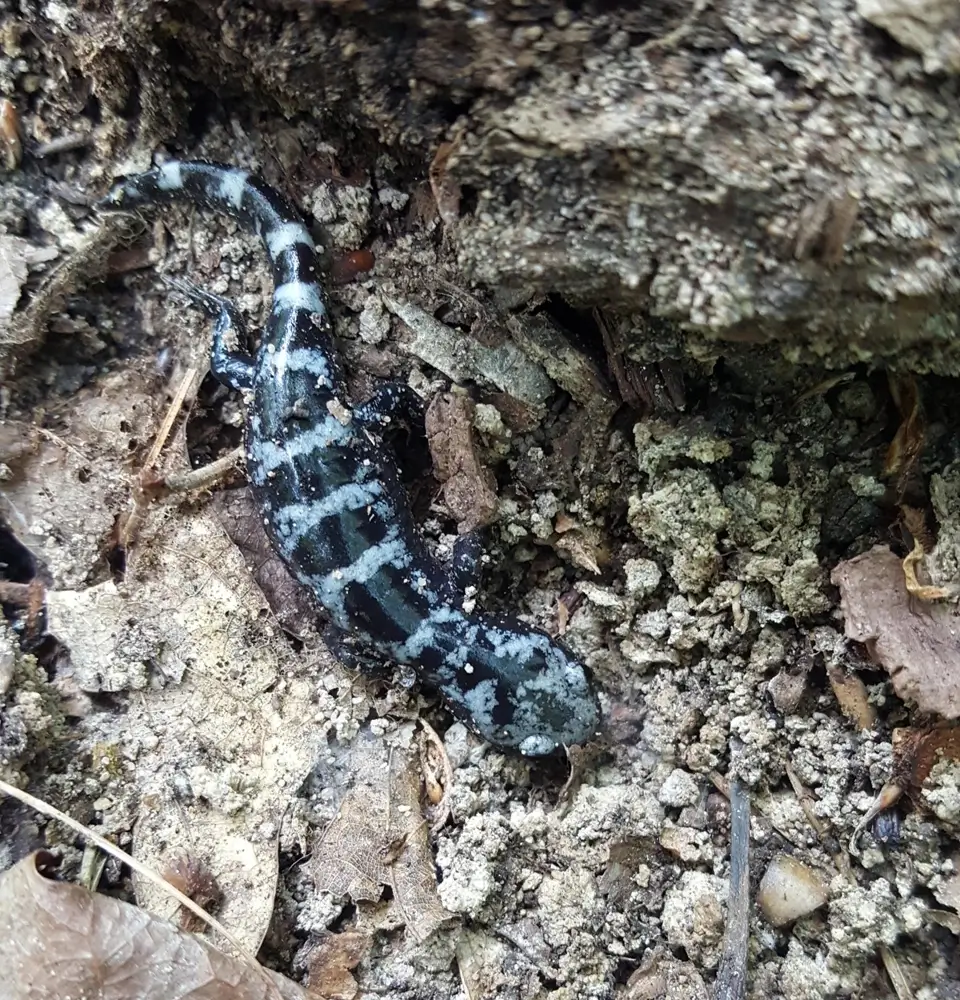
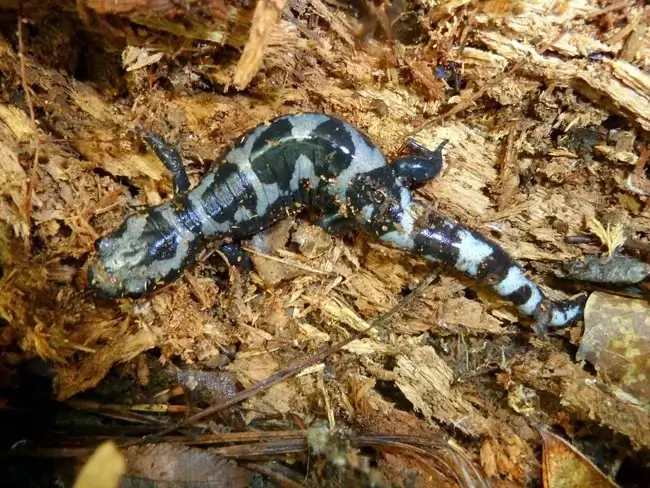
The marbled salamander is 3-5 inches (7.6-12.7 cm) in length.
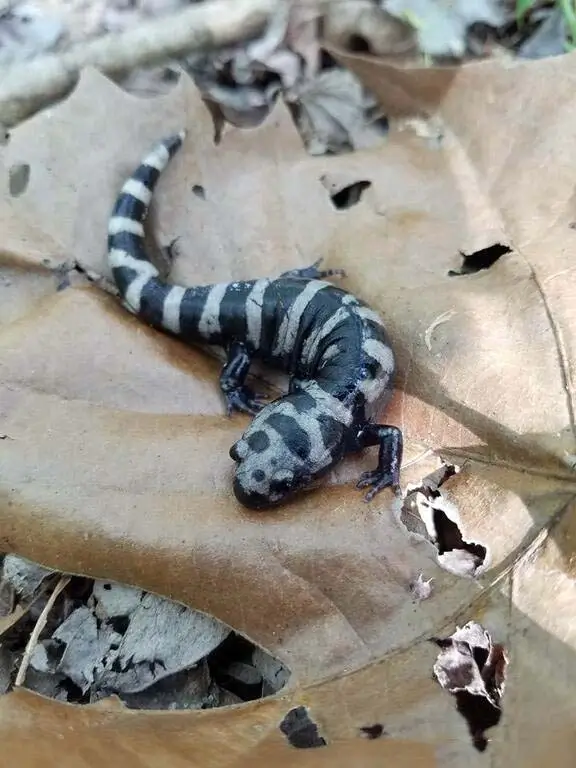
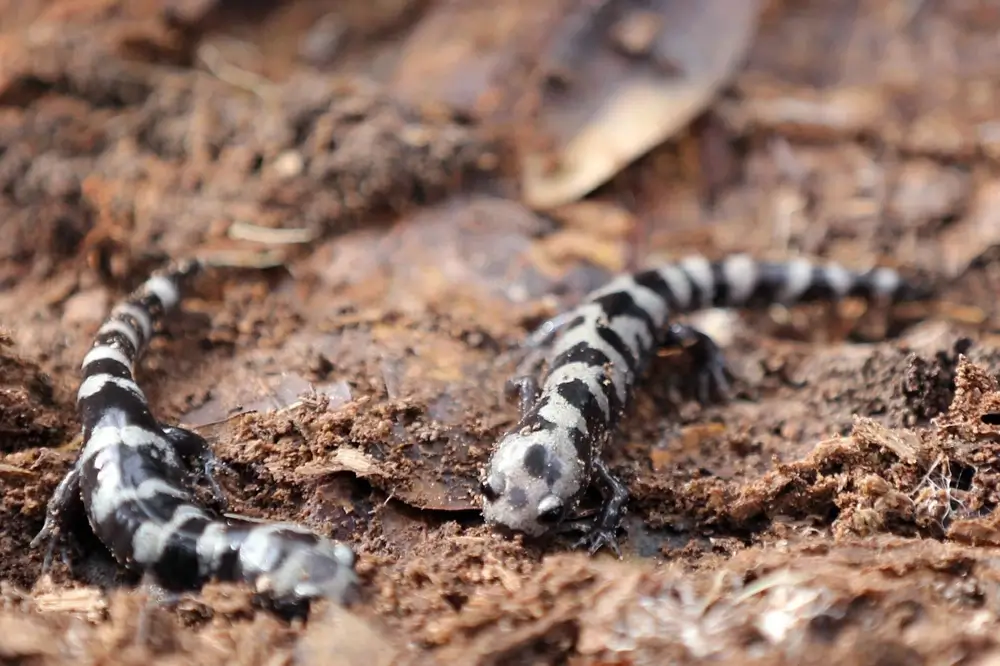
It has a black body with white or silvery-gray markings. The female has gray markings, and the male has white markings. It has 11-12 costal (vertical) grooves.
Habitat
The marbled salamander lives in forests and woodlands. It is found in a variety of habitats, from moist sandy areas to dry hillsides. It spends most of its time in a burrow, in leaf litter, or under bark or a log.
Diet
Adult marbled salamanders eat invertebrates, including earthworms, slugs, snails, centipedes, and a variety of insects.
Larvae eat zooplankton. As they grow larger, they eat tadpoles, insects, and other salamander larvae.
Life Cycle
The marbled salamander breeds from September to October in the northern part of its range and from October to December in the southern part of its range. The marbled salamander mates and lays its eggs on land. The female lays 50-200 eggs, one at a time, in a depression under a log or in a clump of vegetation that fills with water when it rains.
The female usually curls her body around the eggs to keep them moist and waits for rain to fill the depression. The larvae hatch a few days after being covered by water. If there is not enough autumn and winter rain, the larvae may not hatch until spring. The larvae change into salamanders in about 3-6 months.
Behavior
Except for during the breeding season, marbled salamanders are solitary creatures.
Did You Know?
Support for NatureWorks is provided by:
The Marbled Salamander in NH
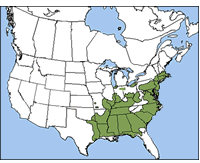
The marbled salamander has been reported in southern New Hampshire near the Massachusetts border around Brookline.