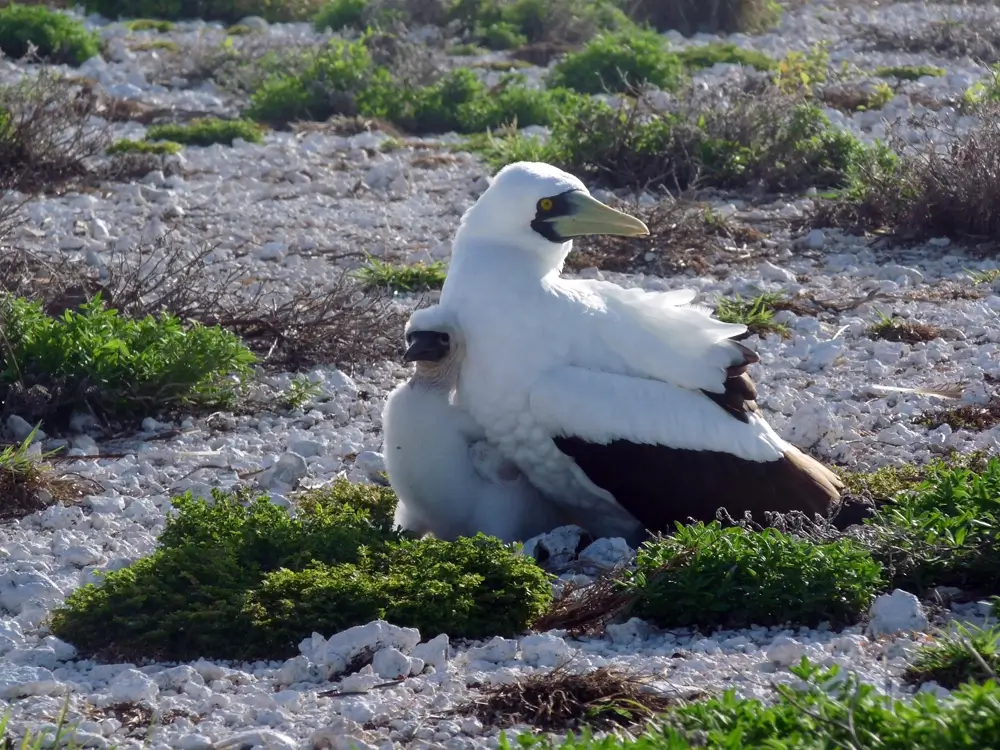
The masked booby is the largest member of the booby family. It is 2.4-2.8 feet (0.74-0.86 m) in length and has a wingspan of 5.25 feet (1.6 m).
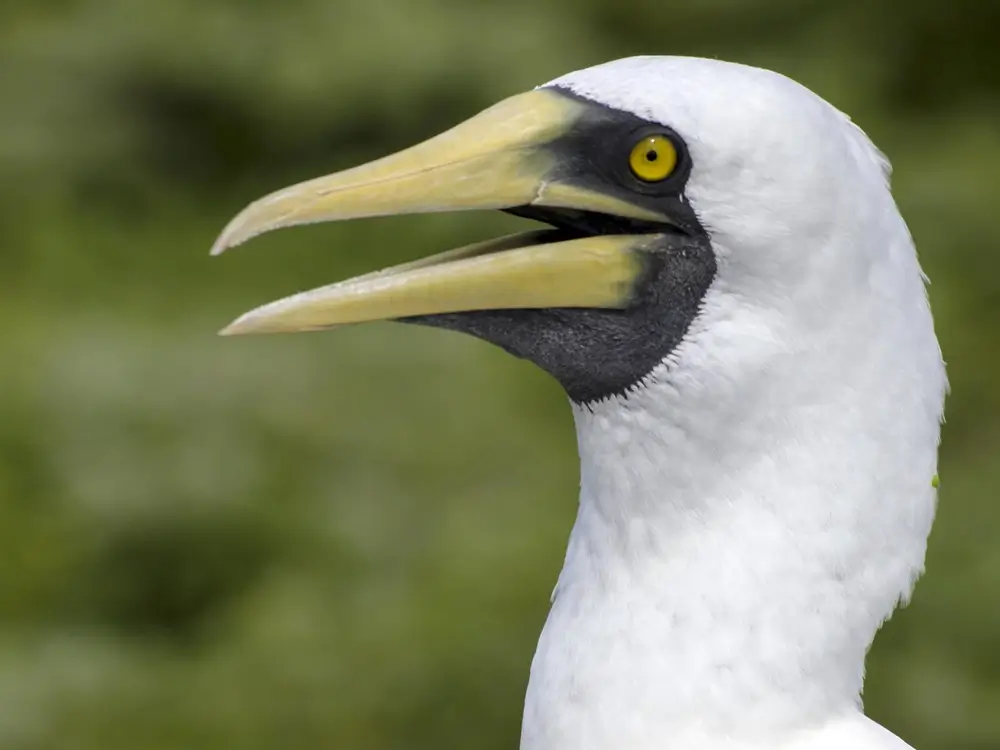
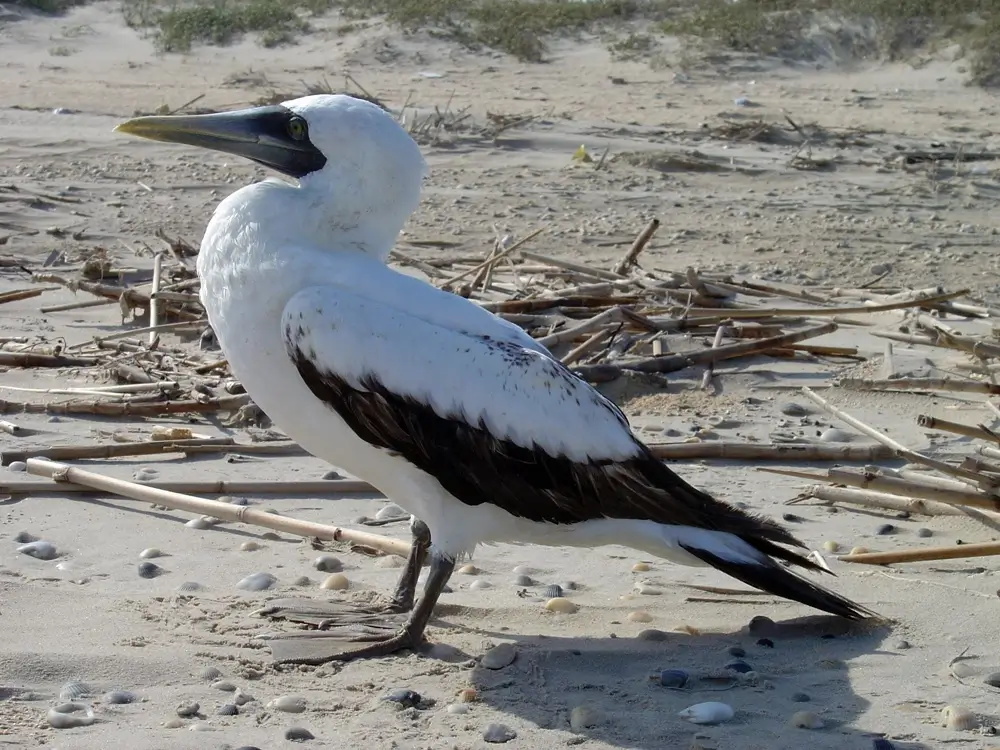
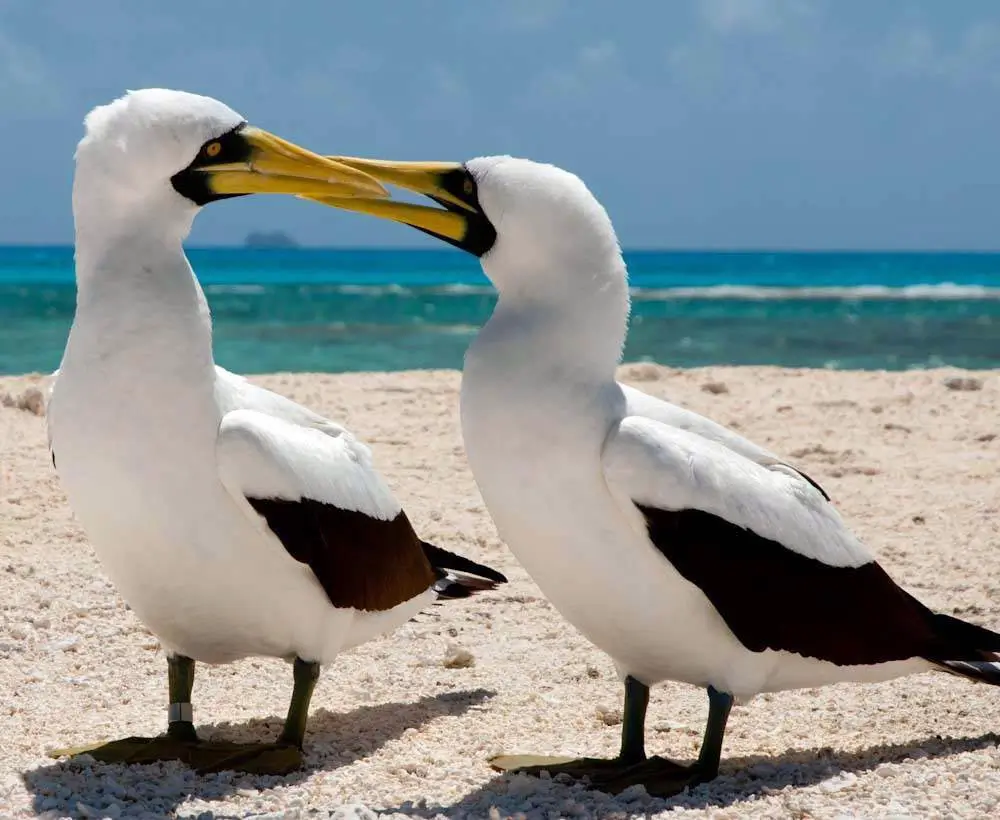
It has a white body, brownish-black wings and tail, and a long, pointed orange-yellow bill. It has a black mask around its eyes and bill and large, gray webbed feet.
Habitat
The masked booby lives on the open ocean. It only comes on land to breed and raise its young.
Diet
The masked booby plunges headfirst into the ocean to catch flying fish and squid.
Life Cycle
The masked booby nests in large colonies. It makes its nest in a shallow depression on the ground. The female usually lays 1-2 eggs. Both parents incubate the eggs. They use their webbed feet to warm the eggs.
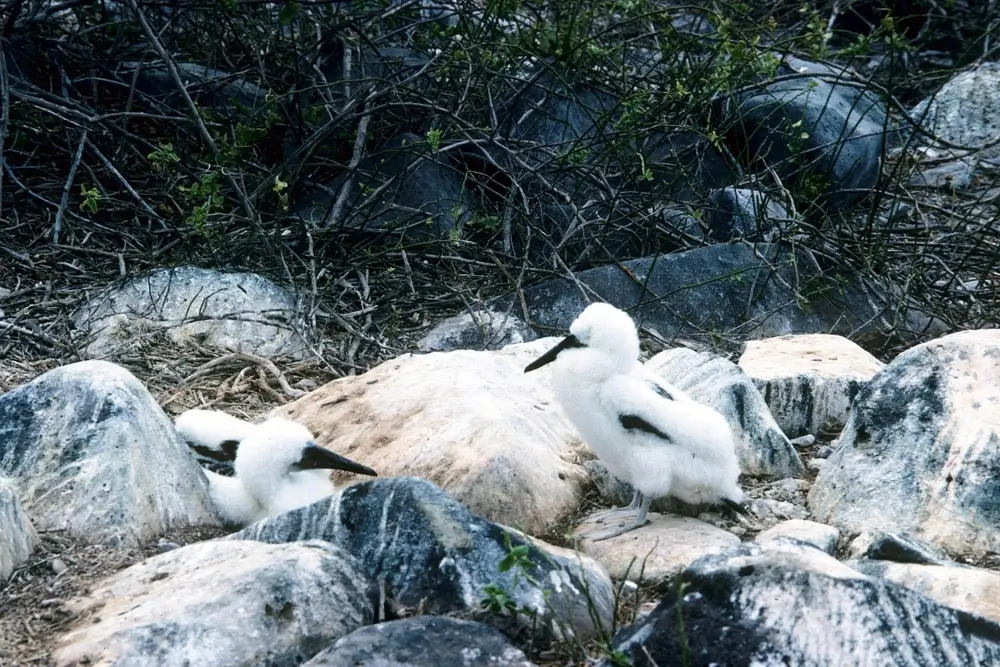
The eggs hatch in about 43 days. If there are two eggs, the first may hatch up to nine days before the second egg. The chicks fledge (develop flight feathers) when they are a little over three months old. They continue to be cared for by their parents for another one or two months. Males mate with only one female.
The masked booby has a lifespan of 15-20 years.
Behavior
When masked boobies lay two eggs, usually only one hatches. In fact, only about 60 percent of their eggs hatch. The second egg may act as an “insurance egg,” giving the parents a better chance that at least one chick survives.
If the second egg does hatch, the older chick often pushes the younger chick out of the nest. The parents sometimes move aside, which can help the older chick. This may seem cruel, but it actually helps the older chick survive because the parents can care for one chick better than two at the same time.
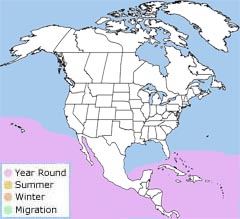
The masked booby breeds in the Caribbean and across the Pacific Ocean to Hawaii, Australia, and Indonesia. Occasionally, it is found in the Gulf states of Louisiana, Texas, and Florida. It winters in open ocean waters.