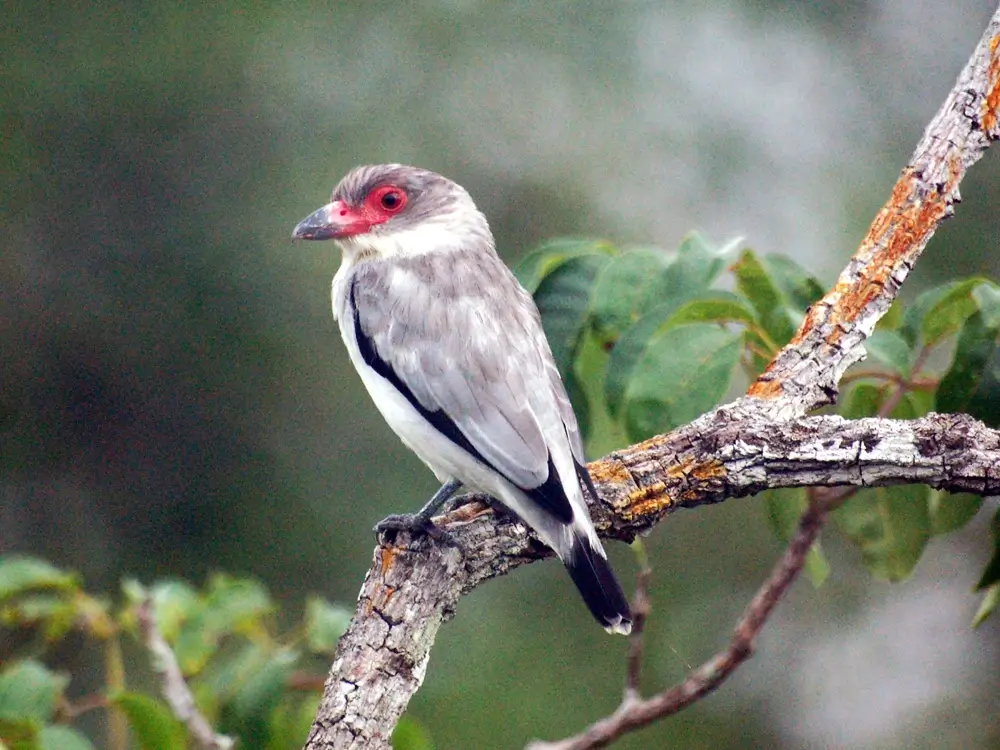
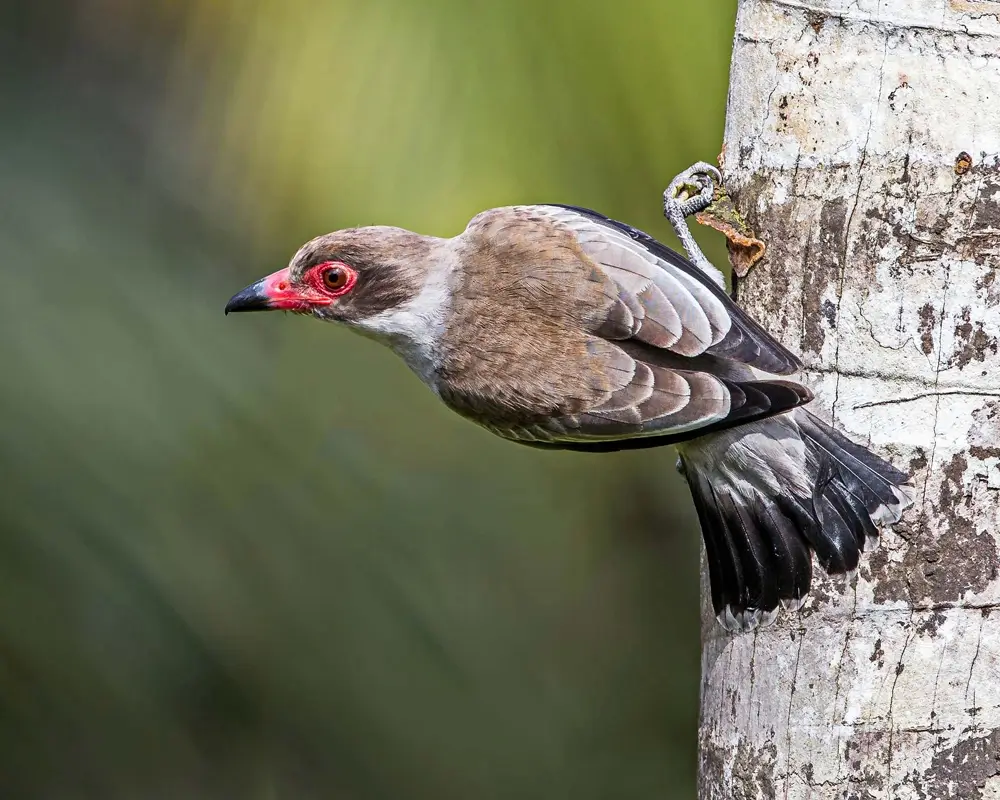
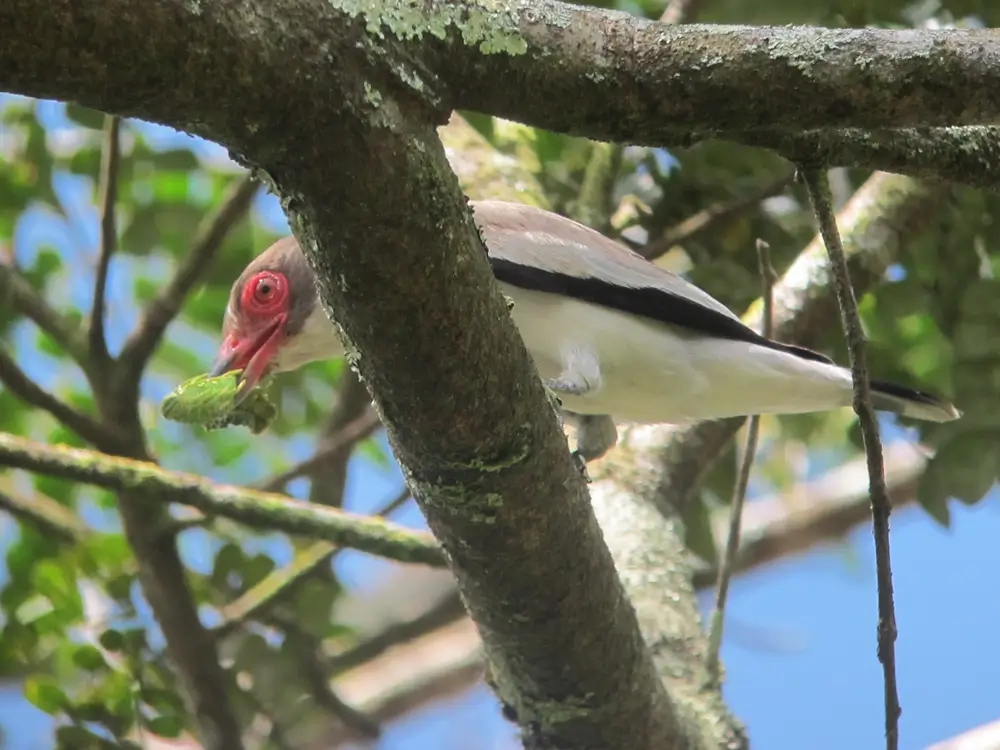
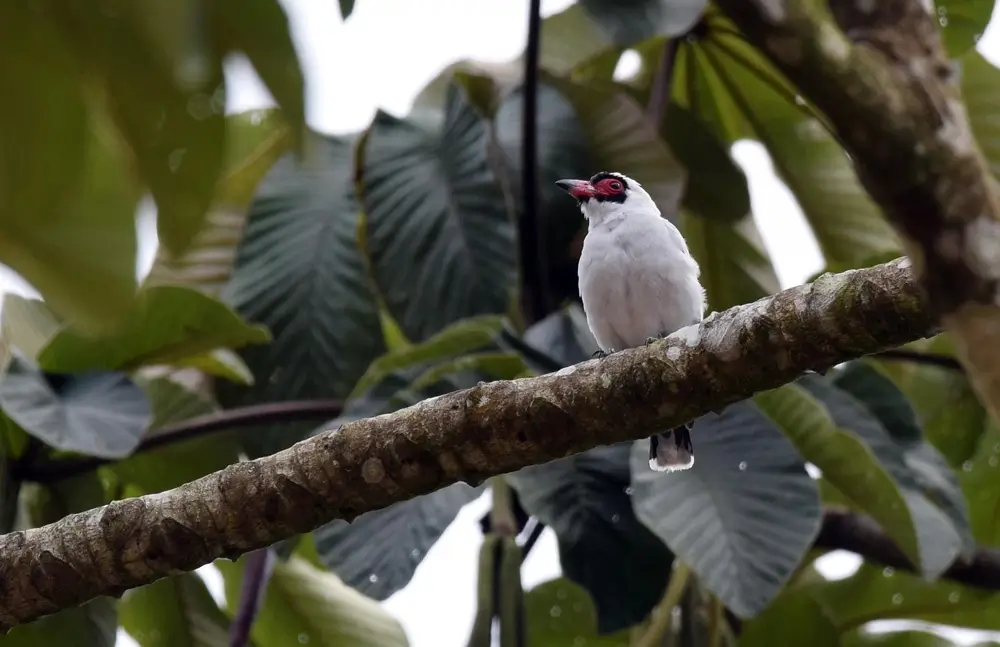
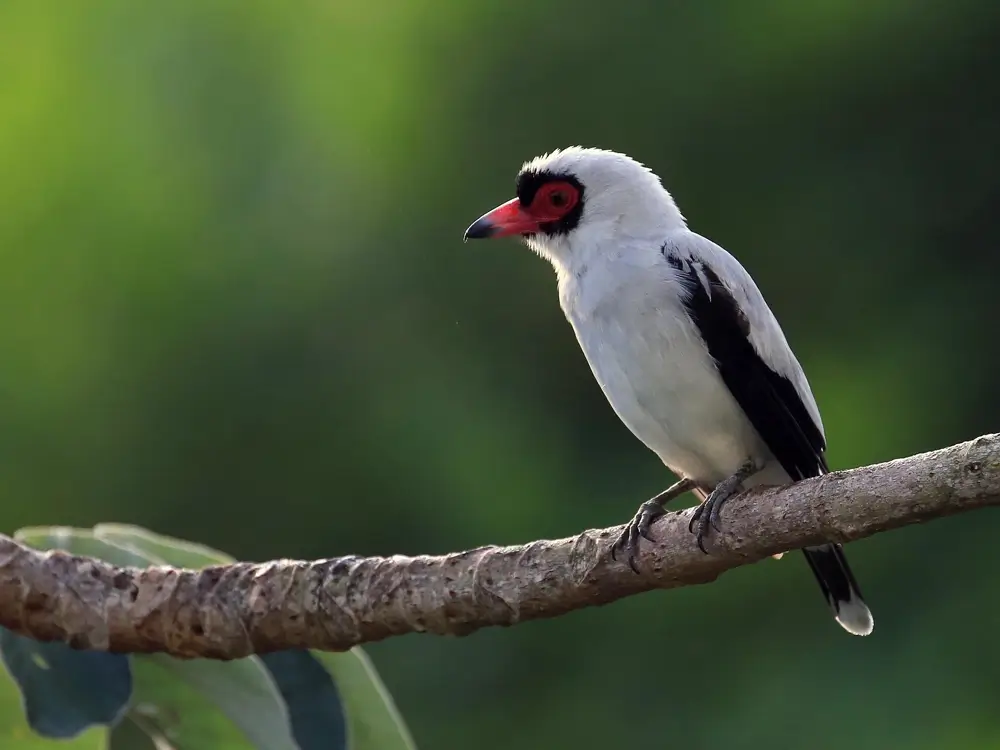
The masked tityra is 7.9-9.4 inches (20-24 cm) in length. It has a thick hooked red bill with a black tip, a black face mask with red around its eyes, a black band on its tail feathers, black flight feathers, and gray legs and feet.
The male has a grayish-white body, and the female has a brownish-gray body.
Habitat
The masked tityra is found in a variety of forests, including subtropical or tropical moist lowland forests, subtropical or tropical moist montane (mountain) forests, forest edges, clearings, and cultivated areas.
Diet
The masked tityra travels in pairs or small flocks and feeds on insects, small vertebrates, and fruit.
Life Cycle
The female masked tityra lays two eggs in a tree cavity or old woodpecker hole. The female incubates the eggs.
The chicks fledge when they are two weeks old. The female has two broods a year.
The masked tityra has a lifespan of 8-10 years in the wild.
Behavior
The masked tityra has a squeaky “quet, quet, quet” call.
The masked tityra is found in Belize, Bolivia, Brazil, Colombia, Costa Rica, Ecuador, El Salvador, French Guiana, Guatemala, Honduras, Mexico, Nicaragua, Panama, Paraguay, Peru, Trinidad and Tobago, and Venezuela.