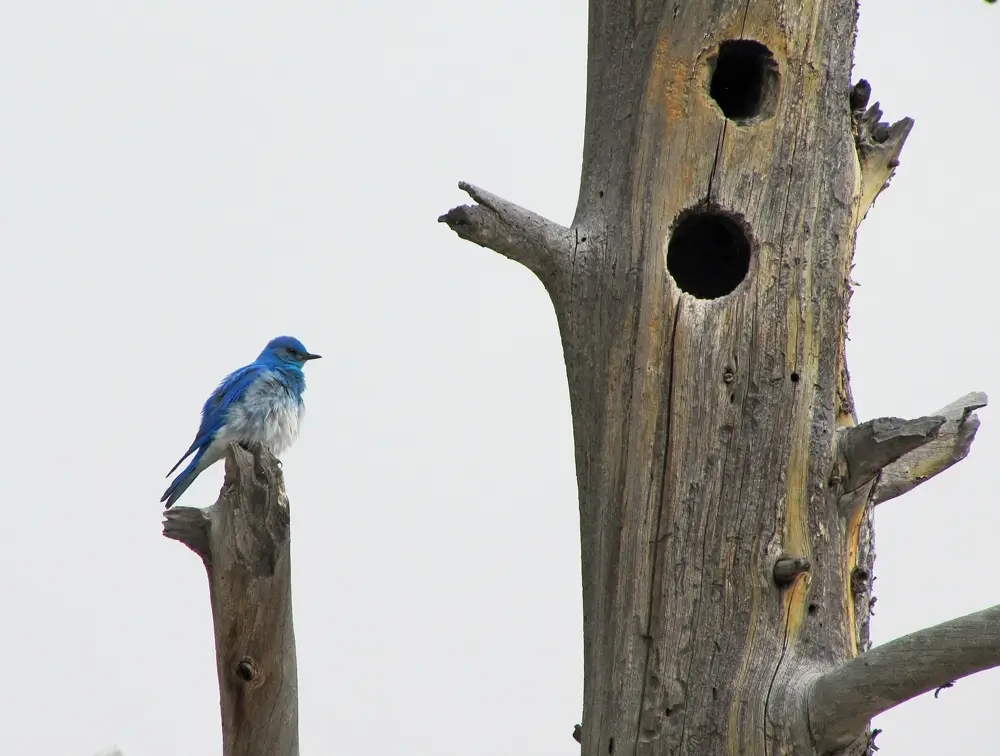
The mountain bluebird is 6-7 inches (15.2-17.8 cm) in length with a wingspan of 11-14.2 inches (28-36 cm).
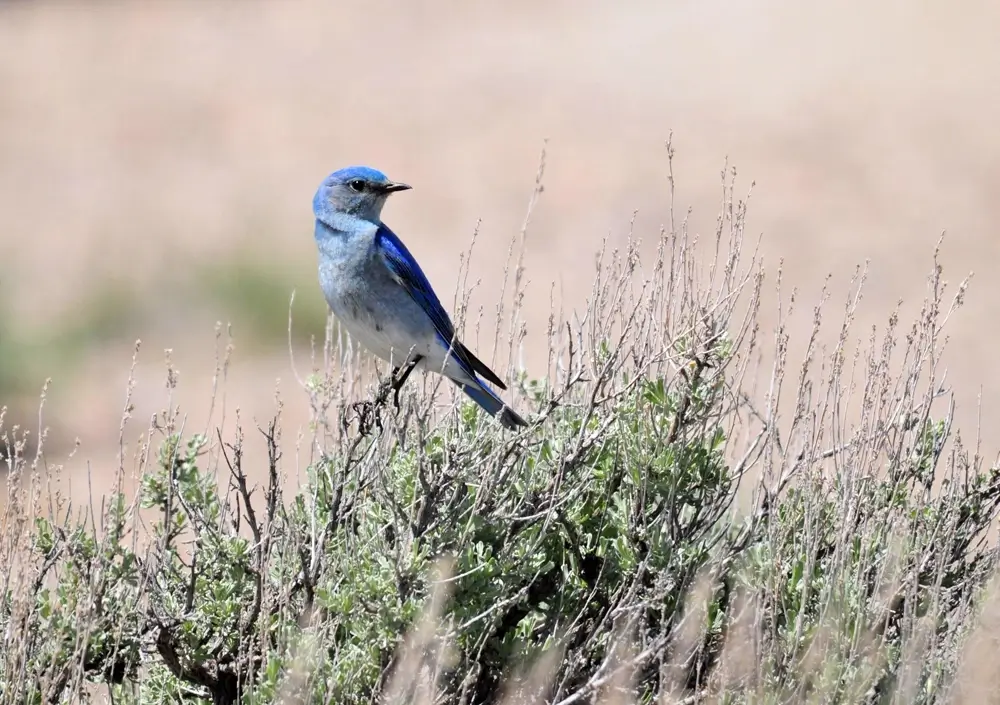
It has a small, pointed black bill and black legs and feet.
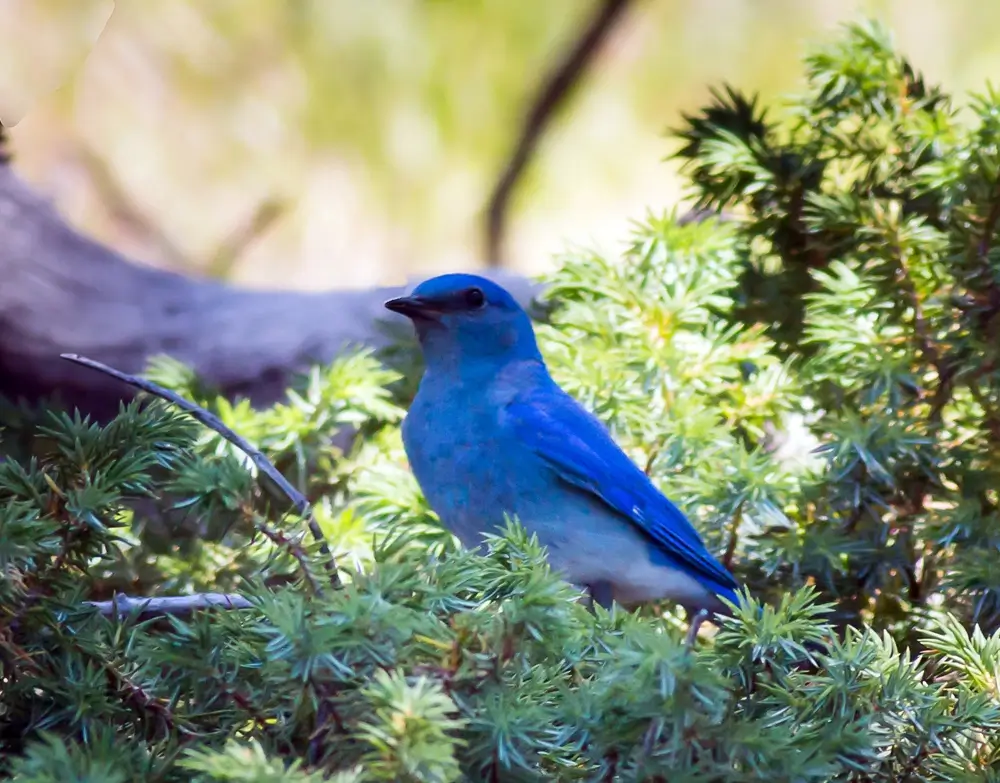
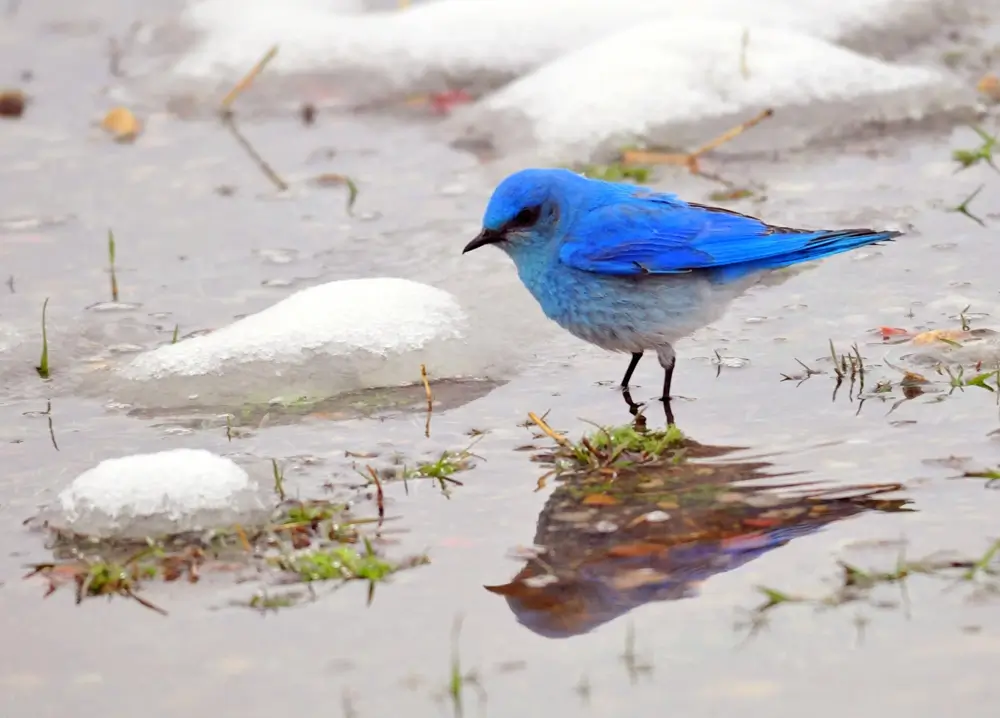
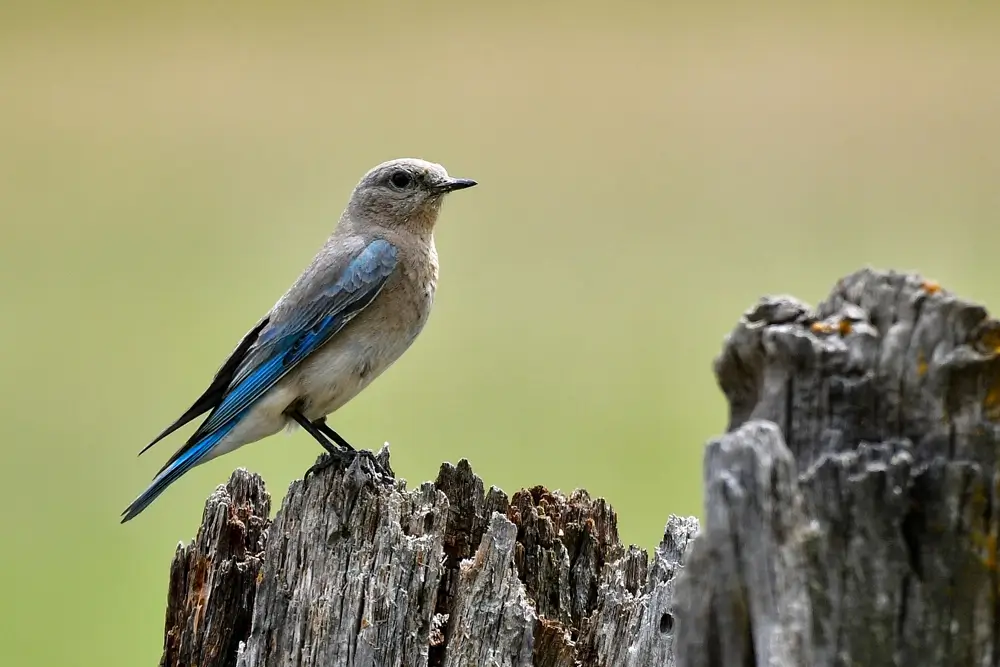
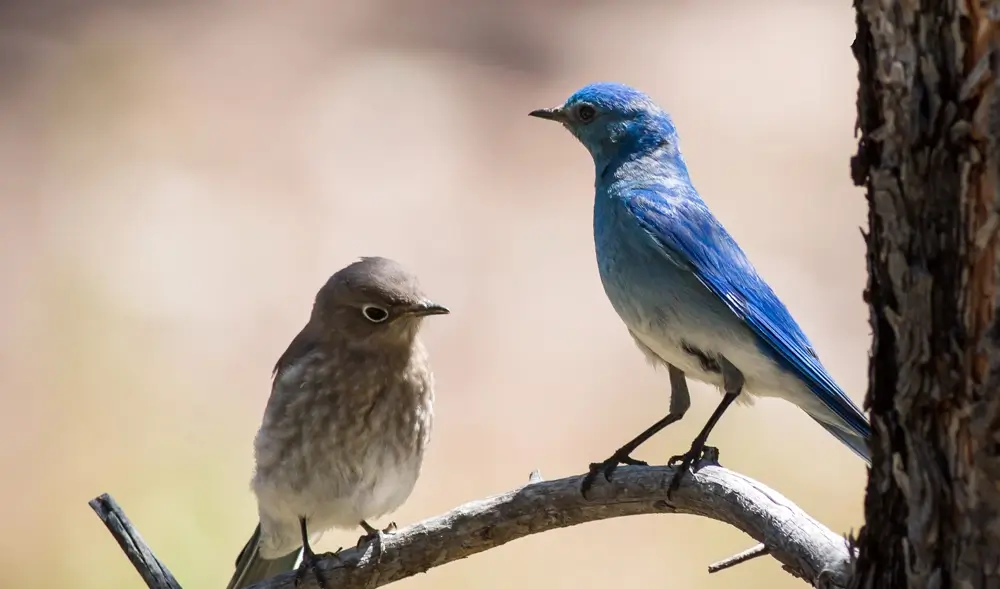
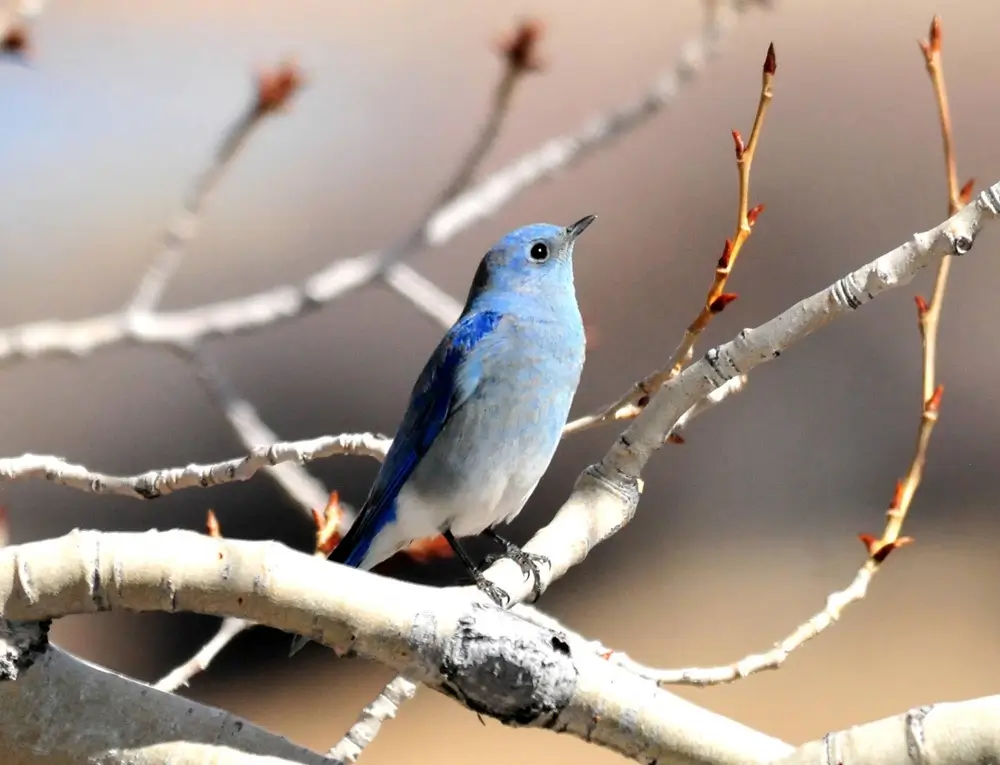
The male is a deep sky blue above and a paler blue below with a white stomach. The female is a duller blue-gray on her wings and has a gray throat, back, and crown.
Habitat
The mountain bluebird breeds in high mountain meadows with scattered trees and bushes and short grass. It winters at lower elevations in grasslands.
Diet
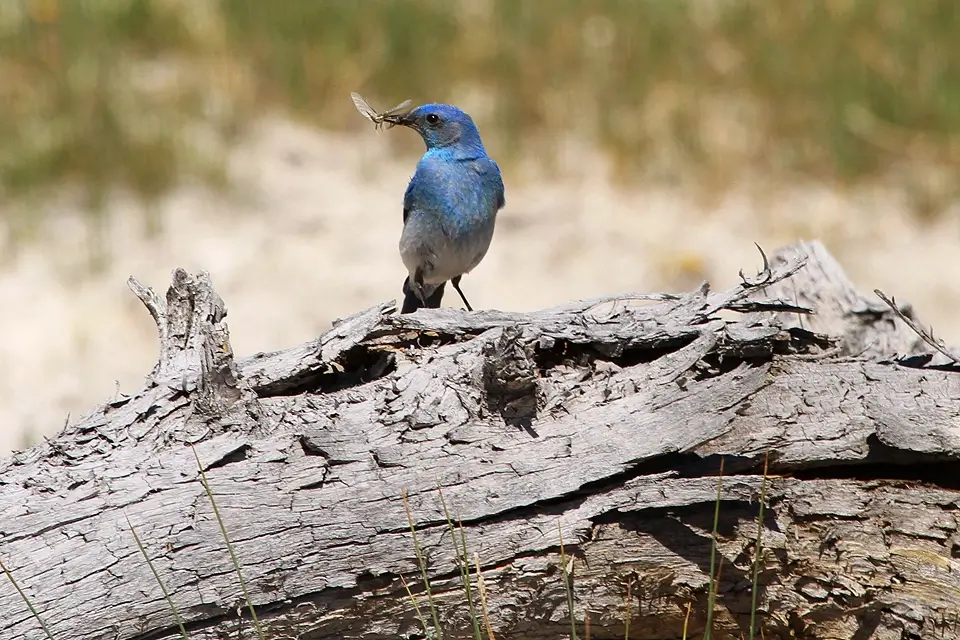
The mountain bluebird hovers just above the ground, looking for insects. When it spots one, it swoops down and snatches it up. It may also swoop down on its prey from a perch in a tree.
In the winter, mountain bluebirds travel in small flocks, sometimes with sparrows and western bluebirds, and forage for insects and berries.
Life Cycle
The male mountain bluebird usually arrives at the breeding site first and selects a nesting site in a tree cavity, an old woodpecker hole, or in a rocky crevice. When the female mountain bluebird arrives, the male flies in and out of its site and calls out in an attempt to attract the interest of a female.
Once a pair has mated, the female builds a nest of plant fibers and bark while the male guards her and the nesting site. The female lays 4-7 eggs at a rate of one egg per day. The female incubates the eggs.
The chicks hatch after about 13 days. The male brings food to the female and the chicks. The chicks fledge when they are 22-23 days old, but may stay with their parents for another two months. Sometimes a pair has a second brood during the breeding season.
The mountain bluebird has a lifespan of 6-10 years in the wild.
Behavior
Sometimes the mountain bluebird migrates alone, but it usually travels in flocks of up to 50 birds. They migrate slowly, stopping often to feed.
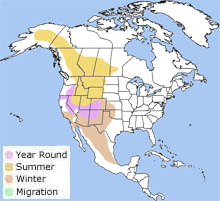
The mountain bluebird breeds from east-central Alaska, southern Yukon, and western Manitoba south in the mountains to southern California, central and southeastern Nevada, northern and east-central Arizona, southern New Mexico, and east to northeastern North Dakota, western South Dakota, and central Oklahoma.
It winters from Oregon south to Mexico, and Texas, and east to eastern Kansas, western Oklahoma, and central Texas.