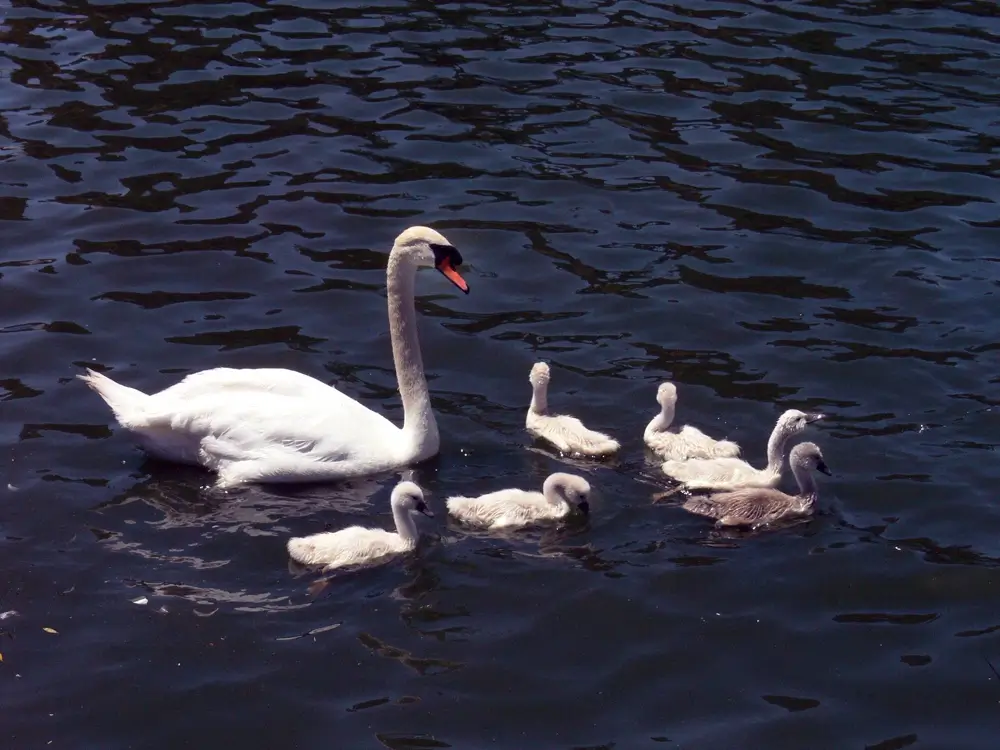
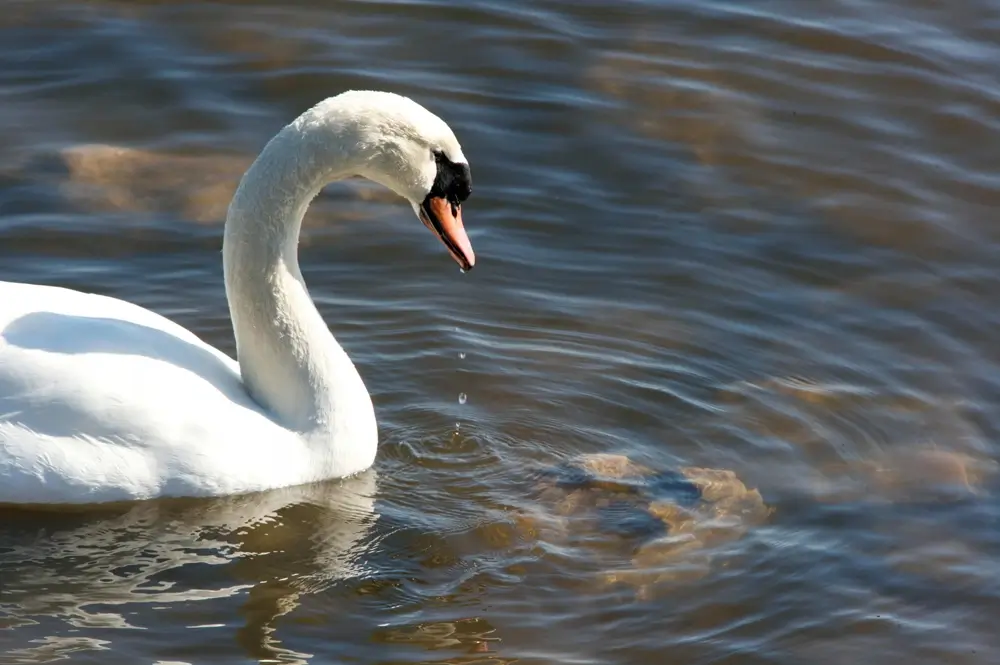
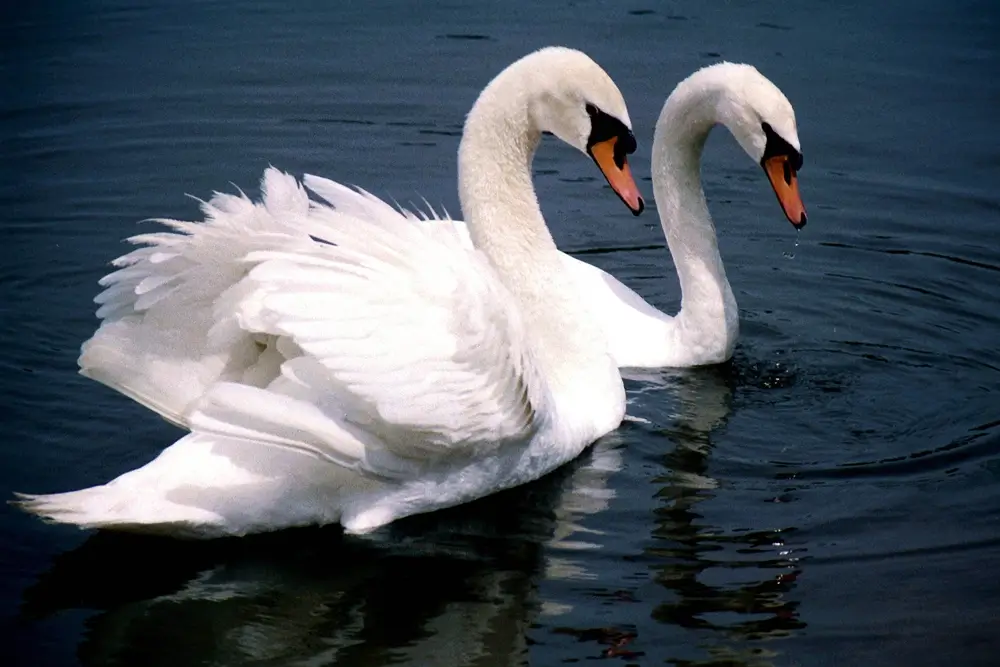
The mute swan is 4-5 feet (1.2-1.5 m) in length with a wingspan of about 6.8-7.8feet (2.1-2.4 m).
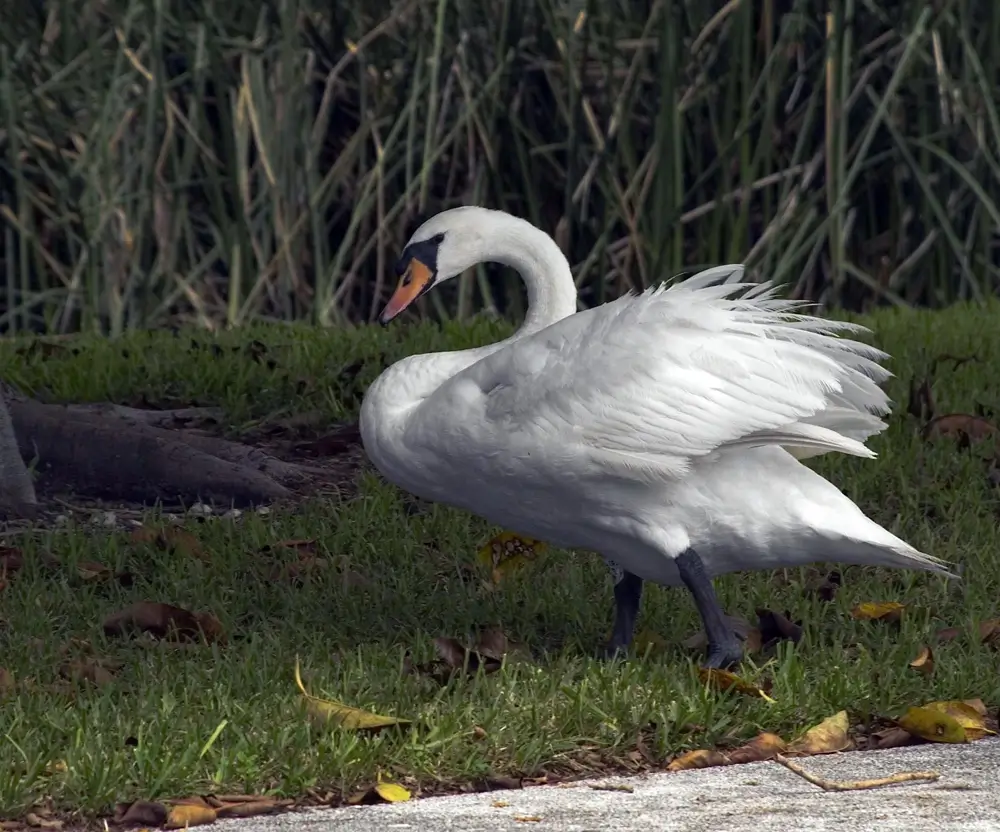
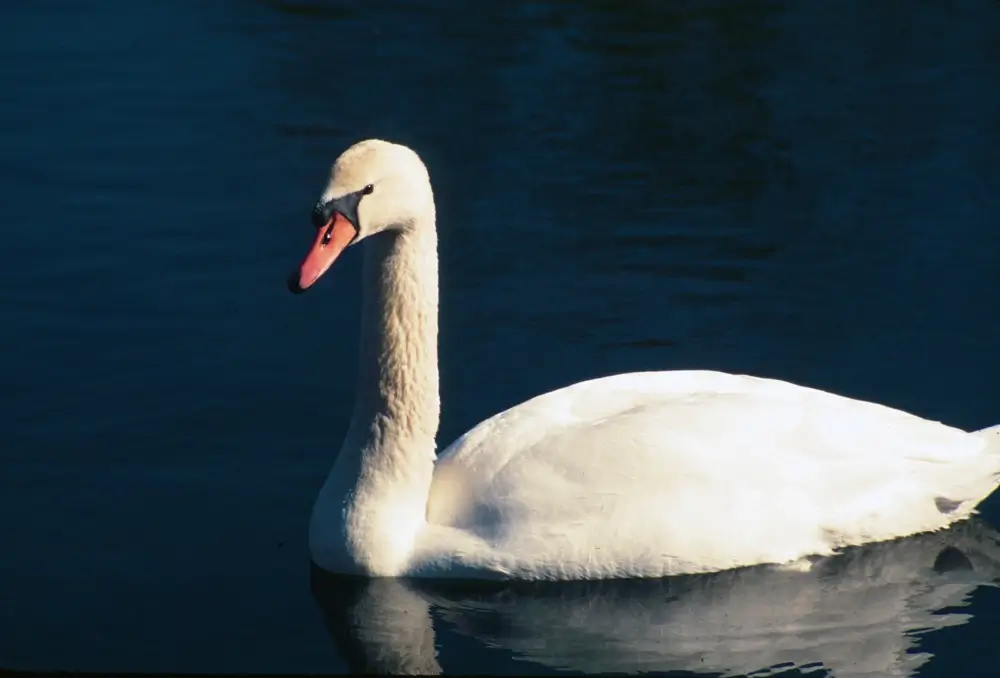
It is white and has a long, graceful neck; an orange bill with a black knob at the base; a black face; and black feet and legs. It has a pointed tail and lacy wing feathers.
Males and females look alike, but the male is usually a little larger, and the black knob at the base of his bill is larger.
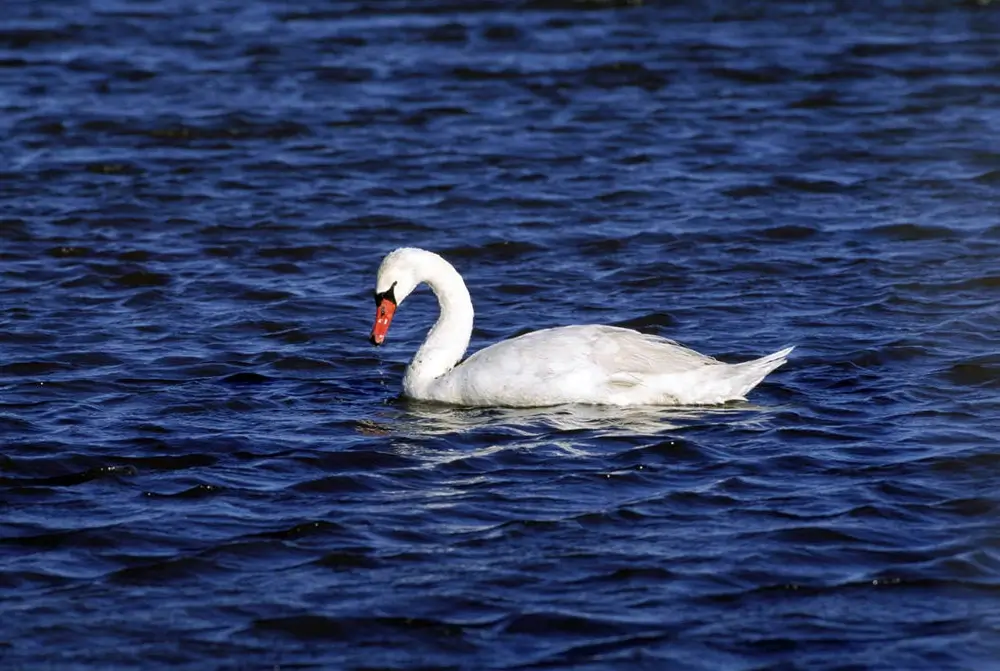
The mute swan plunges its head and long neck underwater to forage for aquatic plants. It also eats insects, fish, worms, and frogs.
Mute swans also swallow gravel to help them digest their food.
Life Cycle
Mute swans mate in the early spring. Male and female pairs may mate for many years.
The female lays 5-6 eggs in a cup-shaped depression lined with down on a large mound of vegetation. The female and the male incubate the eggs for 36 to 38 days. The female spends more time incubating the eggs than the male. The male spends a lot of his time guarding the nest.
The chicks, or cygnets, are a downy brownish-gray. The male sometimes leads newly hatched cygnets down to the water while the female incubates the remaining eggs.
The cygnets can swim and feed themselves shortly after hatching. Sometimes the cygnets ride on their mother’s back. The cygnets fledge when they are 60 days old, but may remain with their parents until the next breeding season.
The mute swan has a lifespan of 10 to 20 years in the wild. It can live 30-40 years in captivity.
Behavior
Male swans are very territorial and chase intruders away. They arch their wings over their backs and charge at the intruder.
Mute swans take off from the water by running very fast and flapping their wings until they build up enough speed to take off. The mute swan can fly at speeds of up to 50 miles per hour(80.1 kph).
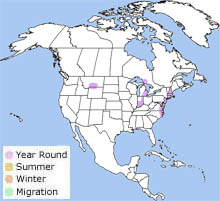
In North America, the mute swan does not migrate, but it may move short distances from frozen water to open water.
When the mute swan swims, it curves its neck into an S-shape and points its bill down. Other swan species, like the tundra swan, hold their necks up straight when they swim.
Did You Know?
The mute swan isn’t really mute; it does make a soft snorting call and it hisses loudly when it is threatened.
Support for NatureWorks is provided by:
The Mute Swan in NH
The mute swan is an introduced species in New Hampshire. It is a year-round resident in the state.