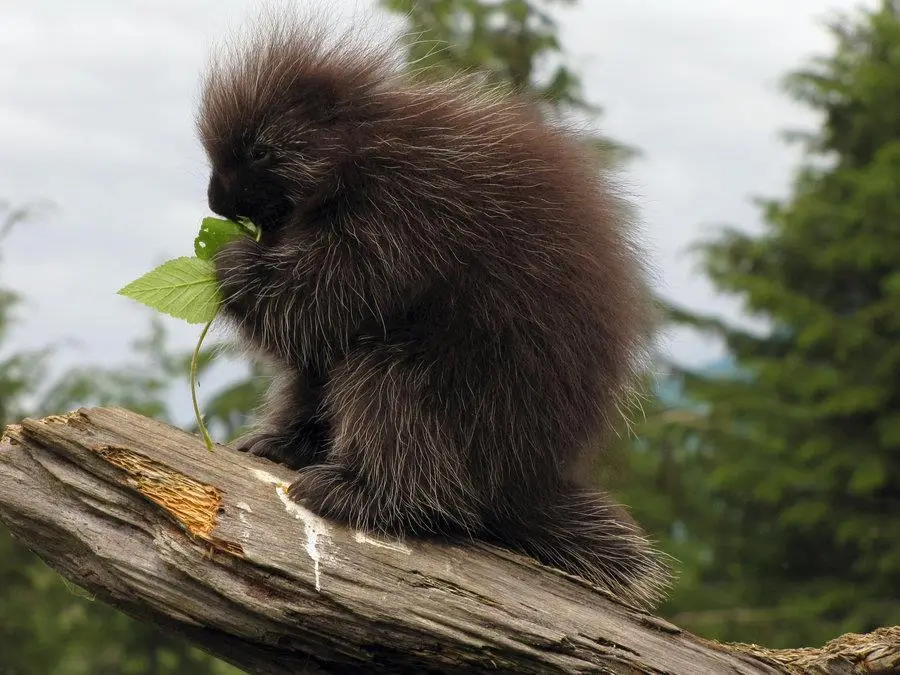
The North American porcupine is a large rodent. It is 2-4 feet (0.61-1.2 m) long and weighs 10-30 pounds (5-13.6 kg).
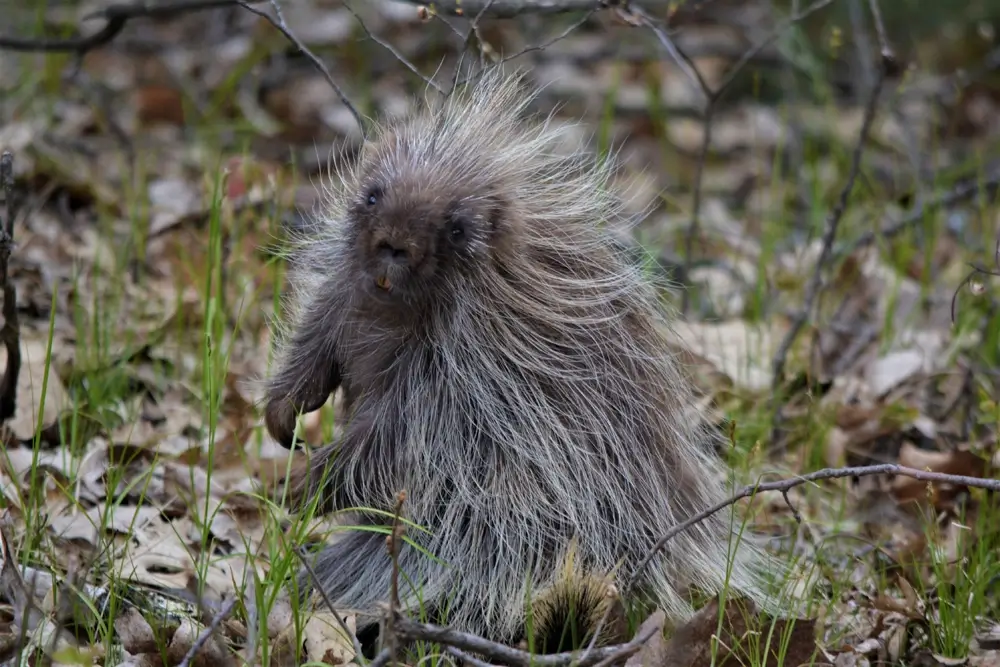
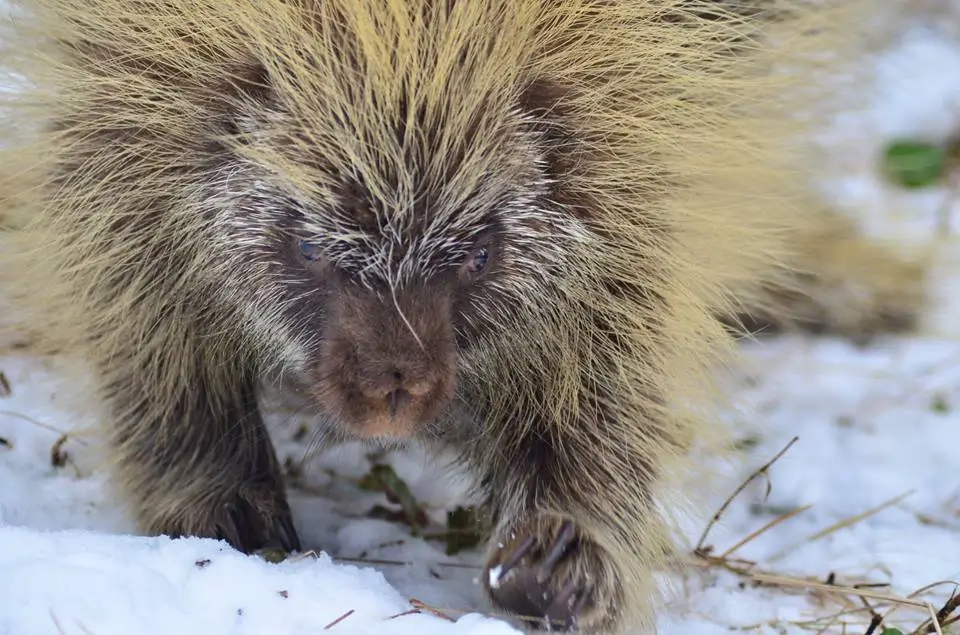
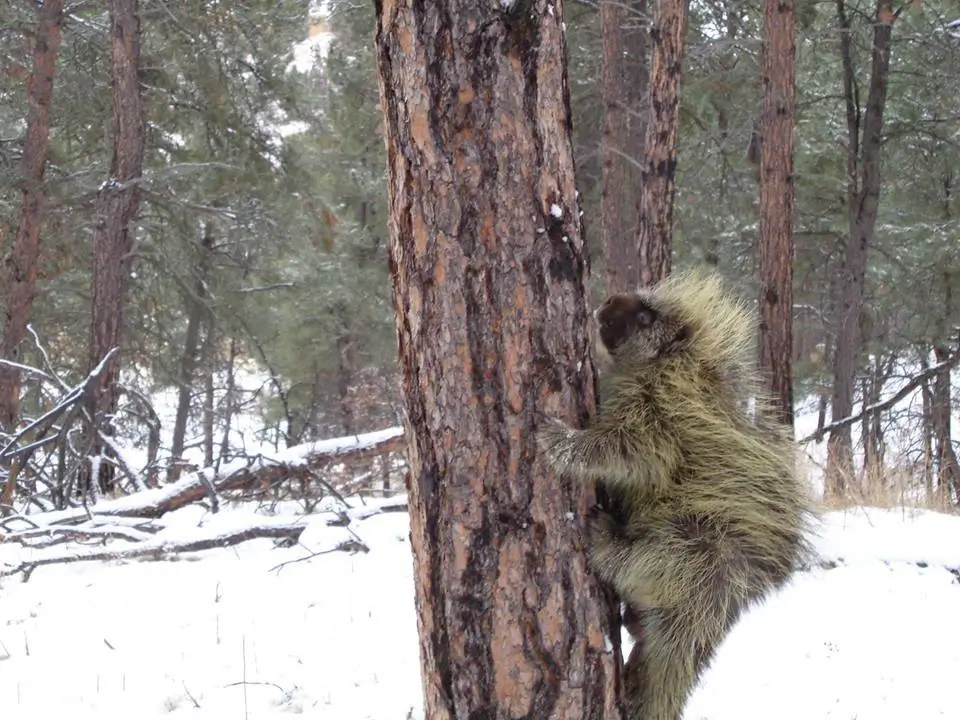
It has black to brownish-yellow fur and strong, short legs. It has hairless soles on its feet that help it climb trees. It has a round body, small ears, and a small head.
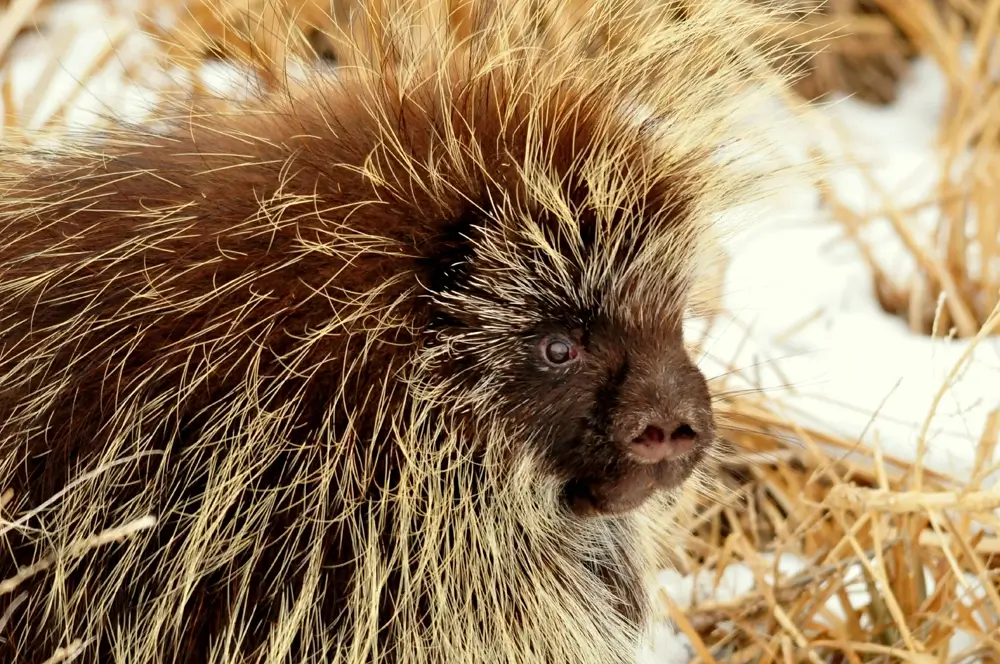
The most recognizable feature of the porcupine is its quills. A porcupine may have as many as 30,000 quills. The quills are hairs with barbed tips on the ends. Quills are solid at the tip and base and hollow for most of the shaft. The porcupine has quills on all parts of its body, except for its stomach. The longest quills are on its rump. The shortest quills are on its cheeks. The porcupine uses its quills for defense.
The porcupine cannot shoot its quills. When a predator approaches, the porcupine turns its back, raises its quills, and lashes out at the threat with its tail. If the porcupine hits an animal with its quills, the quills become embedded in the animal. Body heat makes the barbs expand, and they become even more deeply embedded in the animal’s skin. If an animal is hit in a vital place, it may die.
The porcupine is not an aggressive animal. It only attacks if it is threatened. Some animals, like the fisher, are experts at attacking porcupines.
Habitat
The North American porcupine lives in coniferous, deciduous, and mixed forests. In the West, it is also found in scrubby areas.
Diet
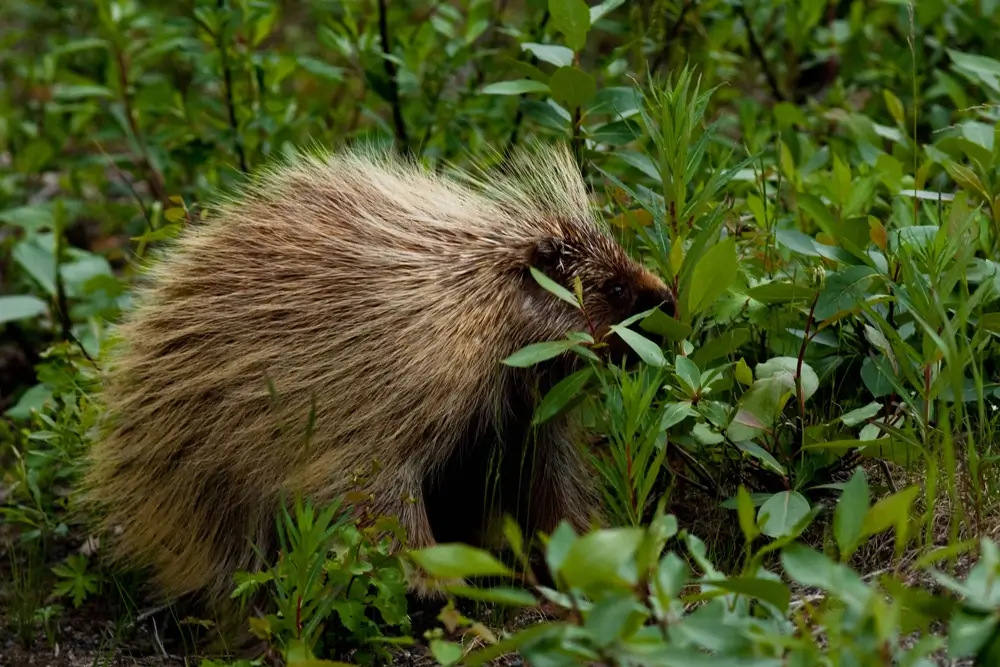
The North American porcupine is an herbivore. It eats leaves, twigs, and green plants like skunk cabbage and clover. In the winter, it may eat bark.
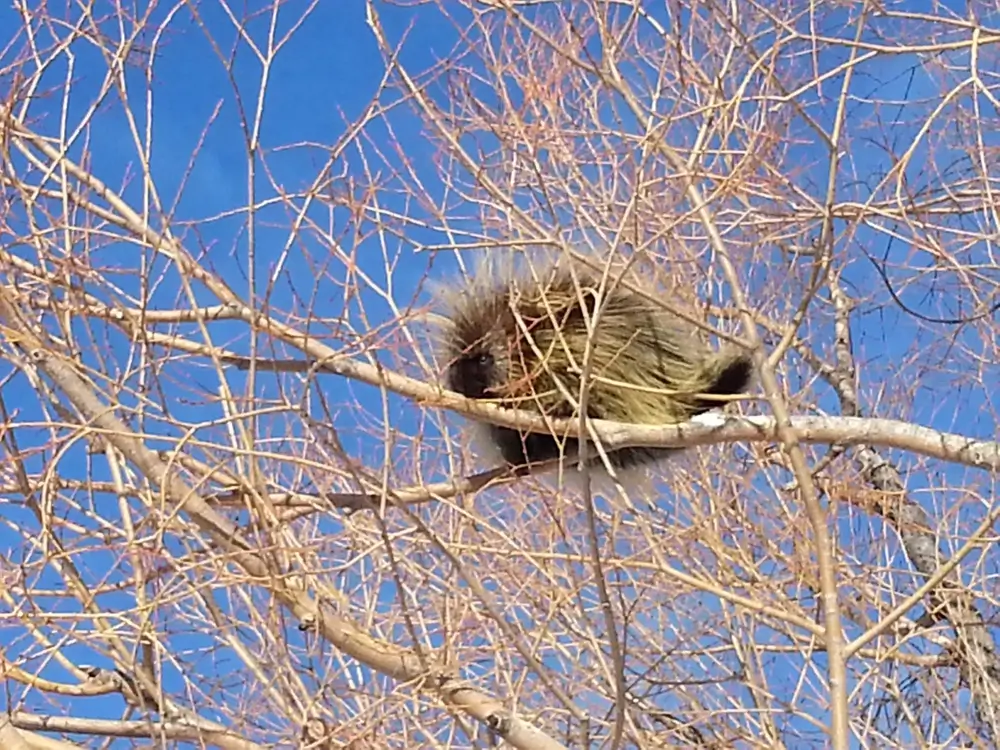
It often climbs trees to find food. It is mostly nocturnal but sometimes forages for food during the day.
Life Cycle
Porcupines mate in late summer and early fall. Porcupines are very vocal during mating season. Males often fight over females. The male performs an elaborate dance and sprays urine over the head of the female.
Seven months after mating, the female gives birth to a single baby. A baby porcupine is called a porcupette. When the porcupette is born, its quills are soft. They harden about an hour after birth. The baby begins to forage for food after only a couple of days. The porcupette stays with its mother for about six months.
North American porcupines have a lifespan of 6-18 years in the wild. In captivity, they can live to be 20 years old.
Behavior
The porcupine is a solitary animal, although it may den with other porcupines in the winter. It makes its den in caves, decaying logs, and hollow trees. The porcupine doesn’t hibernate, but it may stay in its den during bad weather.
The porcupine is a good swimmer; its hollow quills help keep it afloat. It is also an excellent tree climber and spends much of its time in trees.
Did You Know?
The North American porcupine is a very vocal animal and has a wide variety of calls, including moans, grunts, coughs, wails, whines, shrieks, and tooth-clicking.
Support for NatureWorks Redesign is provided by:
The North American Porcupine in NH
The North American porcupine is found throughout New Hampshire.
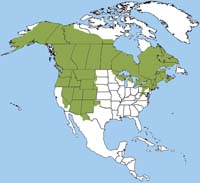
The North American porcupine is found in most of Canada and the western United States south to Mexico. In the eastern United States, it is found in Wisconsin, Michigan, Pennsylvania, New York, and New England.