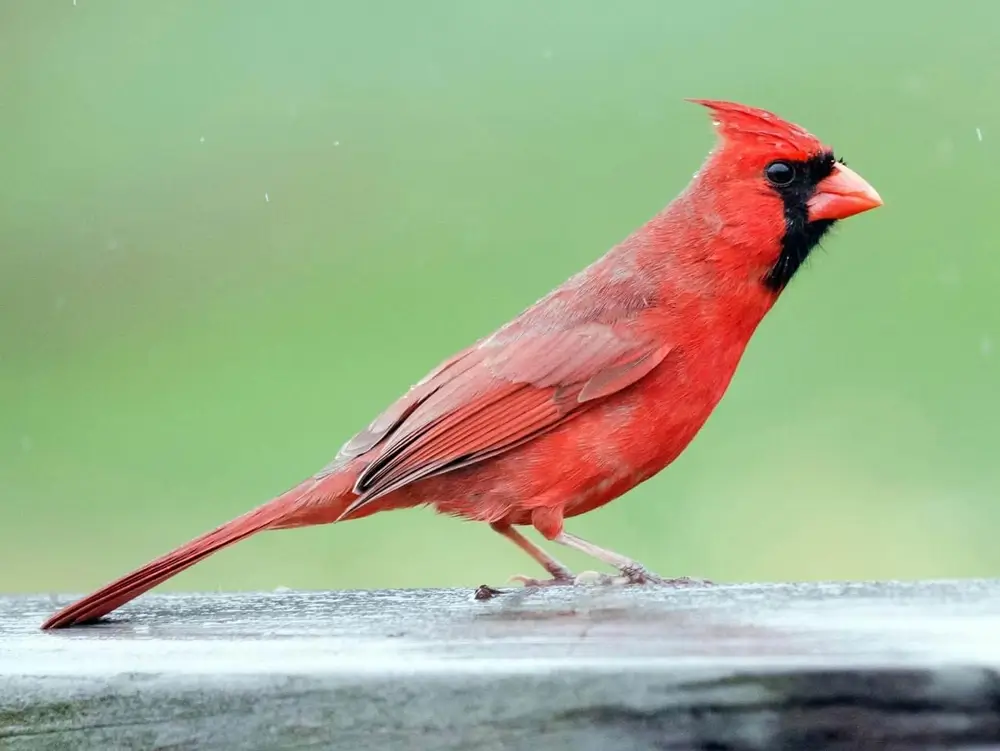
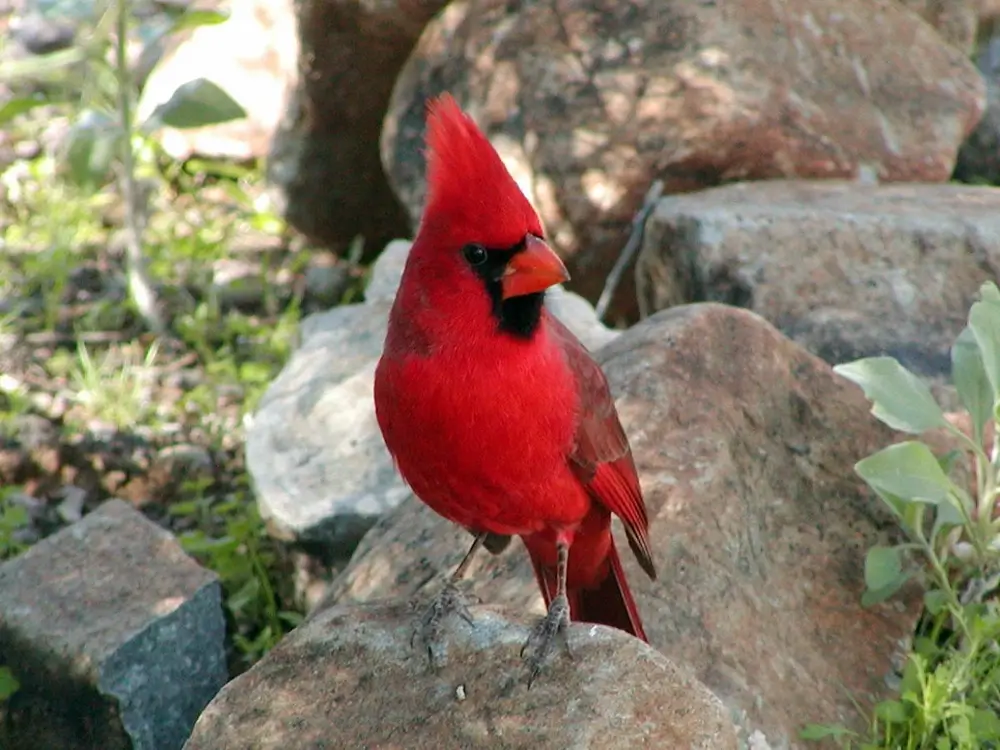
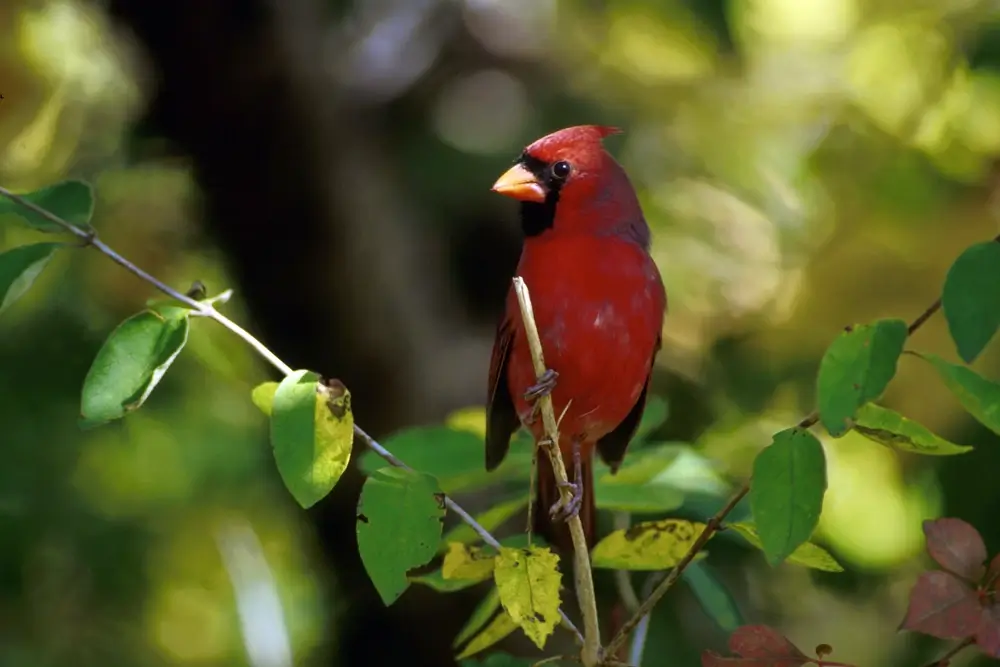
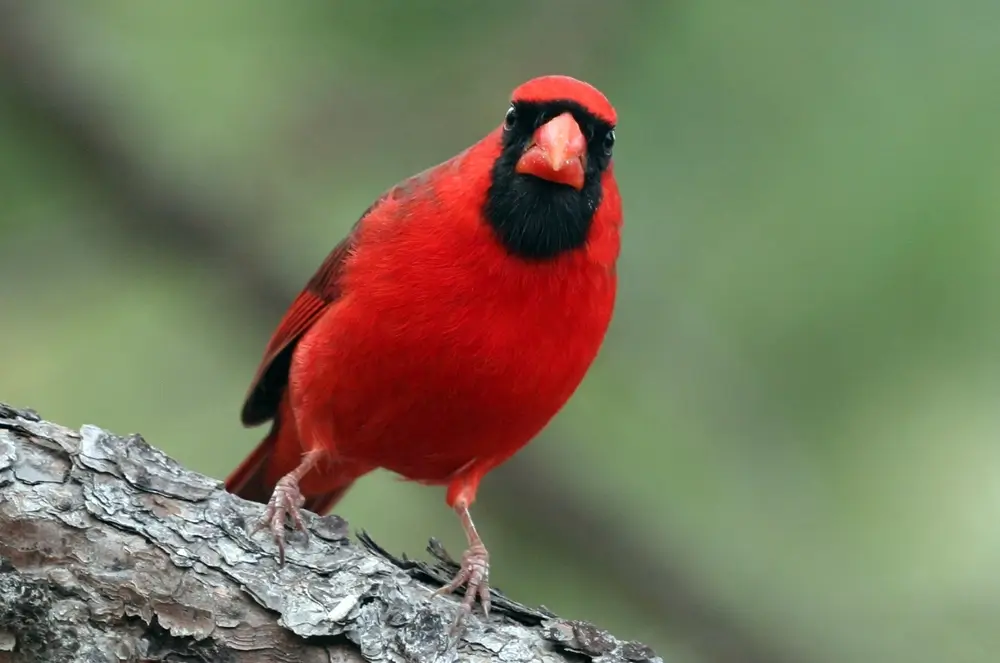
The northern cardinal is 8.3-9.3 inches (21-23.6 cm) in length with a wingspan of 9.8-12.2 inches (25–31 cm).
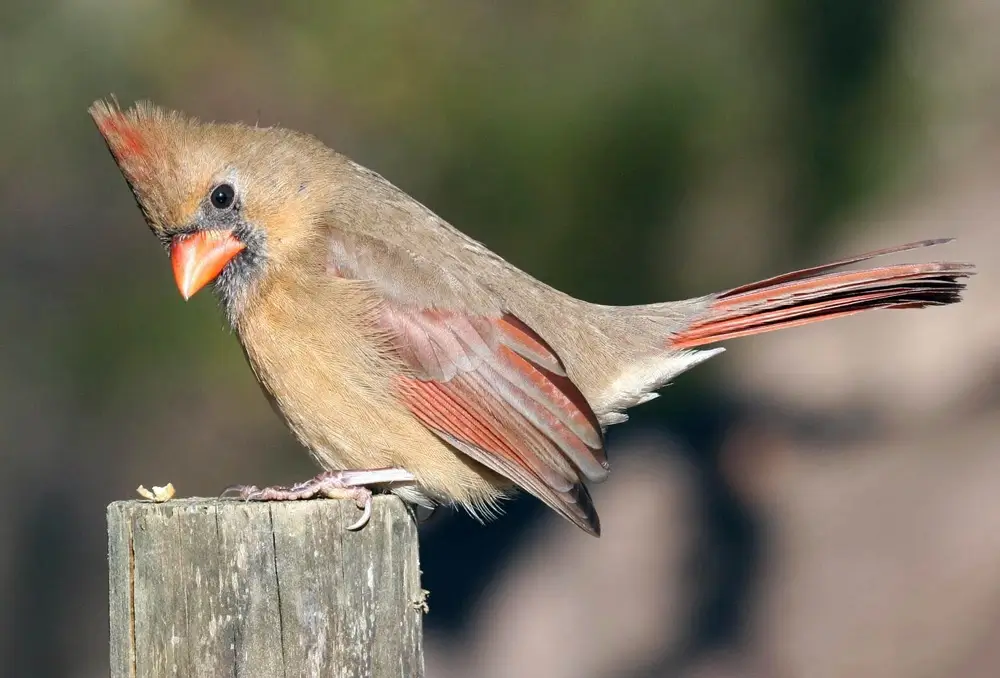
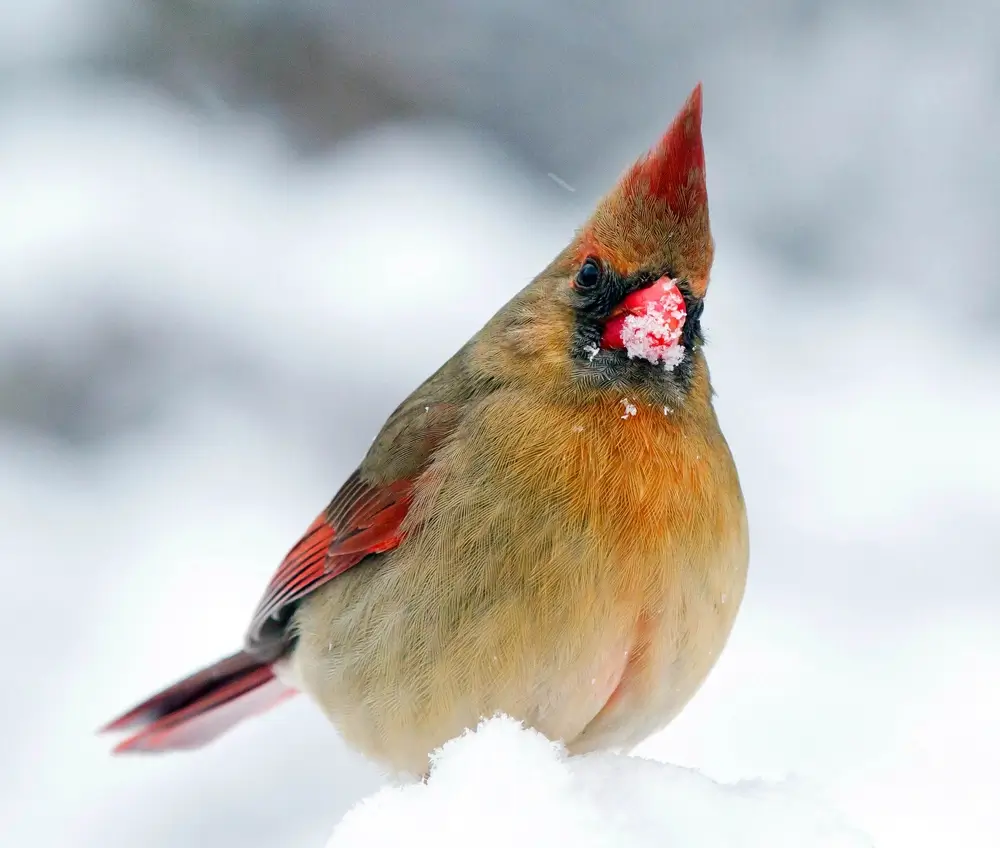
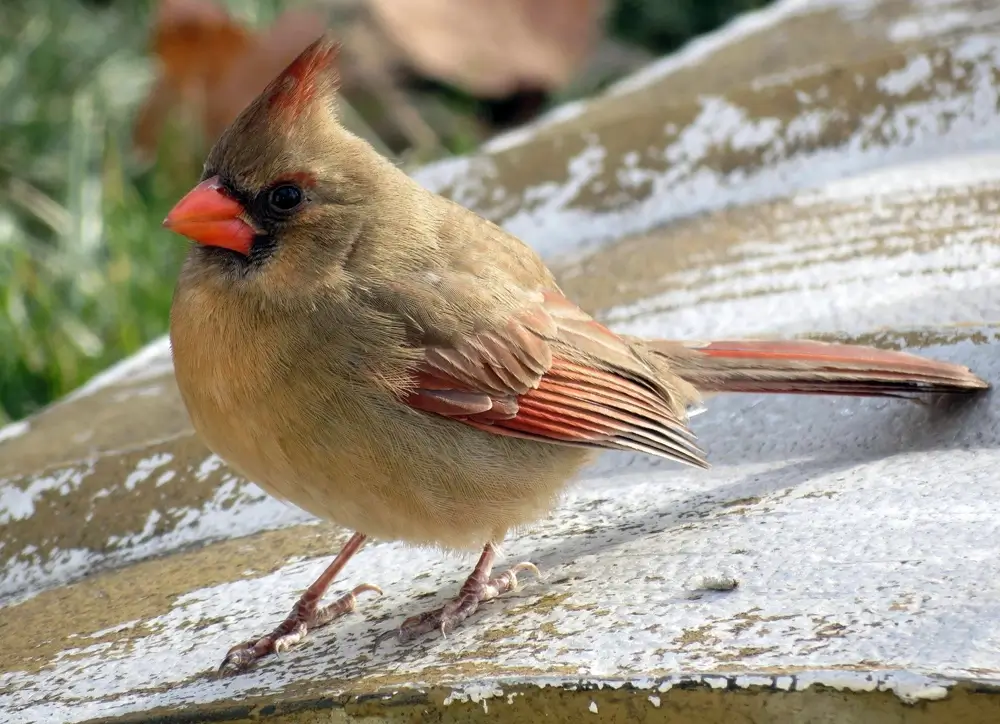
It has a black mask on its face, a crest on its head, and a short, cone-shaped bill. The mask on the female is usually lighter than the mask on the male.
Cardinals are known for their bright red color, but only the males are red. The female is a dull brown or olive color with dull red on her wings and tail.
Habitat
Cardinals tend to live at the edge of woodlands and in the vegetation near houses and gardens. The male cardinal aggressively defends its territory. In fact, a male cardinal may even defend its territory from a reflection of itself in a window or a mirror.
Diet
Cardinals eat seeds, grains, fruits, and insects. They are often found at bird feeders
Life Cycle
Cardinals usually raise two broods of young a year. They mate in March and again from May to July.
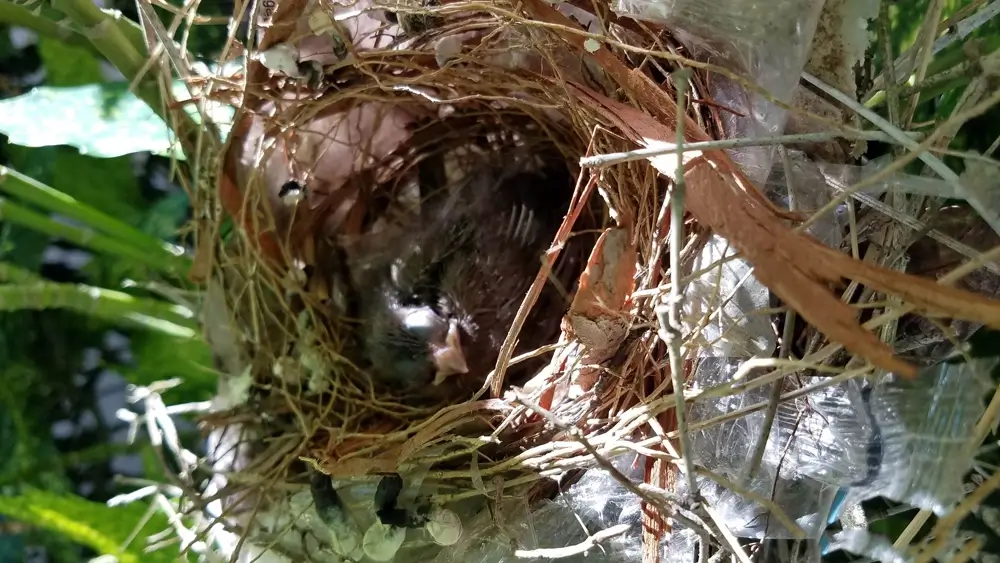
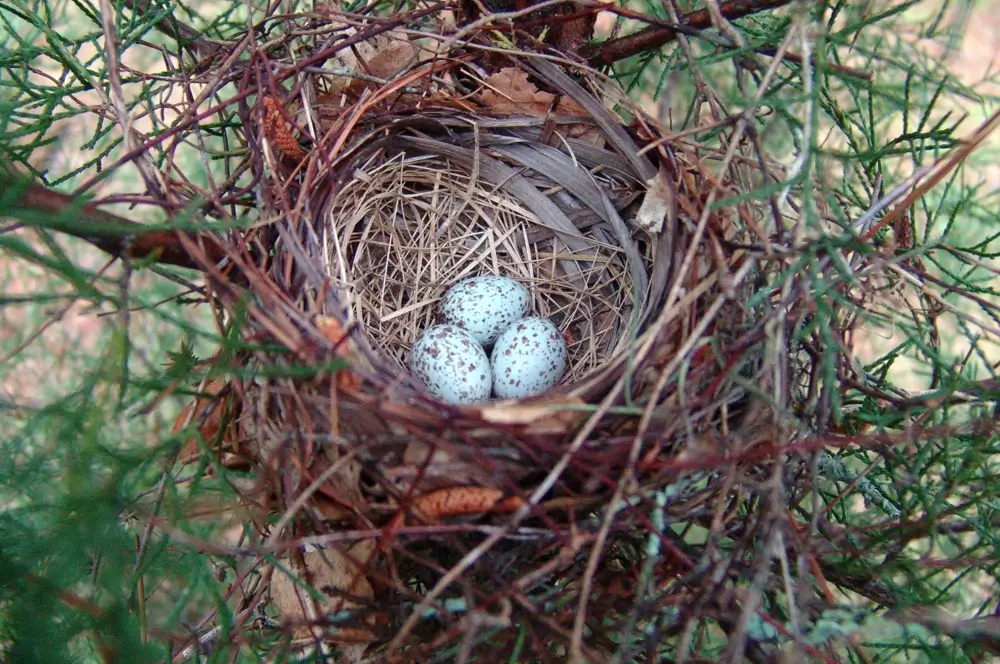
Cardinals usually build cup-shaped nests in small trees, bushes, shrubs, and thick vines that are no more than three to eight feet off the ground. Their nests are made of twigs and bark and are lined with grass, moss, and other soft materials.
The female usually lays four eggs. The eggs take about 12 days to hatch. Young cardinals fledge (develop flight feathers) when they are 11-13 days old.
Cardinals have an average lifespan of around 3 years.
Behavior
Cardinals are non-migratory birds. Most cardinals live within a mile of where they were born.
Cardinals are songbirds, and the male uses its call to attract a mate. Unlike most northern songbirds, the female also sings. The female cardinal often sings from her nest in what may be a call to her mate.
Cardinal pairs have song phrases that they share. If you listen carefully, on the first sunny days of late winter, you may hear the cardinal’s song. It sounds like ‘cheer, cheer, cheer’ or a short ‘chink’ sound.
Did You Know?
The cardinal is named for its bright red color, which is the same color worn in the robes of Cardinals in the Catholic Church.
Support for NatureWorks is provided by:
The Northern Cardinal in NH
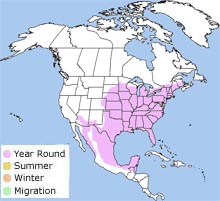
The northern cardinal is a year-long resident of New Hampshire and is found across the state.
The northern cardinal is found in most parts of the United States east of the Rocky Mountains. It is also found in parts of Arizona, California, and New Mexico.
The cardinal population has increased in the past 50-60 years, and now includes New York and New England.
Human-caused changes to habitats have created more suitable areas for the cardinal and made it easier for it to find the food it needs to survive in colder climates.