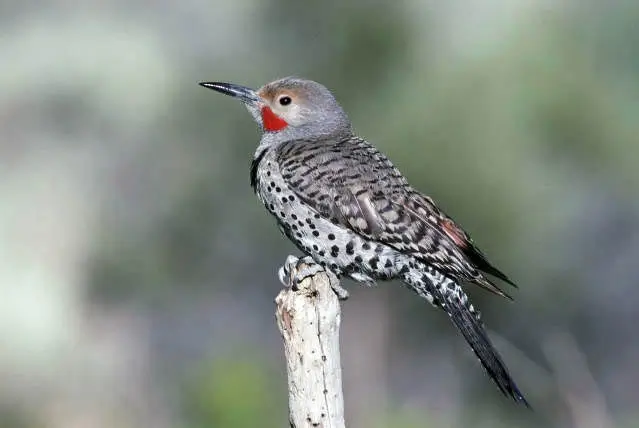
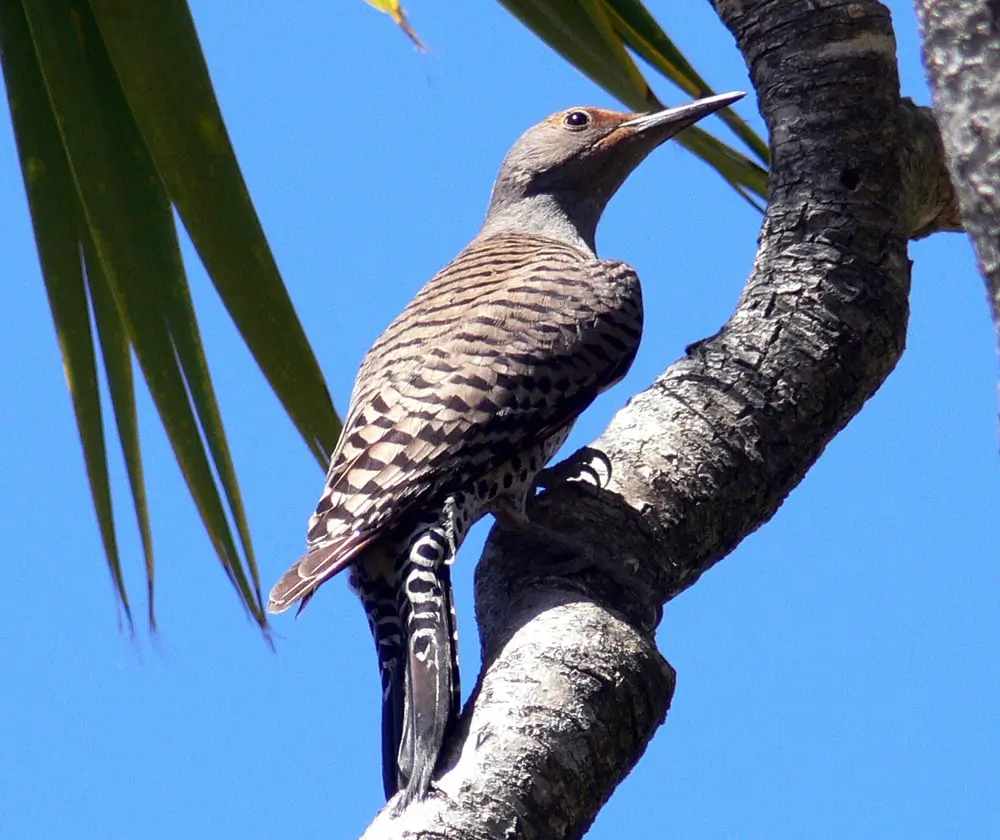
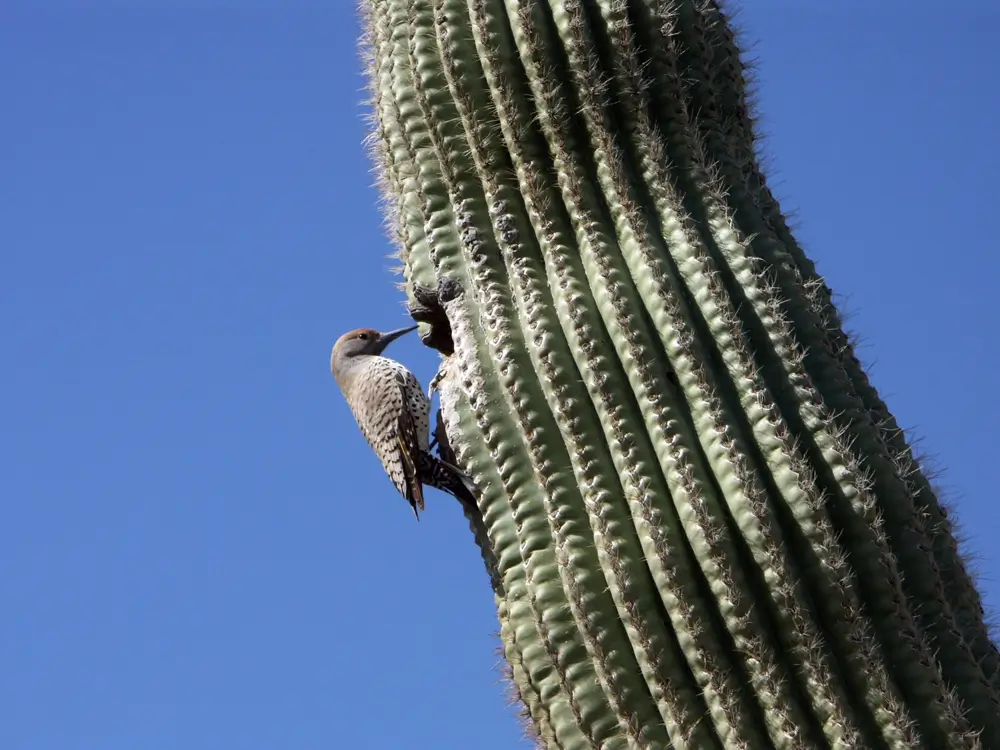
The northern flicker is a large brown woodpecker. It is 11–12 inches (28–31 cm) in length with a wingspan of 17–20 inches (43–51 cm)
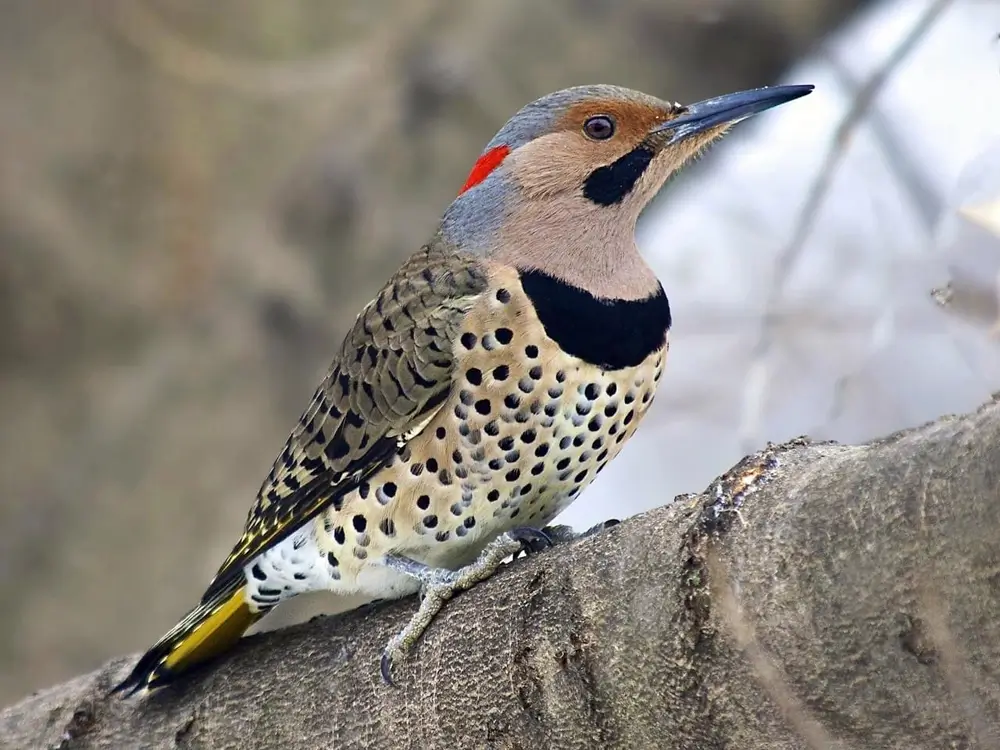
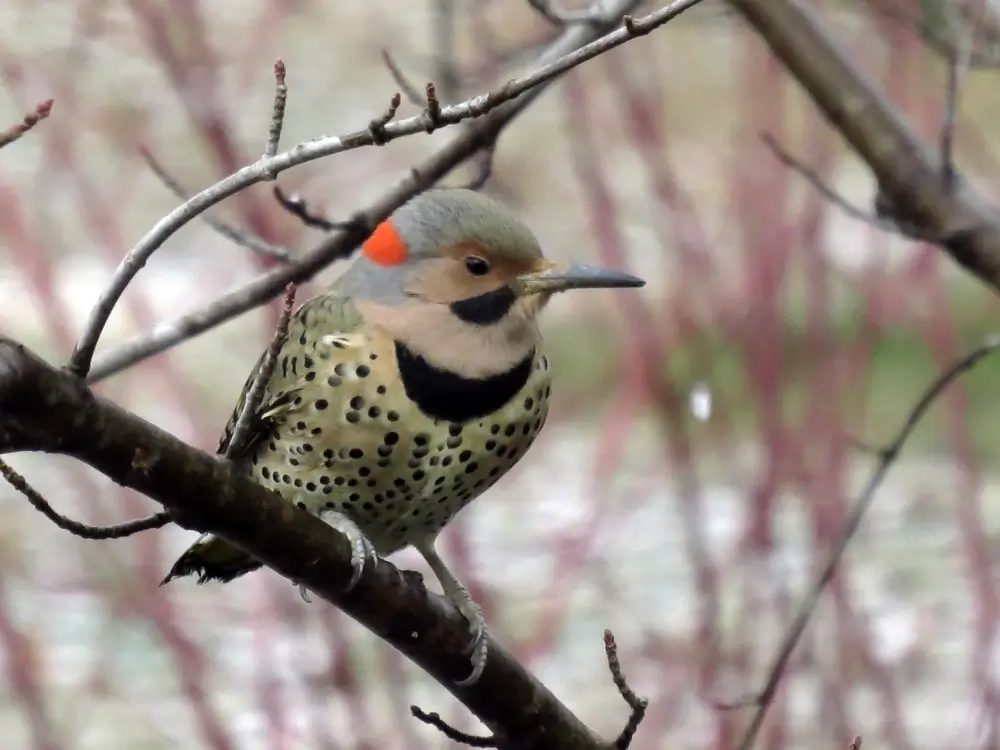
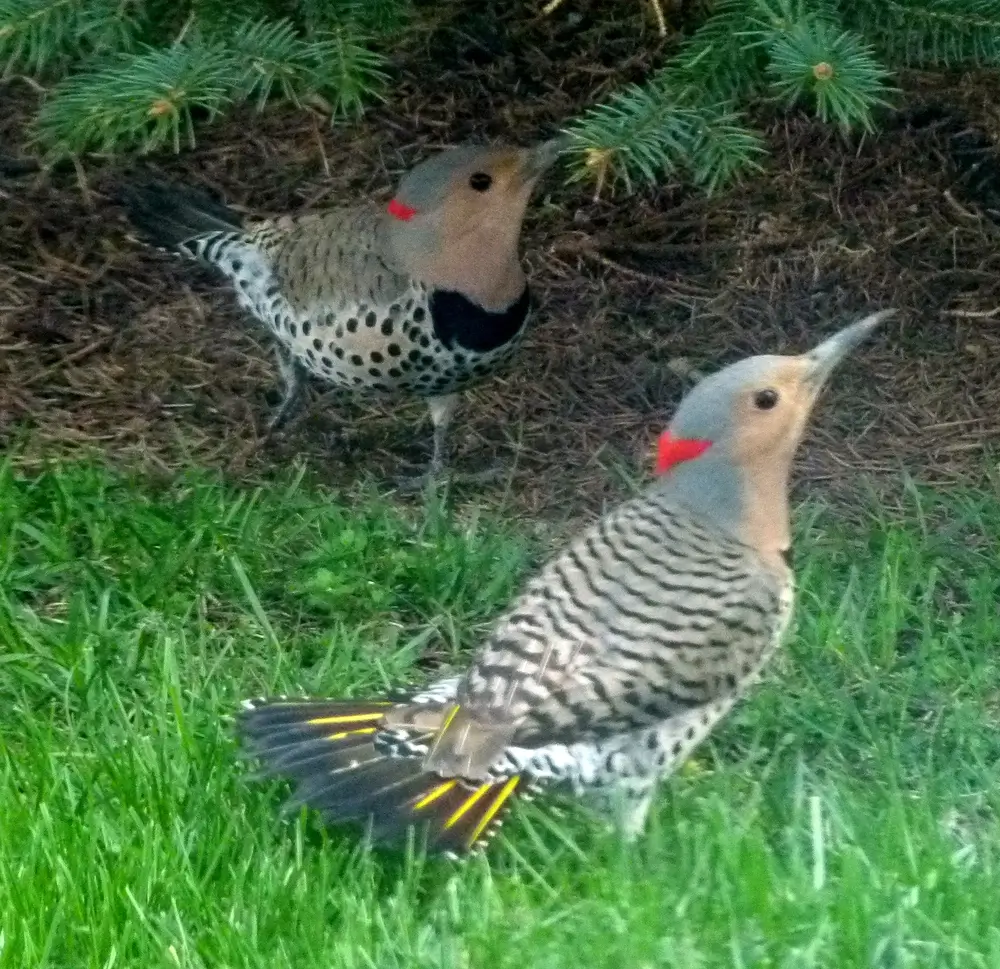
It has a white tail with black bars and a black tip, a light brown to off-white breast with black to brown spots, and a black “bib” on its upper chest. The male has a black or red “mustache” that runs from his bill down to his cheek.
There are five subspecies of northern flicker: the yellow-shafted flicker, the red-shafted flicker, the gilded flicker, the Guatemalan flicker, and the Cuban flicker. Throat color, head color, and the presence of a red marking on the neck can vary depending on the subspecies.
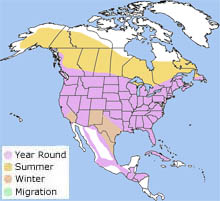
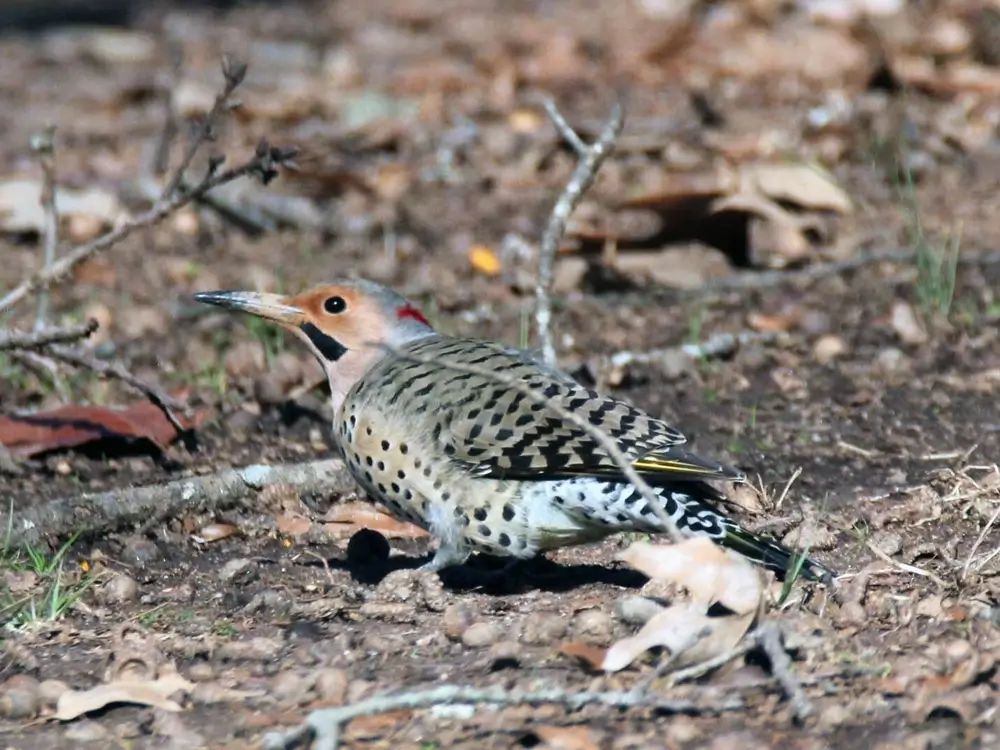
The yellow-shafted flicker has a red patch on its neck and yellow feathers on the inside of its wings. The male has a black mustache. Yellow-shafted flickers are found in the east and the north.
The red-shafted flicker has pinkish feathers on the inside of its wings, and the male has a red mustache. The red-shafted flicker is common in the western U.S.
The gilded flicker is found in the deserts of southeastern California and southern Arizona. It has yellow wing linings, and the males have a red mustache.
Habitat
The northern flicker is found in open forests, woodlots, and groves. It is also common in parks and gardens.
Diet
The flicker’s diet is mostly insects, including ants. They also eat termites, beetles, caterpillars, fruits, and berries. They sometimes eat seeds and nuts.
Life Cycle
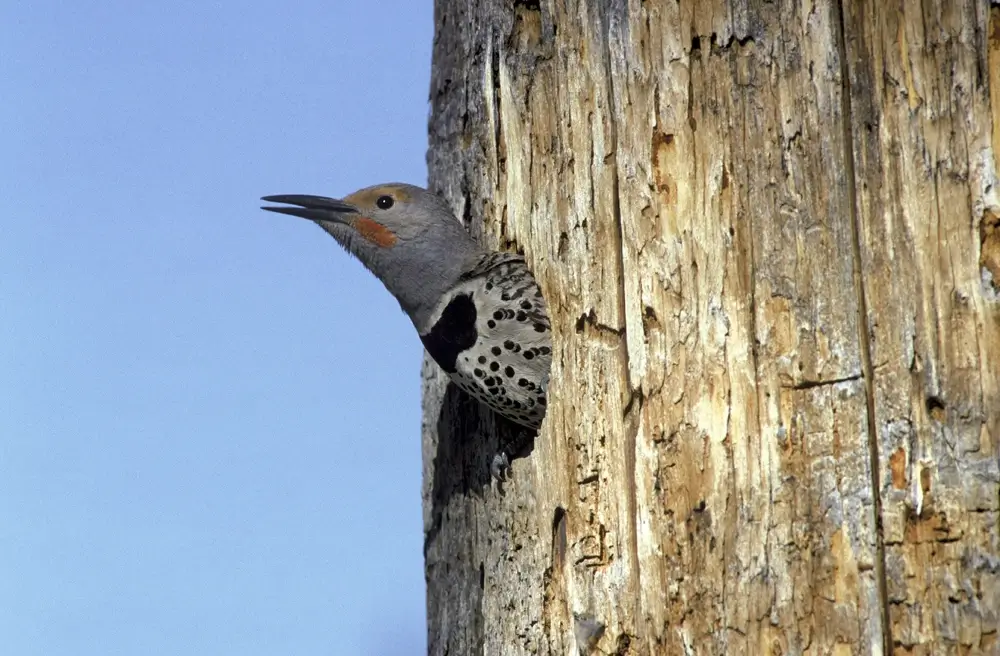
Northern flickers build their nests in holes in trees, telephone poles, or birdhouses. Gilded flickers may build their nests in cactuses. The female usually lays 6-8 eggs.
Both the male and female incubate the eggs for 11-16 days. Both parents feed the fledglings regurgitated food.
The chicks leave the nest about four weeks after hatching. At first, the parents continue to feed them, but they eventually learn to forage for food on their own.
Flickers in the north have one brood a year; in the south, they may have two broods.
The northern flicker has an average lifespan of 3 years.
Behavior
The northern flicker is the only woodpecker in North America that commonly finds food on the ground. It often forages for ants and beetle larvae on the ground. It sometimes perches on tree limbs to eat berries.
Did You Know?
During courtship, flickers peck or “hammer” on dead tree limbs or tin roofs.
In some parts of the United States, flickers are known as yellowhammers.
Support for NatureWorks is provided by:
The Northern Flicker in NH
In New Hampshire, you will find the yellow-shafted flicker across the state.
Populations in the northern part of the state may migrate south in the fall.