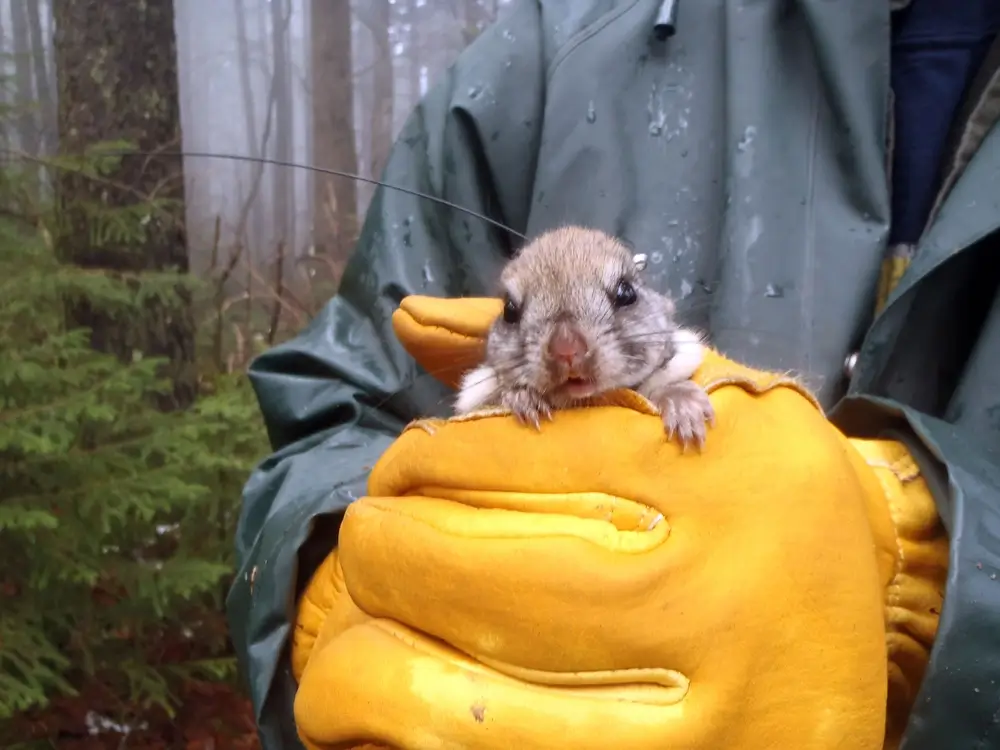
The northern flying squirrel is small. It is about 10-15 inches (25-38 cm) long from the tip of its nose to the tip of its tail and weighs 2.6-5 ounces (75-140 g).
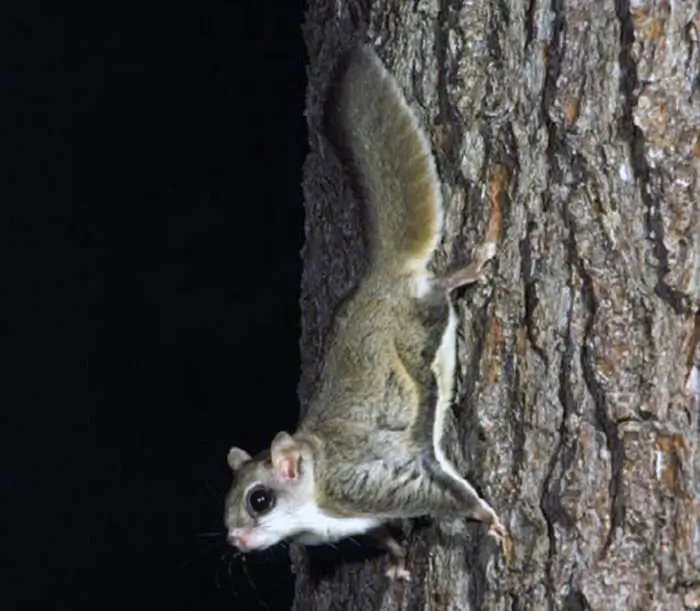
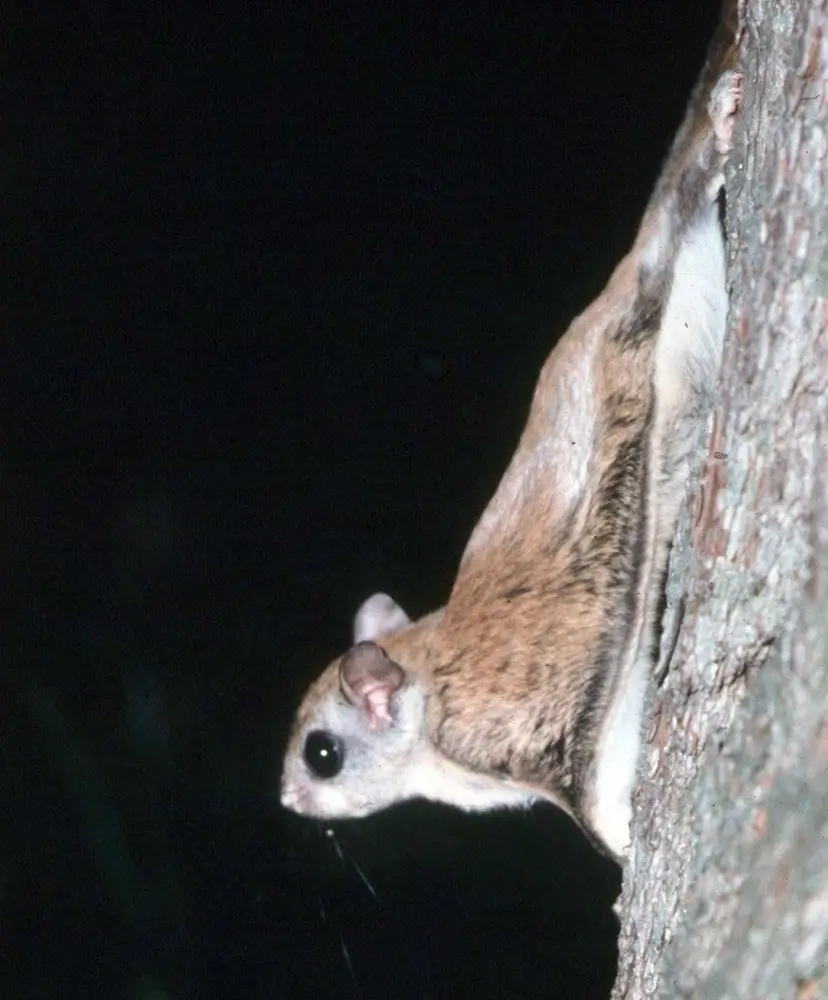
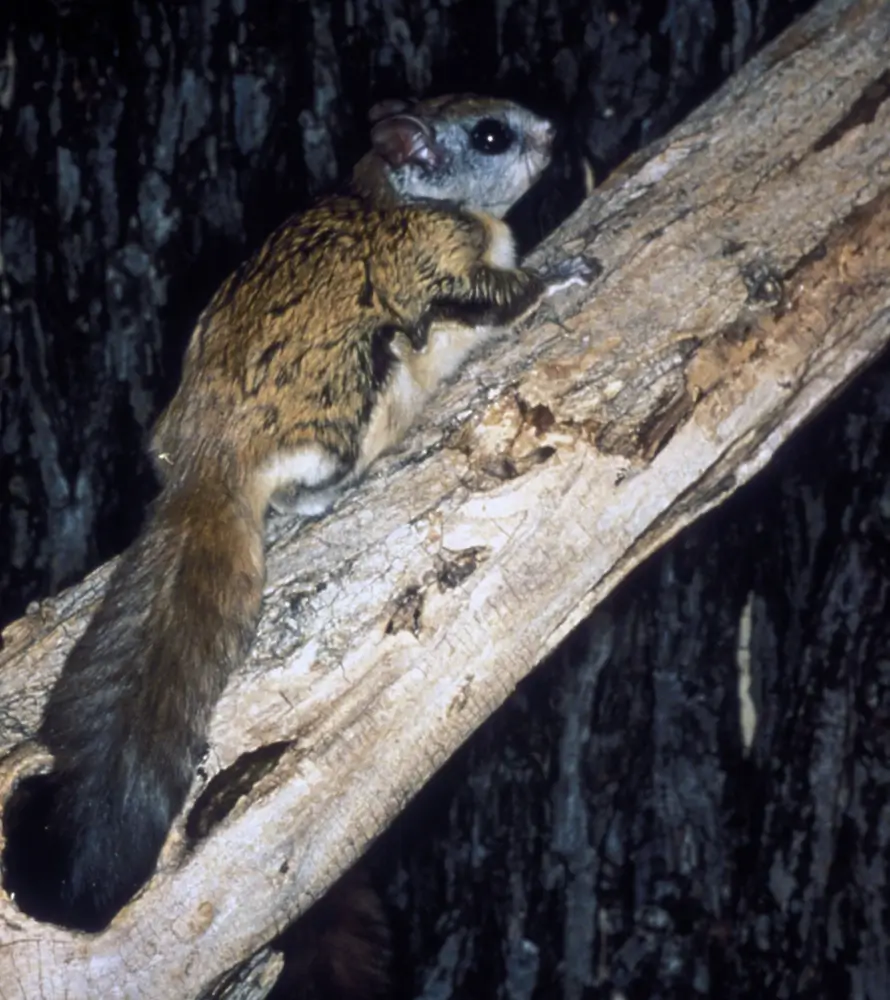
It has large, round black eyes that help it see at night and a long, flattened tail. It has soft cinnamon brown and gray fur above and creamy white fur below.
It has a loose fold of skin between its front and rear feet. When it stretches out its legs, this skin forms a kind of parachute that lets the squirrel glide from branch to branch. As it approaches its landing site, it pulls up, slowing its descent. When it is gliding, it uses its tail as a rudder to help it change direction.
The northern flying squirrel lives in dense conifer or mixed conifer and deciduous forests.
The northern flying squirrel eats nuts, acorns, fungi, and lichens. It may also eat fruits, buds, sap, bird eggs, small nestling birds, and insects.
Breeding season runs from March to May. The female gives birth to 2-5 young after a gestation period of about 40 days. The nest can be a clump of twigs, moss, and shredded bark placed in the crotch of a branch; an abandoned bird nest; an abandoned woodpecker hole; or a tree cavity.
The female cares for the young, who are weaned when they are about two months old. They learn to glide when they are about three months old. The female has one litter a year.
The northern flying squirrel has a lifespan of around 4-6 years in the wild. In captivity, they can live 10-15 years.
The northern flying squirrel is nocturnal and is active throughout the year. It is a highly social animal and may share a nest, living in groups of eight or more adults and juveniles.
Two subspecies of the northern flying squirrel are endangered species in the United States. The West Virginia northern flying squirrel (Glaucomys sabrinus fuscus) is found in Virginia and West Virginia and the Carolina northern flying squirrel (Glaucomys sabrinus coloratus ) is found in North Carolina and Tennessee.

Support for NatureWorks Redesign is provided by:
The northern flying squirrel is usually found in the mountains in New Hampshire where there are lots of conifer trees.
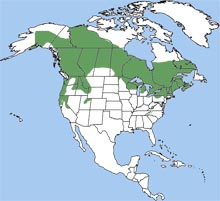
The northern flying squirrel is found in Canada and the northern United States including Alaska, Washington, Oregon, California, Idaho, Montana, Utah, Wyoming, Minnesota, Michigan, and Wisconsin. It is also found in the Appalachian Mountains from New England through North Carolina.
NHPBS inspires one million Granite Staters each month with engaging and trusted local and national programs on-air, online, in classrooms and in communities.