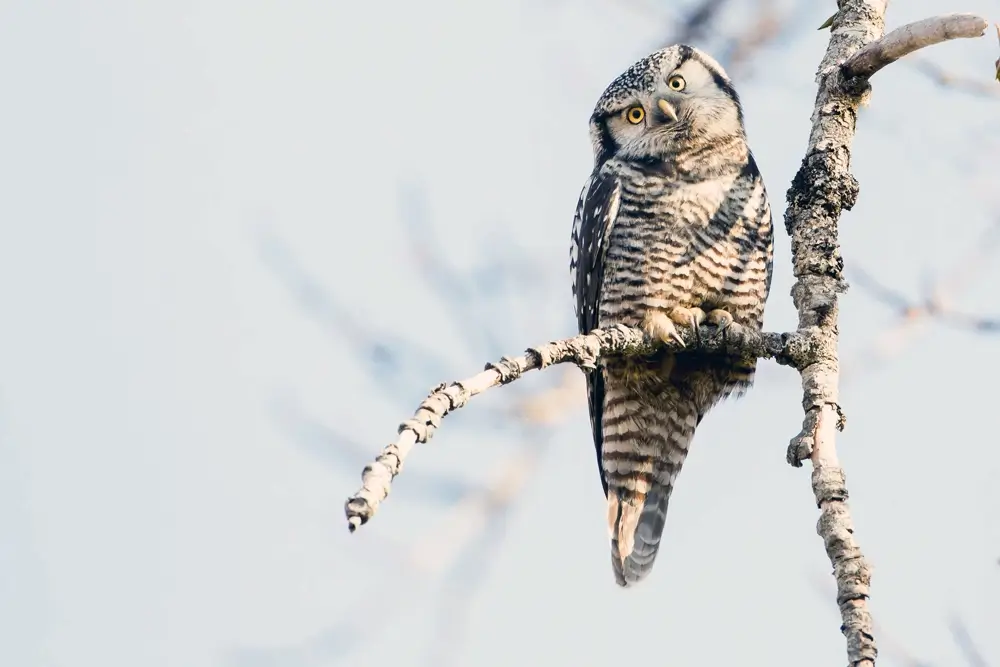
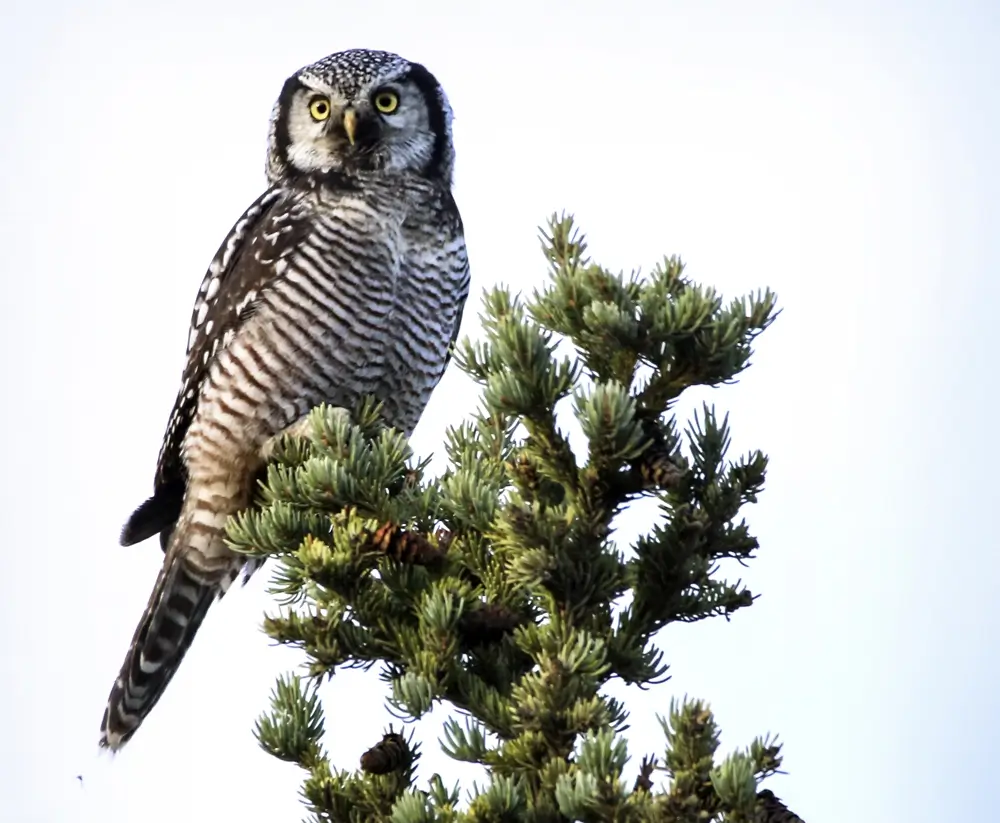
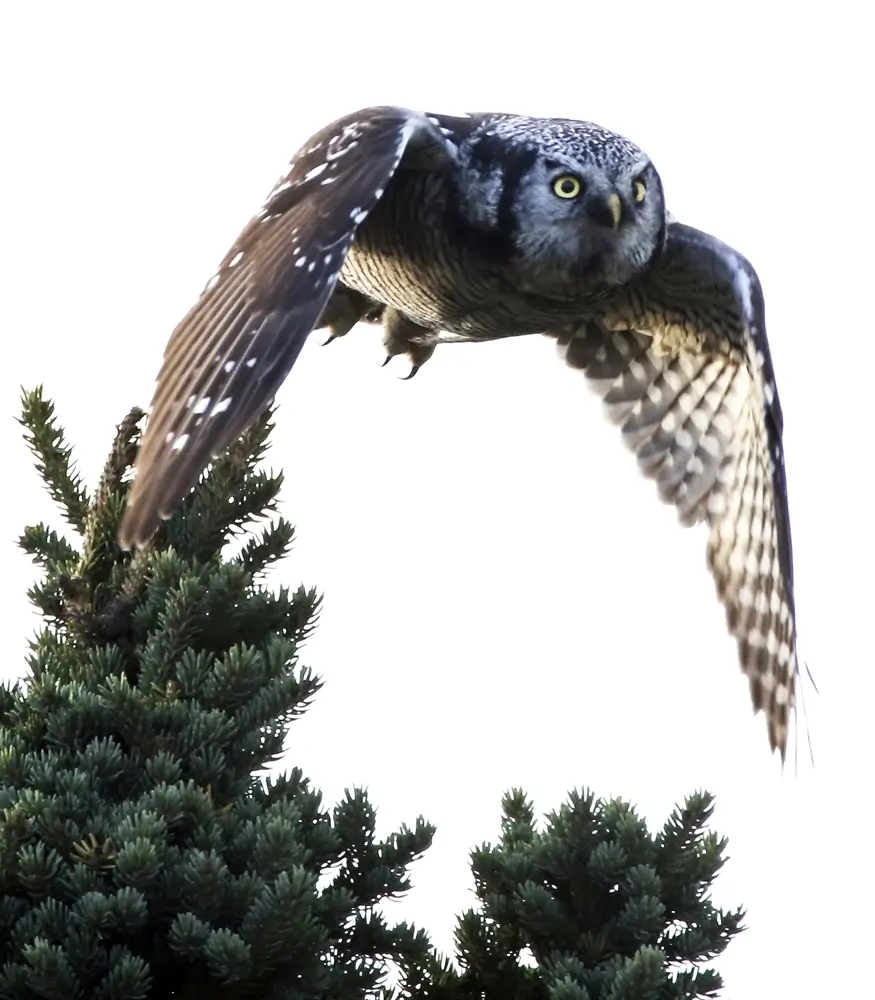
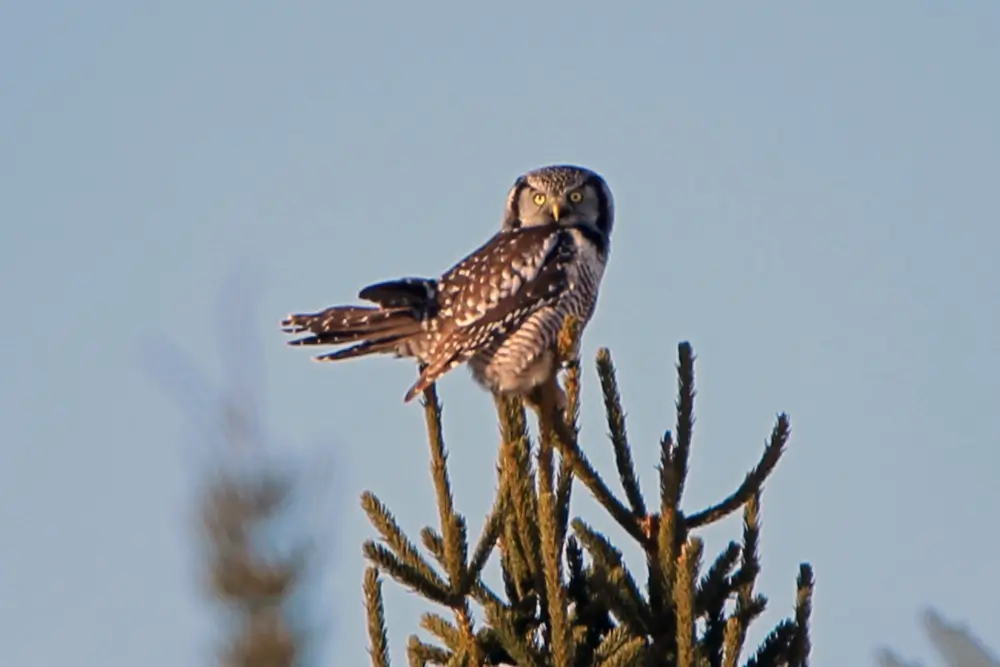
The northern hawk-owl is around 14-18 inches (36-46 cm) tall, about the size of a crow. It has a wingspan of around 28 inches (71 cm).
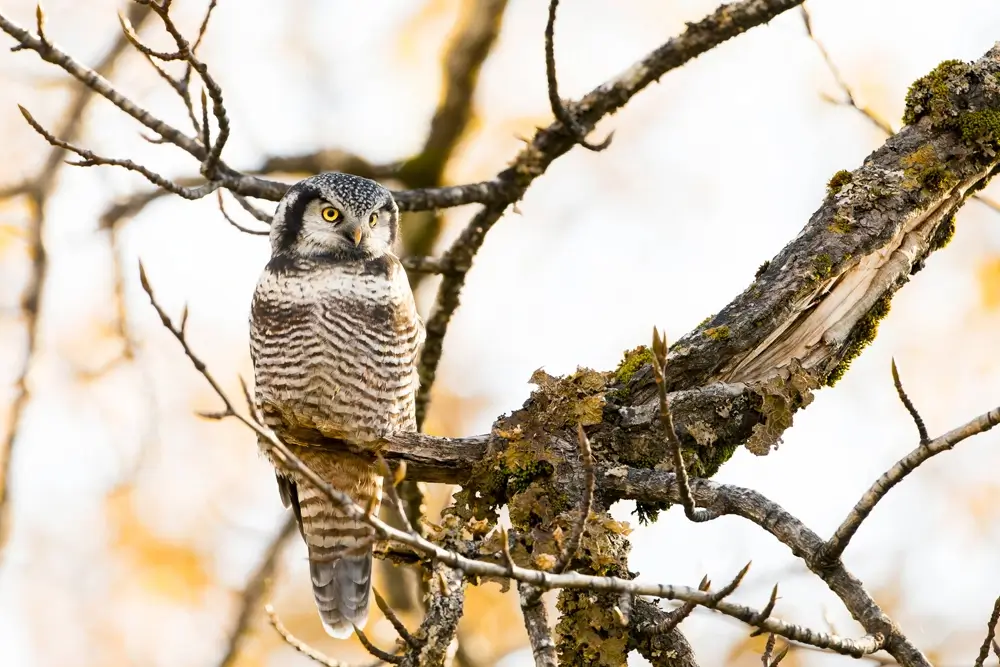
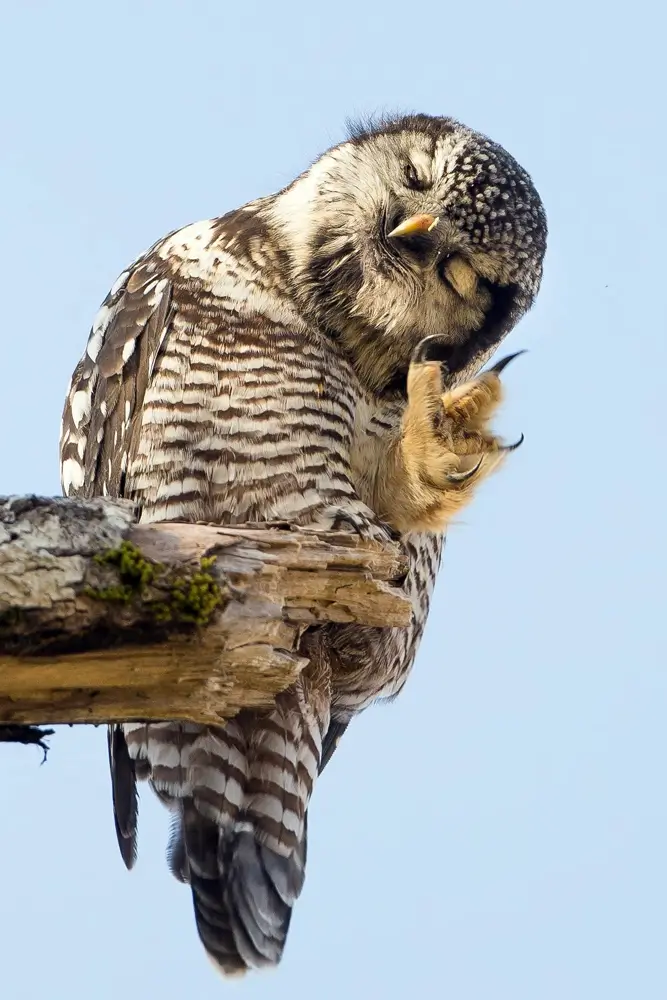
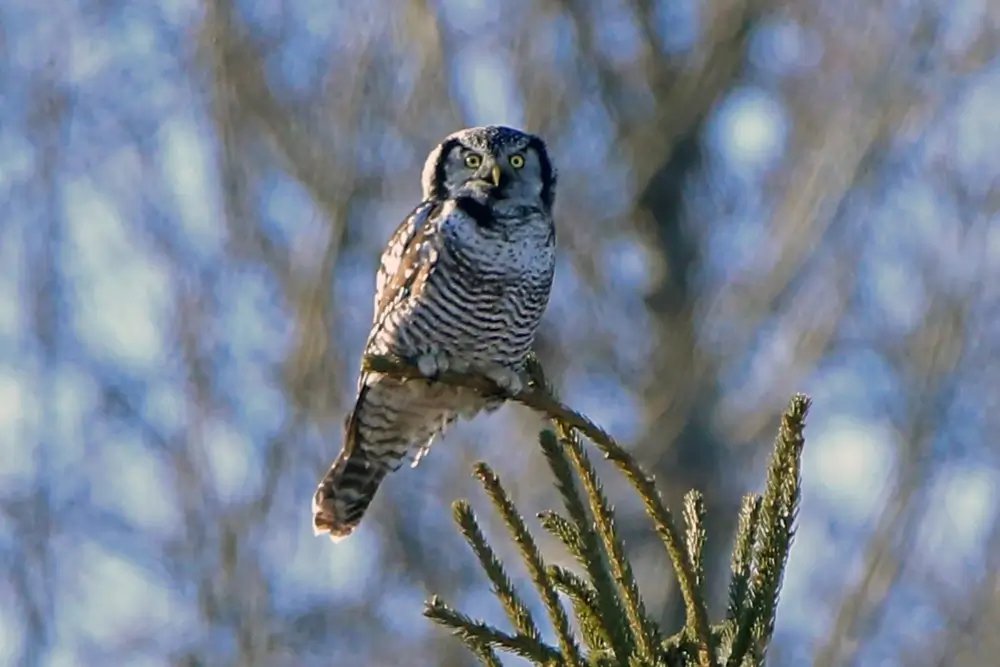
Its wings, head, and back are dark brown with white spots, but its belly is white with thin brown horizontal stripes.
The northern hawk-owl has no ear tufts and a very long tail.
Habitat
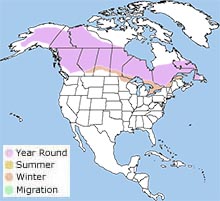
The northern hawk-owl lives in northern coniferous forests. It prefers a habitat on the edge of a clearing, such as a muskeg (bog) or mountain range.
While perched in a tree, the northern hawk Owl can hunt in the cleared area.
Diet
The northern hawk-owl hunts during the day and the night. It preys on small mammals like voles, lemmings, snowshoe hares, and squirrels.
In the summer, it usually eats rodents. In the winter, the northern hawk-owl may eat birds like ptarmigan and grouse.
Life Cycle
The northern hawk-owl breeds from March to June. The female lays 3-13 eggs in a tree cavity, abandoned nest, or sometimes on a cliff. The female incubates her eggs for about a month.
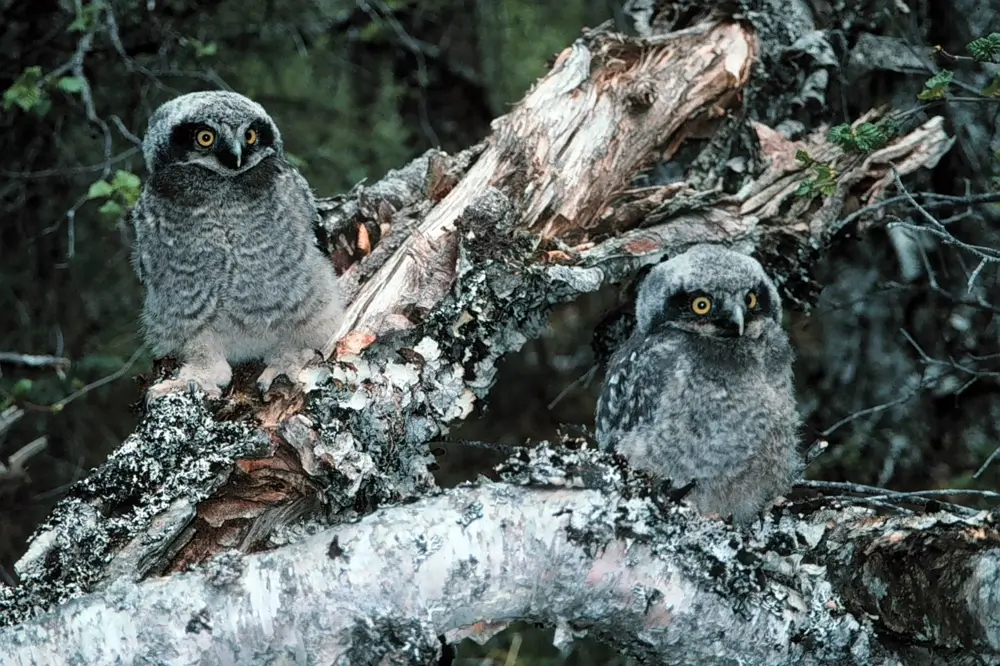
The male brings her food and protects their nest from predators. Northern hawk-owl chicks stay with their parents for about 4 weeks until they fledge and leave the nest.
The northern hawk-owl has a lifespan of up to 10 years.
Behavior
Unlike most owls, the northern hawk-owl hunts during the day, which has led people to compare it to a hawk.
Did You Know?
Support for NatureWorks Redesign is provided by:
The Northern Hawk-Owl in NH
The northern hawk-owl is a very rare winter visitor to New Hampshire.