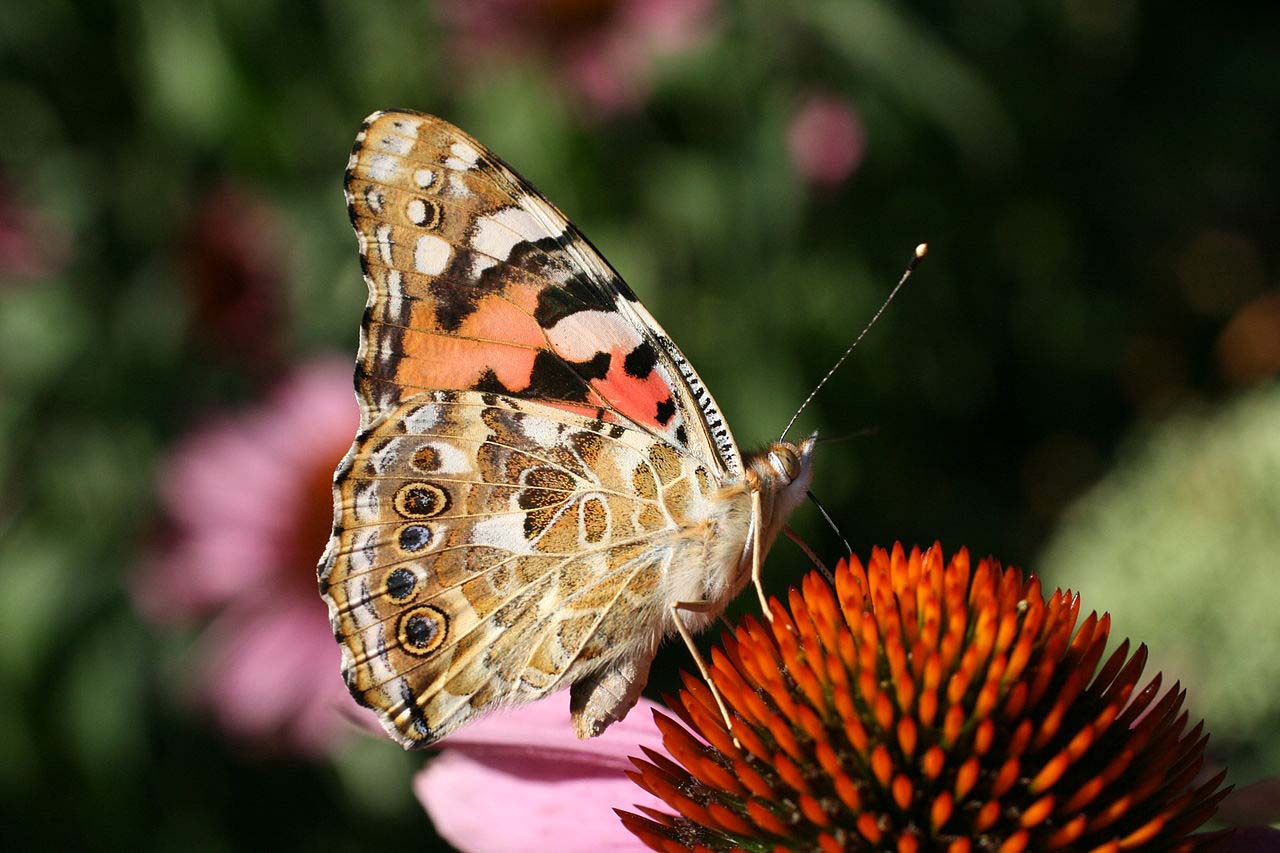
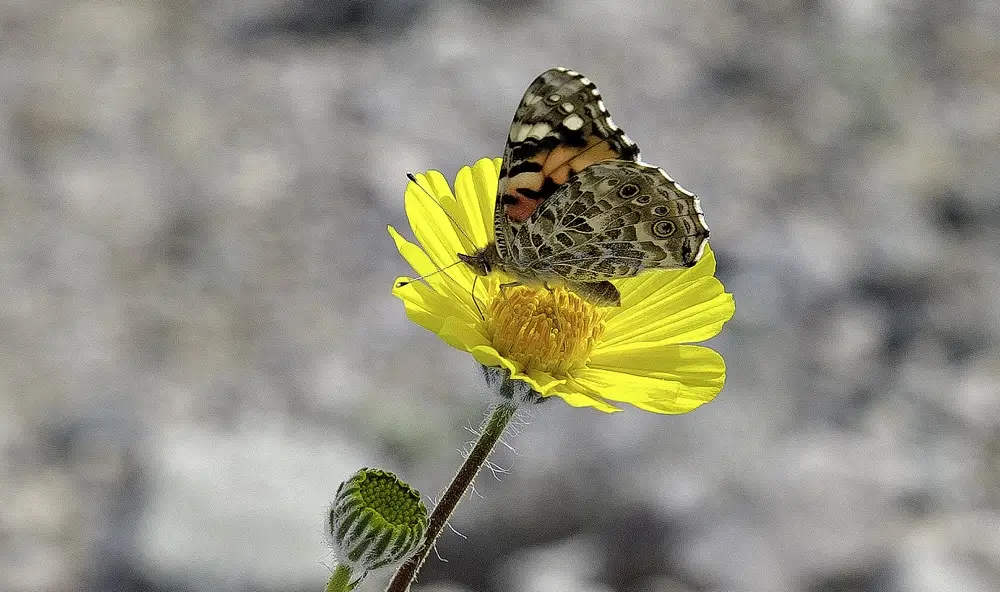
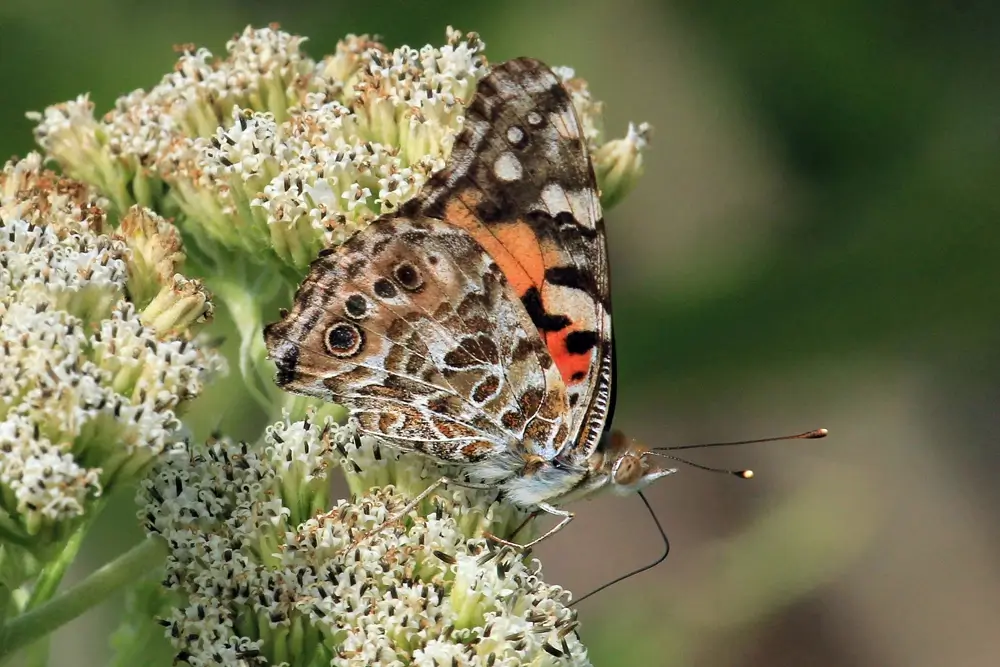
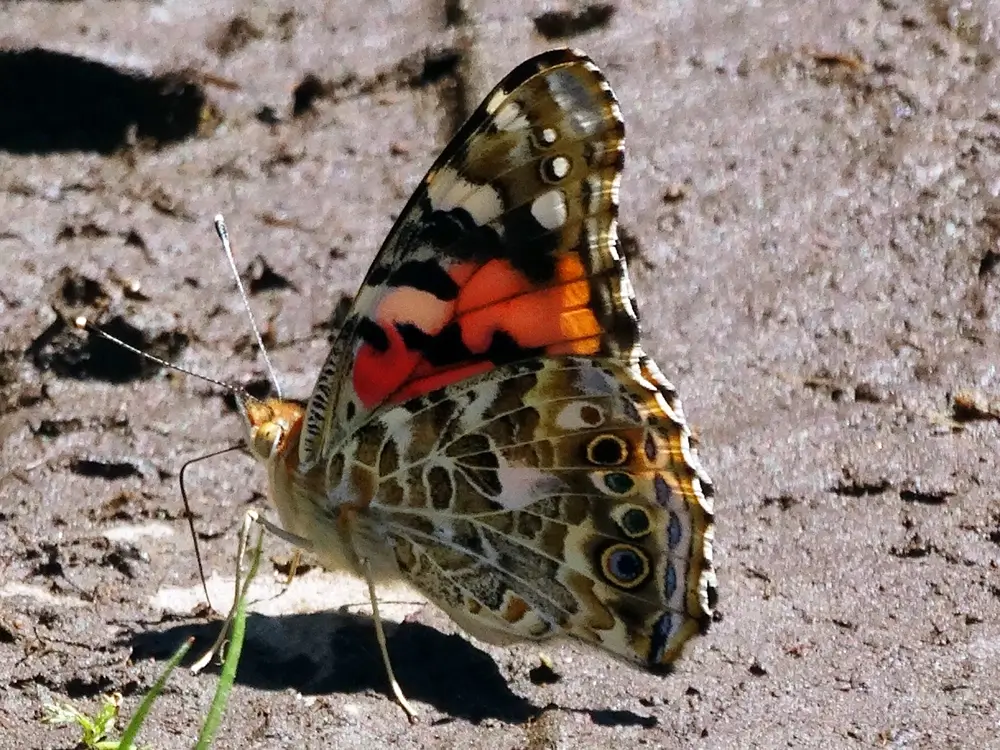
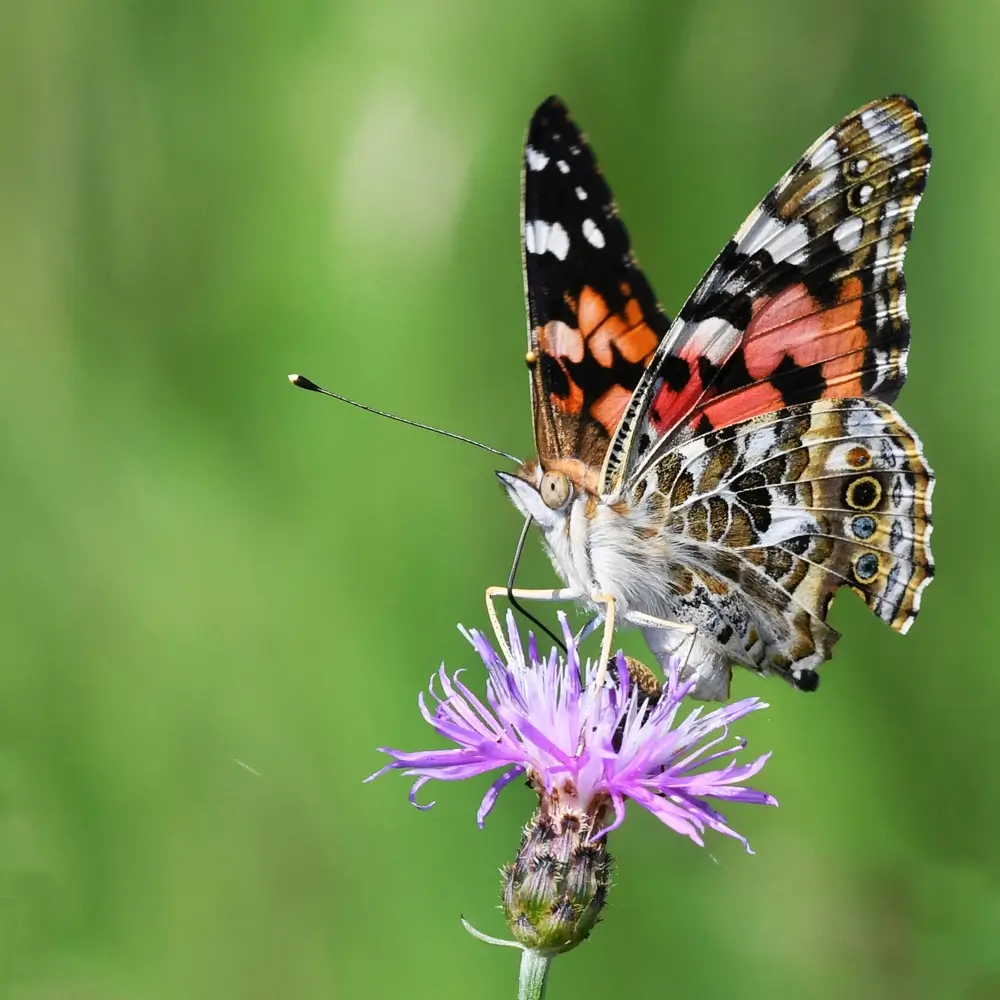
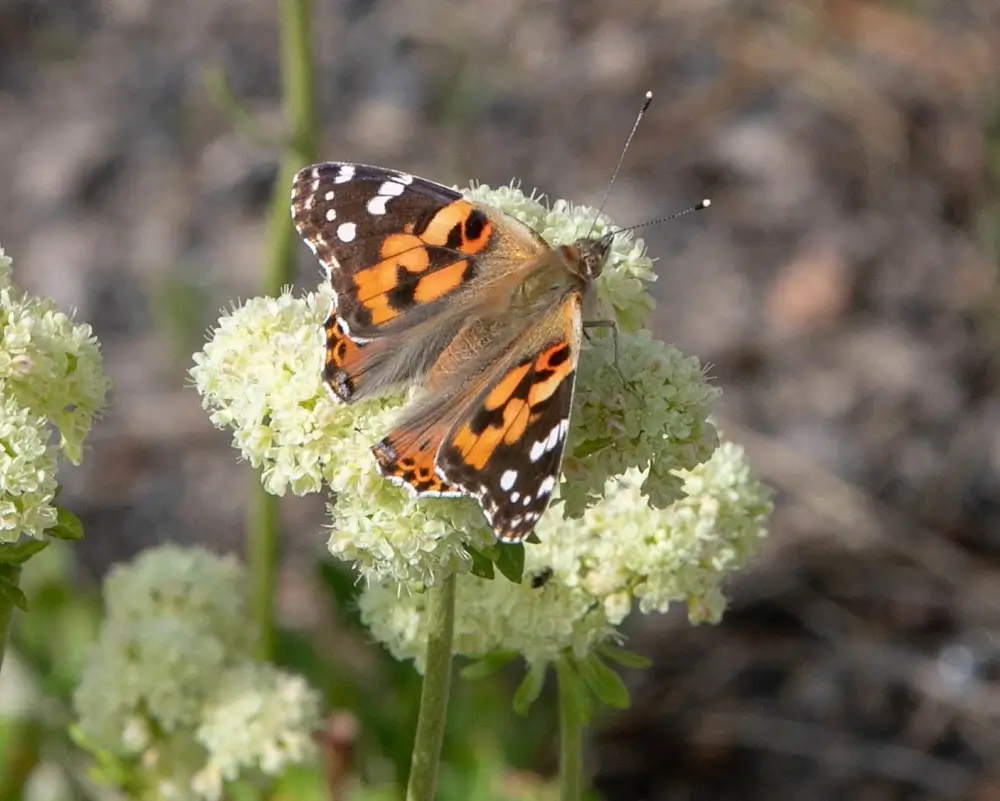
The painted lady has a wingspan of 2-3 inches (5-7.6 cm). It has scalloped orange wings with black patches. The tips of its forewings are black with white splotches. Its underside is a mottled gray, brown, and black with four eyespots.
Habitat
The painted lady is found in almost any habitat, but it prefers open, sunny environments like fields, parks, meadows, and dunes.
Diet
The painted lady eats the nectar of a variety of plants, including goldenrod, aster, zinnia, butterfly bush, and milkweed. The caterpillar eats plants in the Asteraceae (daisy) and Malvaceae (mallow) families.
Life Cycle
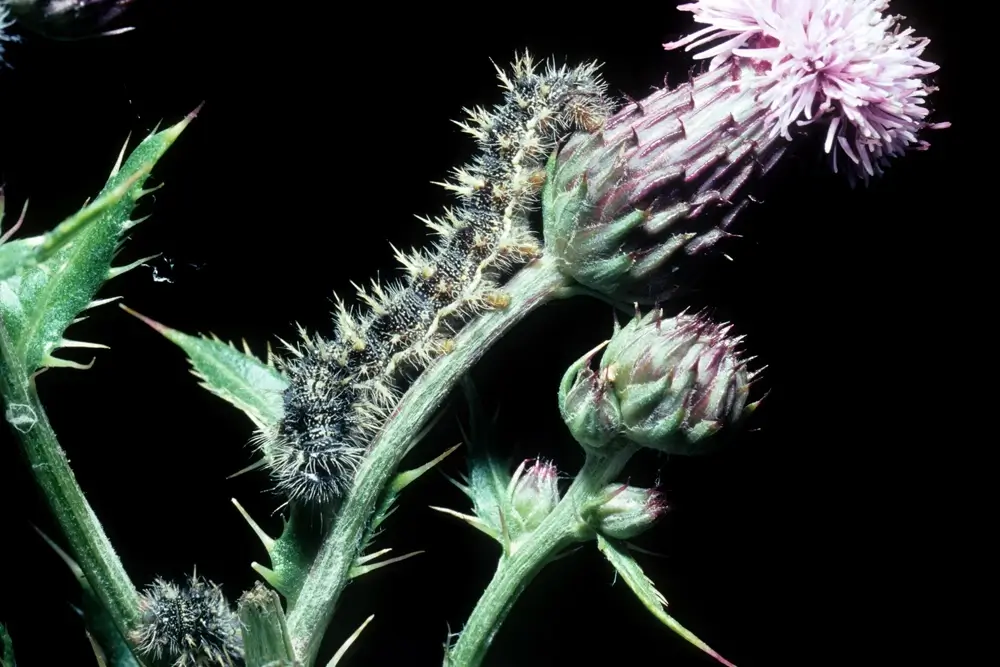
The female painted lady lays single pale green eggs on host plants. The eggs hatch in 3-5 days. The caterpillar is purple to black in color, has yellow and green stripes, and is covered in spines. It pupates* in 5-10 days. The painted lady butterfly emerges from the chrysalis (hard shell that protects the pupa) in 7-10 days.
*A caterpillar pupates and becomes a pupa when it changes into a resting stage before turning into a butterfly.
Behavior
The painted lady can fly at speeds of up to 20 miles per hour. (32 kph)
Did You Know?
The painted lady is also called the thistle butterfly because it likes thistles and the cosmopolitan butterfly because it is found all over the world.
U.S. Fish and Wildlife Service
Support for NatureWorks is provided by:
The Painted Lady in NH
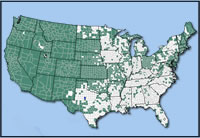
The painted lady is found throughout New Hampshire.
The painted lady is found on all continents, except for Australia and Antarctica. It is the most widespread species of butterfly in the world. In North America, it is found from sub-Arctic Canada south to Panama.