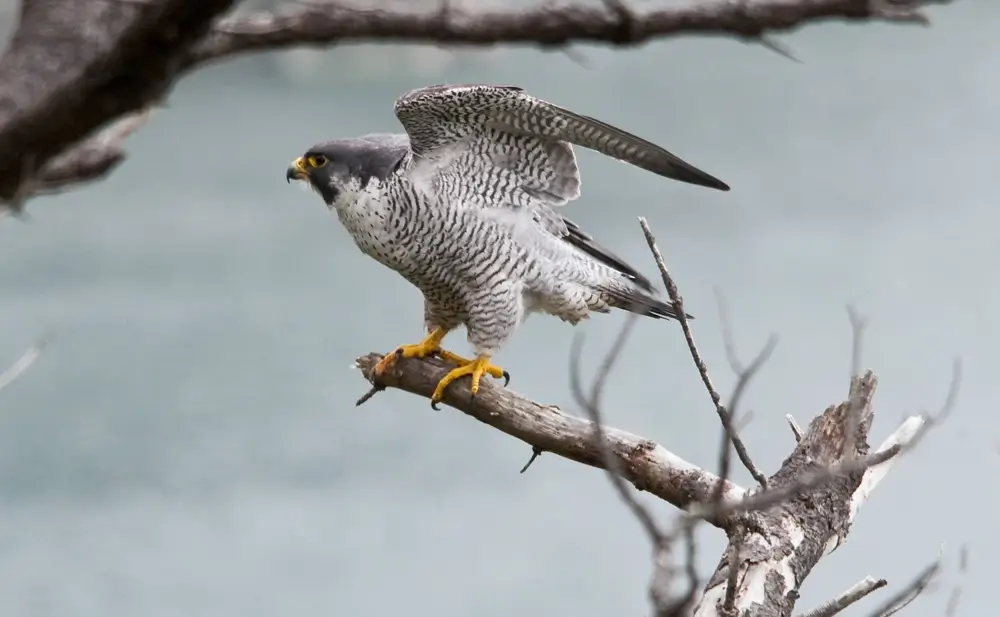
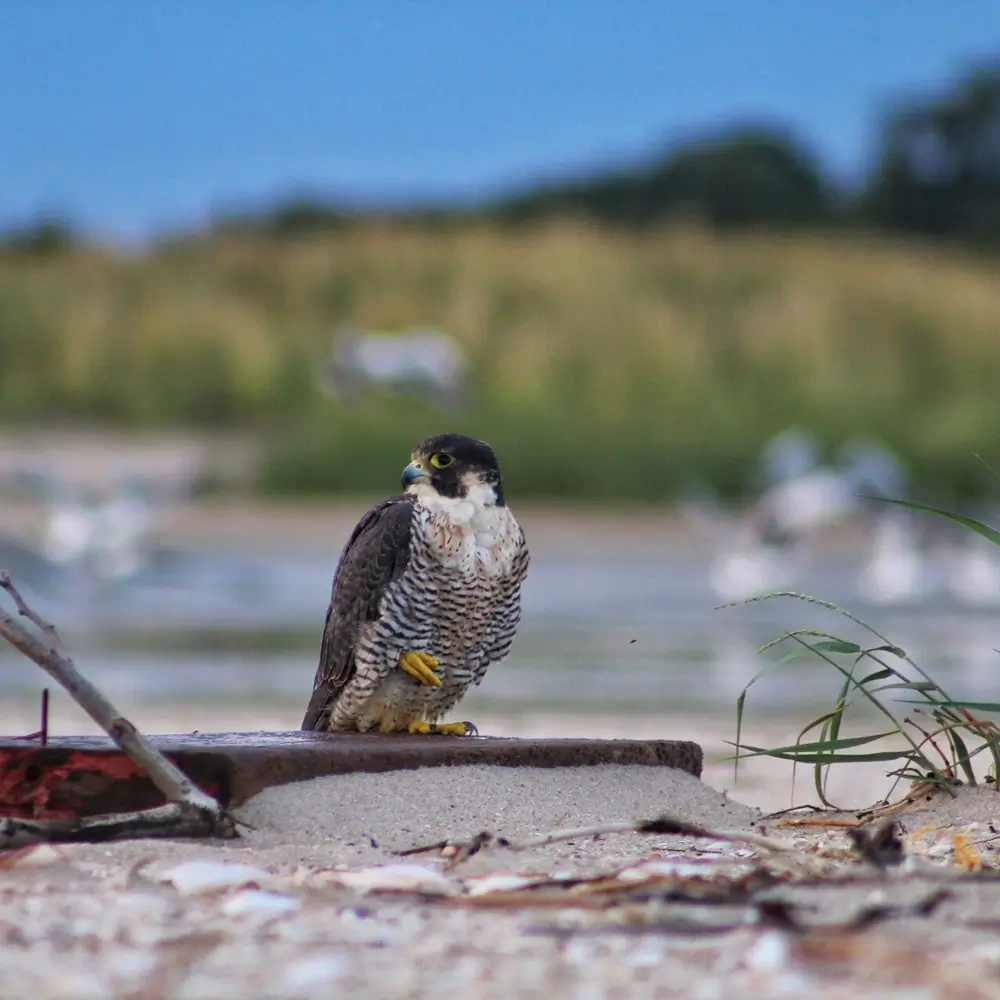
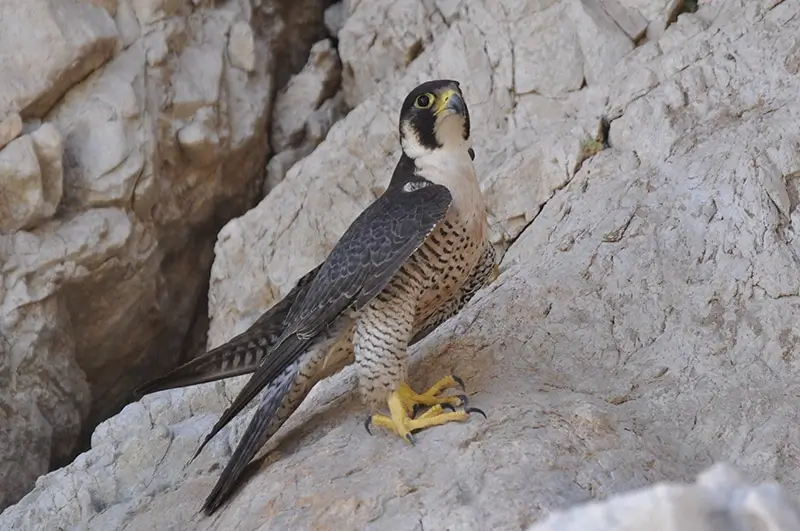
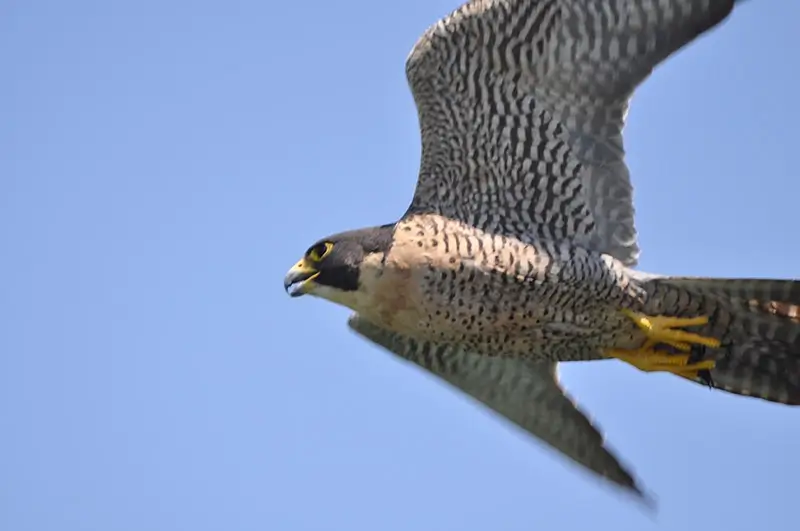
The peregrine falcon is a crow-sized bird, 15-21 inches in length with a wingspan of around three feet. Adult peregrine falcons have long, pointed, slate-gray wings; dark brown backs; buff-colored undersides with dark bars; and long, thin, barred tails.
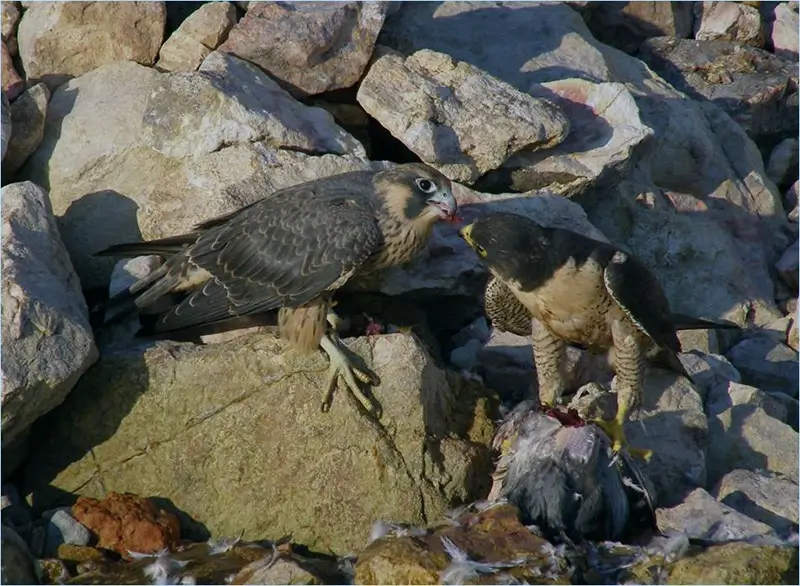
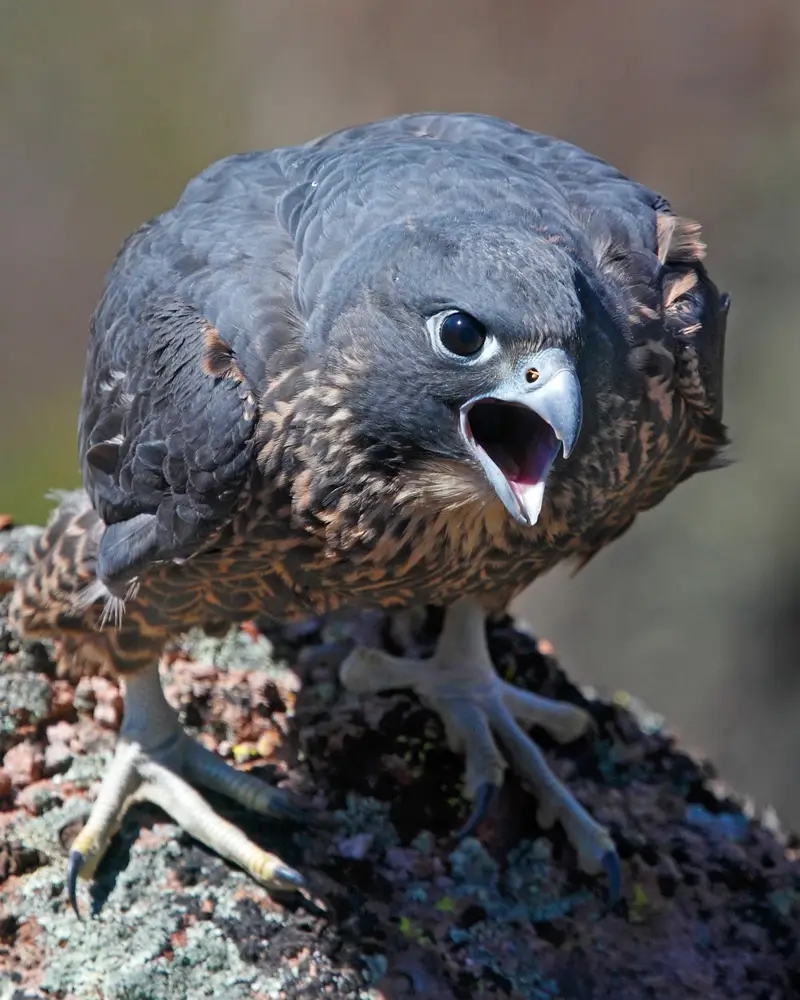
The peregrine falcon has a light face with black streaks on its cheeks and a white chin. It has yellow feet and legs; brown eyes with a yellow eye ring; and a short, hooked gray bill. Females are larger than males. Immature peregrine falcons are brown on their uppersides and have streaked undersides and gray legs and feet.
The peregrine falcon is found in habitats with open areas and cliffs for nesting. It is frequently found on mountains, coasts, and rivers with cliffs. The peregrine falcon is even found in cities, where it uses tall buildings for nesting. Some peregrine falcons in northern regions migrate south in the winter.
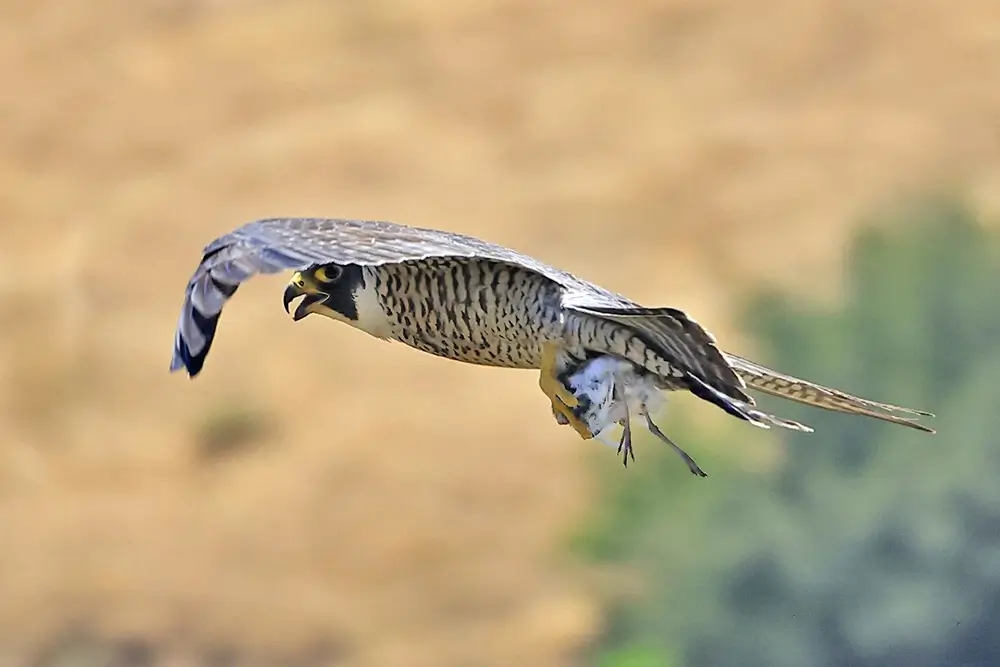
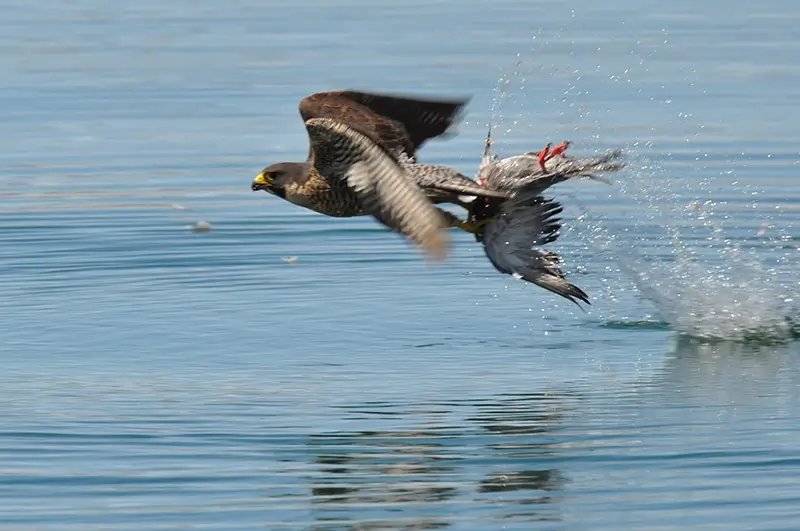
The peregrine falcon hunts in the air or from a perch. It hunts for birds and either dives on its prey from above or chases it from behind. It captures its prey with its strong, sharp talons. It is estimated that the peregrine falcon can dive at speeds of up to 200 miles per hour.
Male and female peregrine falcon pairs mate for more than one year. They return to the same area every year to breed. The male performs aerial displays to court the female. The pair make a nest on a cliff ledge or other high perch. The nest is just a depression in the ground lined with grass, gravel, and dirt. Occasionally a pair will nest in a tree cavity or the abandoned nest of another bird. In urban areas, pairs may nest on tall buildings, towers, or bridges.
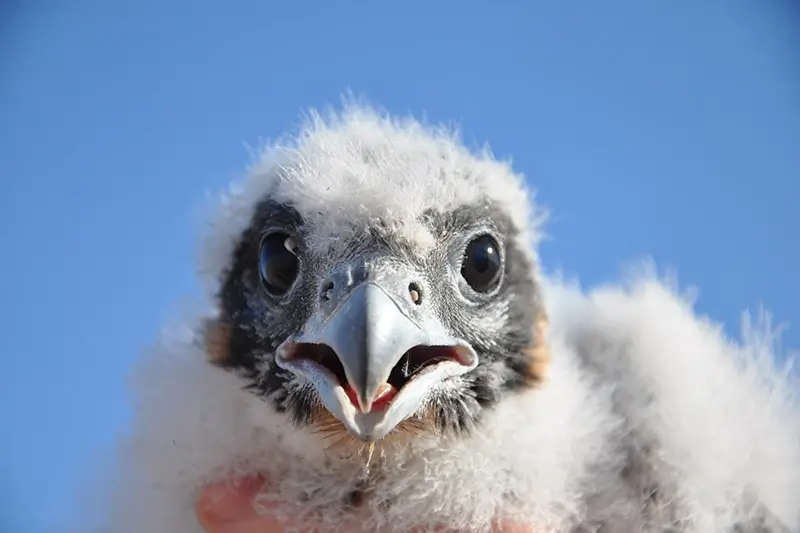
The female lays 3-4 eggs. Both the male and the female incubate the eggs. The chicks hatch in about a month and both parents care for and feed the chicks. The chicks fledge when they are around 40 days old, but they stay with their parents until they can hunt on their own.
When it is pursuing prey, the peregrine falcon can fly at speeds of close to 70 miles per hour.
The pesticide DDT, which was used to control insects, led to a drop in the peregrine falcon population beginning in the 1940s. By the 1960s, the peregrine falcon had all but disappeared from the eastern United States, and by the 1970s western populations had declined by up to 90 percent. In 1970, the peregrine falcon was listed as an endangered species in the United States. DDT was banned in 1972 and the ban, along with captive breed and release programs and artificial nesting sites, led to a growth in the peregrine falcon population in the United States. The peregrine falcon was removed from the Federal Endangered Species List in 1999.

Support for NatureWorks Redesign is provided by:
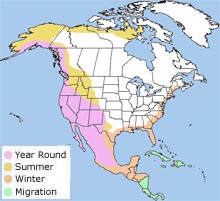
The peregrine falcon is known to mostly breed in the White Mountains of New Hampshire and north. It can also be seen in the state in October during its fall migration.
Peregrine falcons are found in most regions of the world, except Antarctica. In North America, the peregrine falcon breeds from Alaska and the Canadian Arctic south though the western United States into Mexico and from New England to Virginia on the East Coast. It winters along the Atlantic, Pacific, and Gulf Coasts.
NHPBS inspires one million Granite Staters each month with engaging and trusted local and national programs on-air, online, in classrooms and in communities.