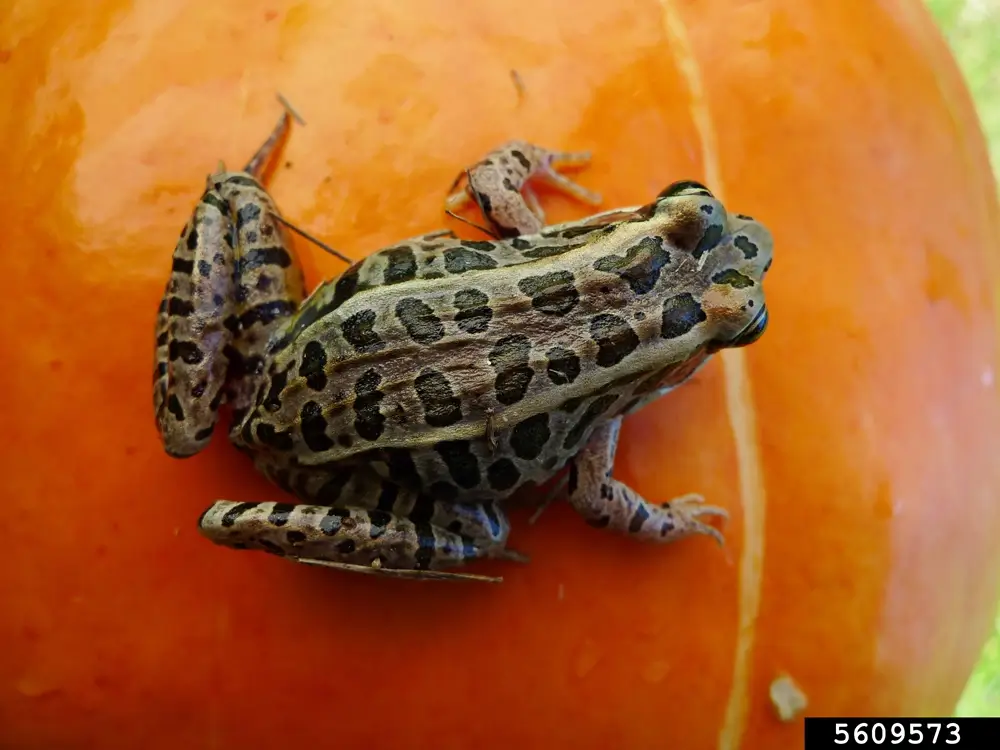
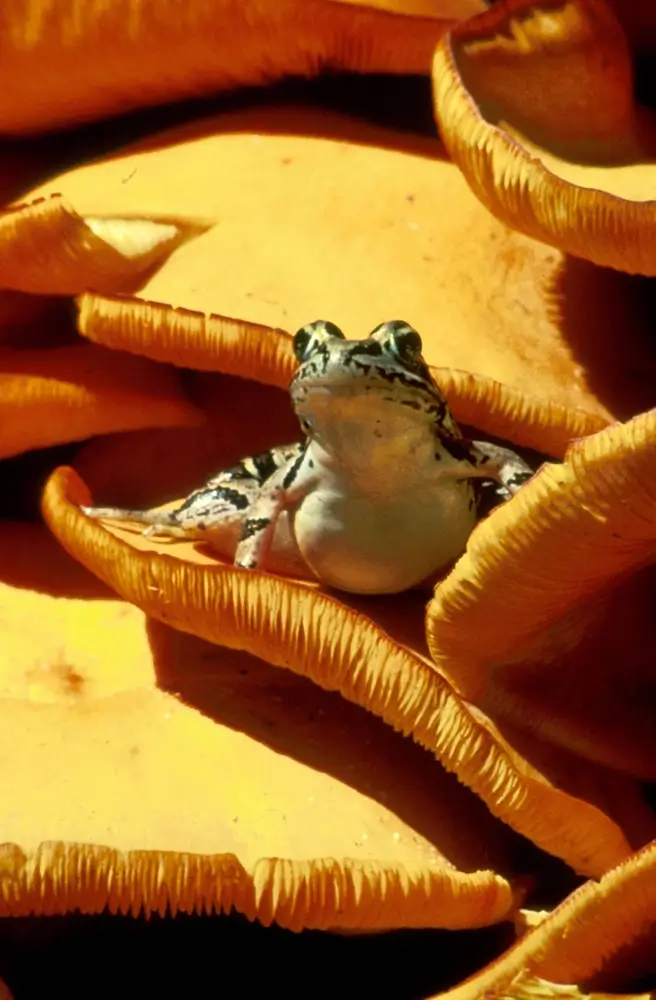
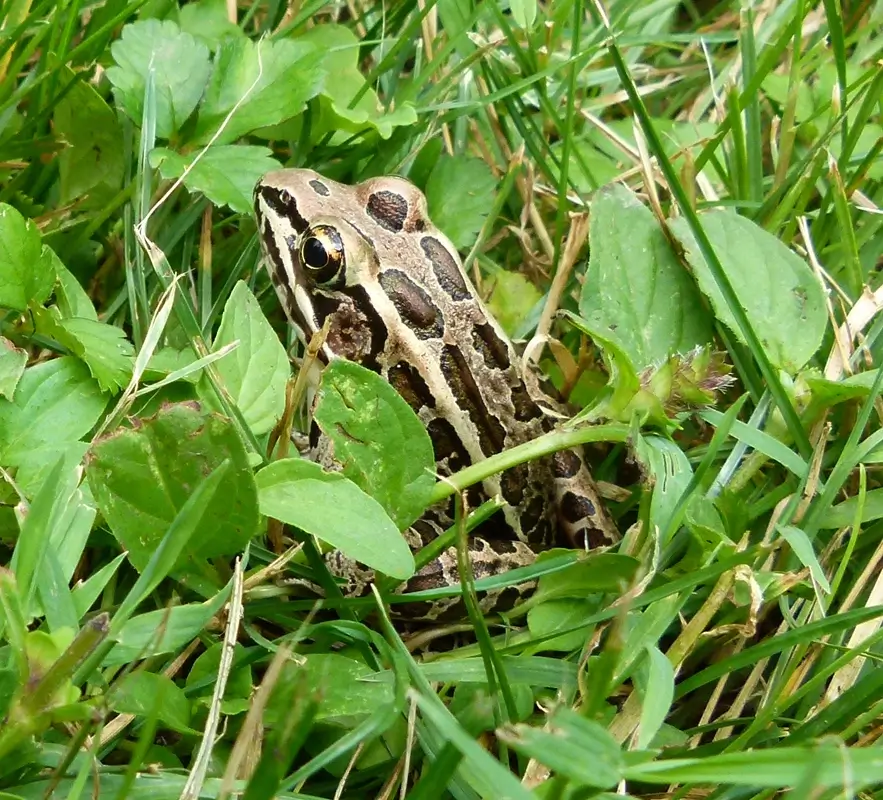
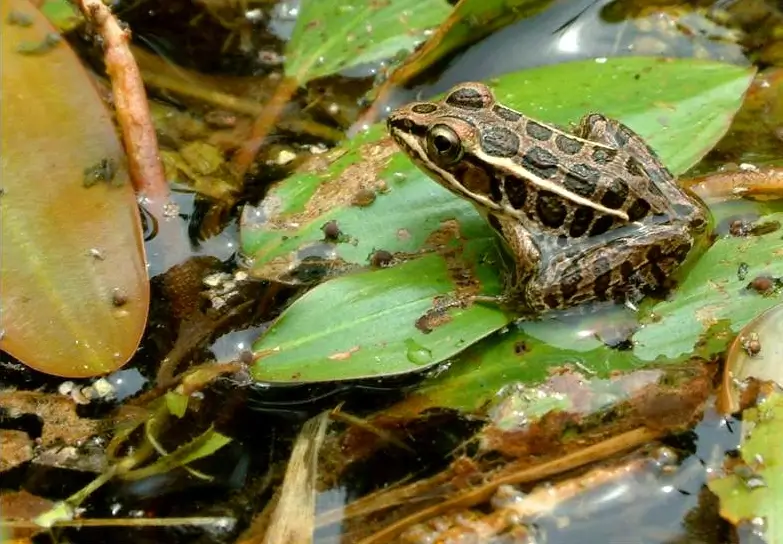
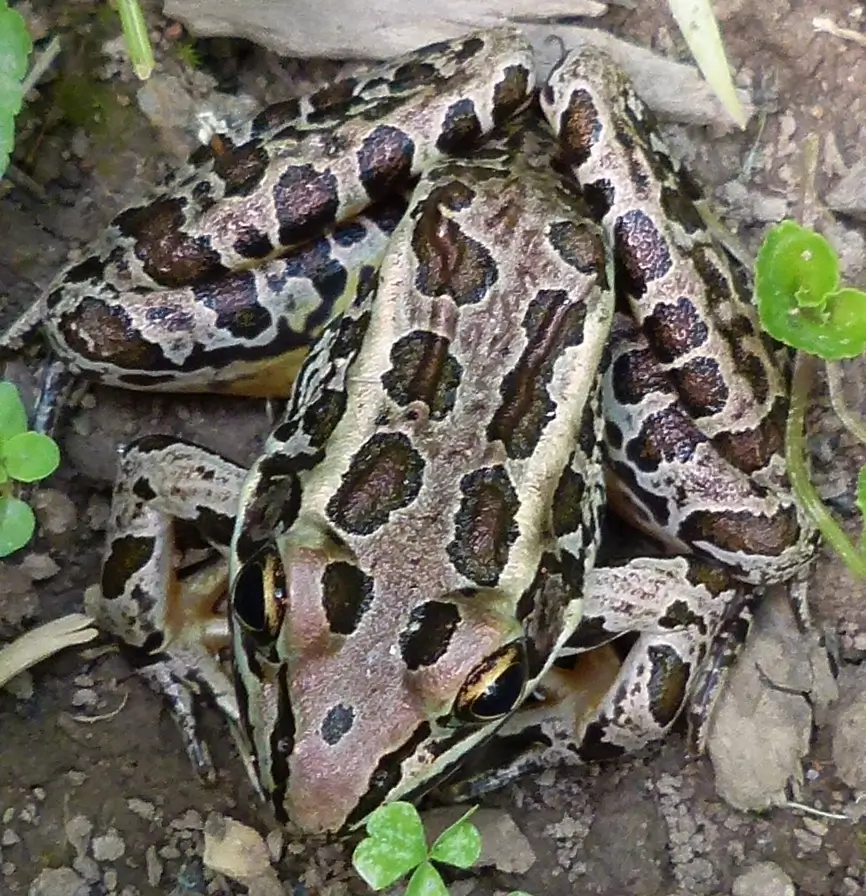
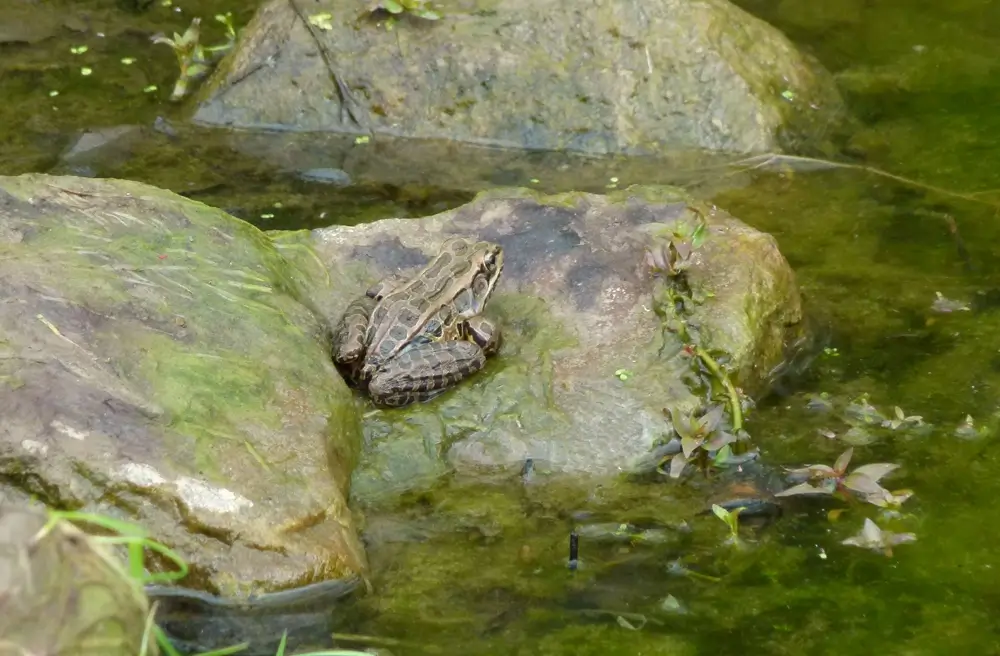
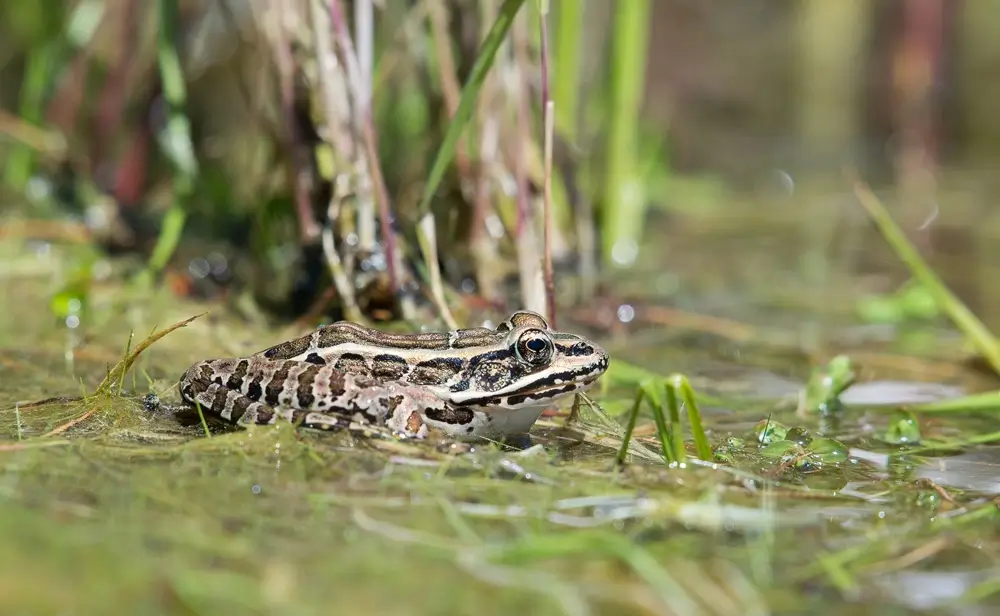
The pickerel frog is 1-3 inches (2.5-7.6 cm) in length. It is tan to green in color and has 2-3 rows of squarish dark spots along its back and hind legs. The undersides of its thighs are bright yellow or orange.
It is sometimes confused with the northern leopard frog. The northern leopard frog looks similar, but its spots are round and randomly scattered on its body, and it doesn’t have patches of bright yellow or orange skin on the inside of its thighs.
Habitat
The pickerel frog is found near streams, lakes, ponds, bogs, and swamps with cool, clear water. In the summer, it can be found in grassy meadows and fields.
Diet
The pickerel frog eats insects, spiders, and other small invertebrates. The pickerel frog tadpole eats algae and plant matter.
Life Cycle
Breeding season runs from March to May. Male pickerel frogs gather in breeding pools and call to females with a low-pitched, snore-like call.
The female lays an egg mass of up to 3,000 eggs in shallow water. The egg mass is usually attached to submerged vegetation. The tadpoles begin to turn into frogs in about 3 months.
Behavior
The pickerel frog produces a bad-tasting, toxic secretion that protects it from some predators, especially snakes.
Did You Know?
In the winter, the pickerel frog burrows into the mud at the bottom of a pond or stream and hibernates.
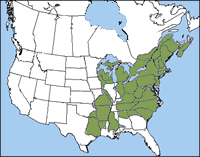
The pickerel frog is found from southeastern Canada south to South Carolina and northern Georgia, and Alabama and west to Wisconsin, Missouri, Arkansas, and eastern Texas.