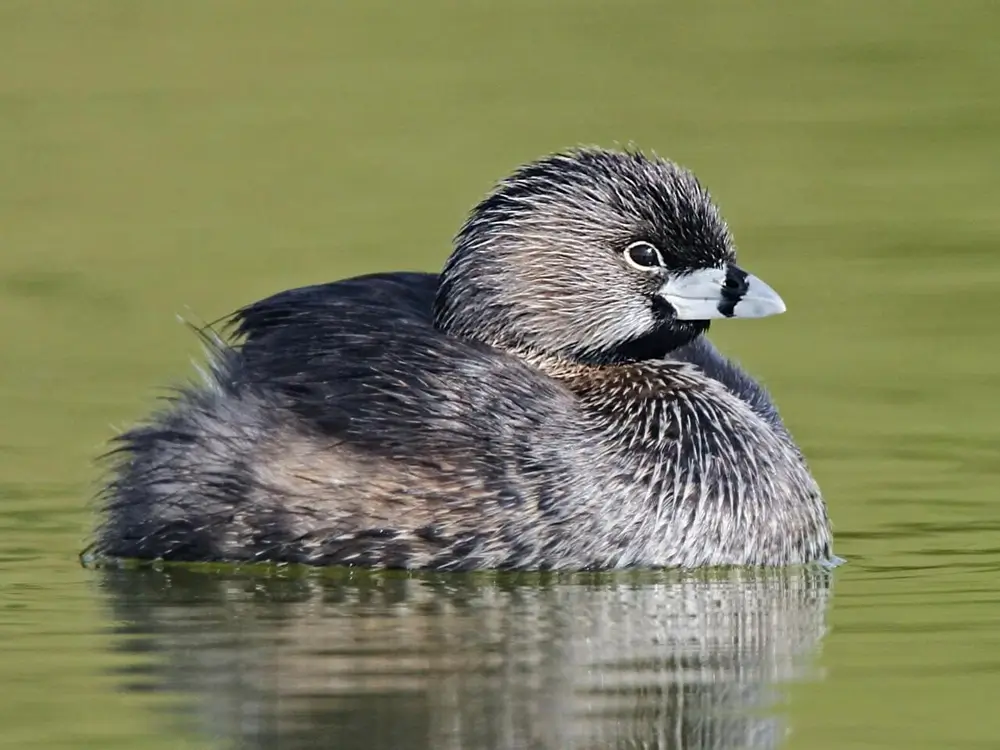
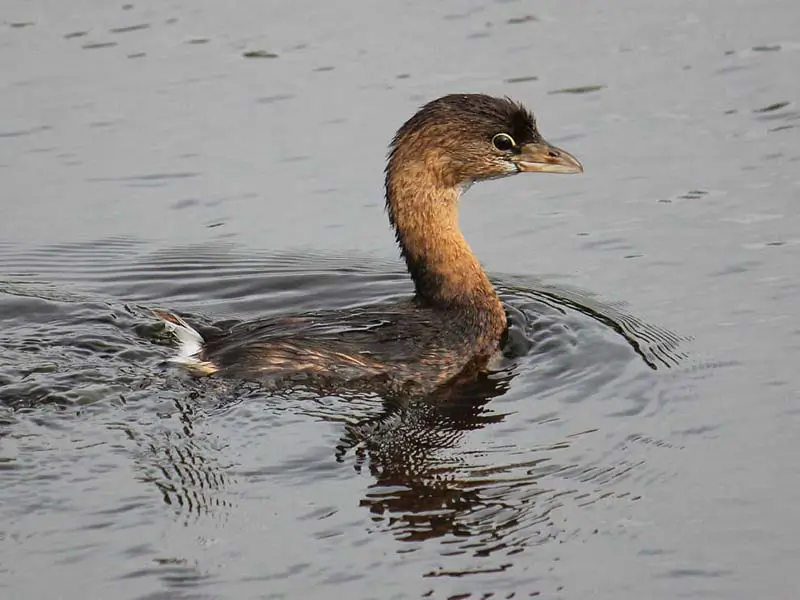
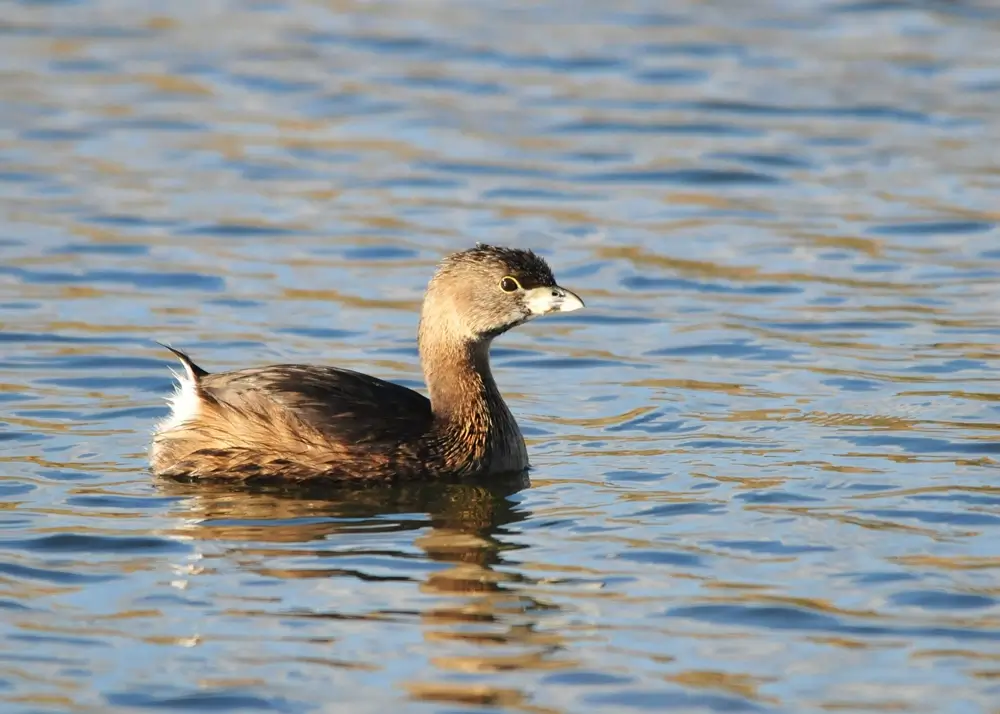
The pied-billed grebe is 9-15 inches in length with a wingspan of 16-24 inches. It has a small, stocky body; a long neck; and a rounded head. It is brown over most of its body and has a white rump. It has a short, stubby whitish bill. Its bill has a dark ring around it during the breeding season. Males and females look the same.
Habitat
The pied-billed grebe is found in freshwater marshes and ponds. It may move to saltwater habitats when freshwater habitats freeze.
Diet
The pied-billed grebe eats mostly aquatic invertebrates, although it sometimes eats fish, reptiles, and amphibians.
Life Cycle
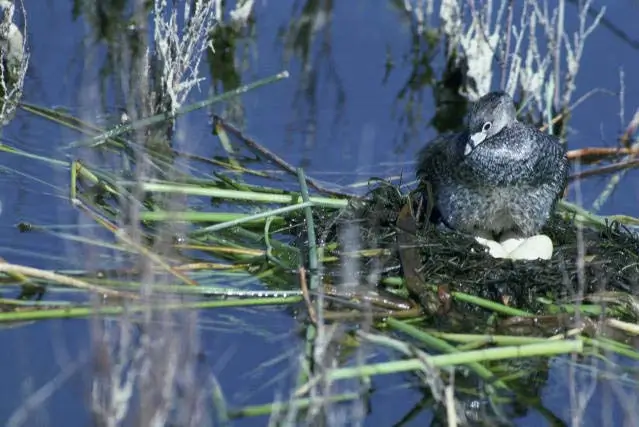
The male pied-billed grebe or a male and female pair establish a territory during the breeding season. Both the male and female gather vegetation from the pond or marsh bottom and build a floating nest in shallow water. The female pied-billed grebe lays 2-10 eggs. Both the male and female incubate the eggs. Incubation takes about 23-27 days.
The chicks are precocial and leave the nest within an hour of hatching. Although they can swim and dive as soon as they leave the nest, the parents protect the chicks and sometimes carry them on their backs. The chicks leave their parents when they are 1-2 months old. In the southern parts of their range, females may have two broods a year.
Behavior
The pied-billed grebe is an excellent swimmer and diver. It often dives to evade predators. In fact, another name for the pied-billed grebe is the Hell-diver.
Did You Know?
Support for NatureWorks is provided by:
The Pied-Billed Grebe in NH
The pied-billed grebe nest across New Hampshire, but its preferred areas to nest, marshy, shrub, and peat wetlands have been impacted by development, and the pied-billed grebe breeding population is threatened in the state.
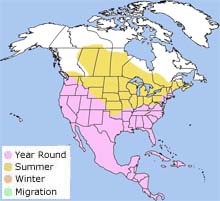
The pied-billed grebe’s range covers most of central and eastern Canada and all of the United States. In the northern parts of its range, the pied-billed grebe will migrate to areas with open water. It lives year-round in the southern part of its range, as long as the water doesn’t freeze over.