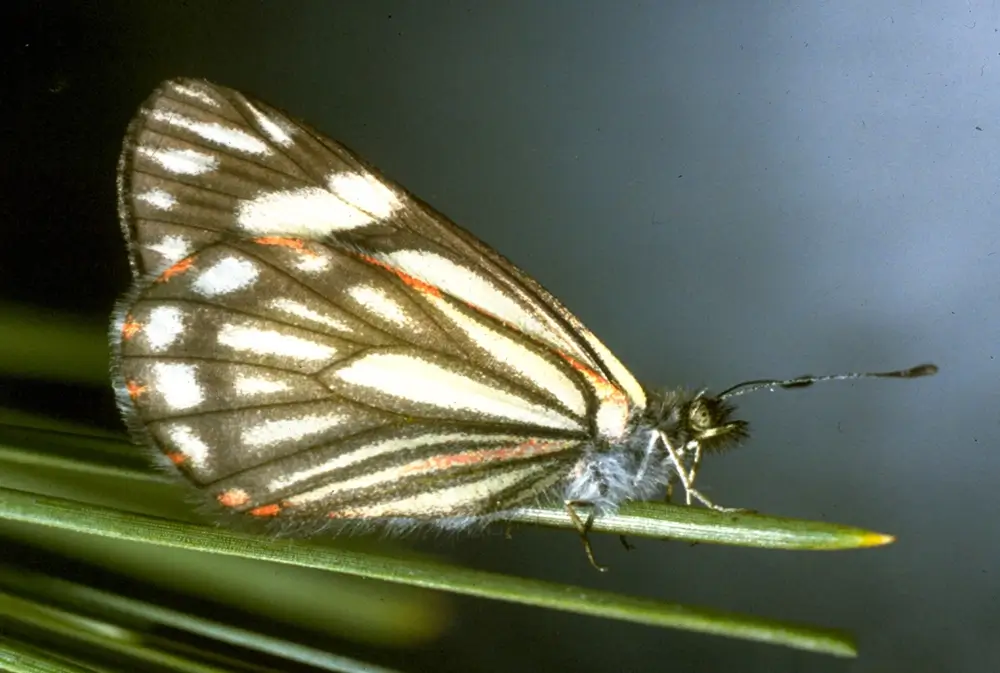
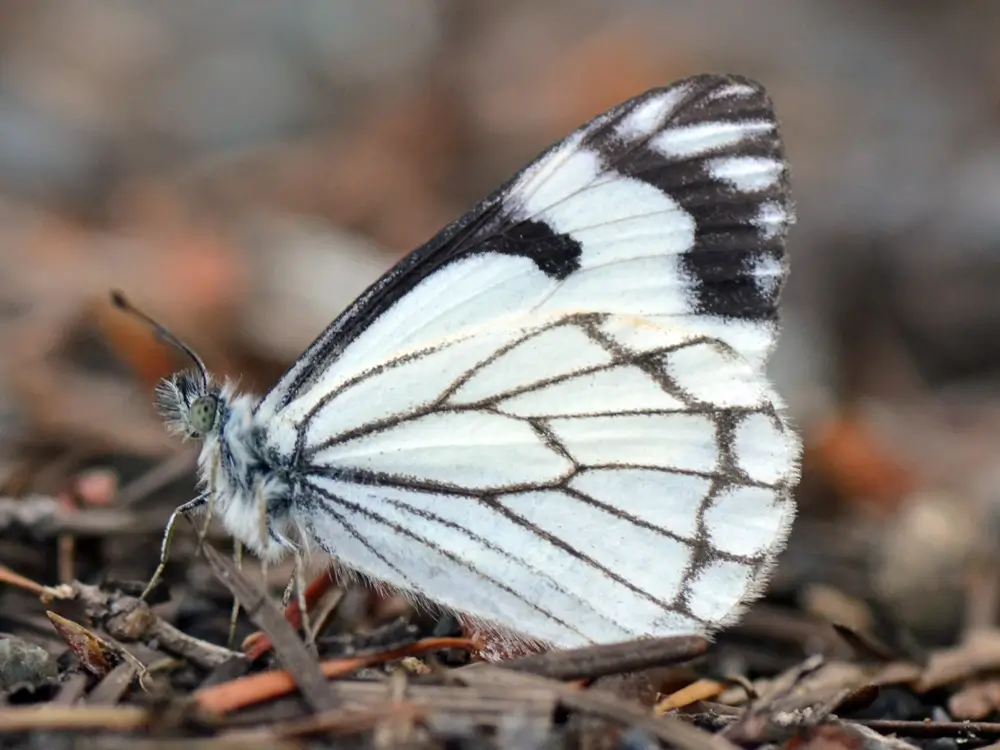
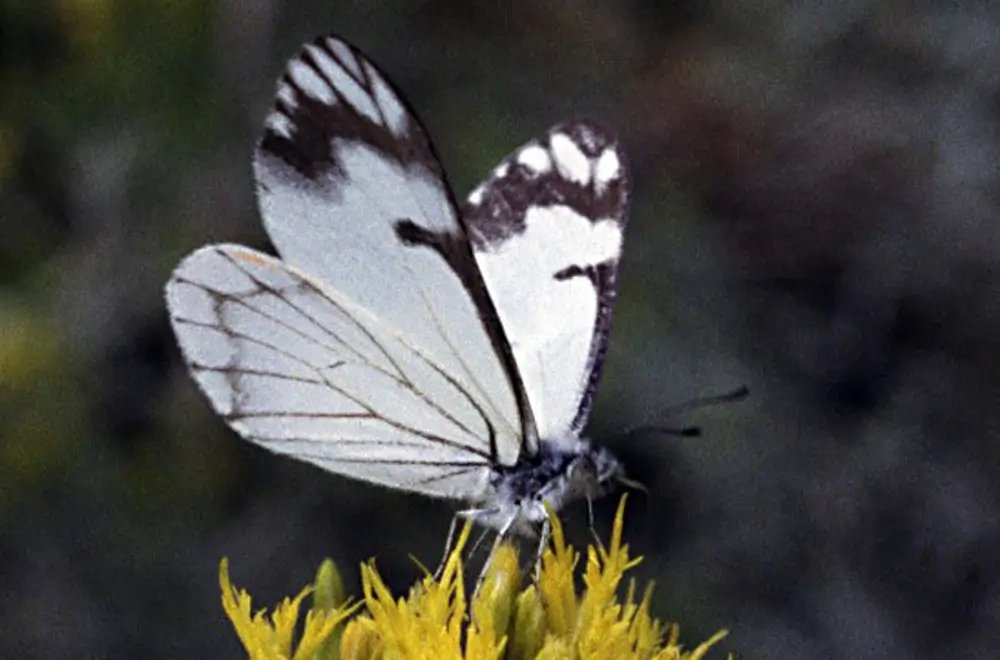
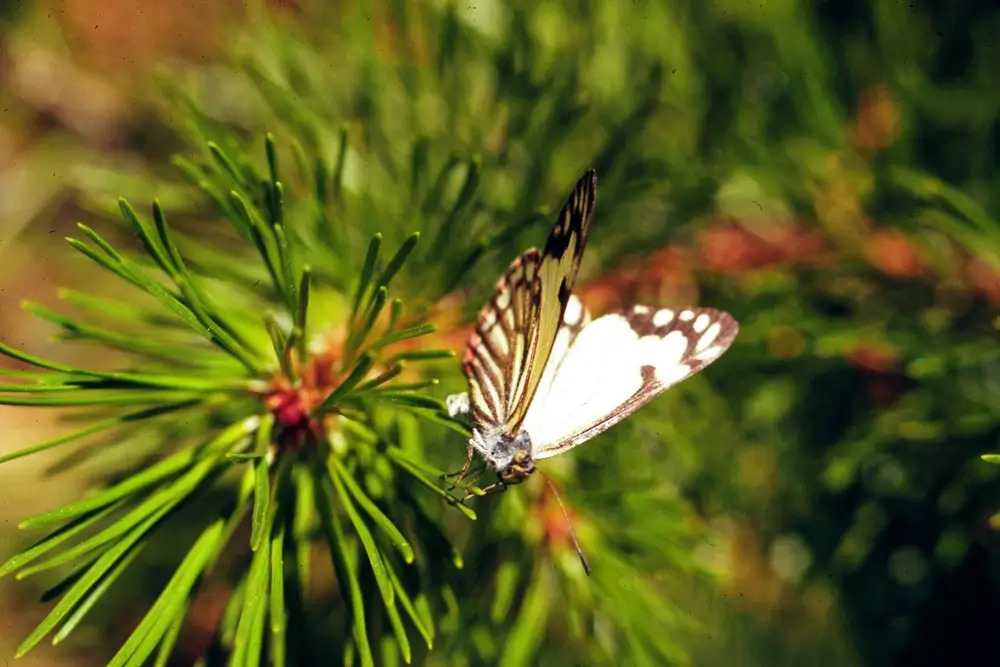
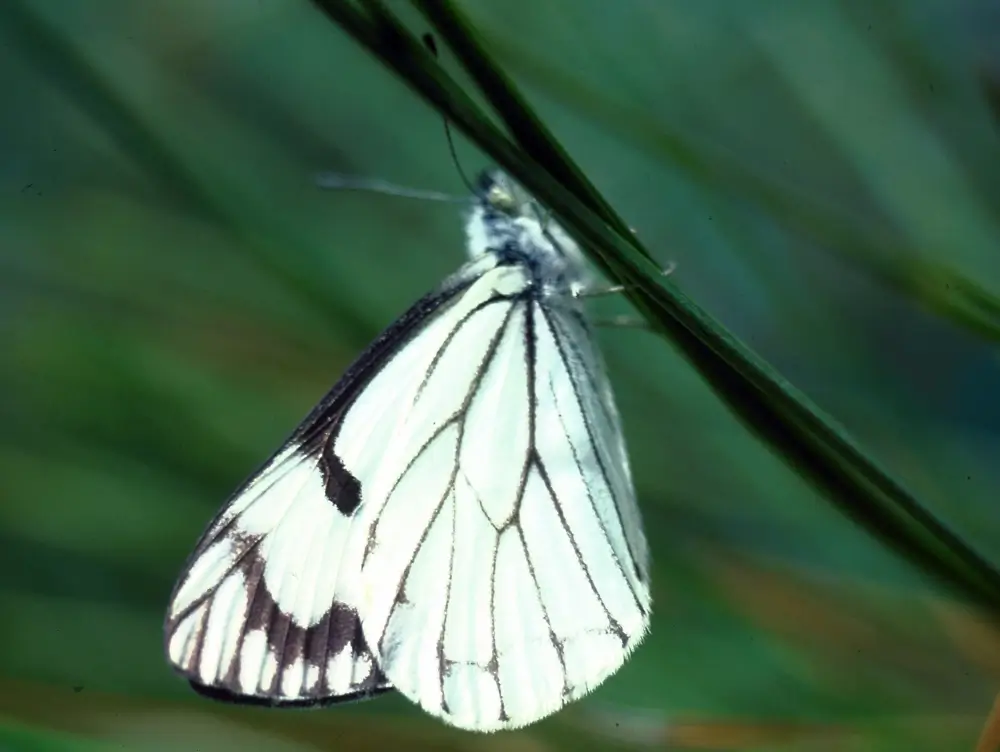
The pine white butterfly has a wingspan of between 1.75 and 2.25 inches (4.4-5.7 cm). Its forewings are white on the uppersides with heavy black markings on its wing tips. The undersides of its back wings have black veins.
Males and females are similar, but the female is a little duller in color, and her hindwings are sometimes edged in red and tinged with yellow.
Habitat
The pine white butterfly is found in pine and fir forests.
Diet
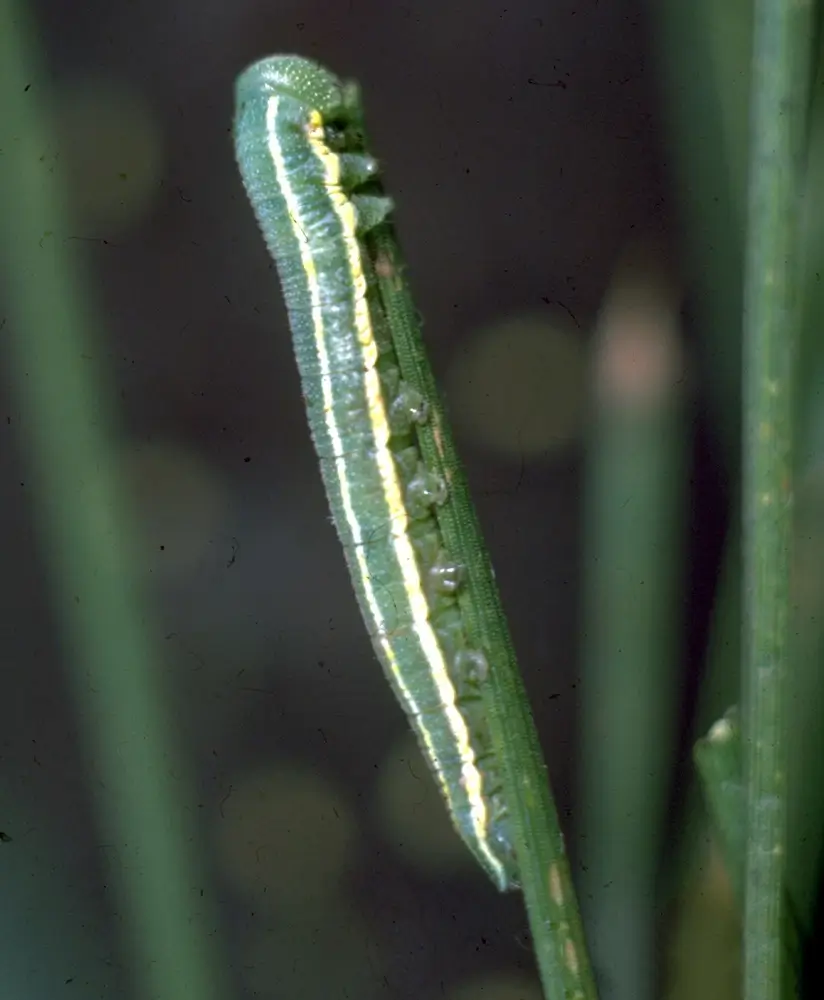
The pine white butterfly eats the nectar of flowers including rabbitbrush and beebalm. The caterpillar eats the needles of various conifers including pines, Douglas-fir, and true firs.
Life Cycle
The male white pine butterfly flies around trees looking for females. The female lays tiny green eggs in a row on a conifer needle. The caterpillars are dark green with white back and side stripes.
They feed in groups when they are young and move apart when they are older. The caterpillars drop down to the base of the host tree on a silk thread when they are ready to pupate.
Behavior
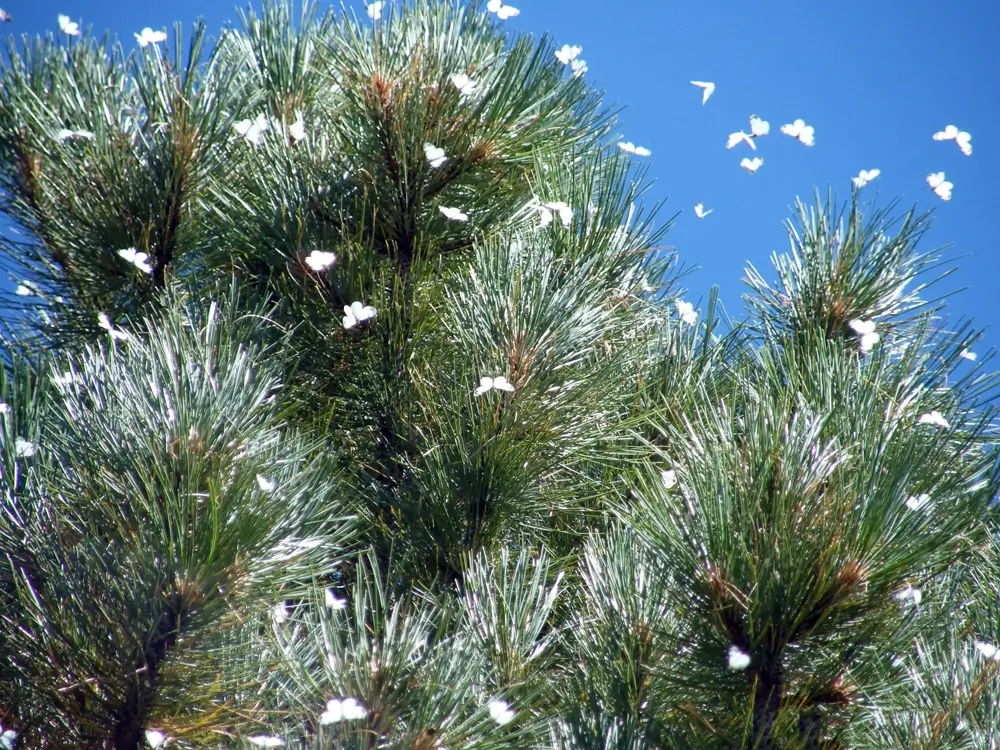
The pine white butterfly is usually found fluttering up high among the conifer trees. Some people consider the pine white a forest pest because the caterpillars can sometimes defoliate conifer trees. Defoliate means to take the leaves (or needles) off a plant or tree.
The white pine butterfly can be found from southern British Columbia and Alberta south to southern California, northern Arizona, central New Mexico, and the western most edges of South Dakota and Nebraska. It is absent from northwest coastal forests.