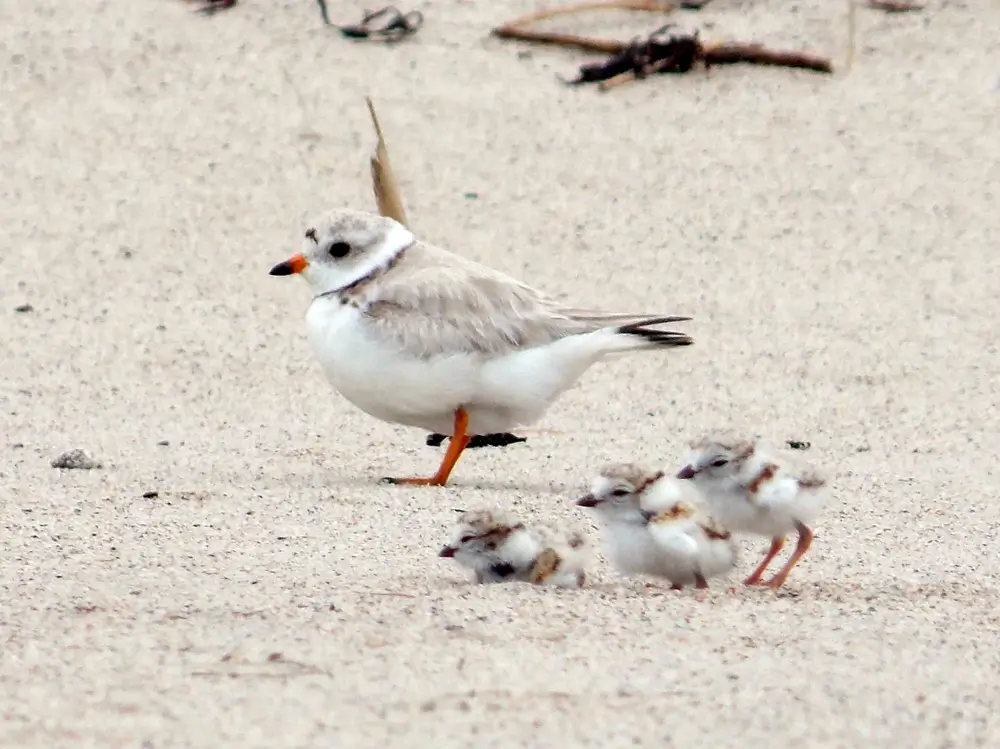
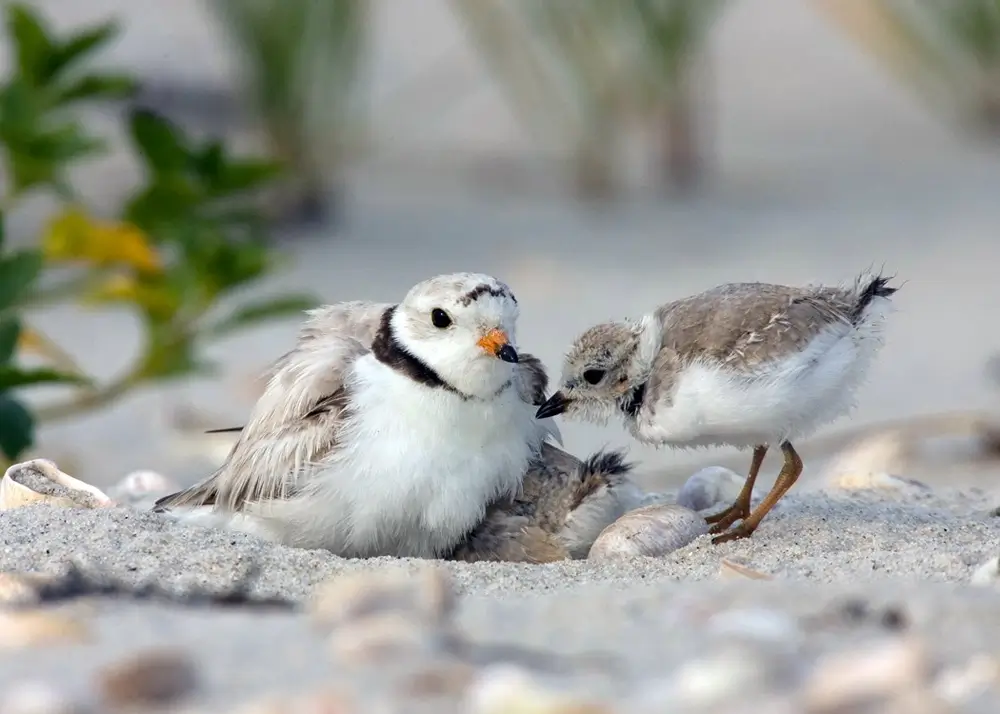
The piping plover is a small, sparrow-sized shorebird. It is 6.7-7.1 inches (17-18 cm) in length with a wingspan of 18-19 inches (45.7-48.3 cm).
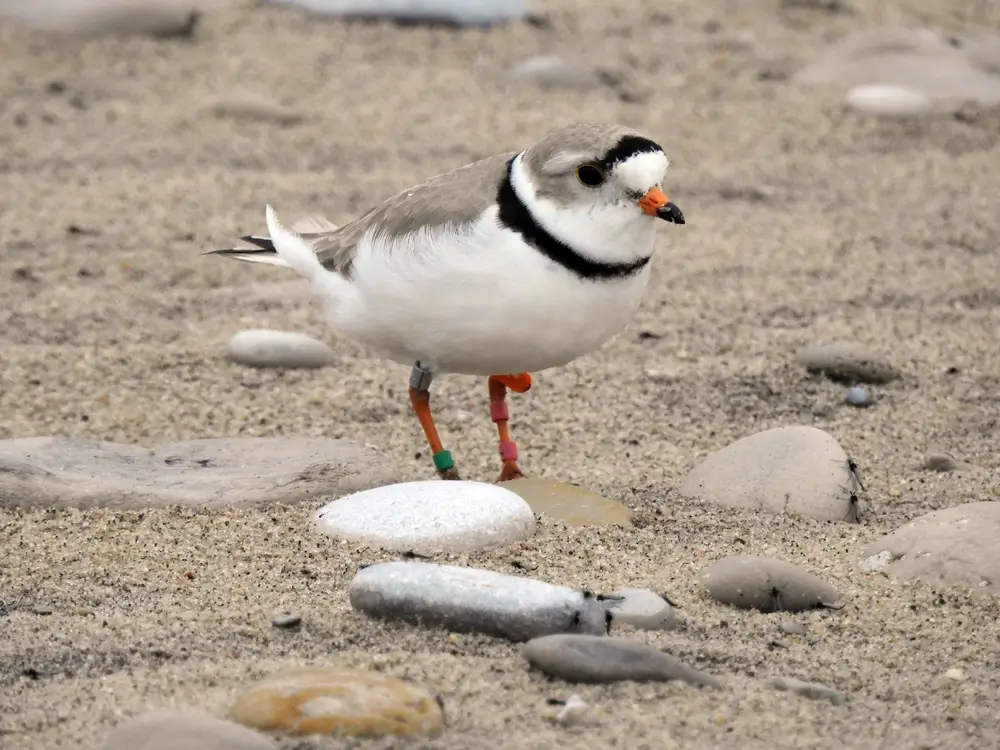
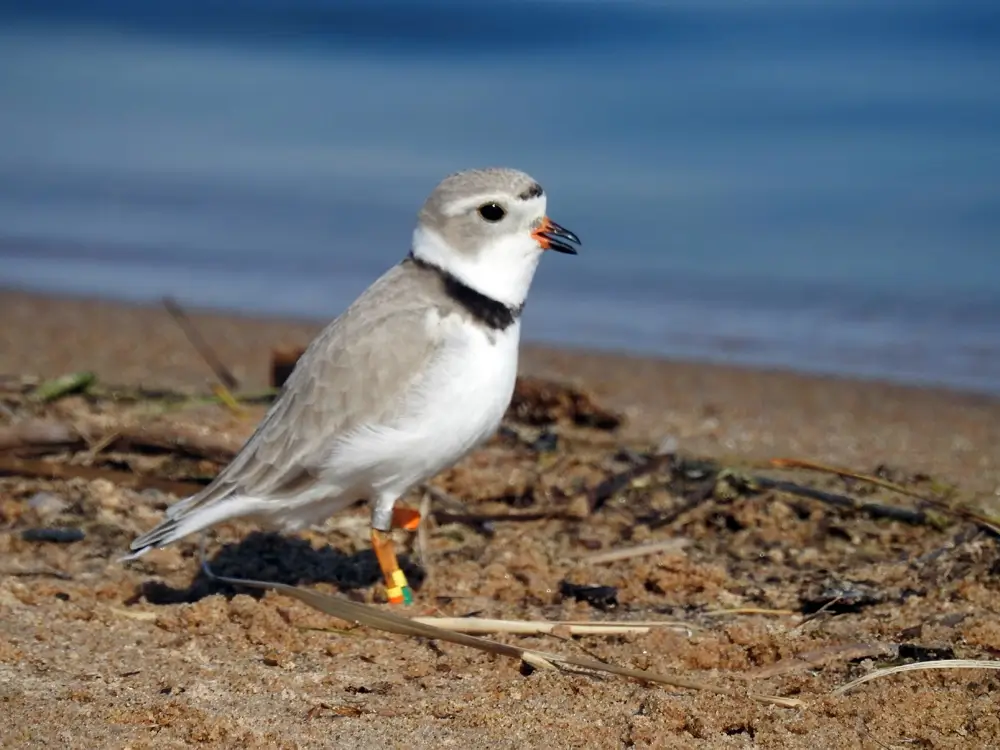
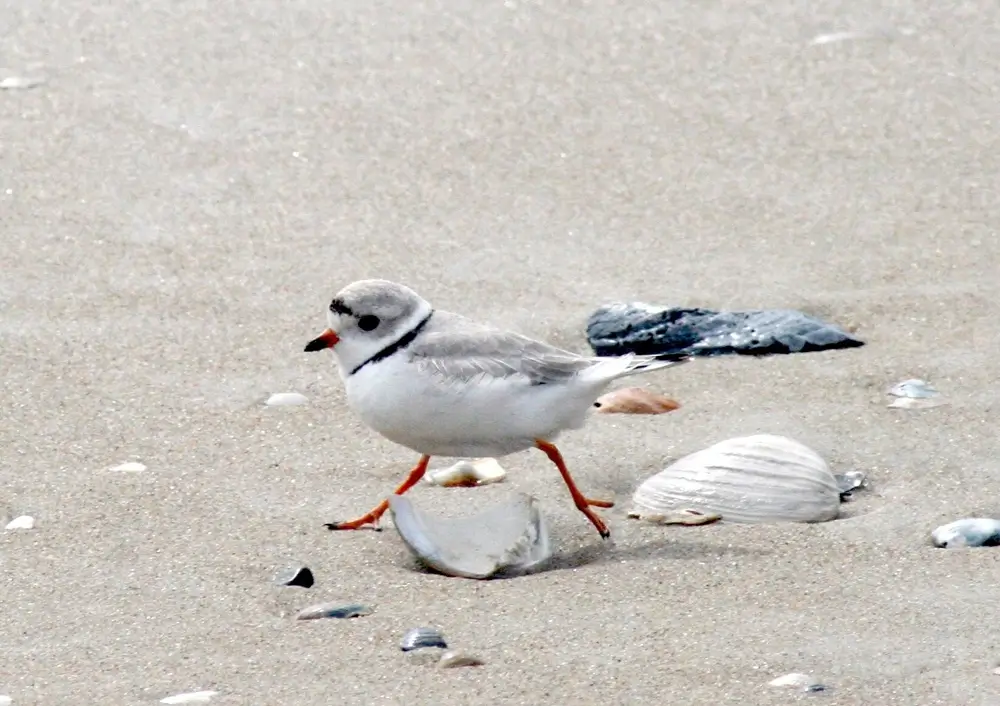
It is sandy brown-gray on its back and white on its underside. It has a black or brown neckband; a black tip on its tail; white “eyebrows;” a black band across its forehead; yellow-orange legs and feet; and a small, stubby orange bill with a black tip.
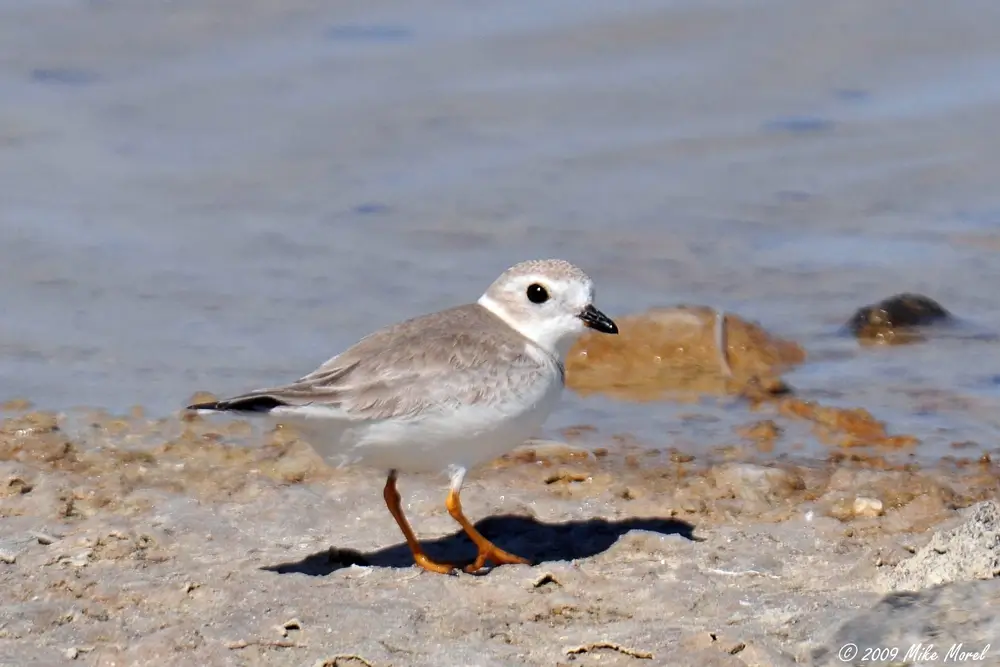
In winter, the piping plover’s black bands fade or disappear, its legs fade to a paler yellow-orange, and its bill becomes black.
Males and females are similar in appearance, but the male is a little larger, and the base of his bill is a brighter orange during the breeding season.
Habitat
The piping plover is found on sandy beaches on the coast and in dry, sandy areas inland.
Diet
Piping plovers eat marine worms, fly larvae, beetles, insects, crustaceans, mollusks, and other small invertebrates.
When it spots its prey, it quickly runs after it, stops suddenly, and then quickly snatches it up.
Life Cycle
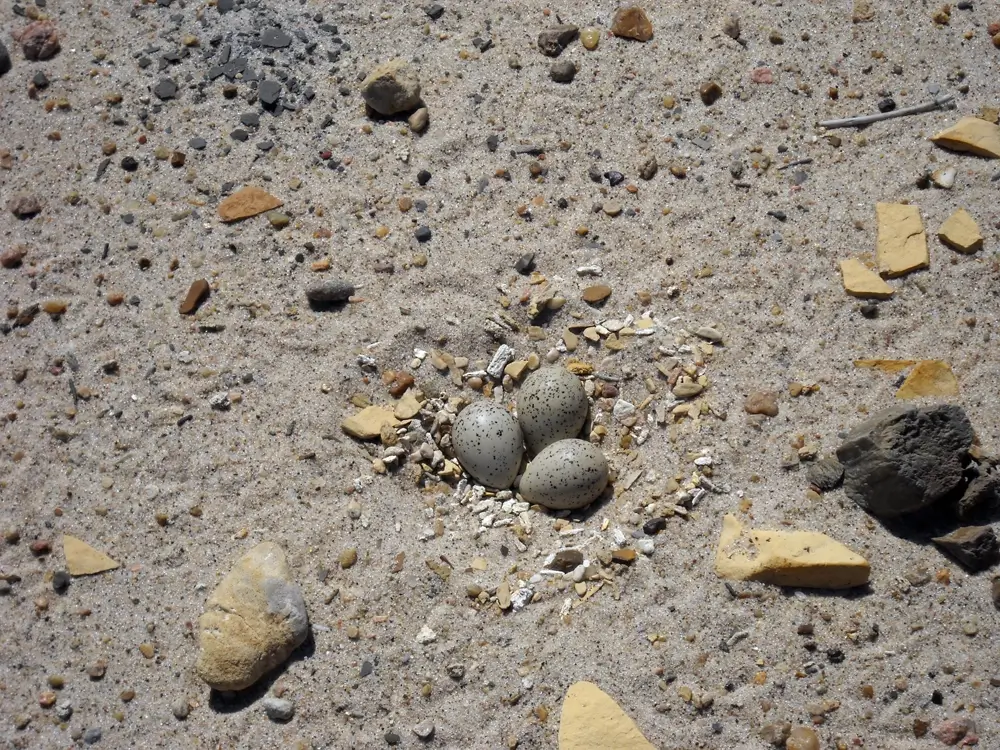
The piping plover returns to its breeding ground in late March or early April. The male piping plover courts the female by flying over her and swooping down close to the ground. The male selects the nest site and defends it from other plovers. He then starts scraping a nest in the sand above the high tide line. Both males and females may toss stones and shell fragments into the depression. The female piping plover usually lays 4 eggs.
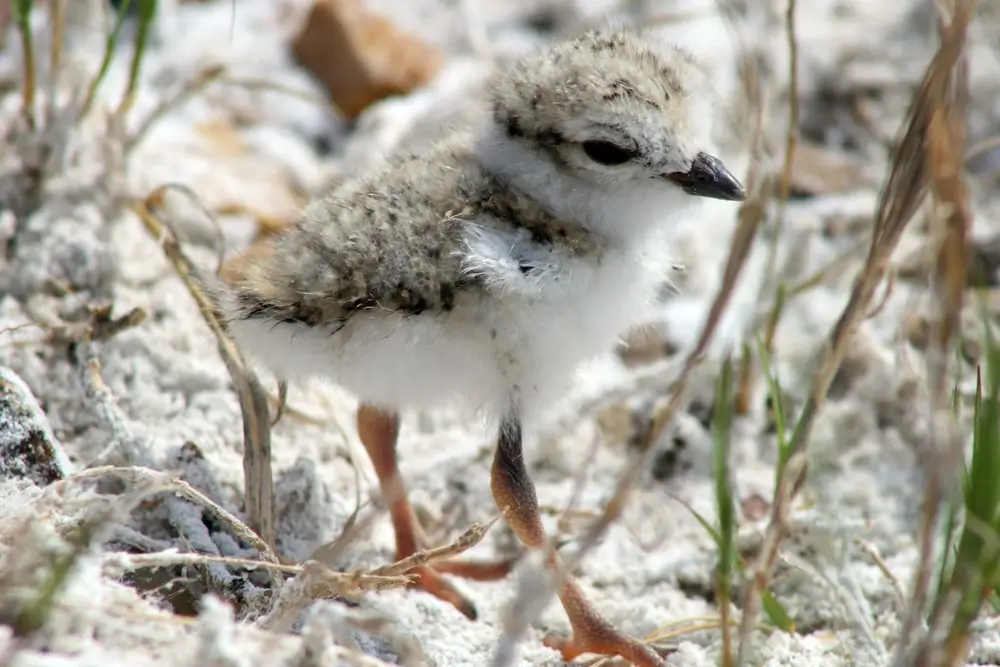
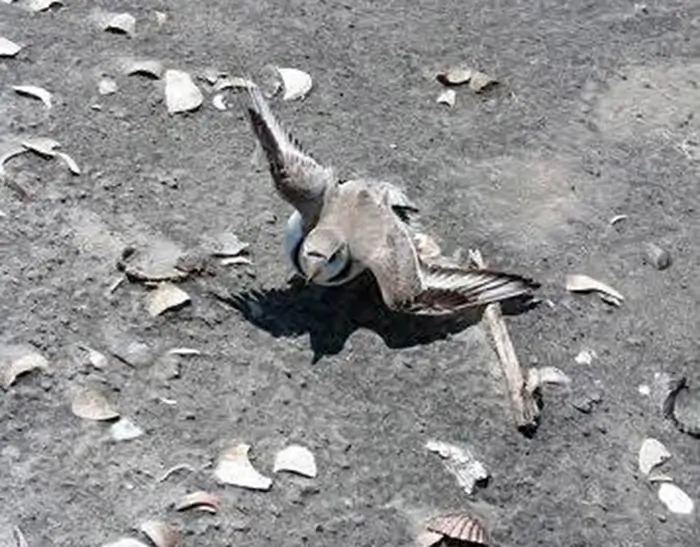
The eggs hatch in about 25 days, and the chicks fledge when they are 3-4 weeks old. The parents don’t feed the chicks. The chicks are precocial and hop out of the nest and forage for food themselves. If the young are threatened by a predator, the adult may pretend to have a broken wing to lure the predator away.
The piping plover has a lifespan of 5-6 years in the wild.
Behavior
Piping plovers and their eggs blend in very well with the sand, which is good camouflage from predators, but can put the eggs in danger of being stepped on by humans. In some areas, the piping plover is endangered.
The spread of human developments in ocean-side and lakeshore areas has disturbed or destroyed nesting sites of the piping plover. On some beaches, the nesting areas of piping plovers are closed off so people don’t step on the eggs.
Did You Know?
The piping plover gets its name from the piping sound of its call.
Support for NatureWorks is provided by:
The Piping Plover in NH
In New Hampshire, piping plovers nest along the state’s beaches. Since 1996, New Hampshire Fish and Game has been fencing off areas and posting signs where plover nests are located to help protect their eggs.
In the past few years, piping plovers have made nests at Hampton Beach State Park and Seabrook Beach.
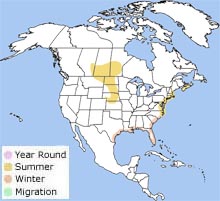
The piping plover breeds on the northern Great Plains from Alberta, Canada, south, along the northern Great Lakes, and along the Atlantic coast from Newfoundland to North Carolina.
It winters on the Gulf Coast and the southern Atlantic coast north to North Carolina.
The piping plover is a threatened species in the U.S. and an endangered species in New Hampshire.