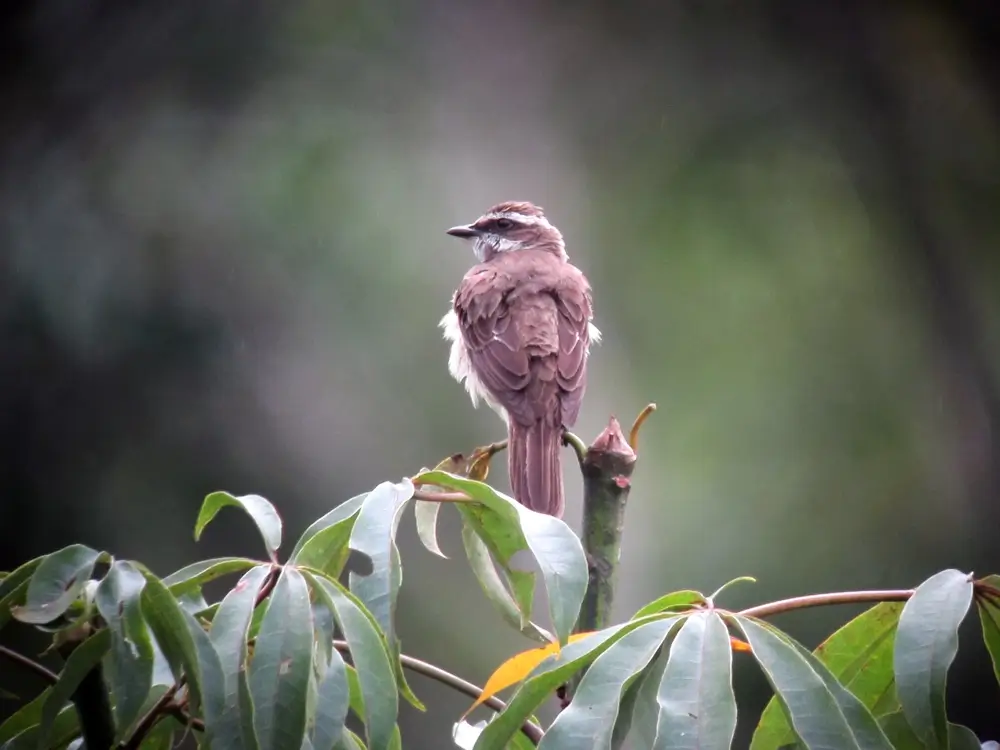
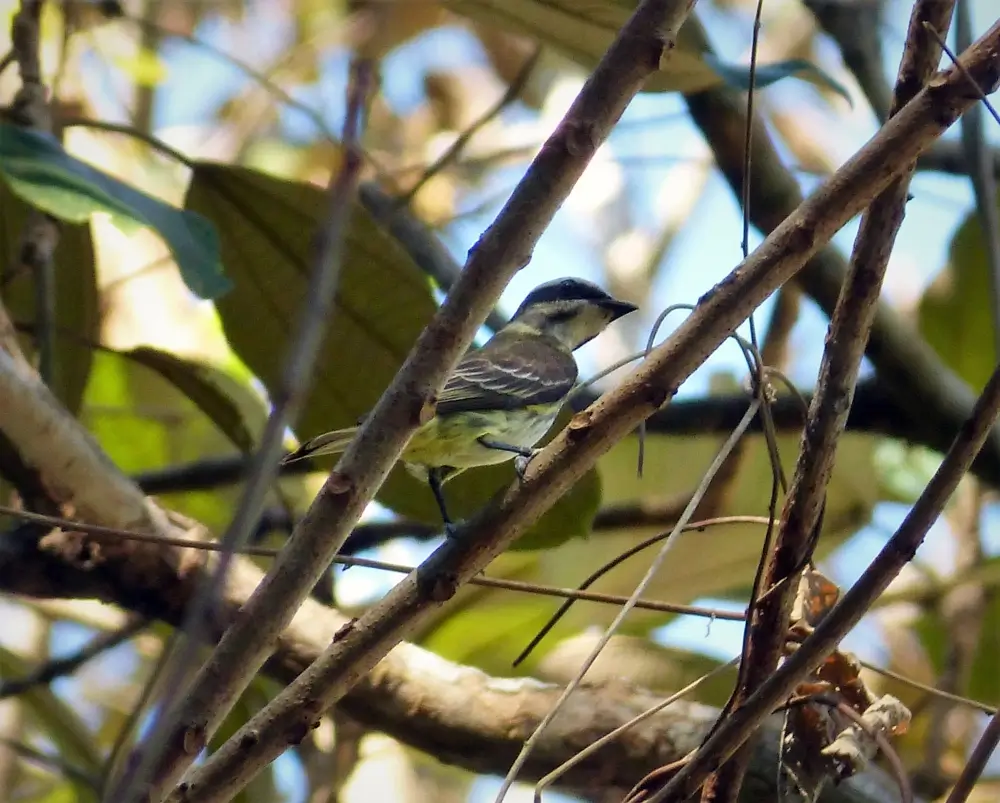
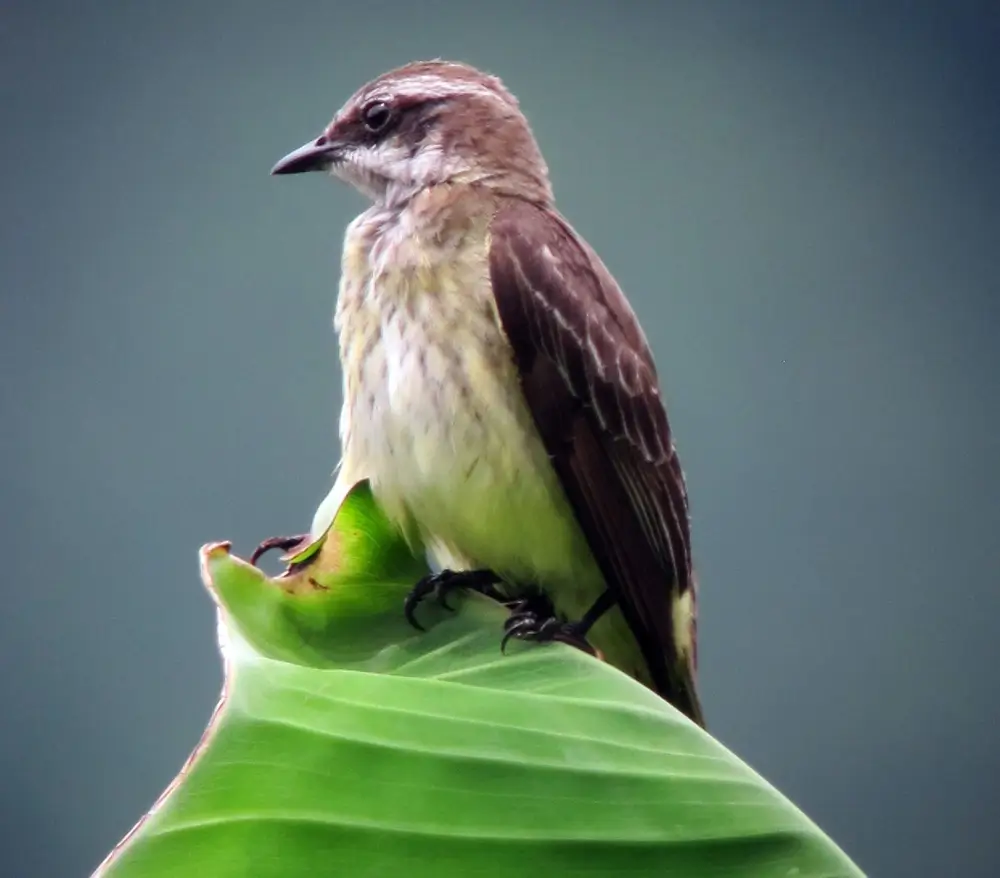
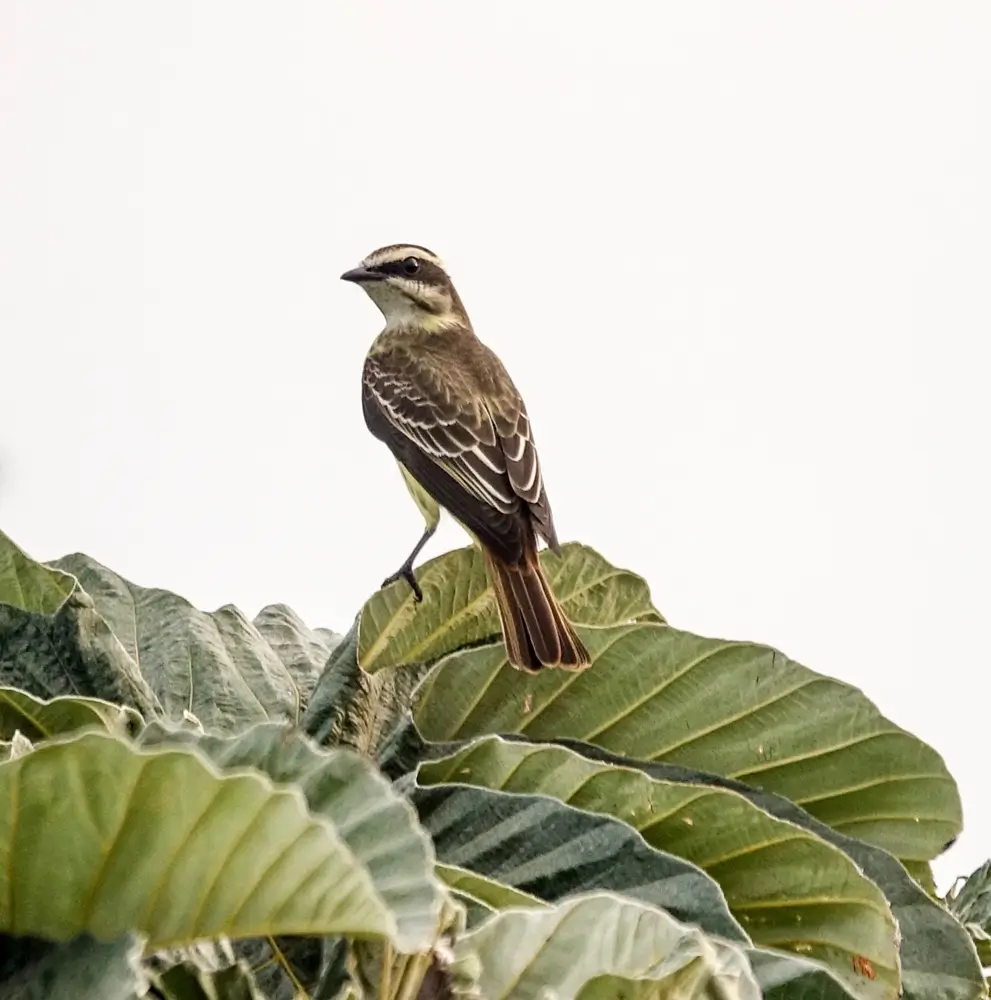
Piratic flycatchers are 5.7-6.7 inches (14.5-17 cm) in length.
They are brown or dark olive-green and have a whitish throat and a yellow belly. They have a white eyebrow stripe, and their wings have a yellowish-white edge. They have a short, broad-based black bill. Males and females look alike.
Habitat
Piratic flycatchers are found in forest edges, river edges, semi-open country, and in cultivated areas with tall trees.
Diet
Piratic flycatchers eat insects and berries. They perch on tree branches and wait for their insect prey to fly by, and then they fly after it.
Life Cycle
Piratic flycatchers get the pirate part of their name from their nesting behavior. They wait for other flycatchers to make their nest, and then they begin to annoy the nest-builder by flying into the nest again and again and again.
They don’t attack the other bird, but sometimes they remove eggs from the nest. Eventually, the other bird abandons its nest, and the piratic flycatcher takes over.
The female lays 2-3 eggs and incubates them for a little over two weeks. The chicks leave the nest when they are 18-20 days old.
Behavior
Piratic flycatchers travel in pairs and are hard to spot since they spend most of their time high in the tree tops.