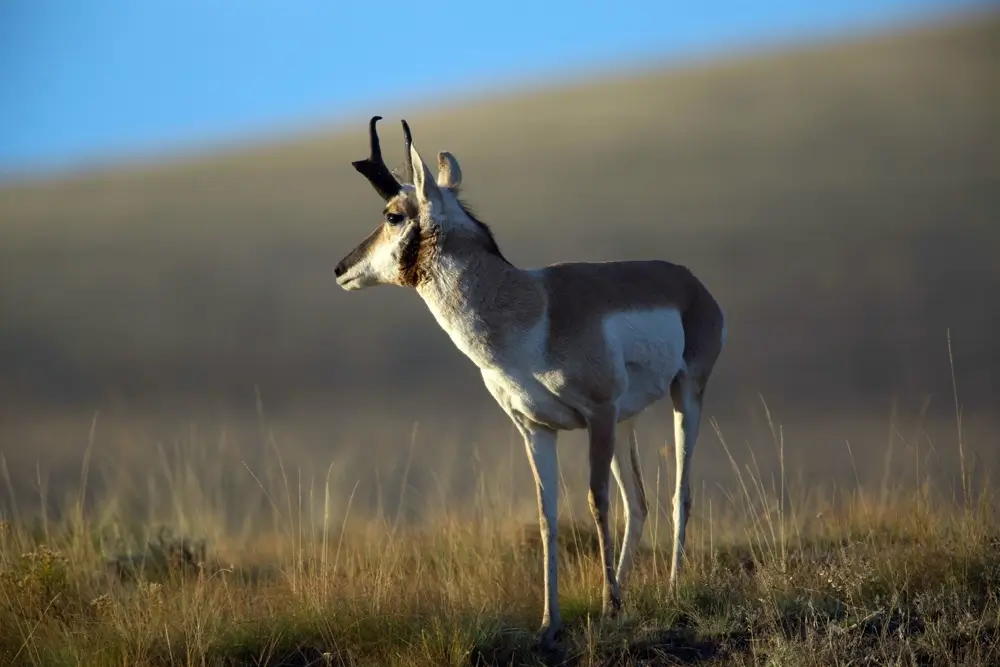
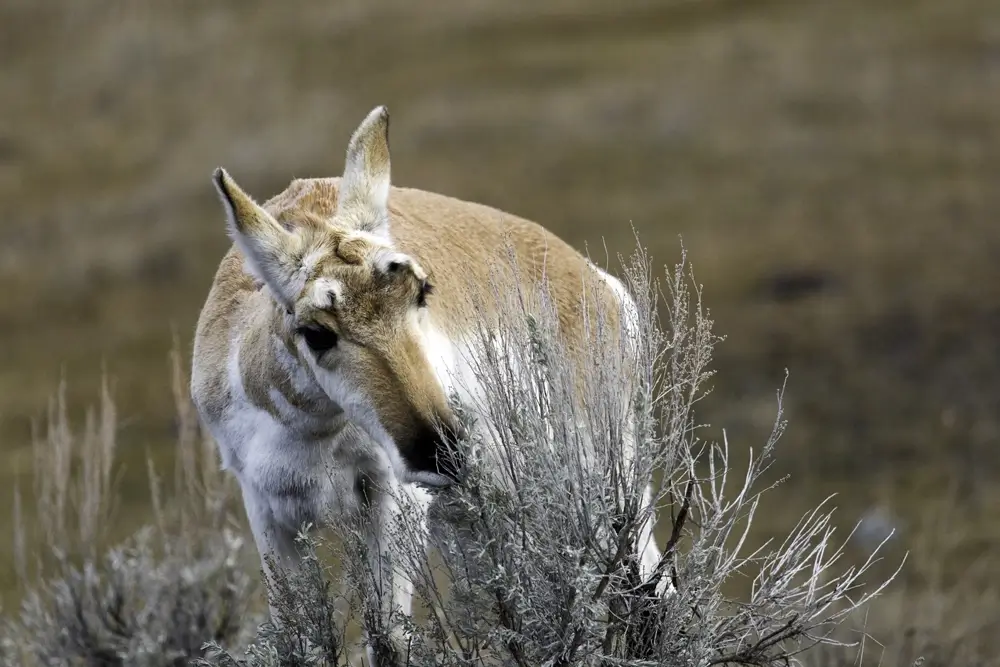
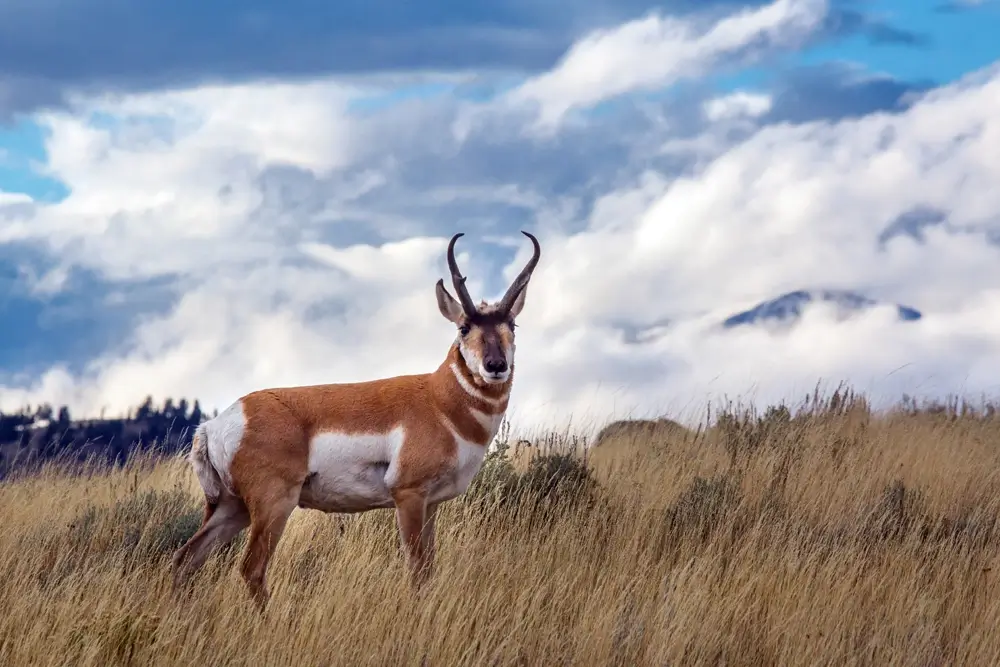
The pronghorn has a deer-like body. It weighs between 90 and 120 pounds (40.8-54.4 kg) and stands about 3.5 feet (1.1 meters) tall from its shoulder to its feet.
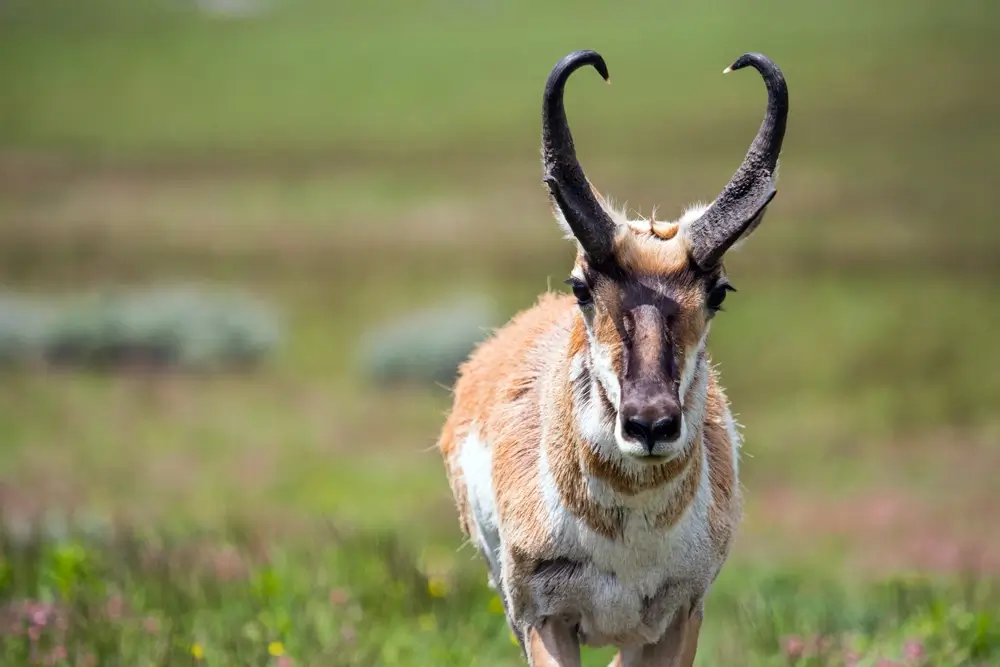
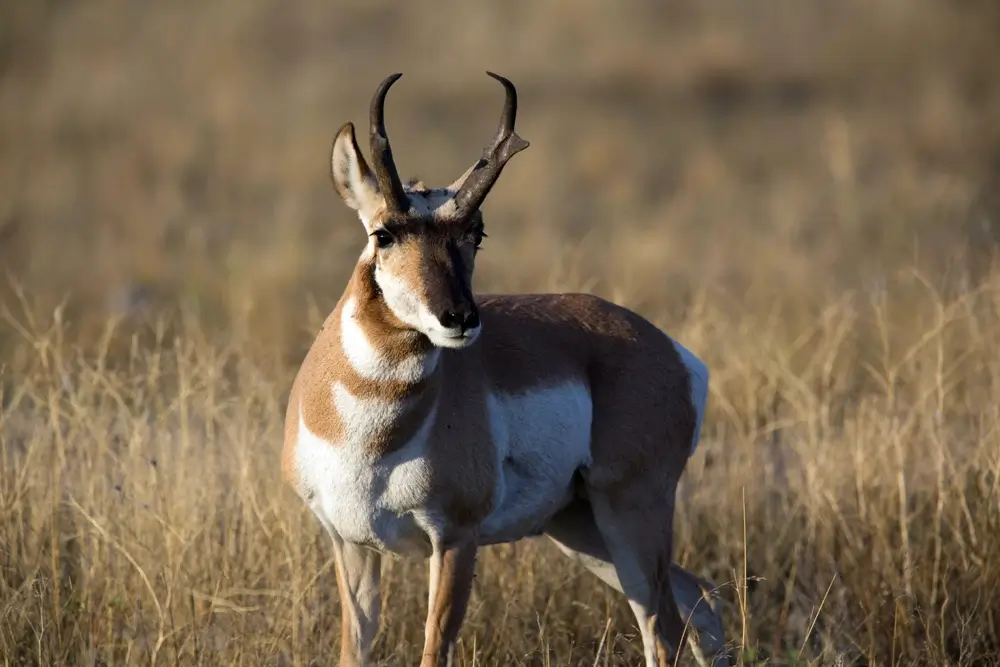
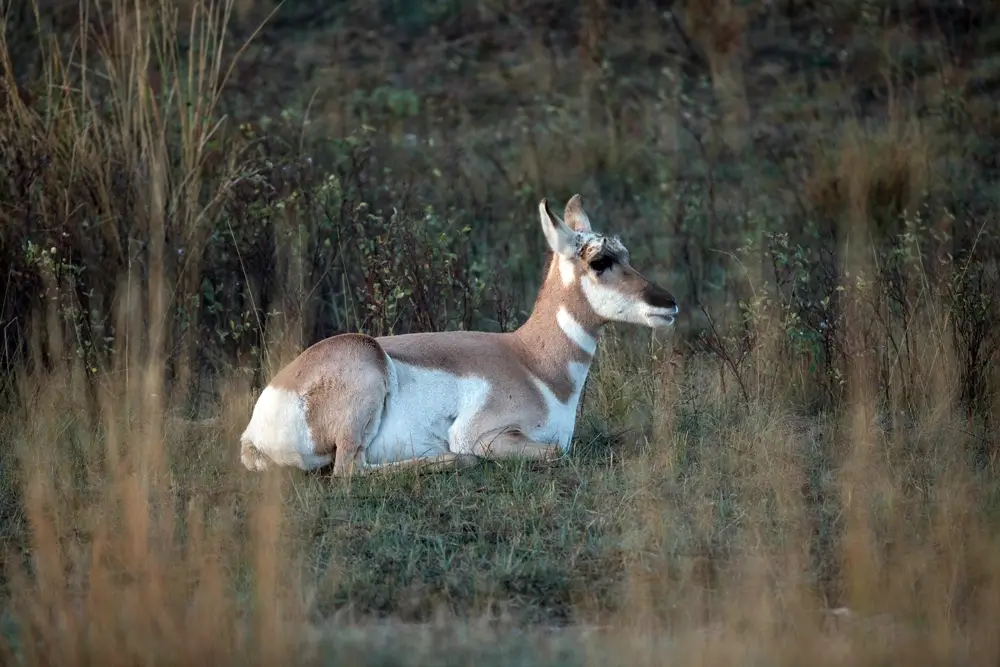
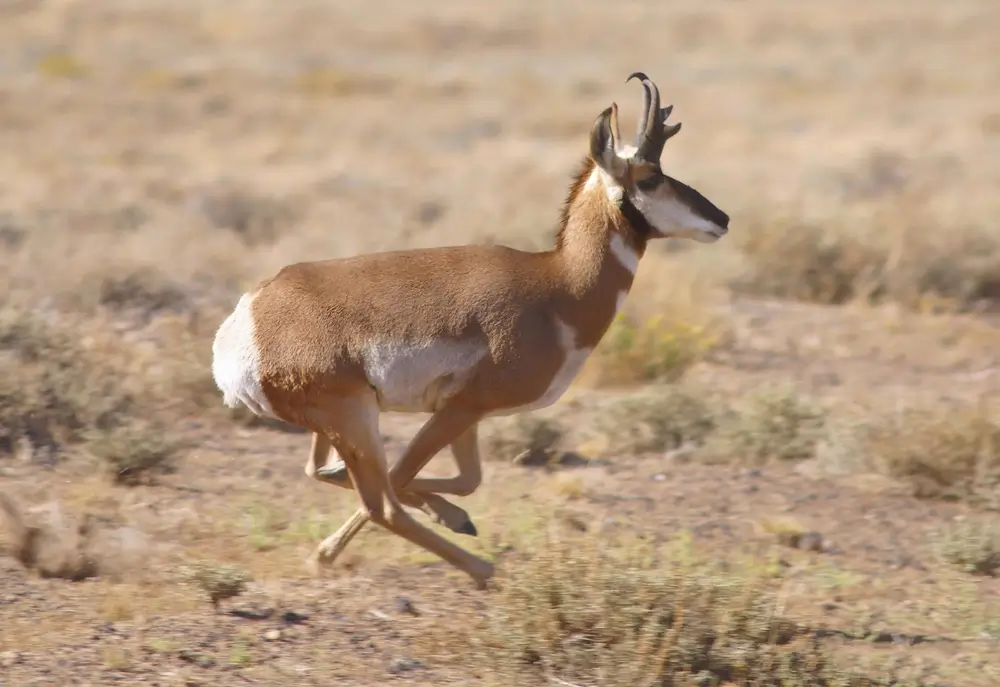
It has a tan to reddish brown body. Its cheeks, belly, rump, chest, and inner legs are white. Males have a broad, black mask that runs from their eyes down their snout to their nose; black neck patches; and pronged black horns that are 12-20 inches (30.5 cm) long.
The pronghorn has horns, not antlers. The male’s horns are lyre-shaped and curve in towards each other. The female does not have the black markings, and her horns are usually straight, short spikes between 3-4 inches (7.6-10.2 cm) in length.
Its horns are made of two parts: a bony core and a sheath-like covering made of a stiff, hair-like material. It is the only animal that has branched horns, and it is the only animal that sheds its horns each year. The outer sheath falls off every year in the fall and then grows back in the summer.
The pronghorn lives in grasslands, brushlands, and deserts. The pronghorn lives in herds that change in size depending on the season. In the summer, females and their young will gather in bands of fewer than a dozen individuals. Young males less than two years old form bachelor herds. Breeding males establish individual territories.
In the winter, the herd includes males and females and can number hundreds of pronghorns. The pronghorn migrates from a summer feeding ground to a winter feeding ground.
In the summer, pronghorns graze on grasses, forbs, and cactus. In the winter, they eat sagebrush and other available plants.
In the southern part of its range, pronghorns mate in the late summer. In the northern part of its range, they mate in the early fall. Males fight over females. A male may mate with more than one female. The female gives birth to 1-2 fawns in late May or early June.
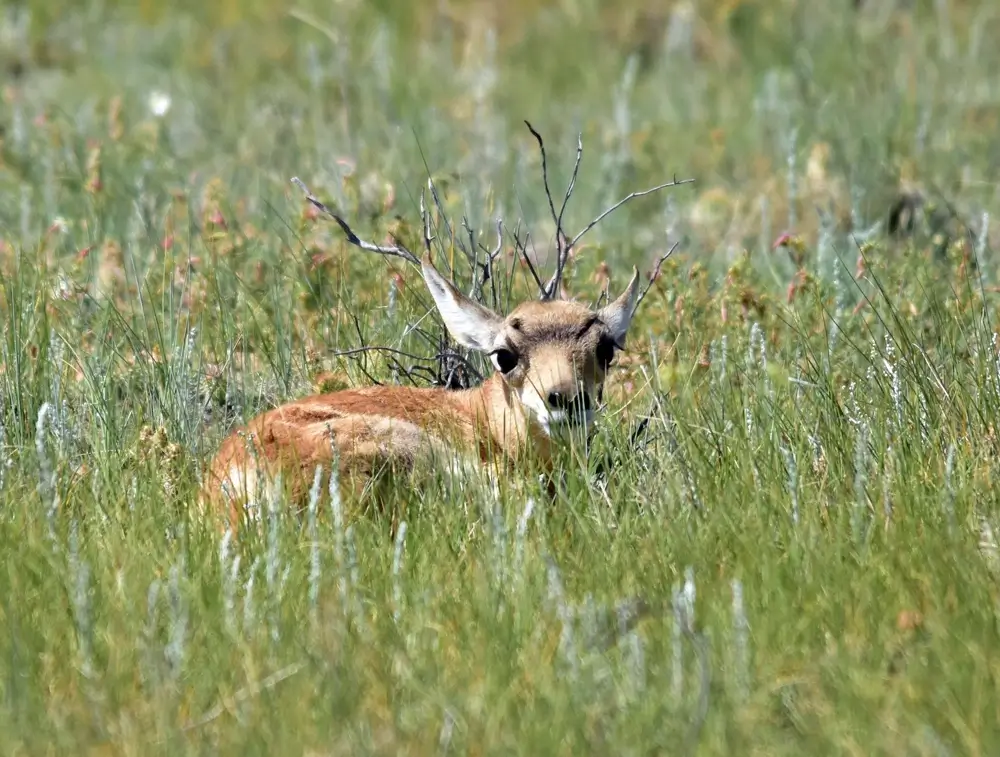
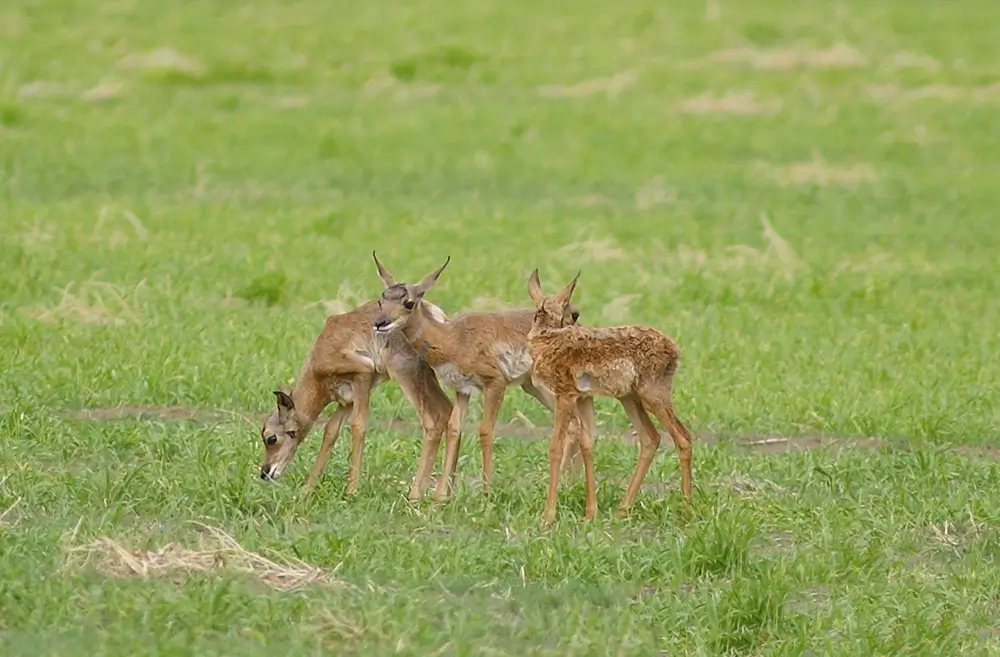
The fawns are almost odorless at birth. This helps protect them from predators. They stay hidden in the grass for the first few days. Their mother grazes away from where she has hidden her fawns so that she doesn’t attract predators to their hiding place.
Fawns join the herd when they are about a week old, and they begin grazing when they are three weeks old. They can run faster than a human when they are just four days old.
The average lifespan of a pronghorn is 7-10 years.
The pronghorn is the fastest animal in the Western Hemisphere. It can run at speeds of up to 60 miles per hour (96.6 kph), and can run long distances at speeds of 30-40 miles per hour (48.3-64.4 kph). It makes bounds of up to 20 feet (6.1 m) when running.
When the pronghorn runs, its mouth is open to help it breathe in extra oxygen. Speed is important because the pronghorn lives in open areas, where there is no place to hide from a predator. It has to be able to run away.
The pronghorn is active at night and during the day. It has excellent eyesight and can spot a threat up to four miles away. When the pronghorn is threatened, it may attack with its sharp hooves.
The pronghorn is a unique North American mammal. Its Latin name, Antilocapra americana, means “American goat-antelope.”
It is not a member of the goat or the antelope family, and it is not related to the antelopes found in Africa.
The pronghorn is the only surviving member of the Antilocapridae family. It has been in North America for over a million years.
Its closest living relatives are members of the Giraffidae or giraffe family.

Support for NatureWorks Redesign is provided by:
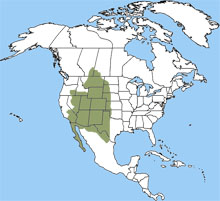
The pronghorn is found in southeastern Oregon, southern Idaho, southern Saskatchewan and Alberta, Canada; Montana, and from western North Dakota south to Arizona and in western Texas.
NHPBS inspires one million Granite Staters each month with engaging and trusted local and national programs on-air, online, in classrooms and in communities.