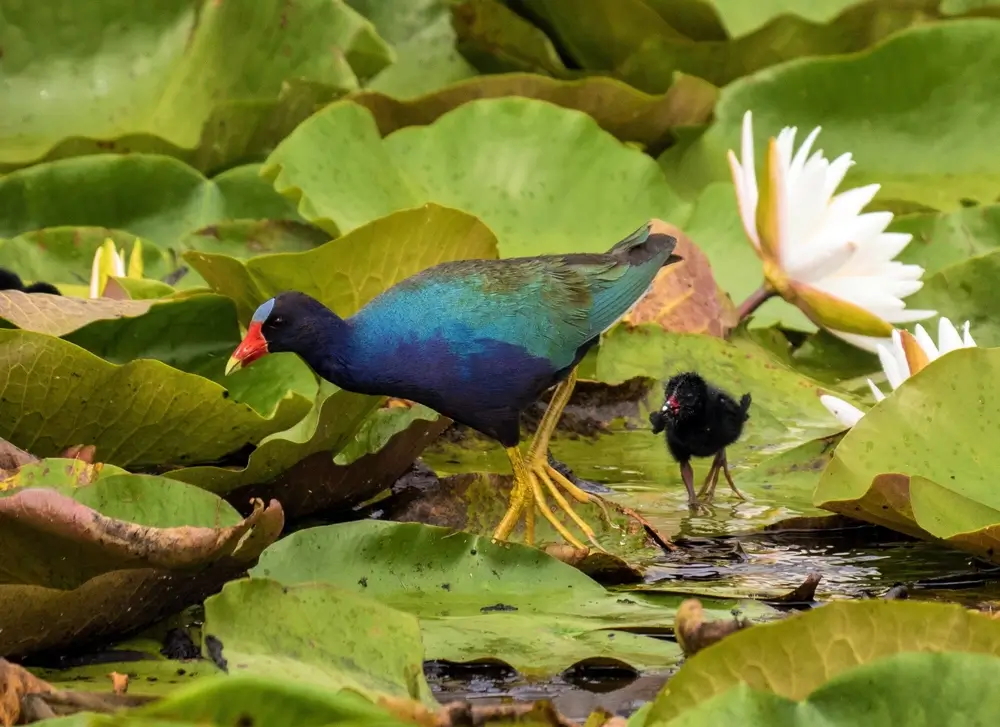
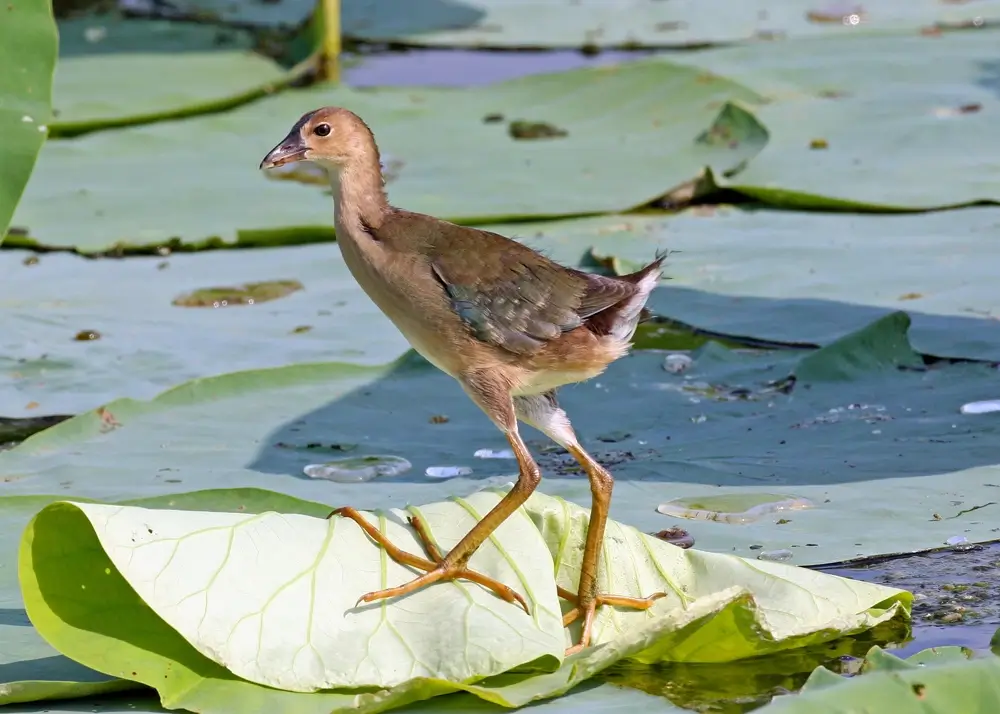
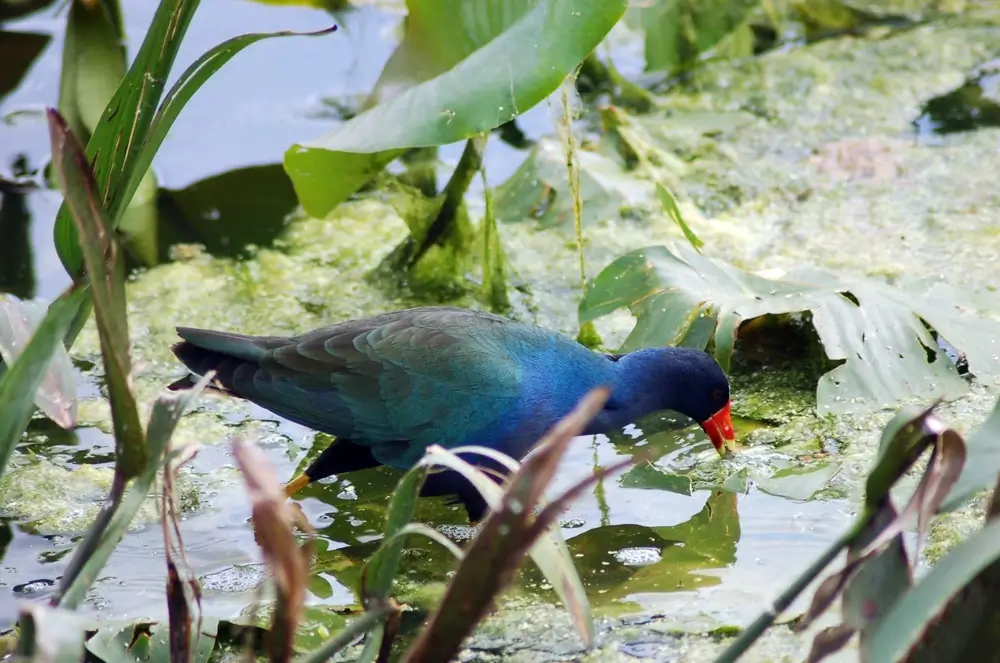
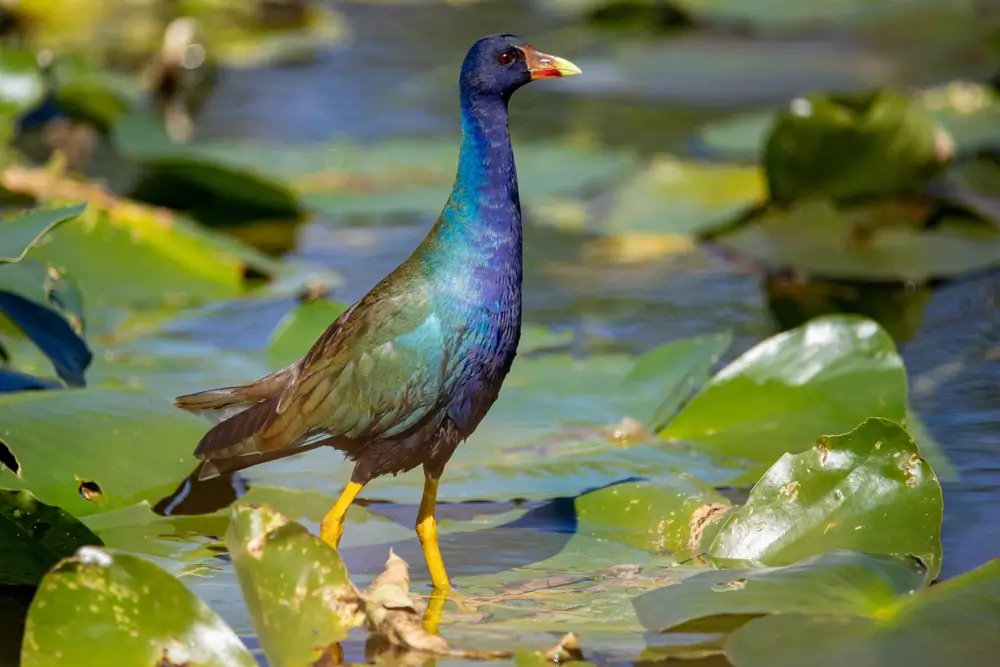
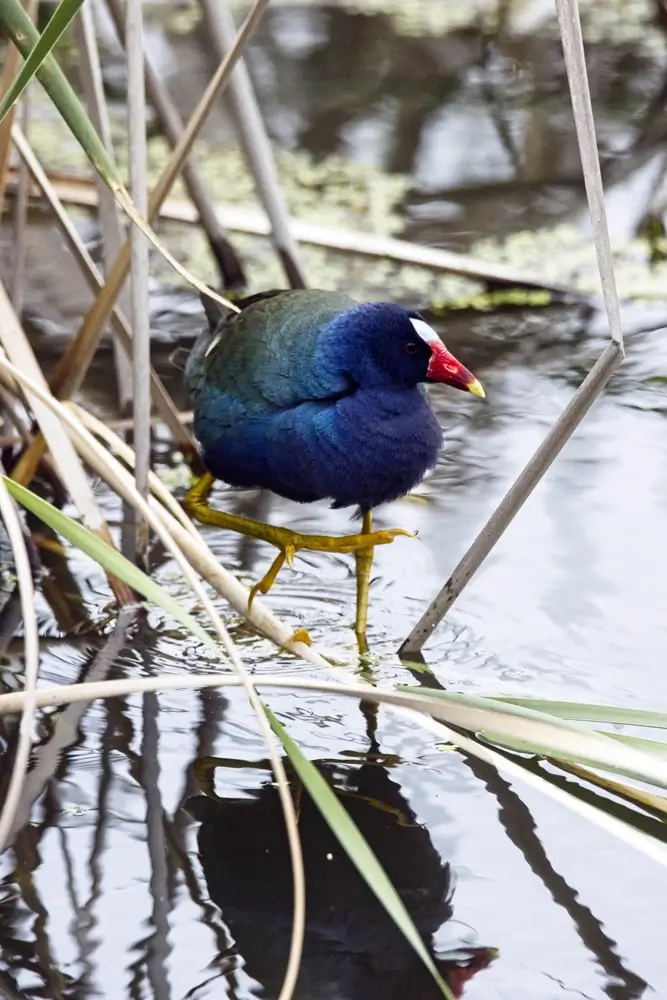
The purple gallinule is a brightly colored marsh bird that is about the size of a chicken. It is 10-15 inches (25-38 cm) in length with a wingspan of 20-22 inches (51-56 cm).
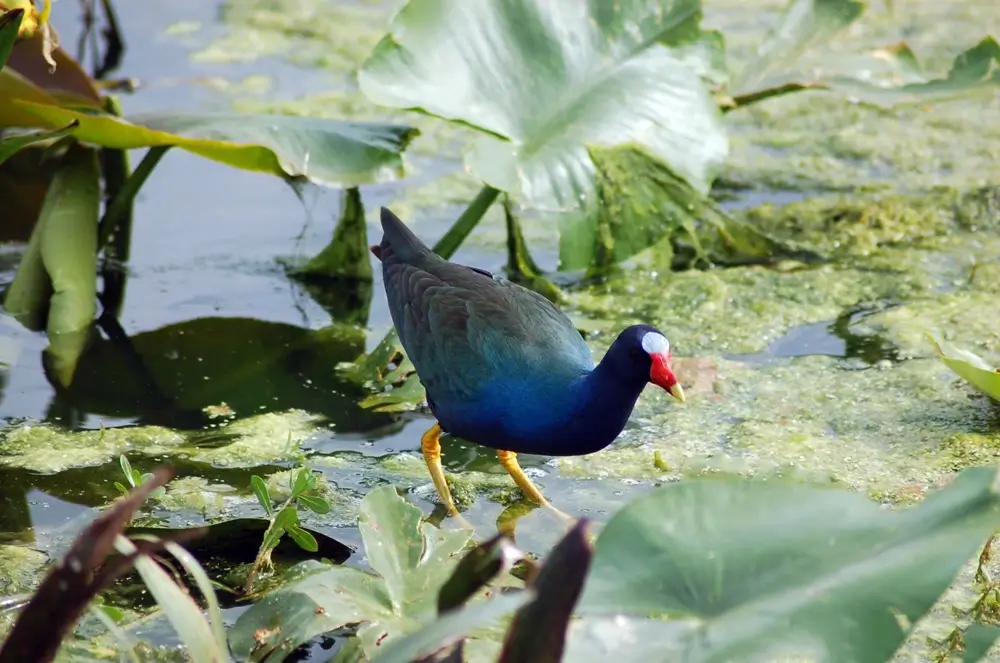
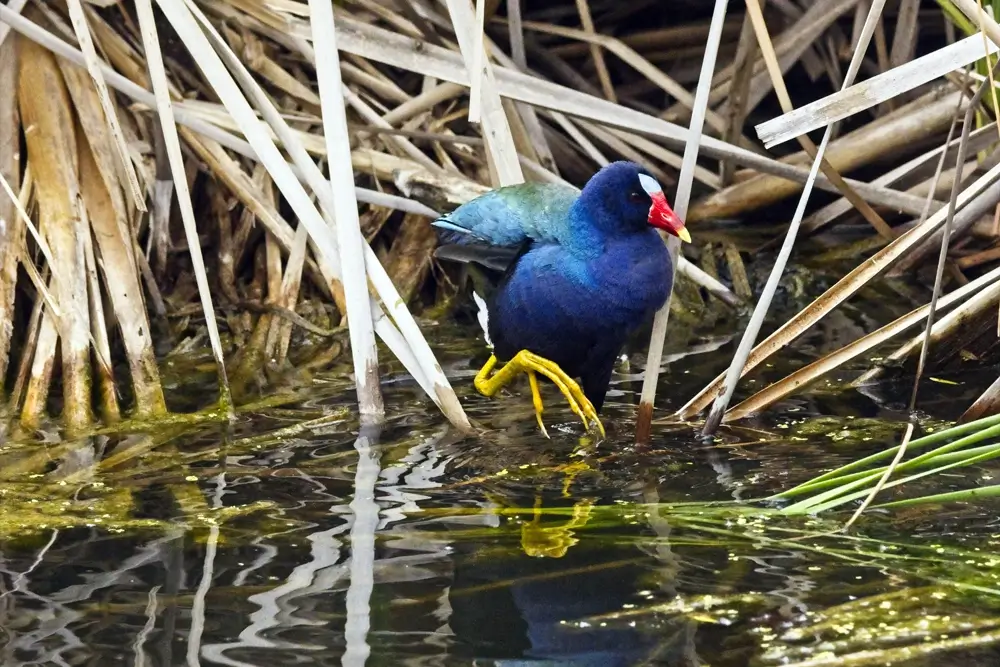
It has blue and green feathers, long yellow legs, very long toes, and a red bill with a yellow tip. Males and females look the same.
Habitat
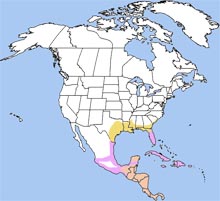
The purple gallinule lives in freshwater marshes with aquatic vegetation like lily pads and pickerelweed.
Diet
The purple gallinule eats a wide variety of foods including frogs, grasshoppers, dragonflies, spiders and water plants.
Life Cycle
The female purple gallinule lays 6-10 eggs in a nest of dead tree stems and leaves. The nest is usually placed on a floating tussock, in a clump of sawgrass, or in a thicket. Both parents incubate the eggs and feed the chicks.
Purple gallinules perform a “changing of the guard” ceremony while they are nesting. One partner will bring the partner incubating the eggs a leaf. The bird on the nest adds the leaf to the nest before turning incubation duties over to the other gallinule.
Purple gallinule chicks are “subprecocial.” They can walk around soon after birth, but they can’t feed themselves for a few weeks. They have a tiny claw at the end of their pollex (inside toe) that helps them grip vegetation as they move around.
The purple gallinule has a lifespan of around 6 years in the wild.
Behavior
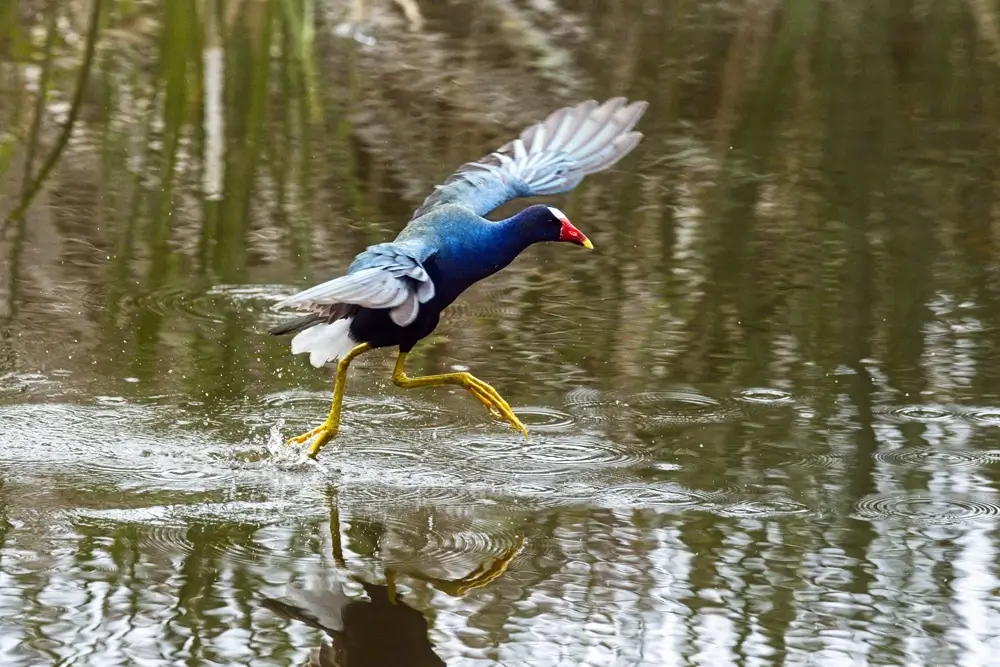
The purple gallinule is not a very good flyer, but it is an excellent wader. It uses its long toes to distribute its weight. It can even walk on lily pads.