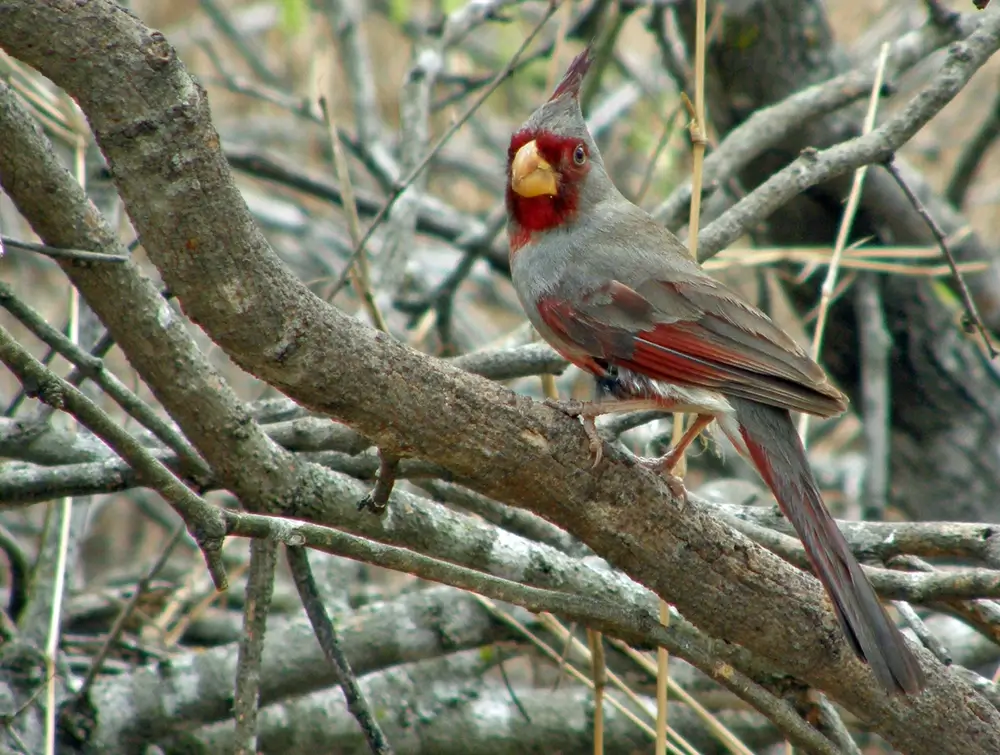
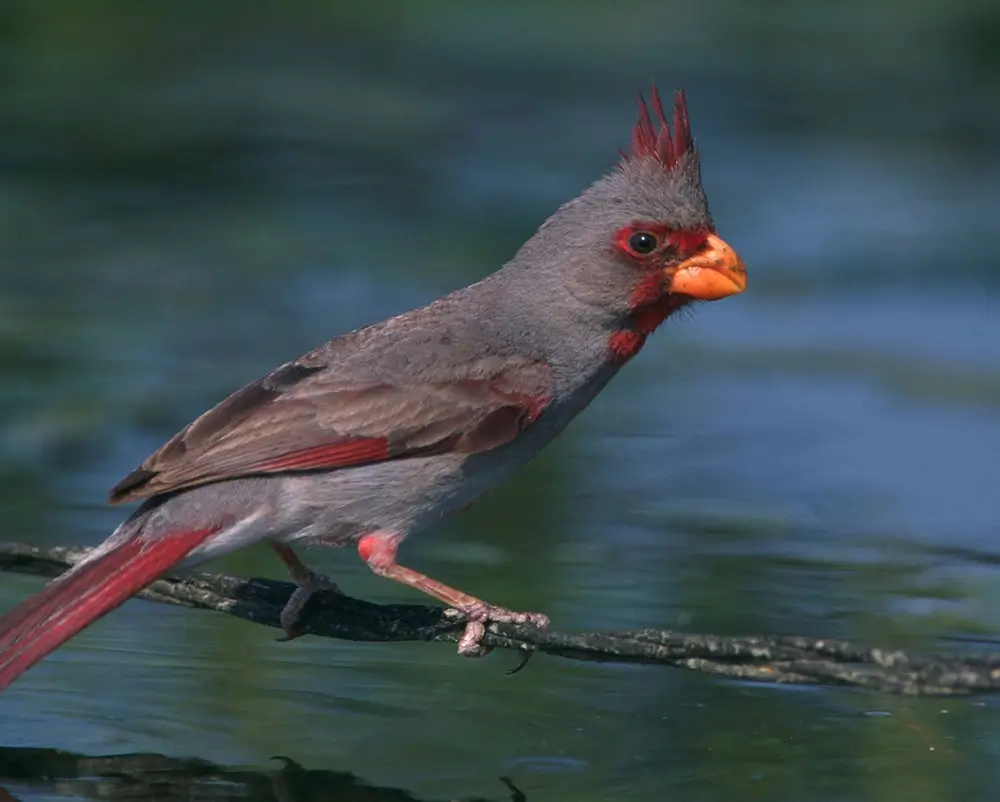
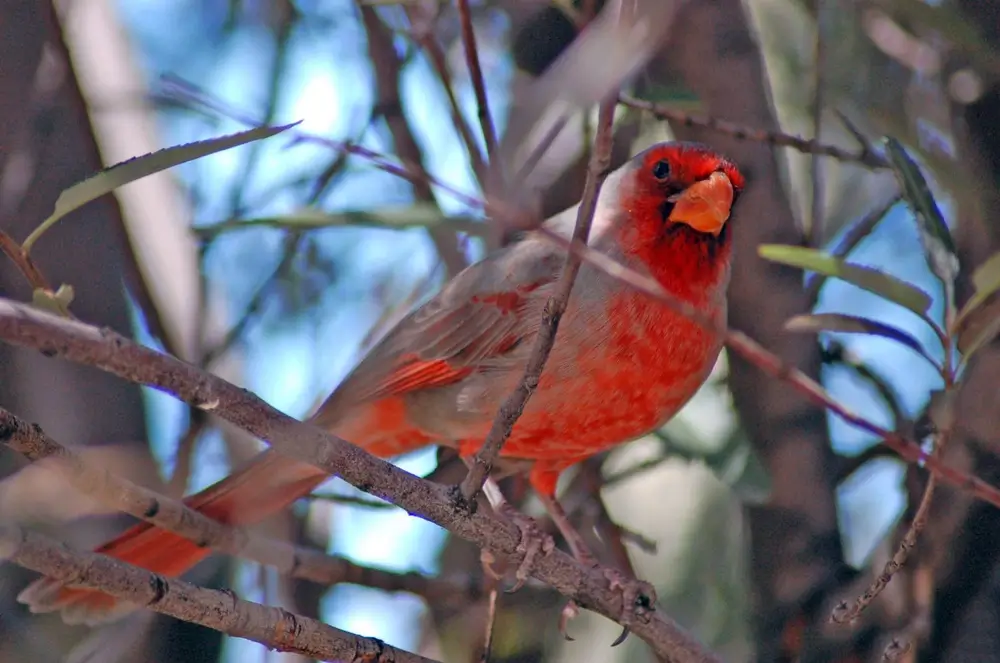
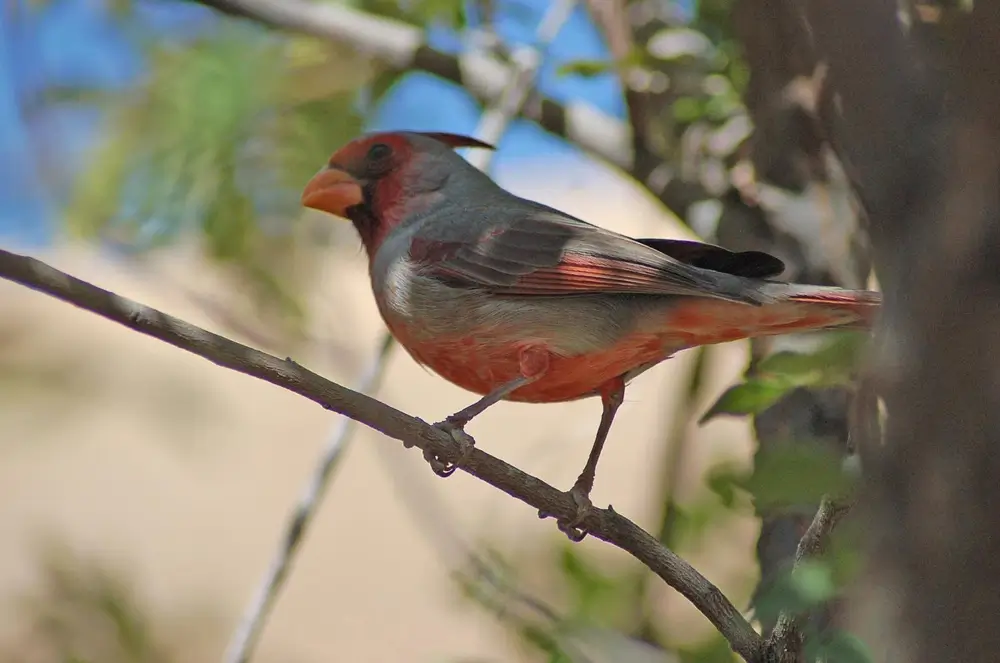
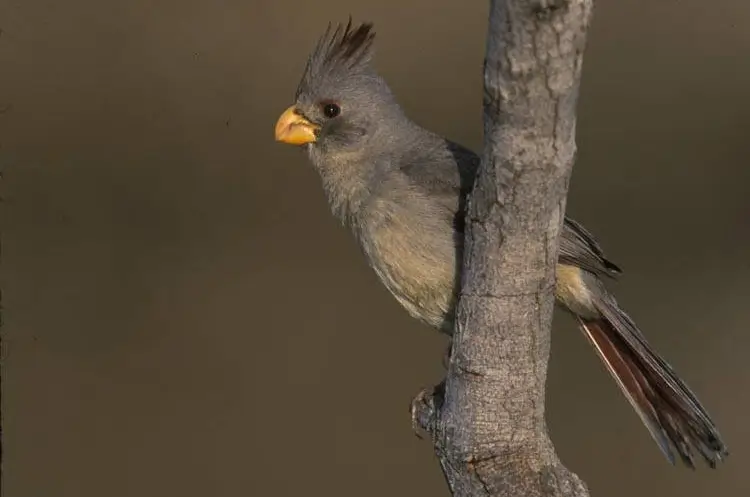
The pyrrhuloxia looks similar to the northern cardinal. It is 7.5-8.5 inches (19-22 cm) in length with a wingspan of 9-12 inches (23-30.5 cm).
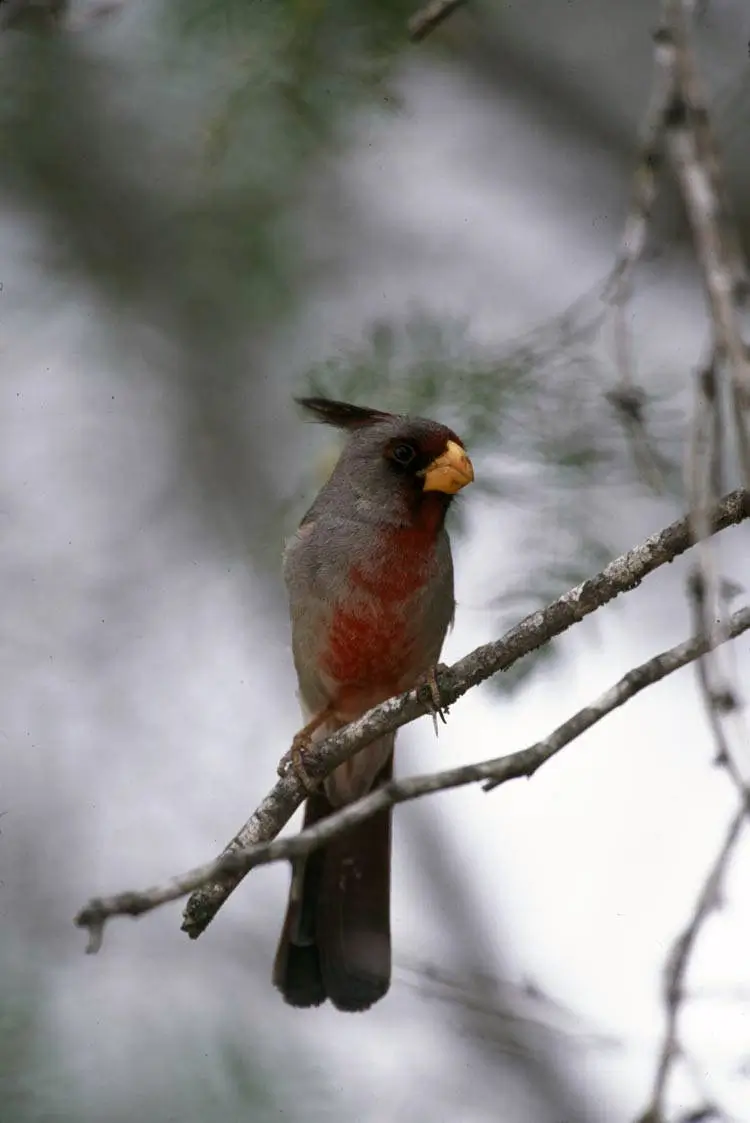
The male is gray with a rosy red breast, red wings, and tail, a red crest, and a red face. The female looks similar, but she is a little paler and lacks the red breast and face.
The pyrrhuloxia has a thick, yellow parrot-like bill that it uses to crack open seeds.
Habitat
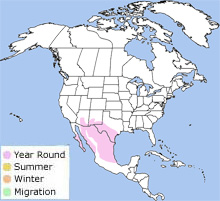
The pyrrhuloxia is found in thorny mesquite thickets, usually along dry desert stream and creek beds. It is also found at the edges of woodlands.
Diet
The pyrrhuloxia forages on the ground for the seeds of grasses, weeds, and mesquite; cactus fruit; and cottonwood catkins. In the summer, it also eats insects. It uses its powerful bill to crack open and crush seeds.
Life Cycle
The female pyrrhuloxia lays 2-4 eggs in a cup-shaped nest made of grass, bark, and twigs. The nest is placed in a dense, thorny bush. The female incubates the eggs for about 2 weeks. During courtship and incubation, the male brings the female food.
The chicks fledge in about 10 days, and both the male and female care for the young.
The pyrrhuloxia has a lifespan of up to 8 years in the wild.
Behavior
The pyrrhuloxia is nonmigratory, but it sometimes strays from its territories. In the winter, it may forage for food in huge flocks containing hundreds of birds.