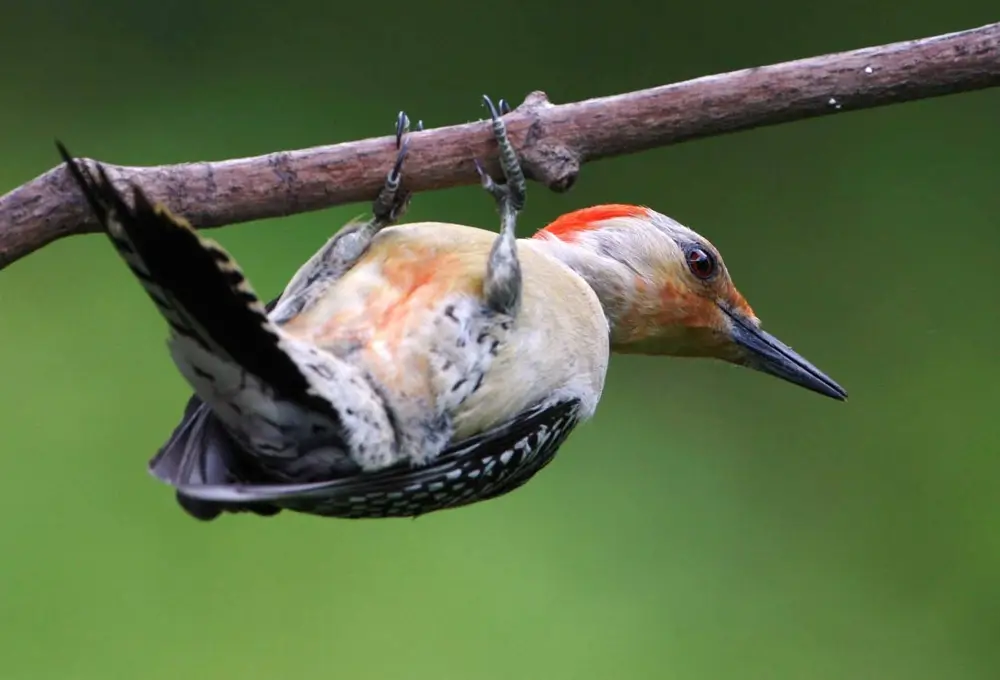
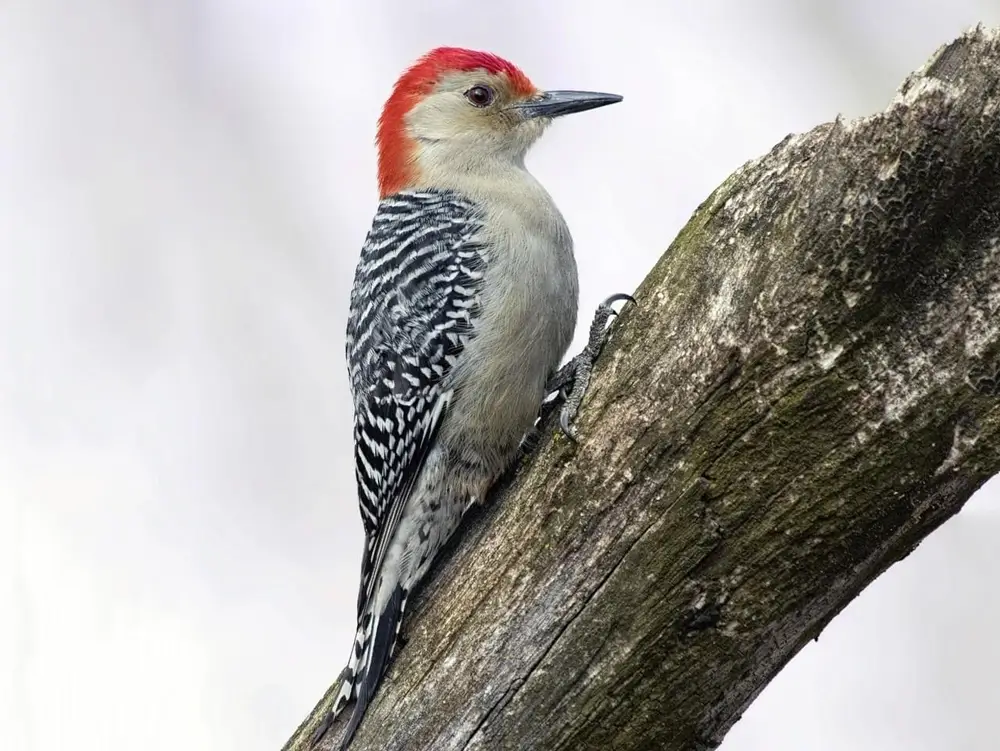
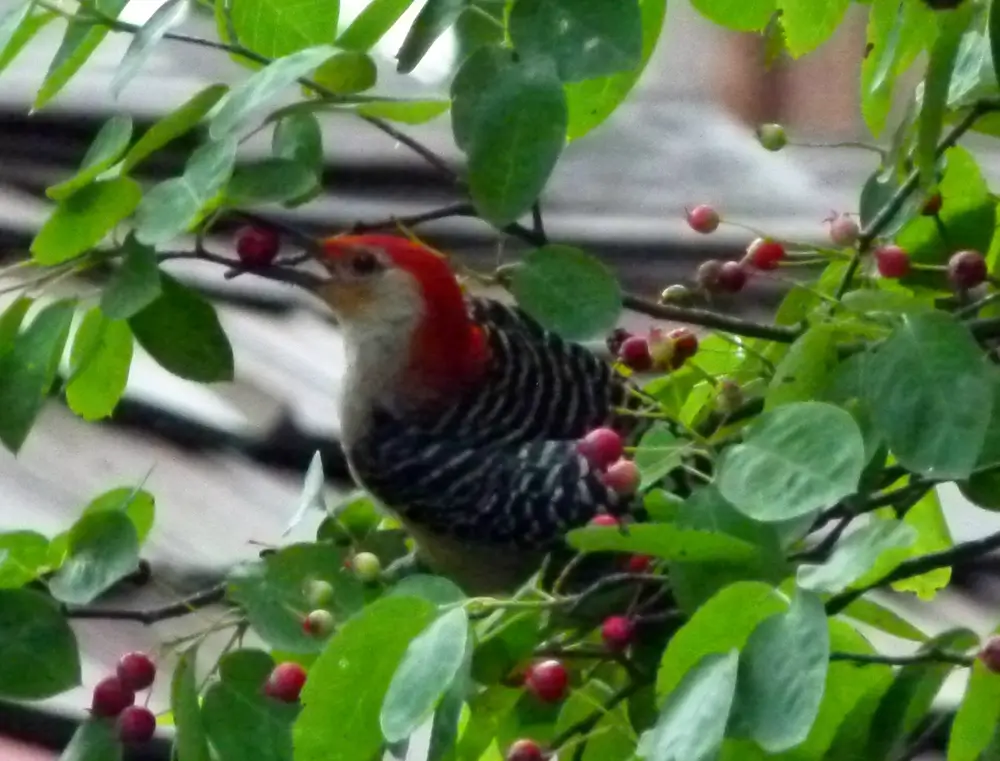
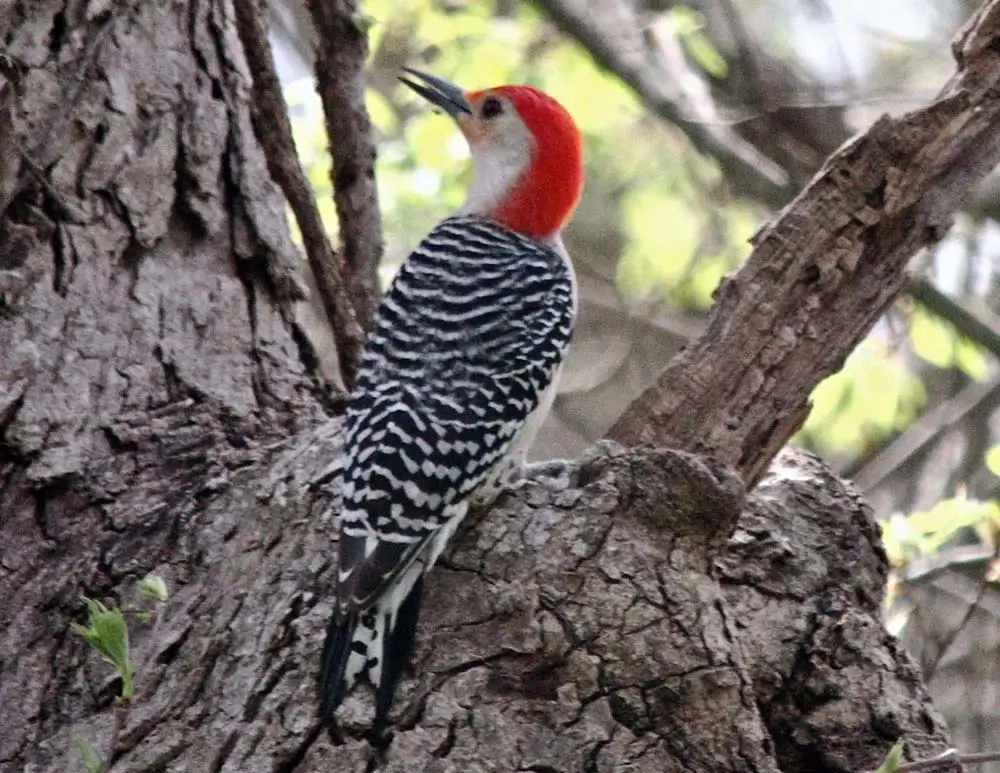
The red-bellied woodpecker is 9-10.5 inches (23-27 cm) in length with a wingspan of 13-17 inches (33-43 cm).
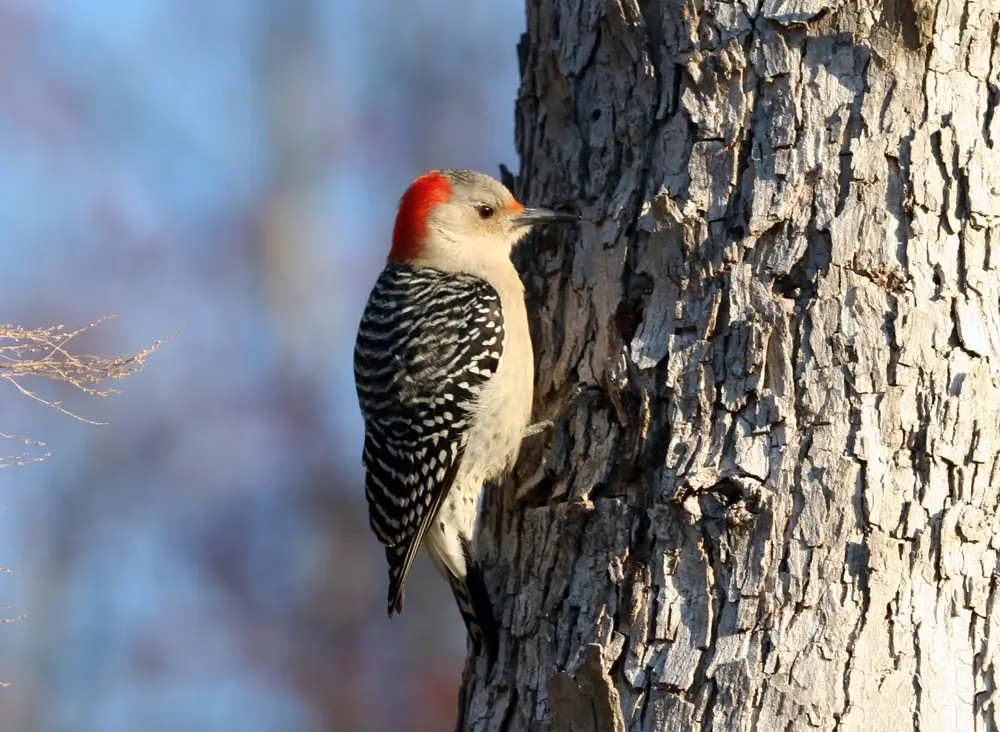
It has a light cream to pink chest and belly, barred black and white wings and back, reddish markings around its bill, and a red crown.
The male has red on the crown and on the nape of his neck. The female has red just on the nape of her neck.
Habitat
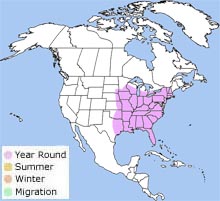
The red-bellied woodpecker makes its home in open and swampy woodlands. In the winter, birds in the northernmost parts of the range may move south.
Diet
The red-bellied woodpecker eats beetles, grasshoppers, ants, and other insects. It also eats acorns, beechnuts, and fruits. It uses its bill to probe for insects in trees and tree stumps. The red-bellied woodpecker sometimes stores food in a tree cavity.
In the winter, the red-bellied woodpecker’s diet is mostly seeds, and it can often be found at bird feeders.
Life Cycle
Red-bellied woodpeckers tap their bills together when they are courting. The nest cavity is built by both the male and the female. The cavity is lined with wood chips and is about a foot deep. It is usually built in a dead or dying tree.
The female lays 3-8 eggs, and both the male and female incubate the eggs and care for the young. The male incubates at night.
The chicks hatch in about three weeks, and they fledge in about a month. The chicks usually stay with their parents until the fall.
The oldest known red-bellied woodpecker lived to be 12 years old.
Behavior
Red-bellied woodpeckers aggressively defend their nesting cavities, but starlings frequently take over their nesting sites.
Did You Know?
Support for NatureWorks is provided by:
The Red-Bellied Woodpecker in NH
The red-bellied woodpecker is found throughout New Hampshire, and it is a year-round resident.