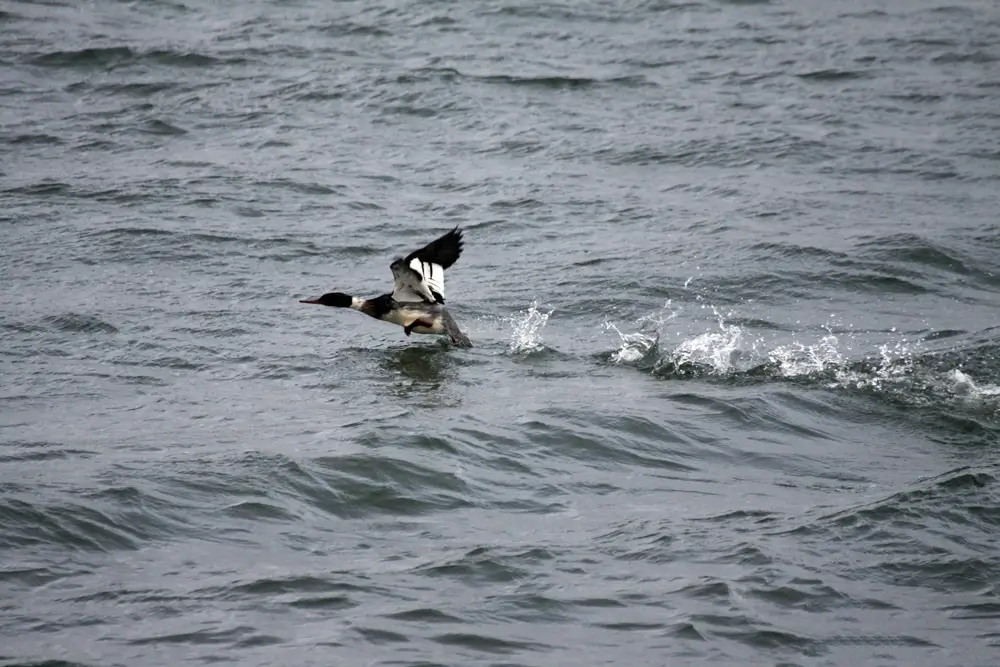
The red-breasted merganser is a diving duck that is 20-25 inches (51–64 cm) in length with a wingspan of 26-29 inches (66–74 cm).
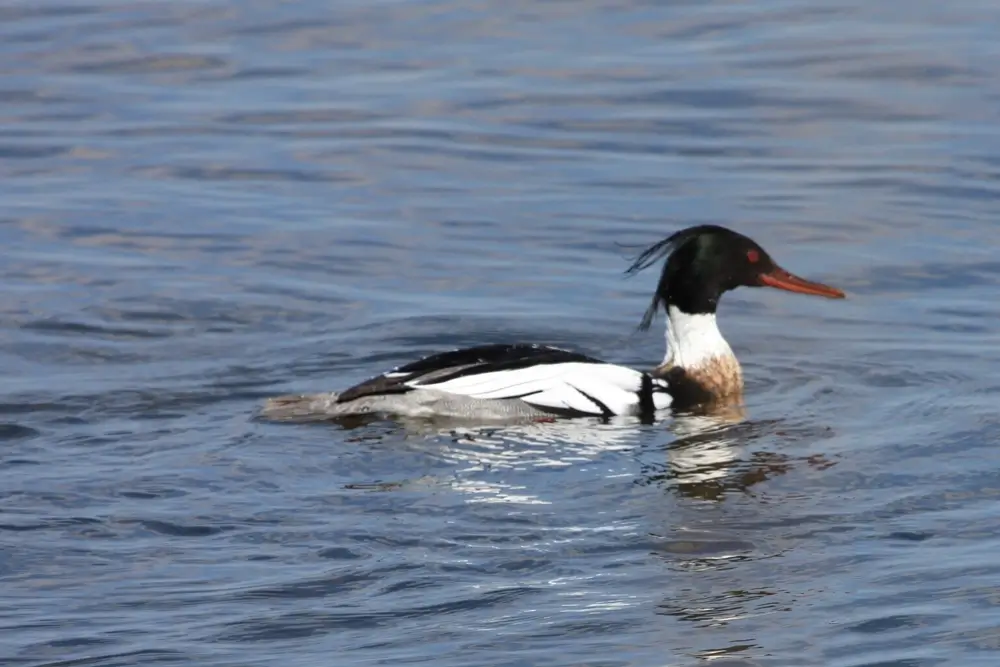
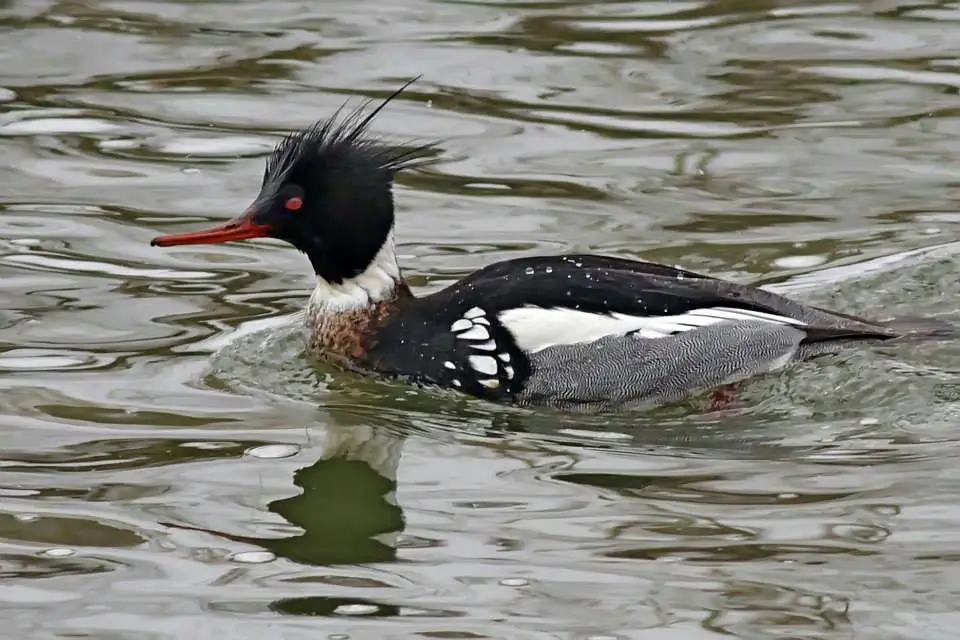
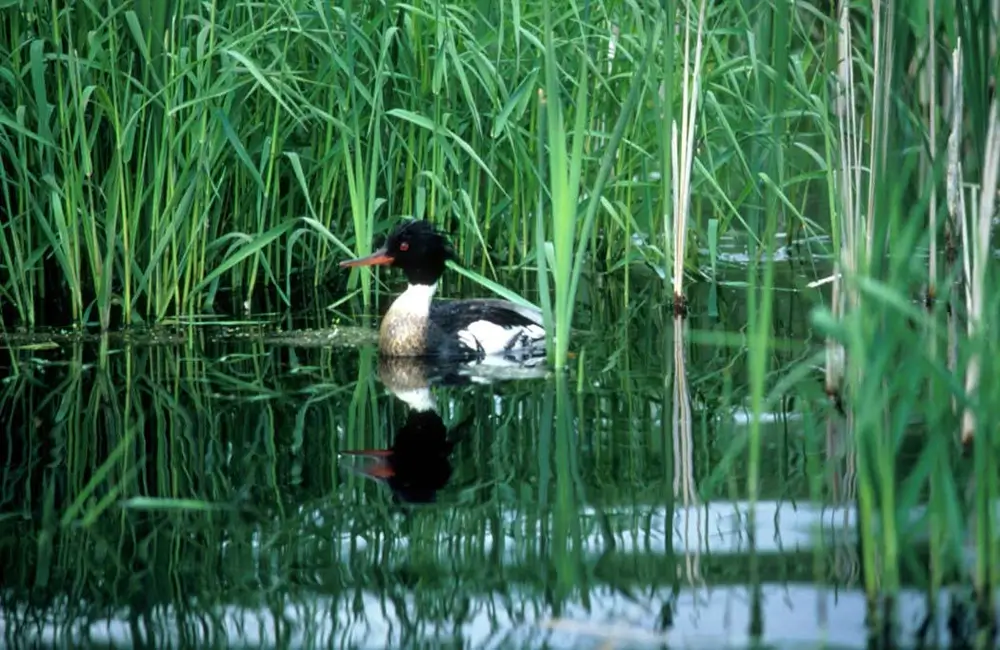
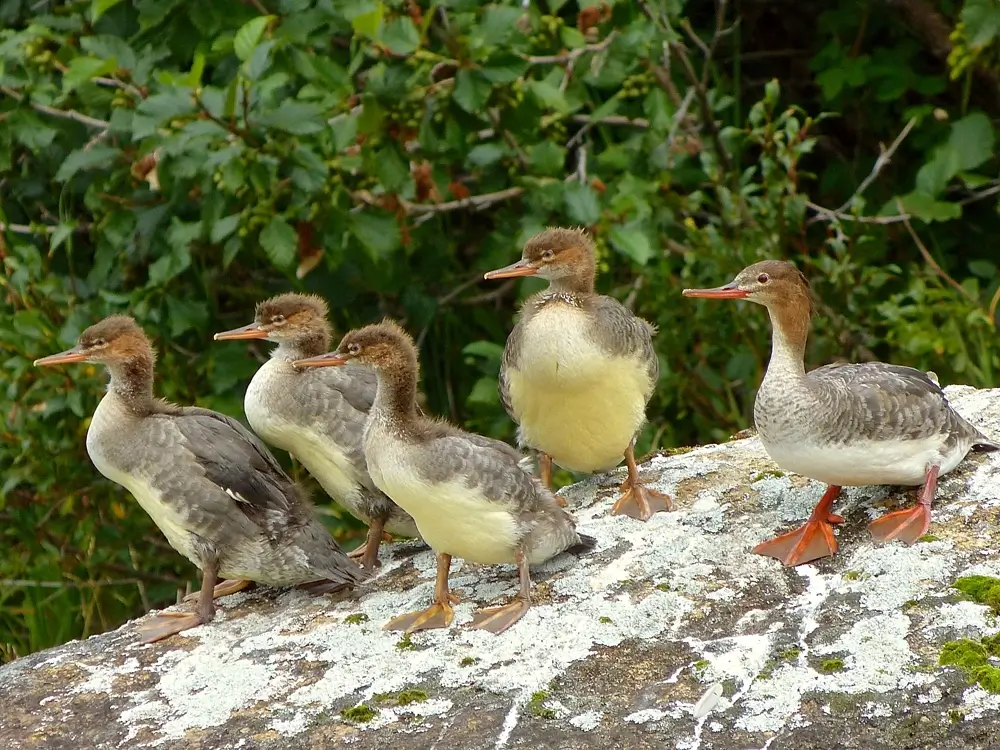
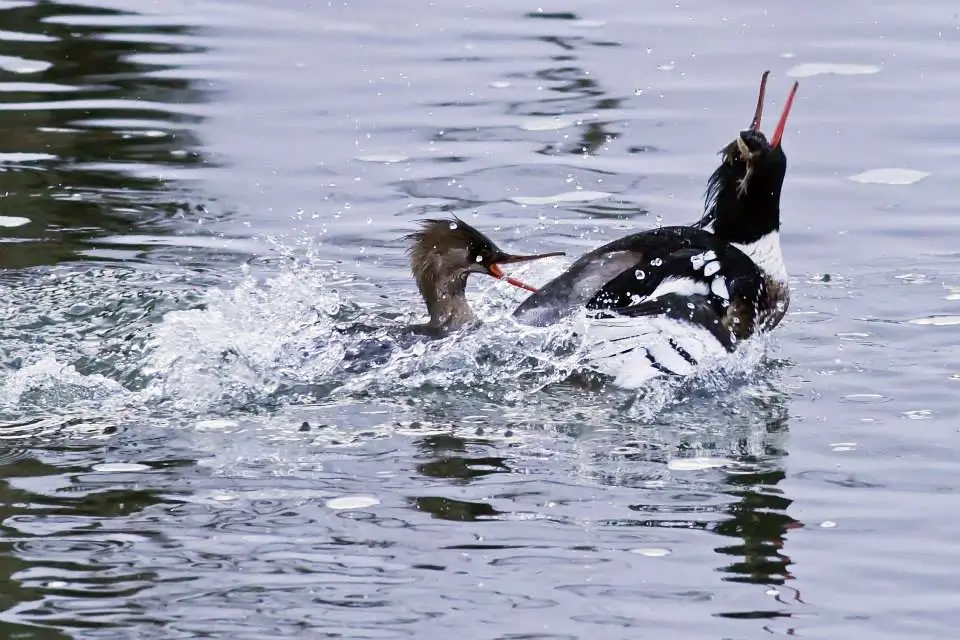
It has a long, thin, serrated (jagged or saw-like edge) orange-red bill, red eyes, and orange-red legs and feet. It has a shaggy crest of feathers on its head. The male has a reddish breast, gray sides, and a white neck. He has a glossy green head and a black back.
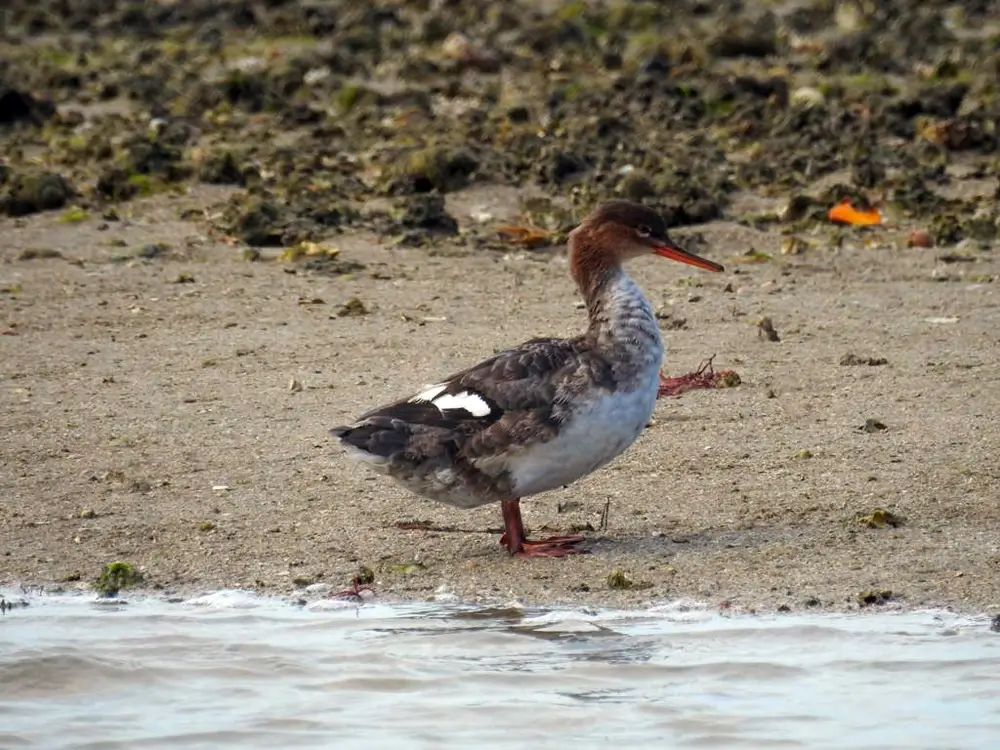
The female has a bluish-gray breast, back, and wings, a white belly, and a reddish-brown head.
The red-breasted merganser looks similar to the common merganser, but it is a little larger and the male has a reddish breast.
Habitat
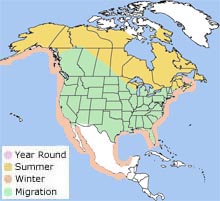
The red-breasted merganser breeds on the tundra in freshwater and brackish wetlands and protected bays. It winters on coastal bays, estuaries, and protected coastal areas.
Diet
The red-breasted merganser dives and uses its serrated bill to catch and hold fish, crustaceans, and tadpoles. It brings its prey back to the surface and eats it. Sometimes small groups of red-breasted mergansers will work together to herd fish into shallow water.
Life Cycle
The red-breasted merganser forms mating pairs in the late winter and early spring. The female lays 8-10 eggs in a nest made of vegetation and lined with down. The nest is well-hidden and near the water.
The male leaves when incubation begins. The female incubates the eggs for 29-35 days. A day or two after hatching, the female leads the chicks to water, where they can feed themselves.
The female leaves her young before they fledge. The chicks fledge when they are about two months old.
The red-breasted merganser has an average lifespan of 7 years in the wild. The oldest recorded lifespan for a red-breasted merganser was 9 years.
Behavior
The red-breasted merganser is usually silent, although it makes grunting and croaking sounds during courtship.
Did You Know?
Support for NatureWorks is provided by:
The Red-Breasted Merganser in NH
The red-breasted merganser winters off the coast of New Hampshire. It can sometimes be seen inland during migration.