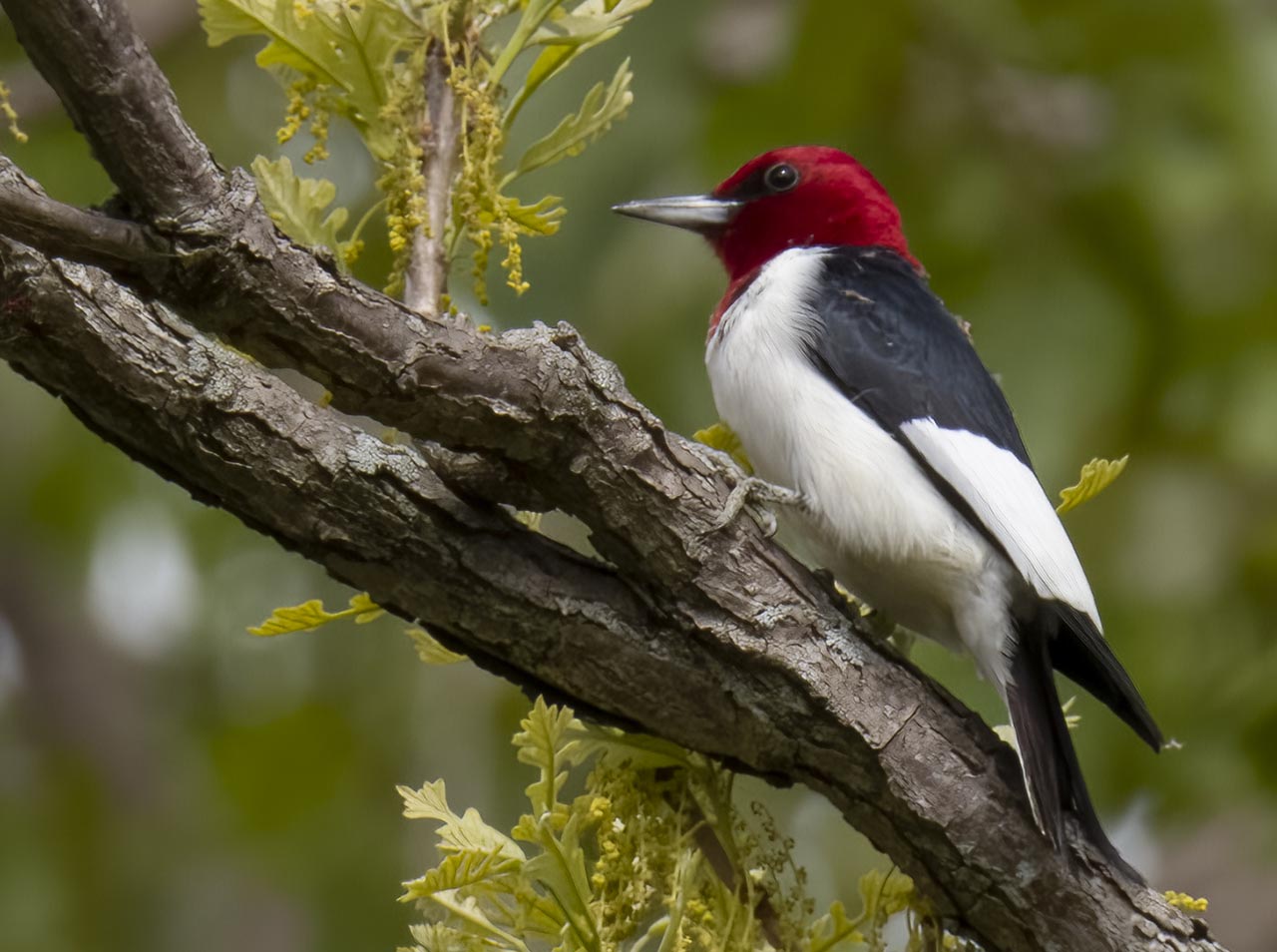
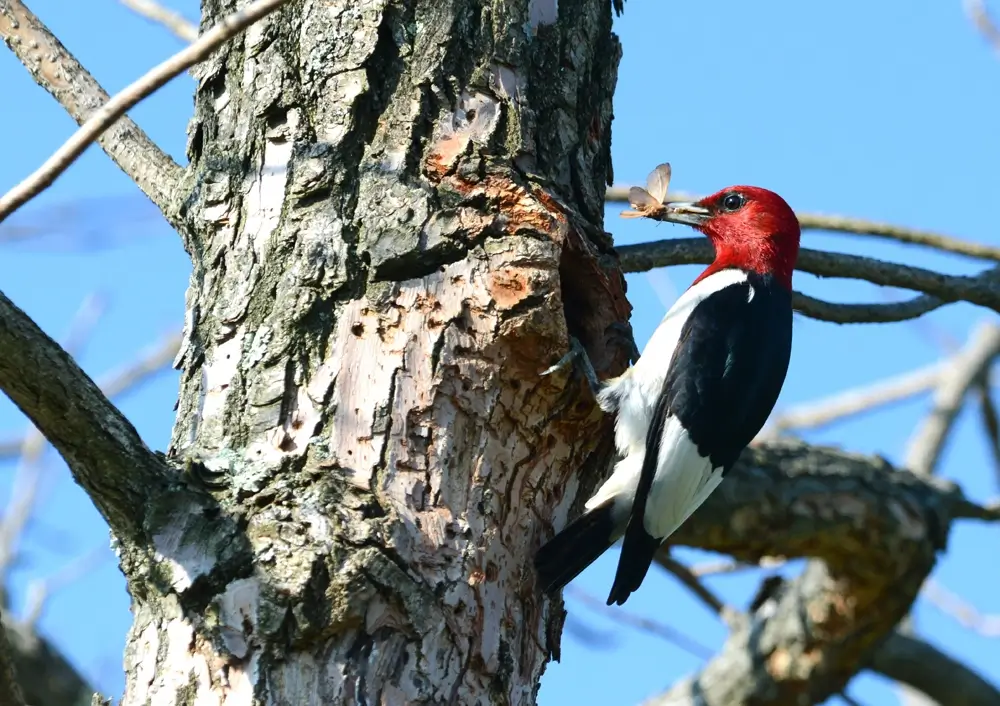
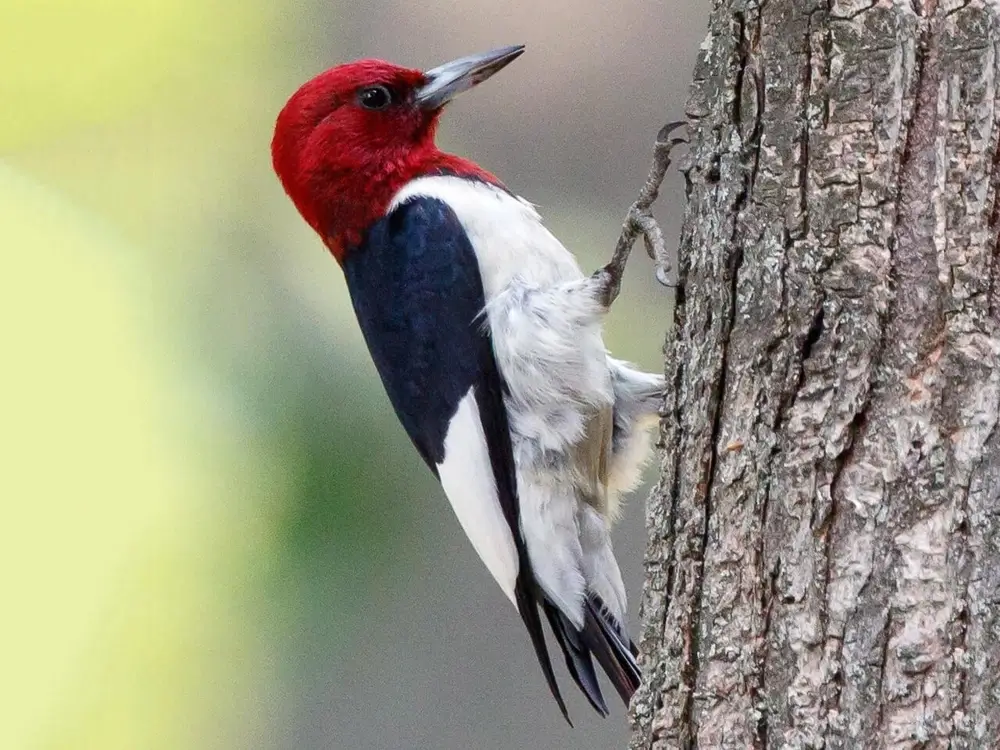
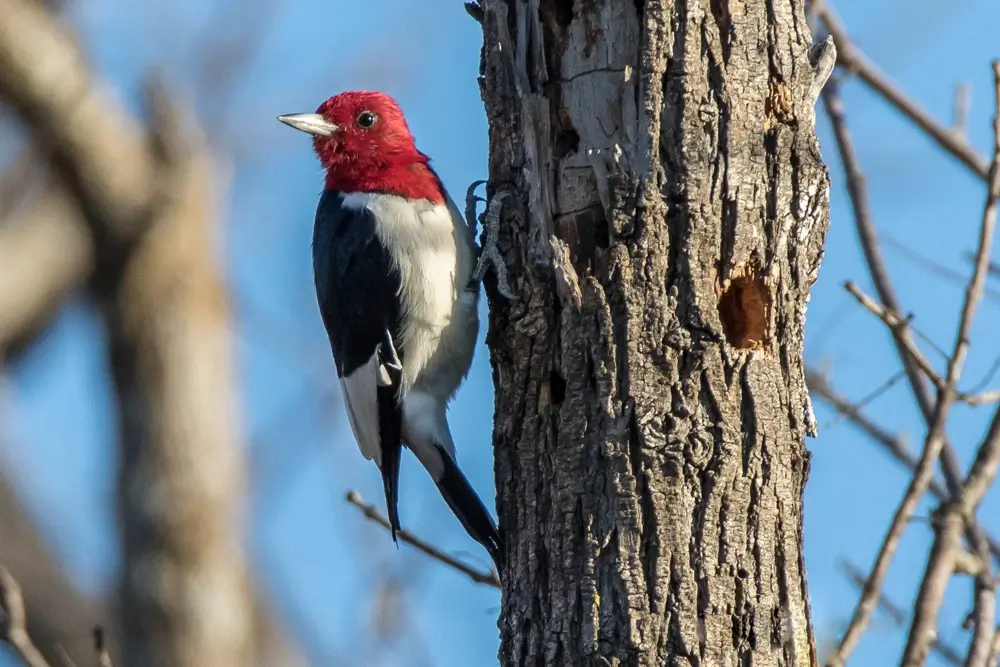
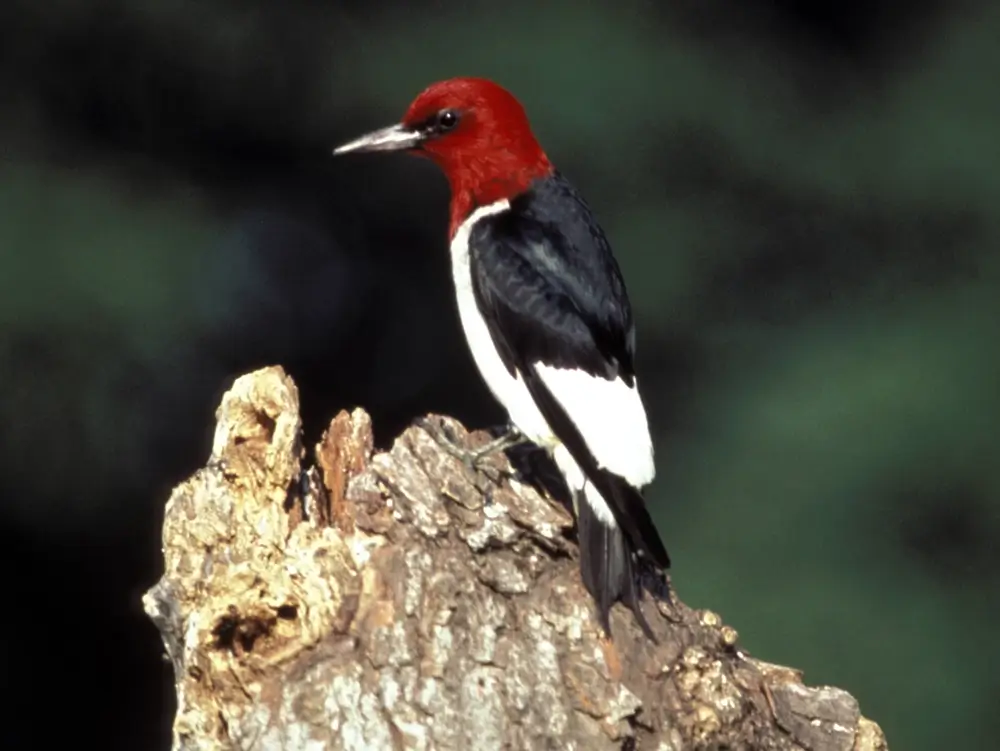
The red-headed woodpecker is a small woodpecker, about 7.5-9.1 inches (19-23 cm) in length with a wingspan of 14-17 inches (35.6-43.2 cm).
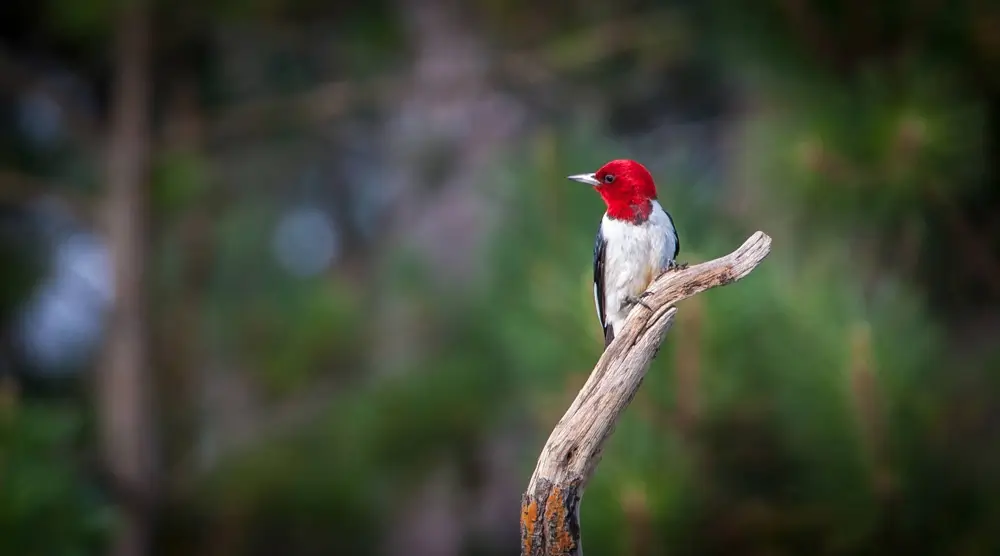
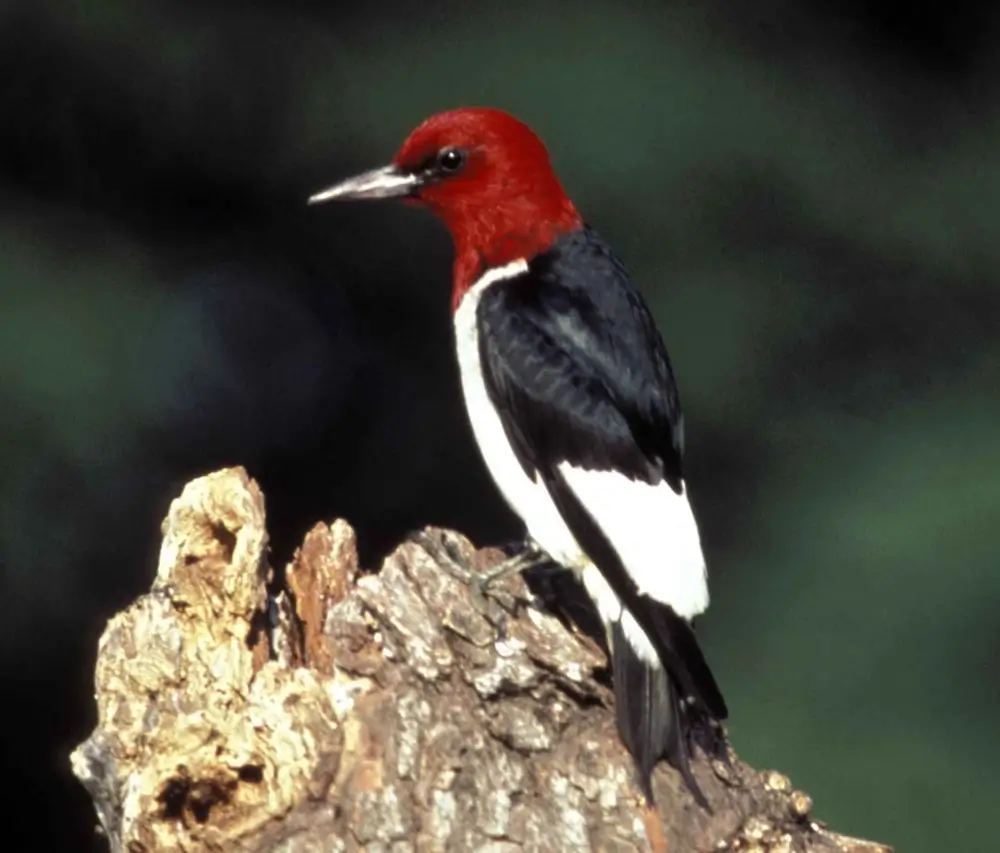
It has a red head, neck, and upper breast. It has a white lower chest and stomach, black wings with a white patch on the back, and a black tail. It has a long, strong, sharp bill and black eyes. Males and females look alike.
Habitat
The red-headed woodpecker is found in open woodlands, forest edges and clearings, river bottoms, orchards, parks, open woods, wooded swamps, and grasslands with trees. It especially likes areas with dead or dying trees.
Diet
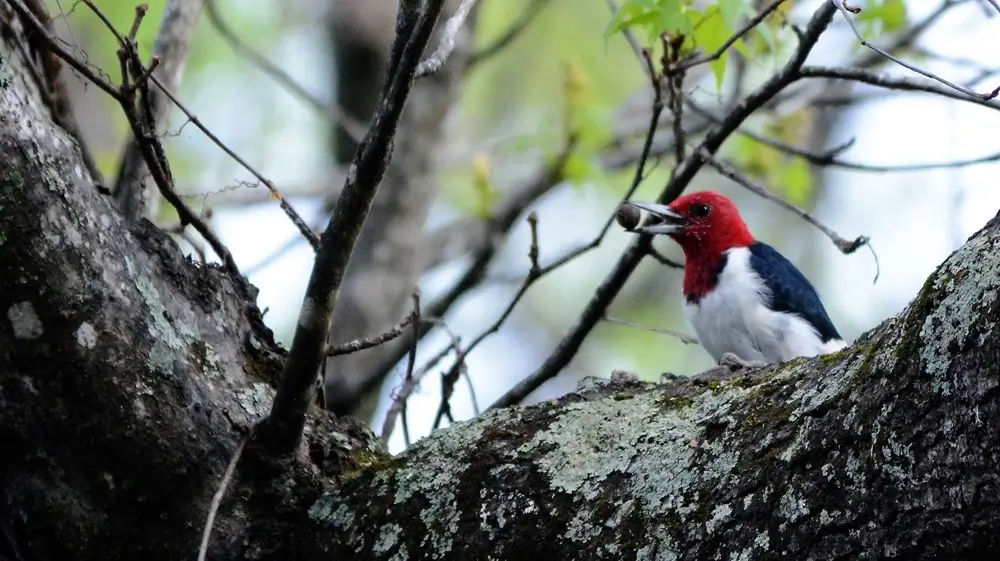
The red-headed woodpecker is omnivorous. It eats insects, spiders, earthworms, nuts, seeds, berries, fruit, and occasionally small mammals. It may also eat bird eggs, fledglings, and mice.
The red-headed woodpecker doesn’t drill into trees to excavate insects as often as other woodpeckers. Instead, it perches on a tree branch or fence post and waits for flying prey to go by, or it forages on the ground for food.
The red-headed woodpecker is one of only four species of woodpecker that store food. It hides food in crevices in trees, under the bark of trees, in fence posts, and even under shingles on roofs. The red-headed woodpecker may even wedge a live grasshopper or beetle into a crevice to eat later.
Life Cycle
The red-headed woodpecker nests in holes in dead trees, telephone poles, fence posts, and even under roofs. The female lays 3-10 eggs.
Incubation lasts 12-14 days. Both the male and the female incubate the eggs. The male incubates the eggs at night. Both parents feed and care for the chicks. The chicks fledge when they are 24-31 days old and can catch their own food shortly after they fledge.
The oldest known red-headed woodpecker lived to be almost 10 years old.
Behavior
The red-headed woodpecker is a solitary bird, except during mating and when raising young.
Did You Know?
Support for NatureWorks is provided by:
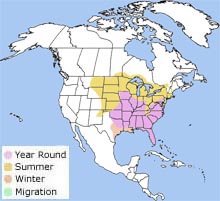
The Red-Headed Woodpecker in NH
The red-headed woodpecker does not breed in New Hampshire, but it can sometimes be seen in the state.