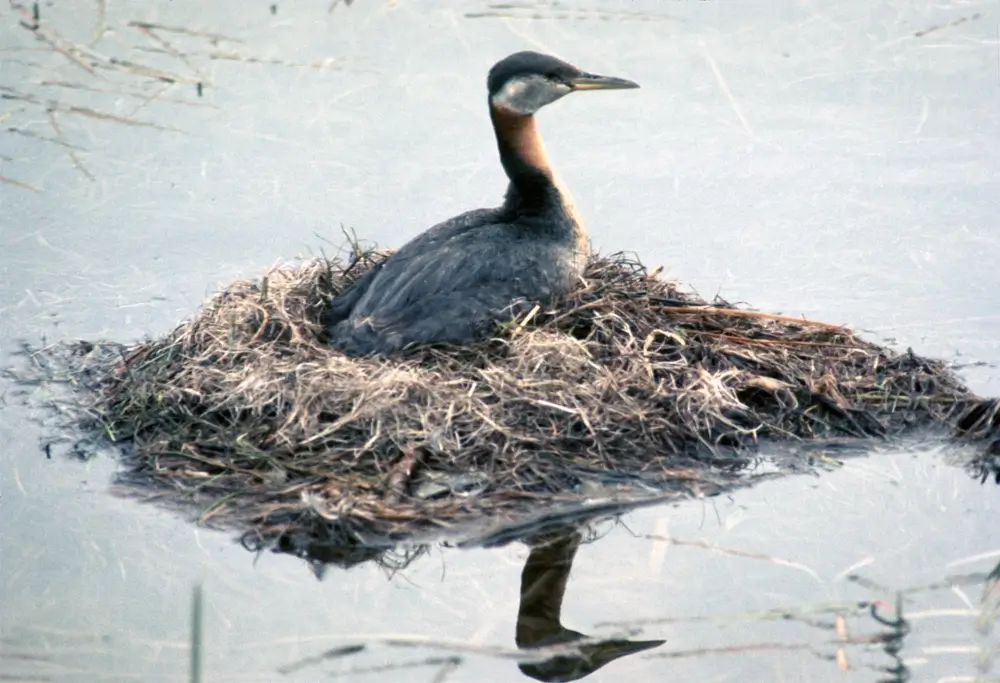
The red-necked grebe is a medium-sized aquatic bird that is 18-20 inches (46-51 cm) in length with a wingspan of 30-33 inches (77–85 cm).
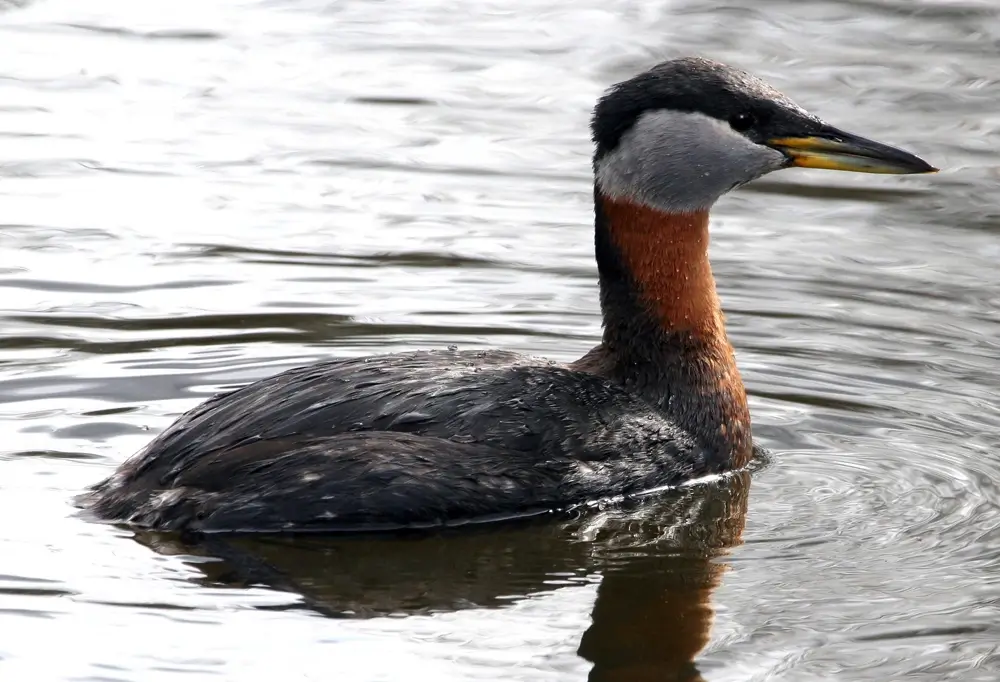
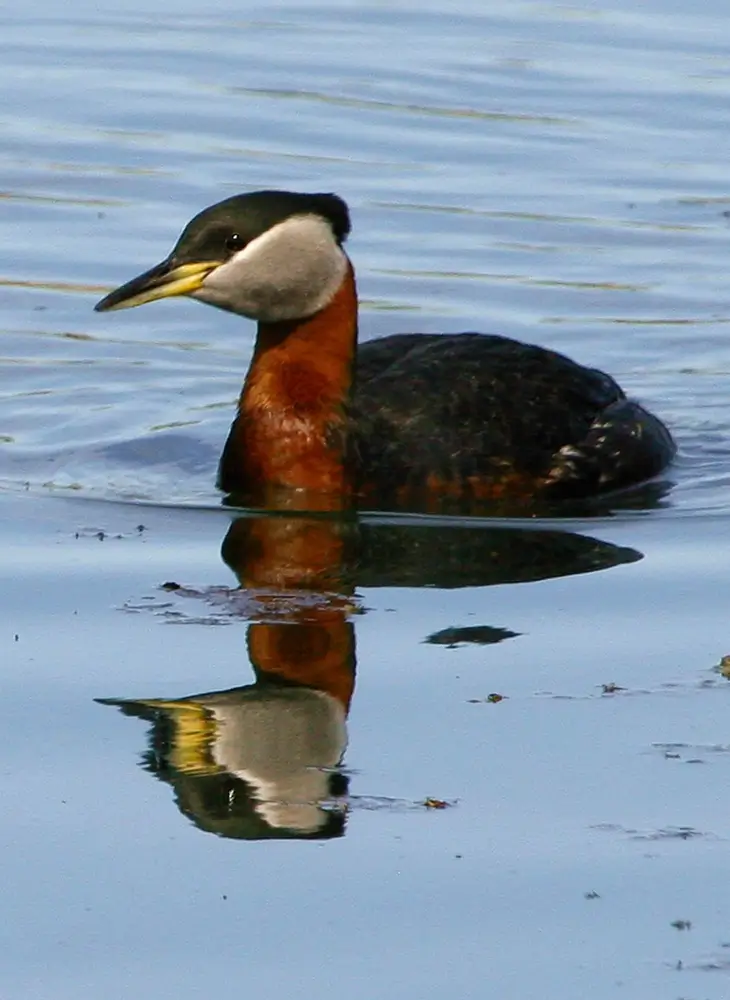
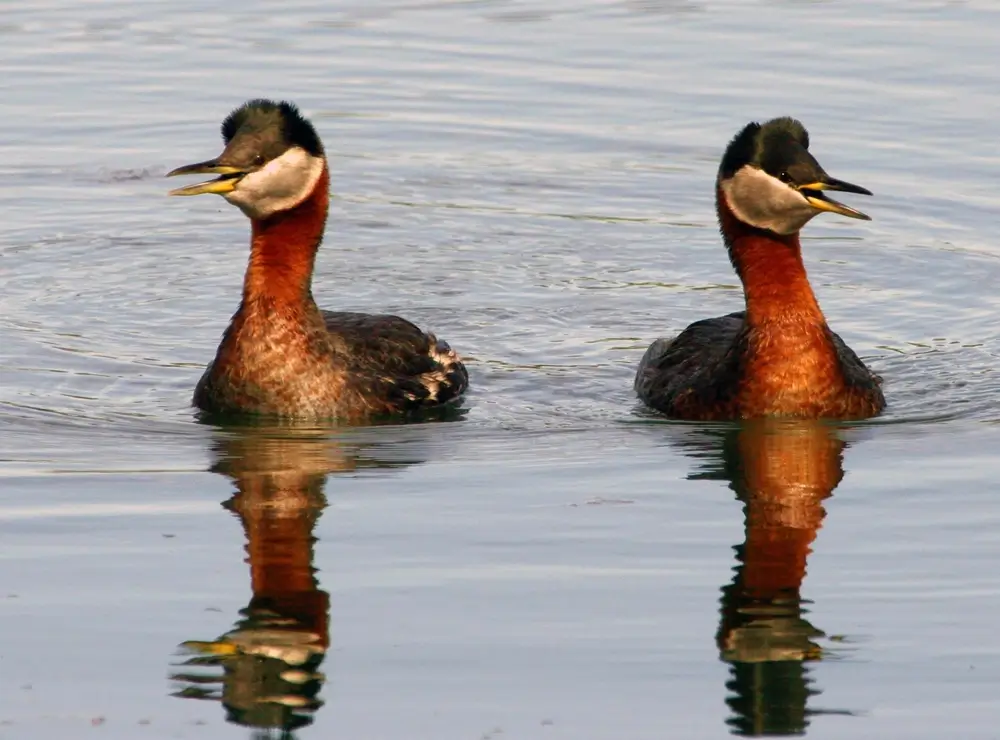
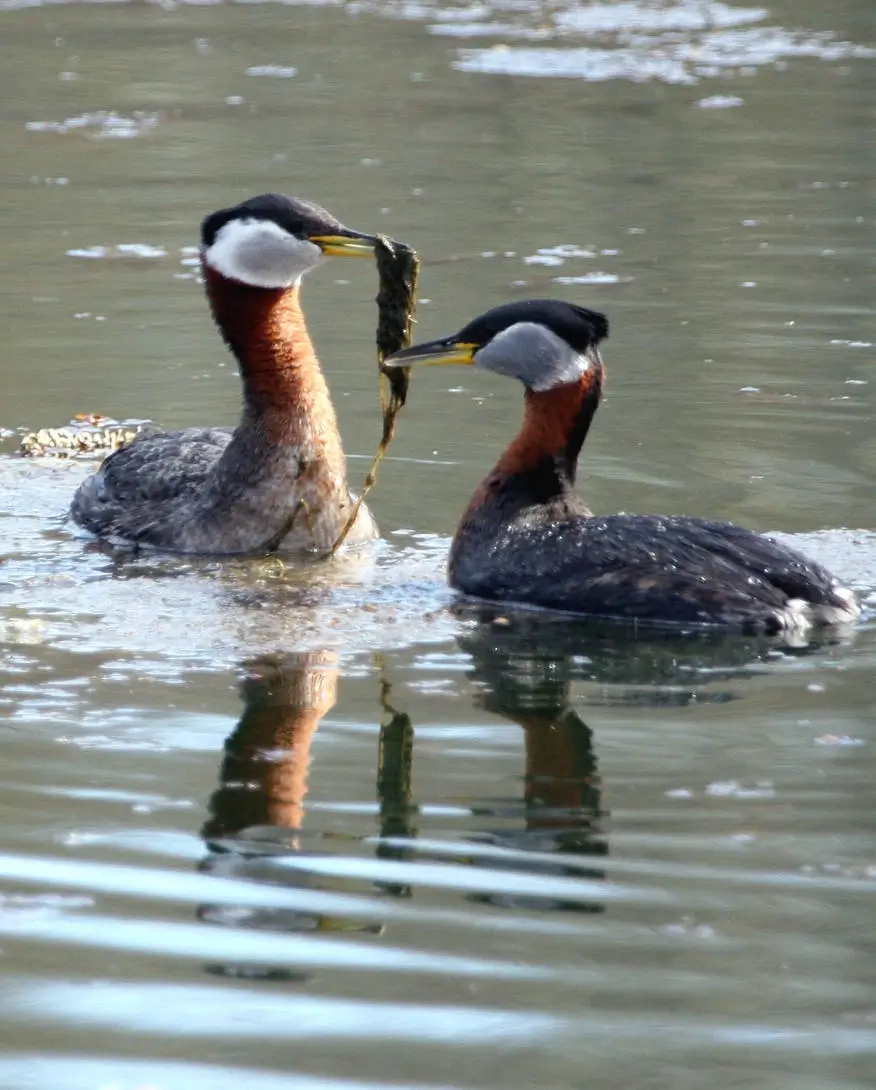
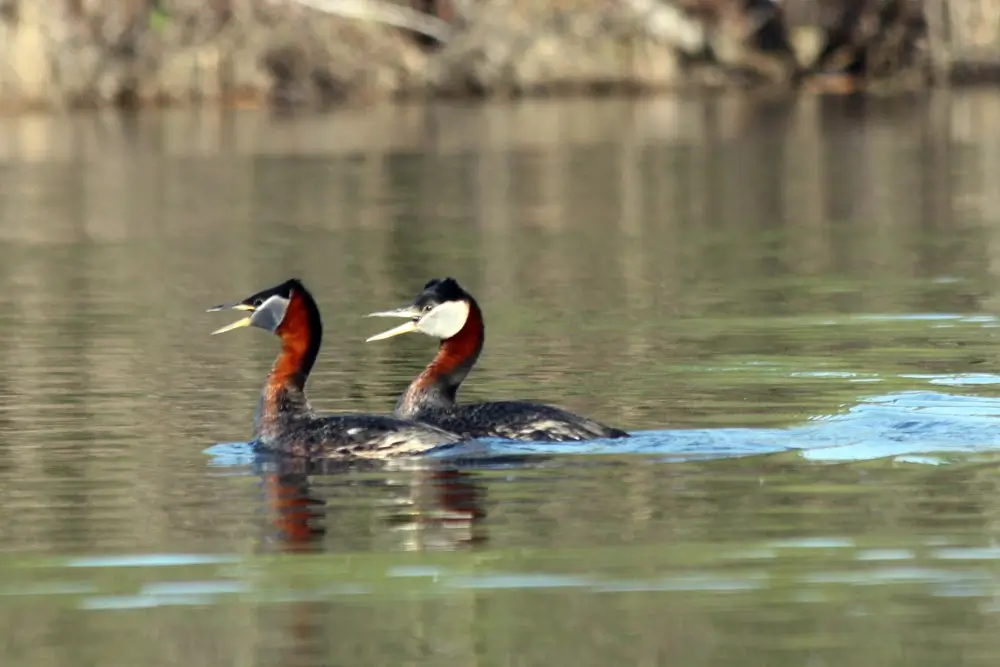
It has a long neck; a straight, long black bill that is yellow at the base; and black legs and feet that are set far back on its body. It has a black cap, grayish-white cheeks, and a brown body.
During the breeding season, it has a rusty red neck and breast. In the non-breeding season, it has a gray neck and breast.
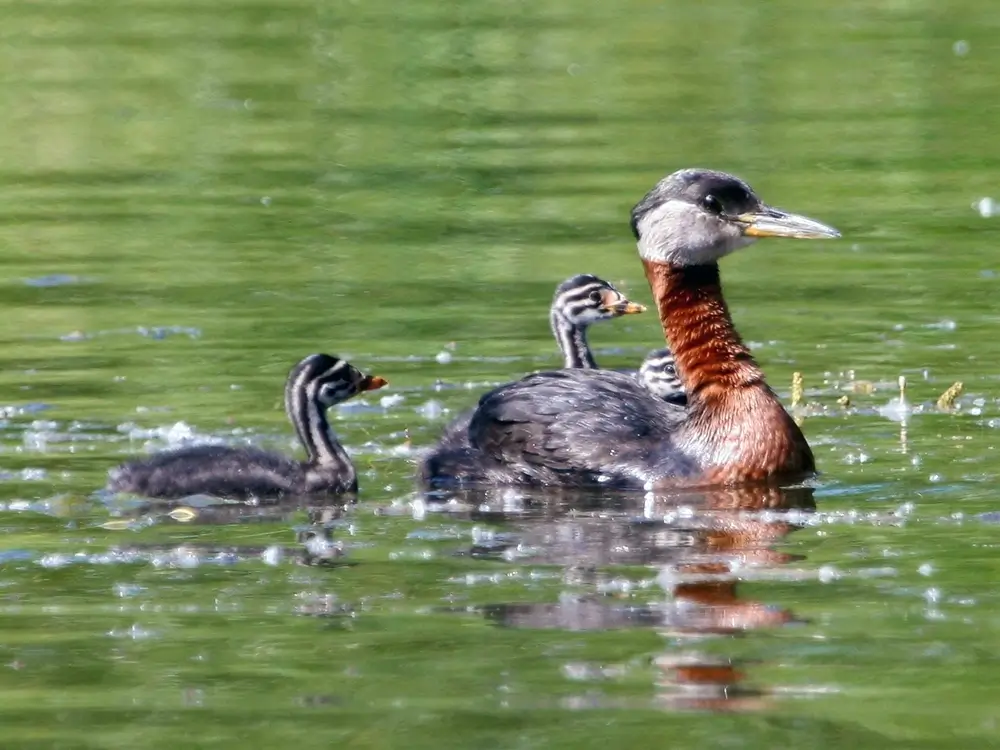
oung red-necked grebes have black and white zebra-striped heads and necks. Males and females look alike, but males are a little larger.
Habitat
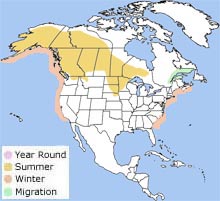
The red-necked grebe lives in marshy ponds and lakes in the summer. In the winter and during migration, it is found on large lakes, coastal bays, and estuaries.
Diet
The red-necked grebe eats minnows and other small fish, crayfish, tadpoles, salamanders, insects, and aquatic plants.
When it is looking for food, it often swims with its head underwater and then dives when it spots food. Sometimes it scoops up food from the surface of the water.
Life Cycle
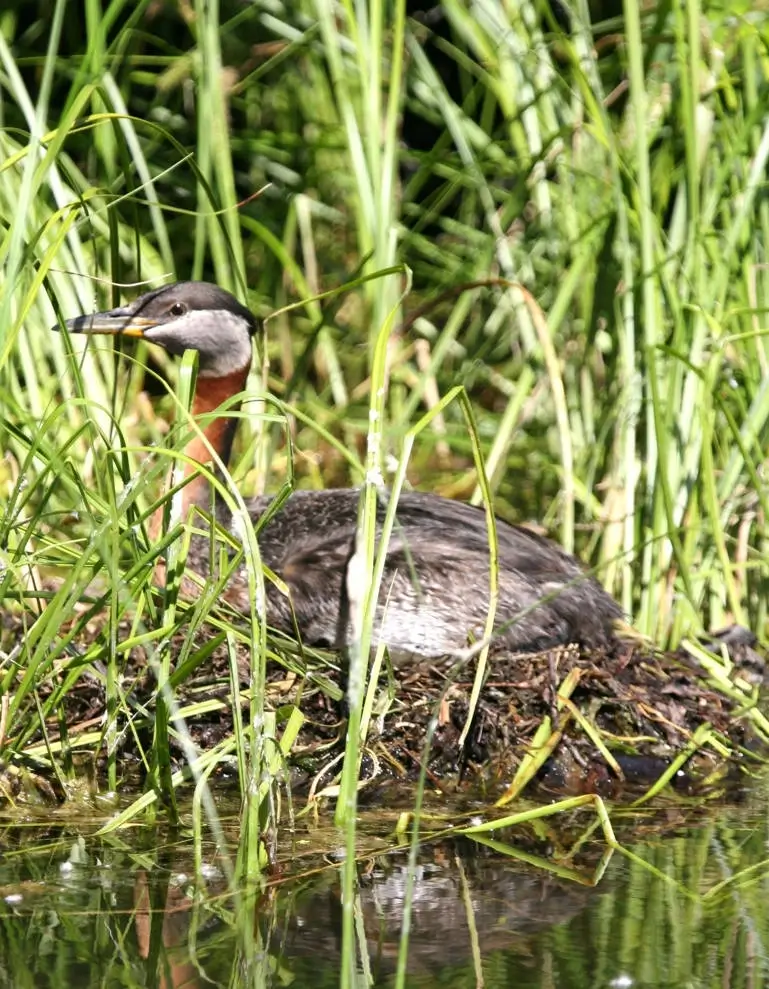
The female red-necked grebe lays 2-6 eggs. The nest is made on a floating mass of reeds and grass. The eggs hatch in about three weeks.
The chicks fledge when they are between 50 and 70 days old. Both parents care for the young.
The red-necked grebe has a lifespan of 6-9 years in the wild.
Behavior
The red-necked grebe is a great diver and swimmer. It often swims with just its head above the water. It rarely leaves the water for land and, except for when it is migrating, it rarely flies.
Did You Know?
Support for NatureWorks is provided by:
The Red-Necked Grebe in NH
The red-necked grebe does not breed in New Hampshire, but it does winter in its coastal waters.