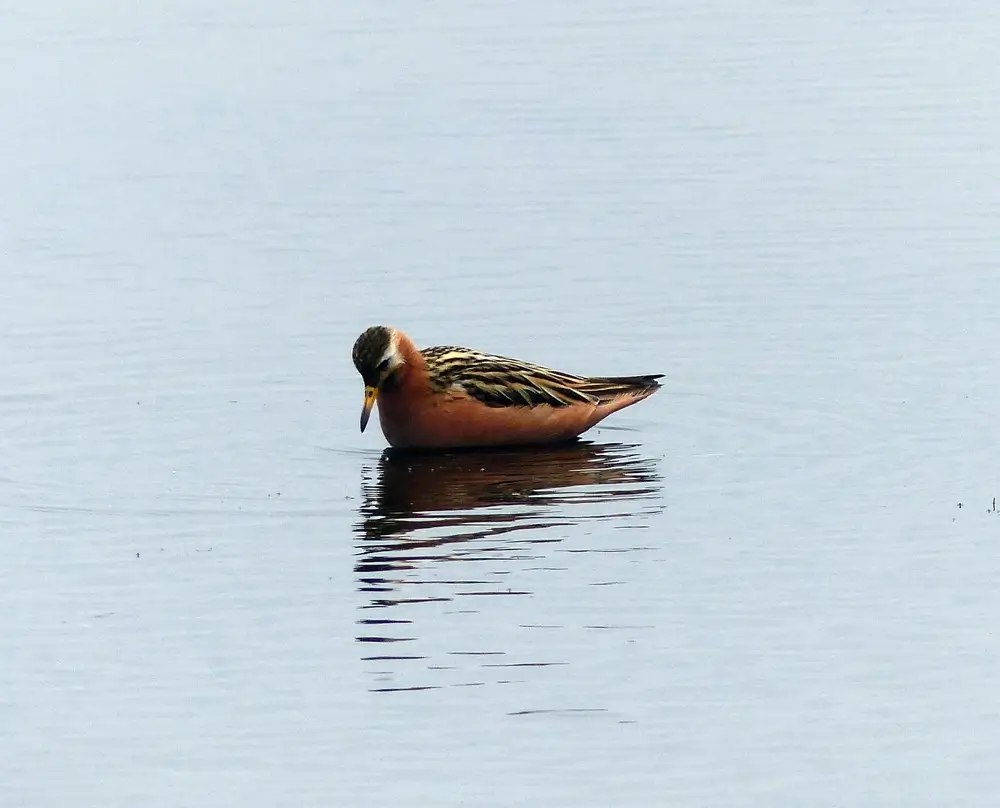
The red phalarope is a medium-sized shorebird that spends most of its time at sea. It is 7.9-8.7 inches (20-22 cm) in length with a 16.1–17.3 inches (41–44 cm) wingspan.
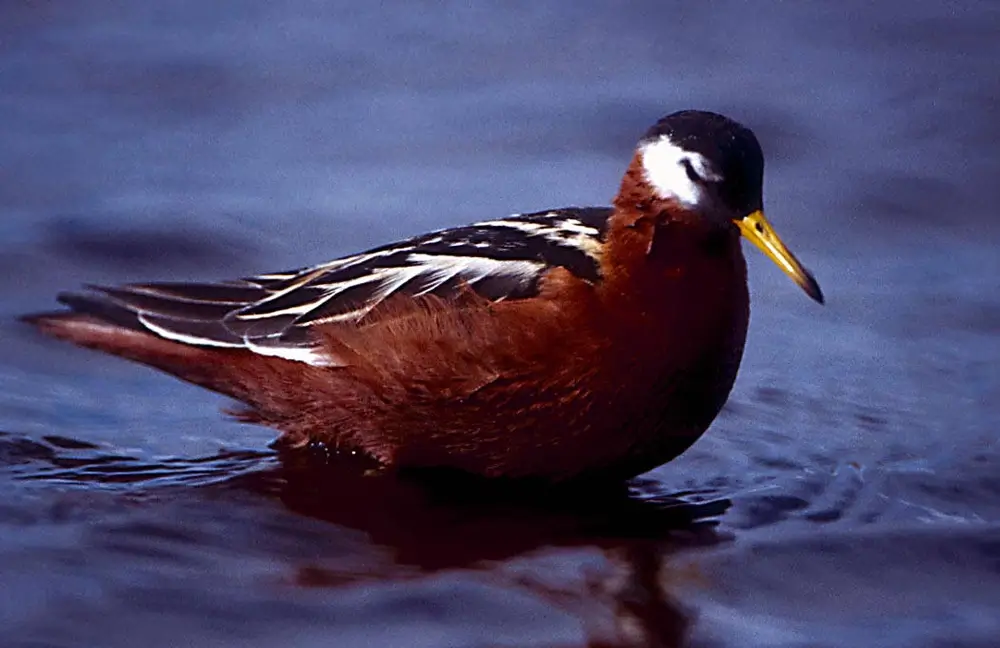
It has a white stripe across its wings that is visible when it is in flight. It has a dark rump and a dark stripe down its tail. During the breeding season, the female has a reddish-brown neck, breast, and belly; a brown and black mottled back; a black head; a yellow bill; and white cheeks. The male is a little duller in color and has a brown cap.
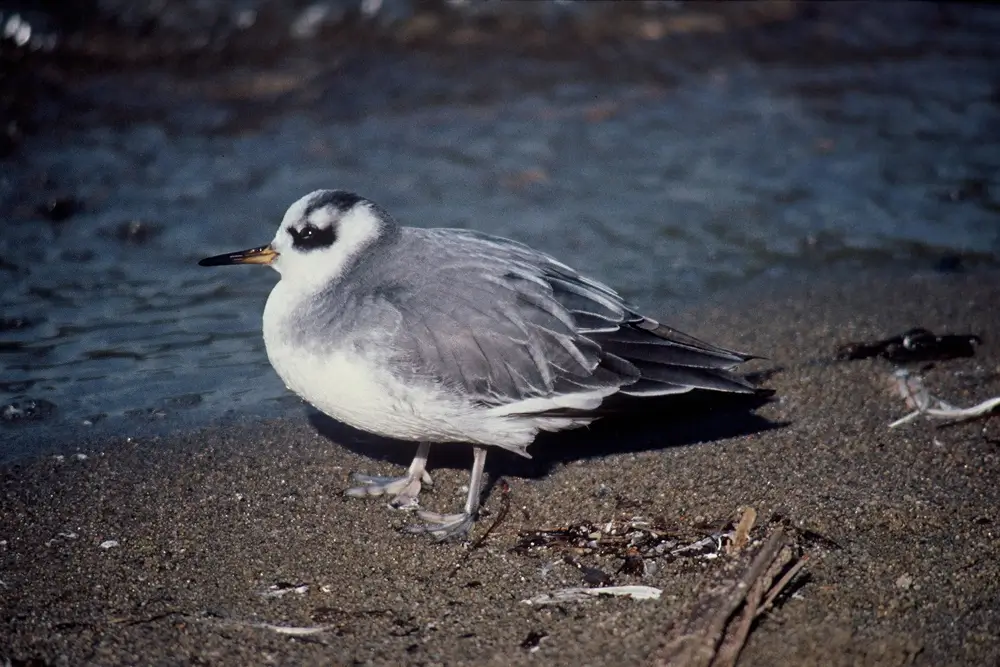
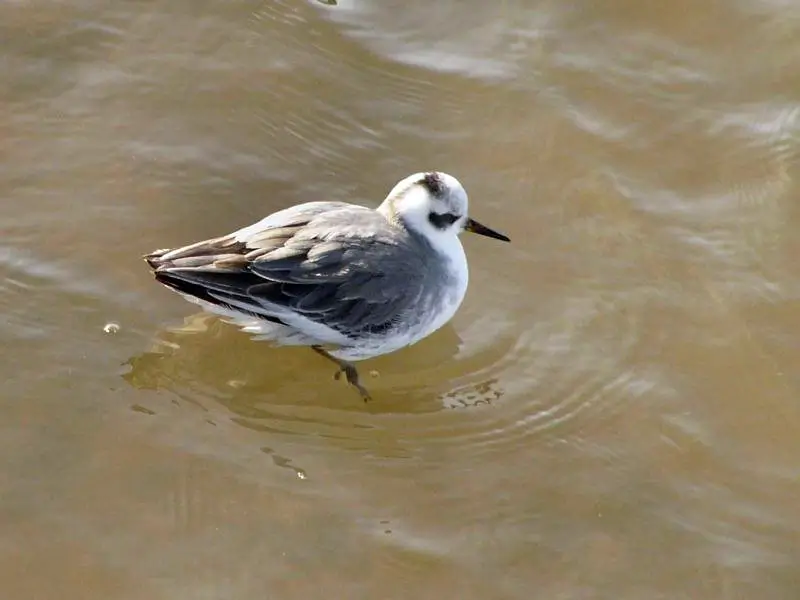
During the winter, the red phalarope is light gray on its back and wings and white on its breast and belly. It has a white head with a black patch across its eyes.
Habitat
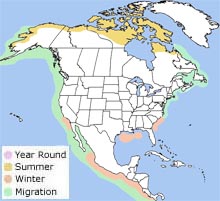
The red phalarope breeds on the tundra. In the winter, it is found on the open ocean off the coast of South America.
Diet
During the breeding season, the red phalarope eats insects, mollusks, and crustaceans.
The red phalarope isn’t built for diving, so on the ocean, it skims food off the surface of the water and strains plankton through its bill. Sometimes it even swims in circles to create a whirlpool of water that brings plankton up to the surface.
Life Cycle
The male and the female red phalarope switch traditional roles during the breeding season. The female red phalarope tries to attract a mate with a display flight. Both the male and the female create a scrape in the ground. The female picks the best one.
The scrape is lined with lichen, moss, and grass. The female lays four eggs and then leaves. The male incubates the eggs for 18-20 days and then cares for the chicks.
The chicks are precocial and leave the nest and feed themselves shortly after hatching. The chicks fledge when they are 16-18 days old.
Behavior
The red phalarope is often found with whales and even picks parasites off their backs. In fact, whalers called red phalaropes “bowhead birds” because they were often seen with baleen whales.
Did You Know?
Support for NatureWorks Redesign is provided by:
The Red Phalarope in NH
The red phalarope may be spotted in New Hampshire during its migration.
The red phalarope breeds in the Arctic regions of Alaska and northern Canada. It migrates off the Atlantic and Pacific coasts. Severe storms can sometimes bring them inland.
It winters at sea in flocks of the Atlantic, Gulf, and Pacific coasts south to South America.
The red phalarope is also found in Africa and Asia,