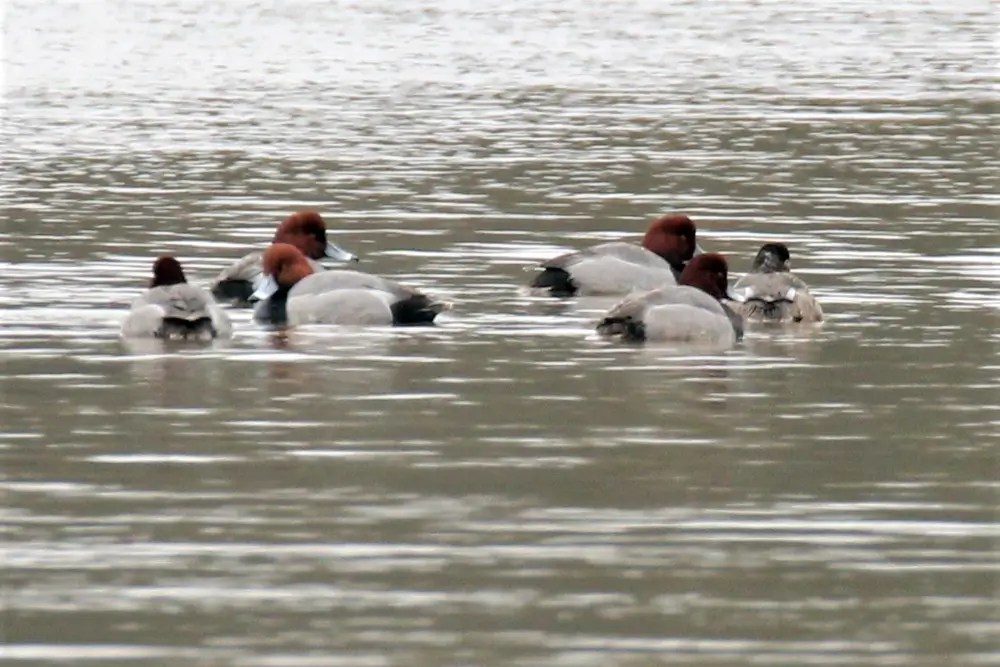
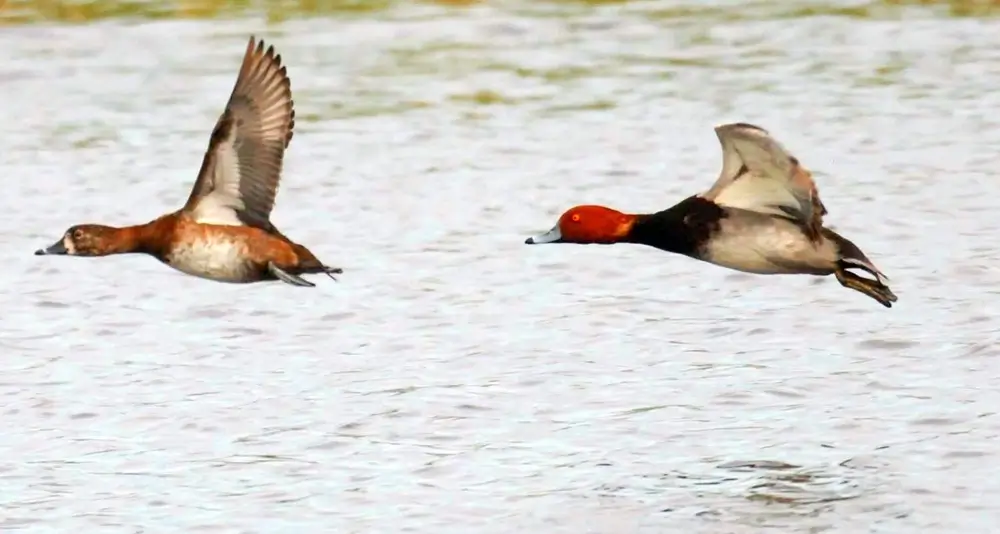
The redhead is a diving duck that is 16.5-21.3 inches (42-54 cm) in length with a wingspan of 29.5-31.1 inches (75-79 cm).
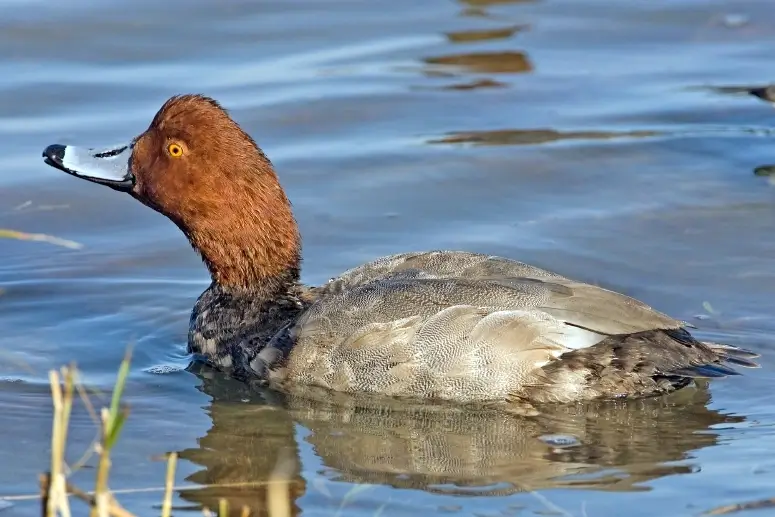
It has a rounded head and a grayish-blue bill with a black tip. It has grayish-blue legs and feet and a gray stripe on its wings.
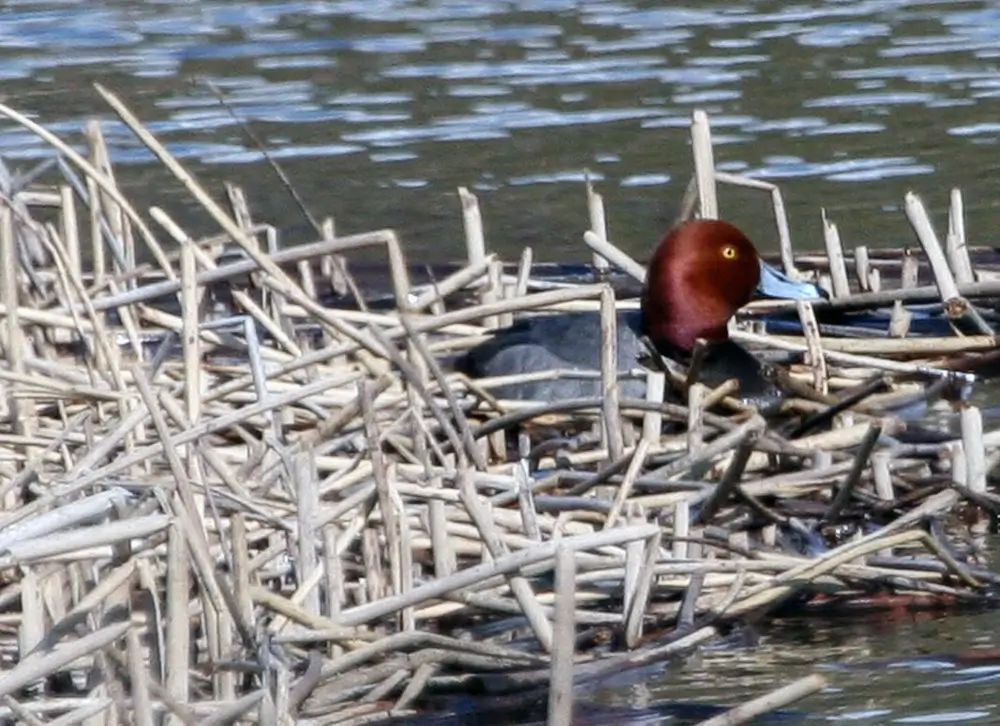
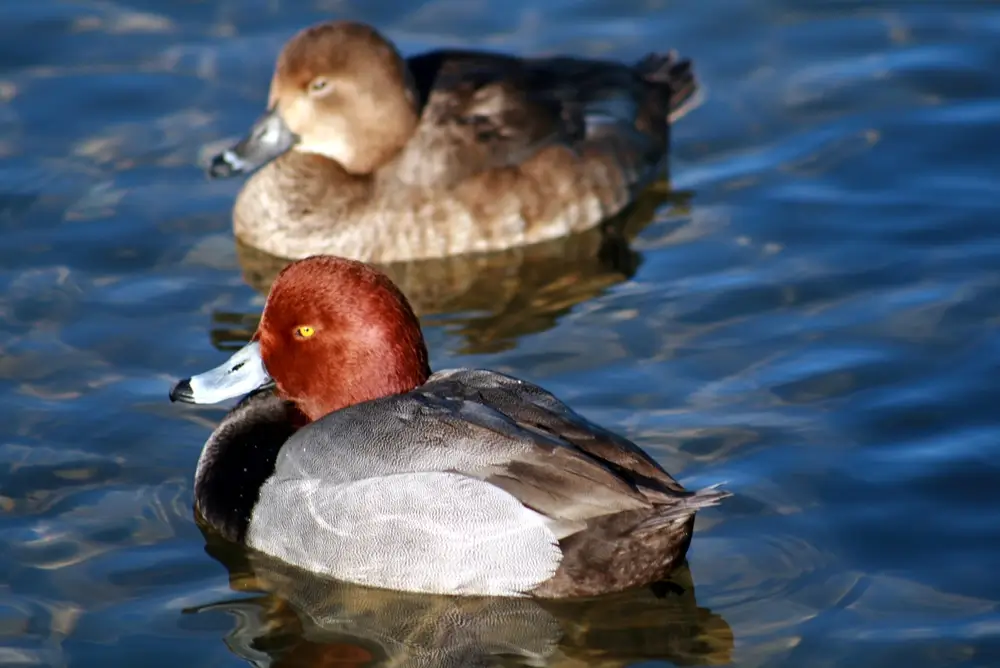
The male has a copper-colored head, a gray back, and a black breast and rump.
The female is grayish-brown on her back, sides, and wings. She has a lighter grayish-brown belly.
Habitat
The redhead is found in shallow freshwater lakes, ponds, marshlands, coastal waters, and bays.
Diet
The redhead is a diving duck. It searches for aquatic vegetation in muddy shallow areas of water. It may also eat mollusks, aquatic insects, and small fish
Life Cycle
Redhead pairs form in the late winter or the early spring. The female lays 10-16 eggs in a cup-shaped nest lined with down and attached to reeds and other marsh vegetation. The male leaves the female once she begins to incubate the eggs.
The eggs hatch in 25-26 days. The ducklings are precocial and can feed themselves shortly after hatching. The ducklings fledge when they are about two months old. The female sometimes lays her eggs in the nests of other ducks.
The redhead has a lifespan of 5-10 years in the wild. In captivity, it can live to be 20 years old.
Behavior
Like most diving ducks, the redhead’s legs are set back on its body to help it swim and dive. It is awkward on land, and it has to run across the water to take off in flight.
The male has a meow-like call, and the female makes a squawking sound.
Did You Know?
Support for NatureWorks Redesign is provided by:
The Redhead in NH
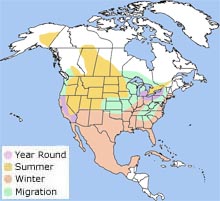
The redhead does not breed in New Hampshire, but it can be spotted in the state n the non-breeding season.