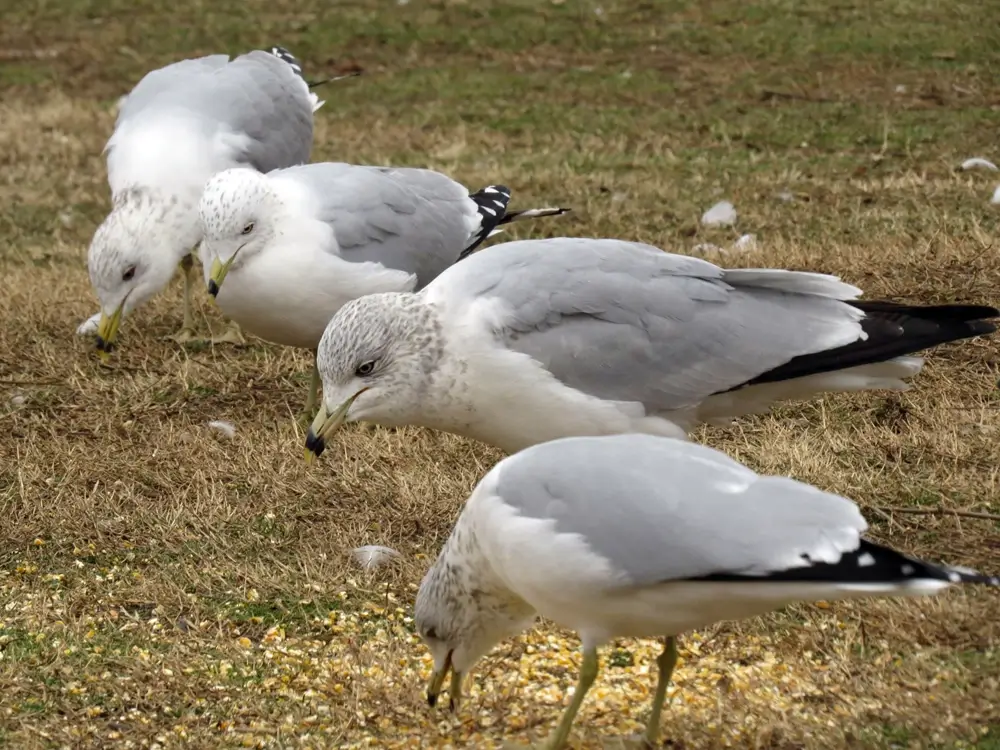
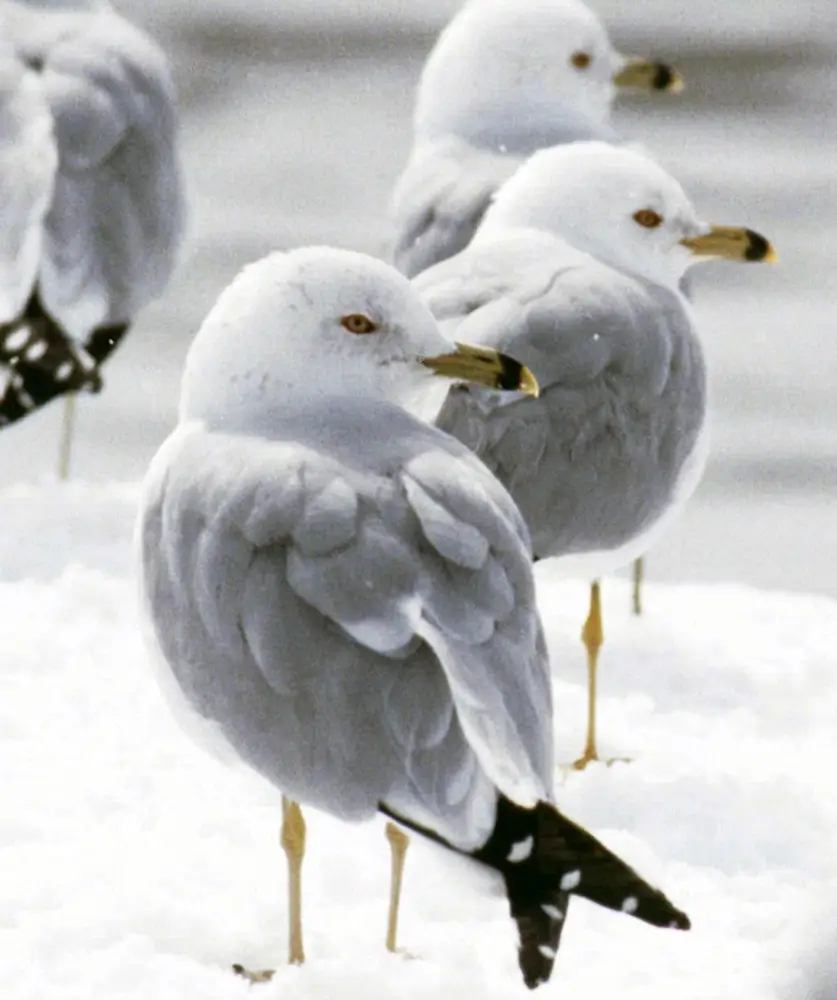
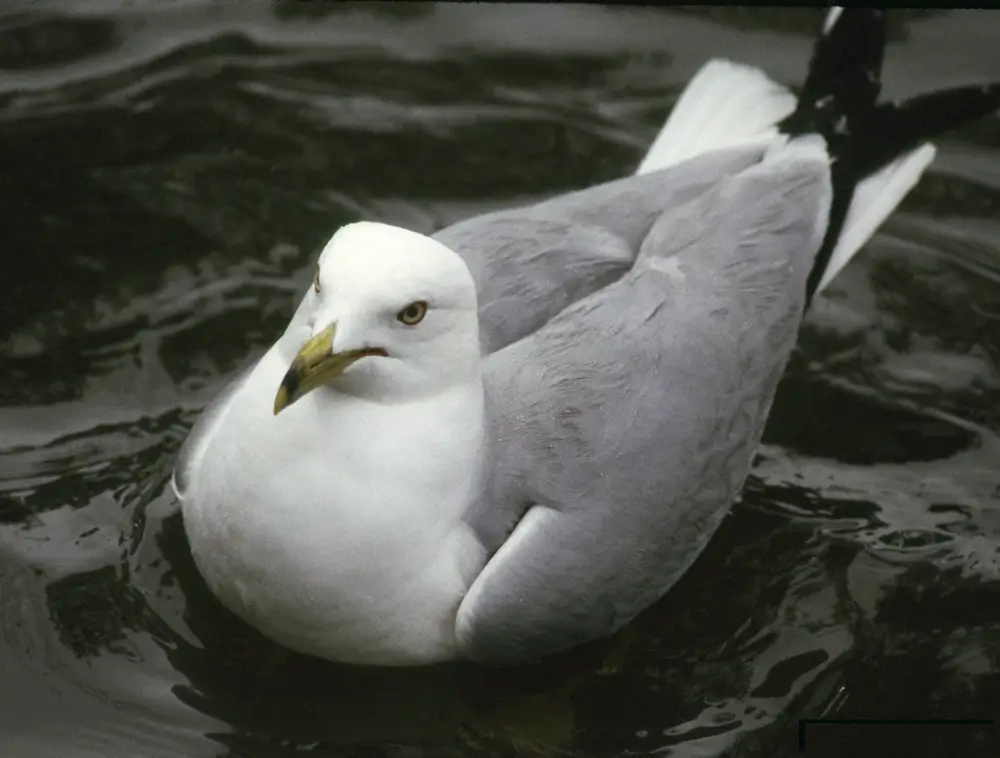
The ring-billed gull is a medium-sized gull. It is 16.9-21.3 inches (43-54 cm) in length and has a wingspan of 3.4-3.8 feet (1-1.2 m).
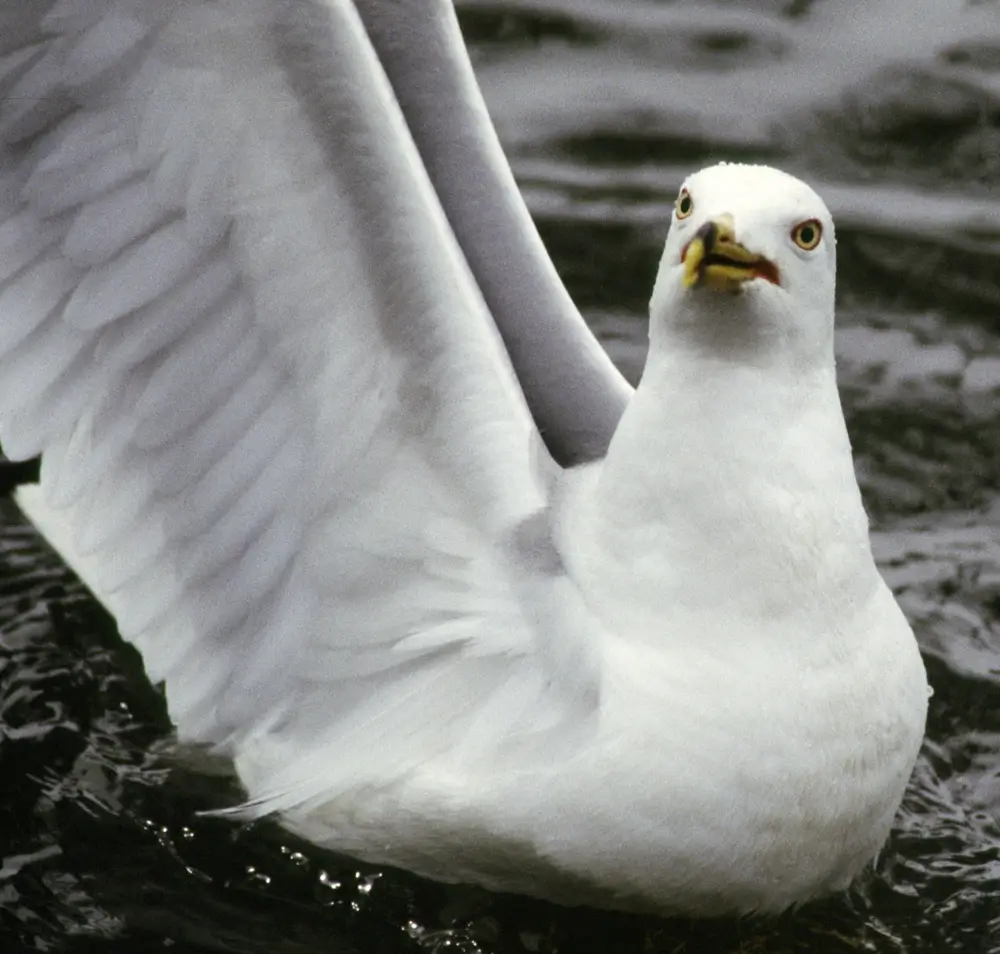
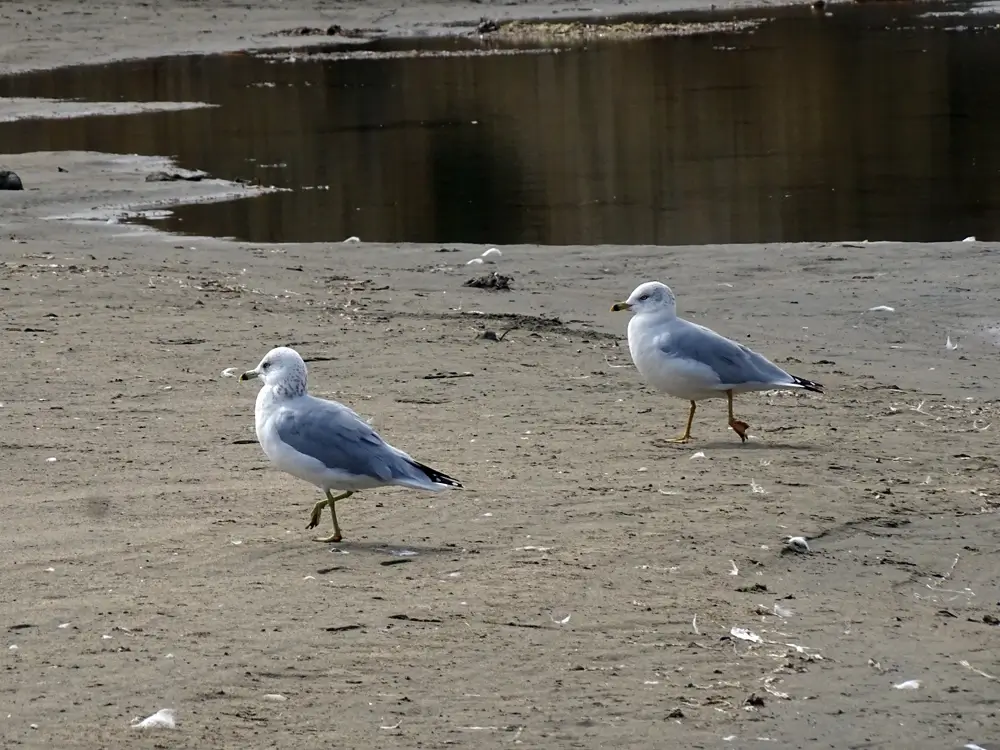
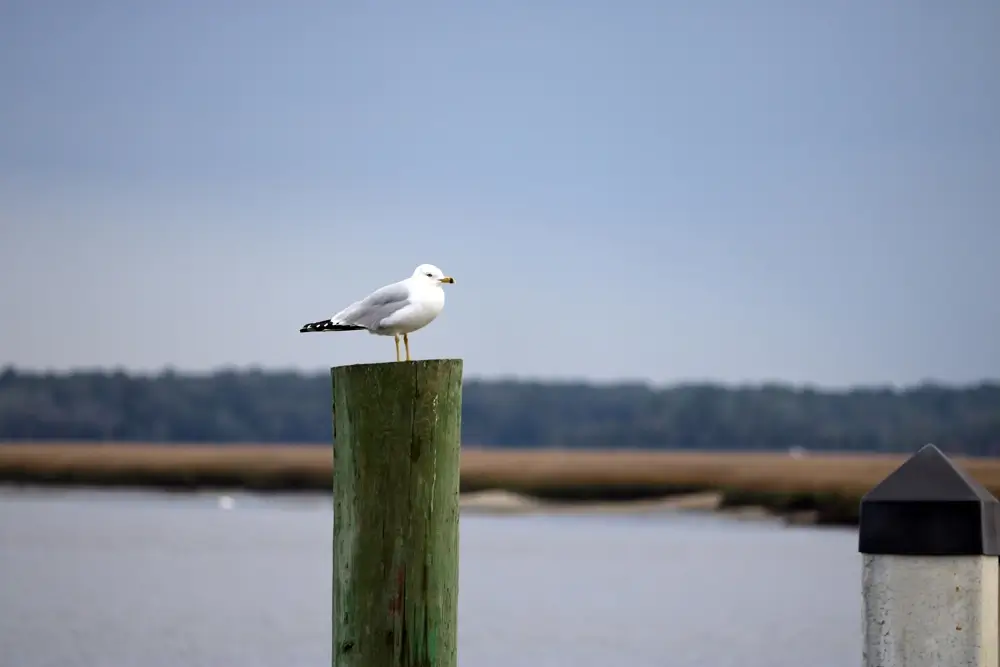
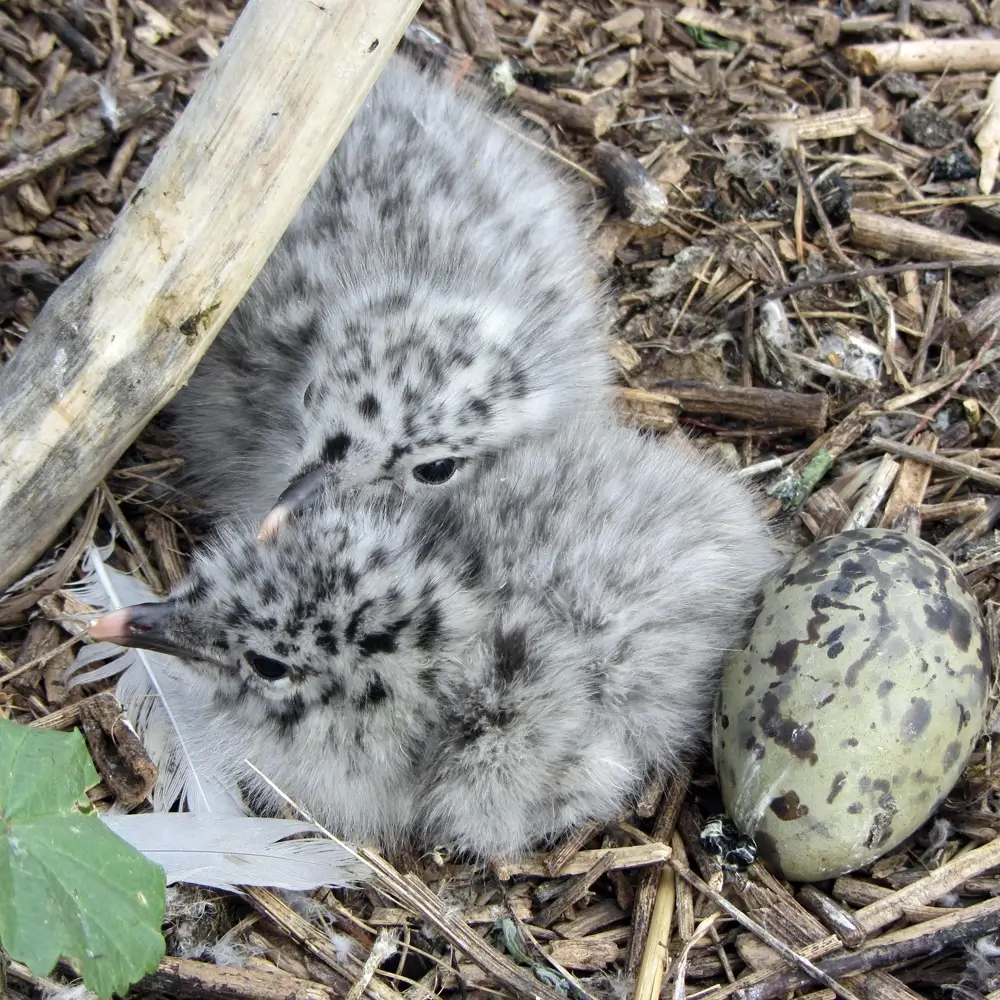
It has a short, bright yellow bill with a black ring at the tip. It has a white head, neck, chest, and belly, and a soft gray back and upper wings. It takes three years for the ring-billed gull to develop its adult plumage. Juvenile gulls are white with brown spots.
Habitat
The ring-billed gull makes its home on lakes and rivers. It may move to the ocean in the winter.
Diet
The ring-billed gull eats insects, seeds, grain, fish, and garbage.
It is sometimes called the “fast food gull” because it often hangs around fast food restaurants scavenging for food.
Life Cycle
The female ring-billed gull lays 2-4 eggs in a hollow in the ground. The nest is made with reeds and rushes.
Both the male and the female incubate the eggs. The eggs hatch in a little over 3 weeks. Both parents feed the chicks regurgitated food.
The chicks leave the nest a few days after they are born. They fledge in about a month.
Ring-billed gulls have a lifespan of 3-10 years in the wild. The oldest ring-billed gull on record lived to be 28 years old.
Behavior
The ring-billed gull returns to its nesting site well before it is time to nest so it can establish its territory. It usually nests in colonies on islands in lakes with other gulls and terns. A nesting site may have as many as 1,000 pairs of ring-billed gulls.
Did You Know?
Support for NatureWorks is provided by:
The Ring-Billed Gull in NH
The ring-billed gull does not breed in New Hampshire, but it can be seen in the state during its migration, and young gulls can be seen on the beach during the summer.
The closest breeding population is found on the Maine side of Lake Umbagog.
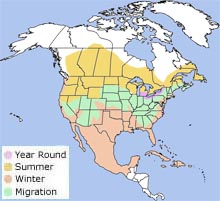
In North America, the ring-billed gull breeds in the Northwest from the prairies of Canada south to California. It is also found in the Great Lakes region, the Canadian Maritimes, and northern New England.
It winters from southern New England south to Cuba, from the Great Lakes south to the Gulf of Mexico, and from British Columbia south to Mexico.