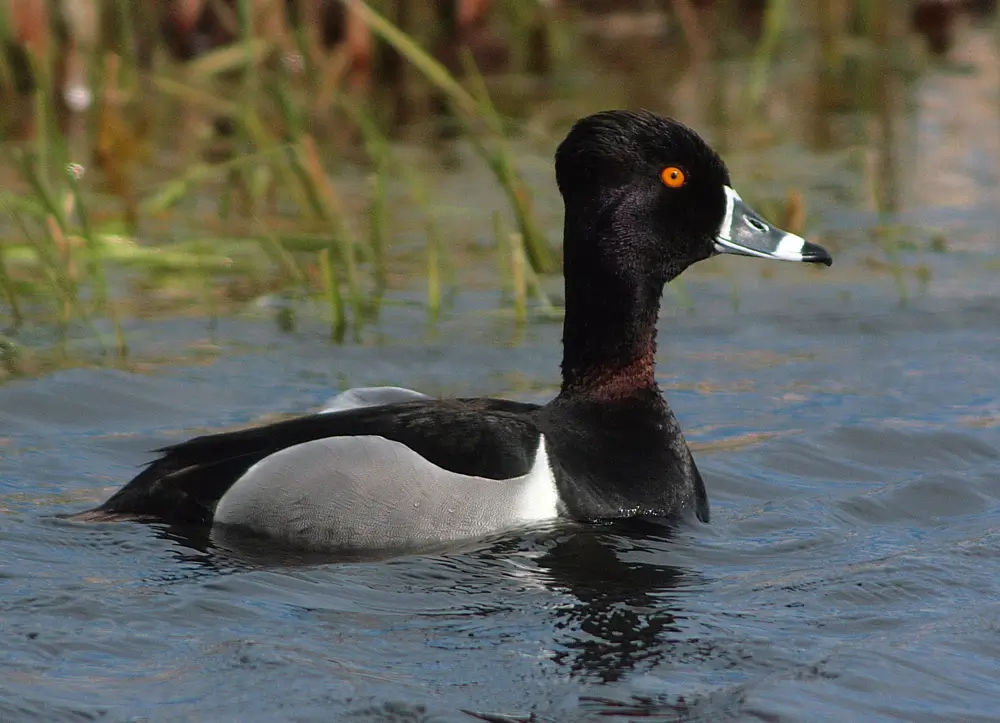
The ring-necked duck is a diving duck 15-18 inches (39–46 cm)in length with a wingspan of 2-2.3 feet (0.61 m).
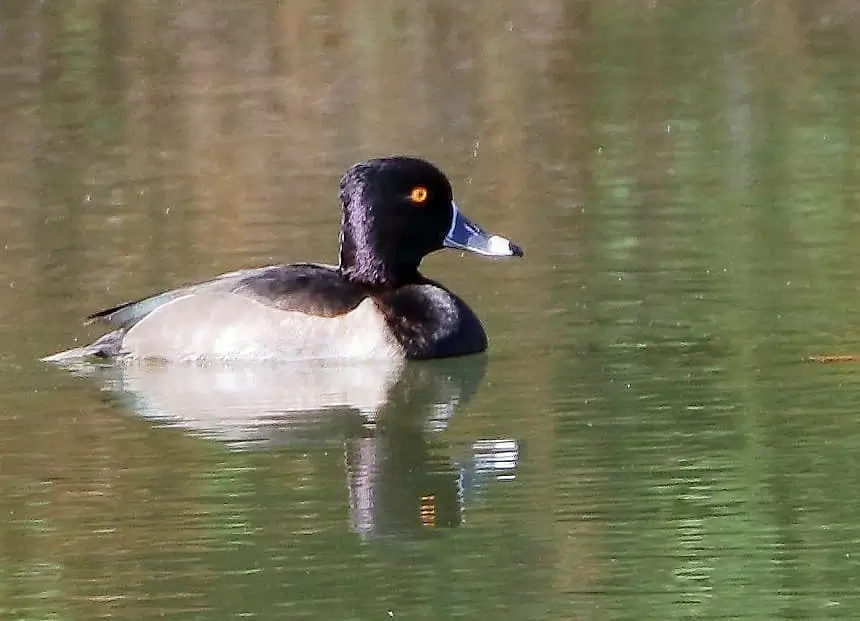
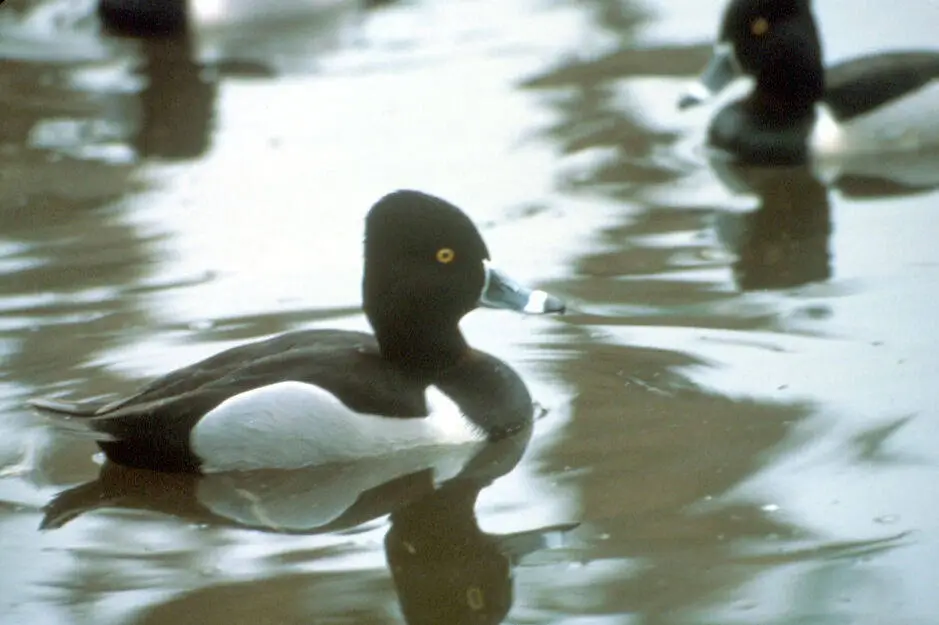
It has a bump on the crown of its head, a slate gray bill with a white ring around the tip, and yellow eyes. It gets its name from the hard-to-see chestnut ring around its neck.
The male has a glossy purple head that looks black. He has a black chest, back, and rump; gray sides; and white stripes on the sides of his breast. He has a white stripe on his wings.
The female has tan sides, a brown back, a white belly, and a white ring around her eyes.
Habitat
The ring-necked duck is found in shallow wetlands with emergent, submerged, or floating vegetation.
Diet
The ring-necked duck dives in shallow water for aquatic vegetation like wild celery, bulrush, pondweed, and pond lily. It may also dabble on and just below the surface for food.
It also eats mollusks, snails, aquatic insects, and small fish.
Life Cycle
Ring-necked duck pairs form in the early spring. The female chooses a nesting site over or near the water in tall vegetation and builds a bowl-shaped nest on a platform of vegetation and lines it with down.
She lays 8-12 eggs. The male leaves when the female begins incubating the eggs. The female incubates the eggs for 28- 29 days. The chicks fledge when they are about 50 days old.
The ring-necked duck has a lifespan of 6-10 years in the wild. The oldest ring-necked duck on record lived to be 20 years old.
Behavior
Unlike most other diving ducks, the ring-necked duck can take off from the water without running across its surface.
Did You Know?
Support for NatureWorks is provided by:
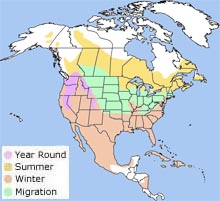
The Ring-Necked Duck in NH
The ring-necked duck breeds in northern New Hampshire and can be seen in the rest of the state during its migration.