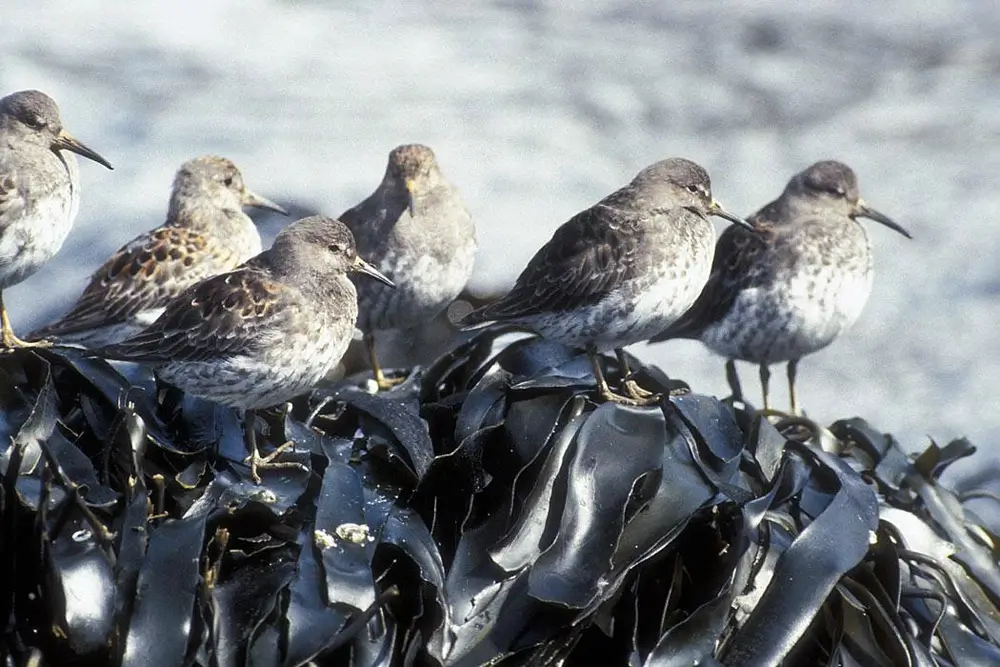
The rock sandpiper is a plump, medium-sized shorebird 7.1-9.4 inches (18-24 cm) in length with a wingspan of about 17 inches (39 cm).
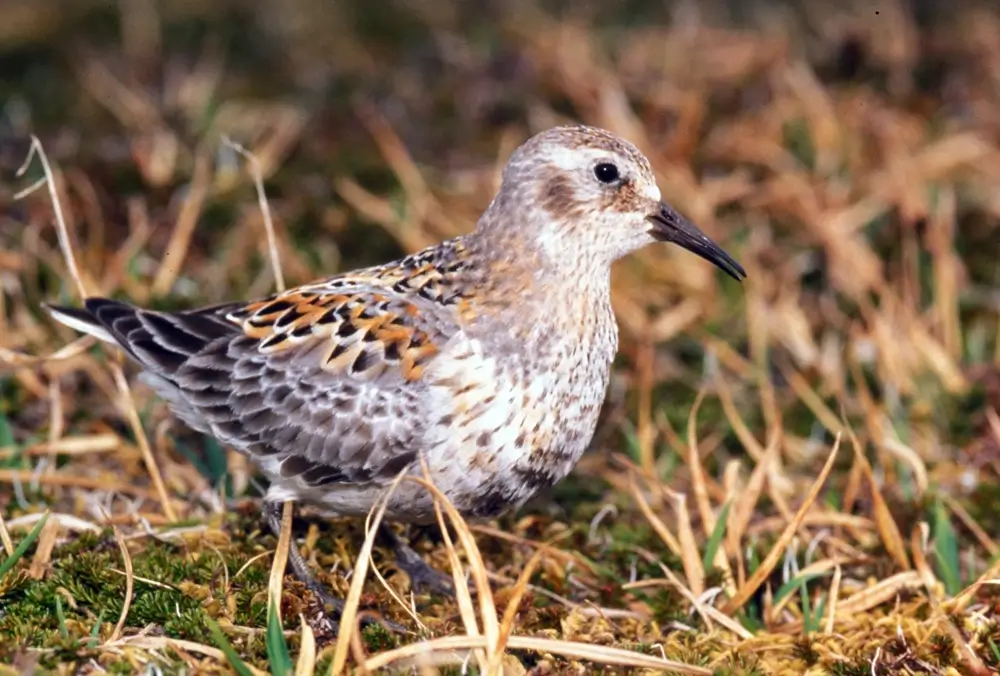
It has a thin black bill with a yellow base that droops a little at the tip and short legs. In the winter, it has a slate-gray head, breast, and upperparts.
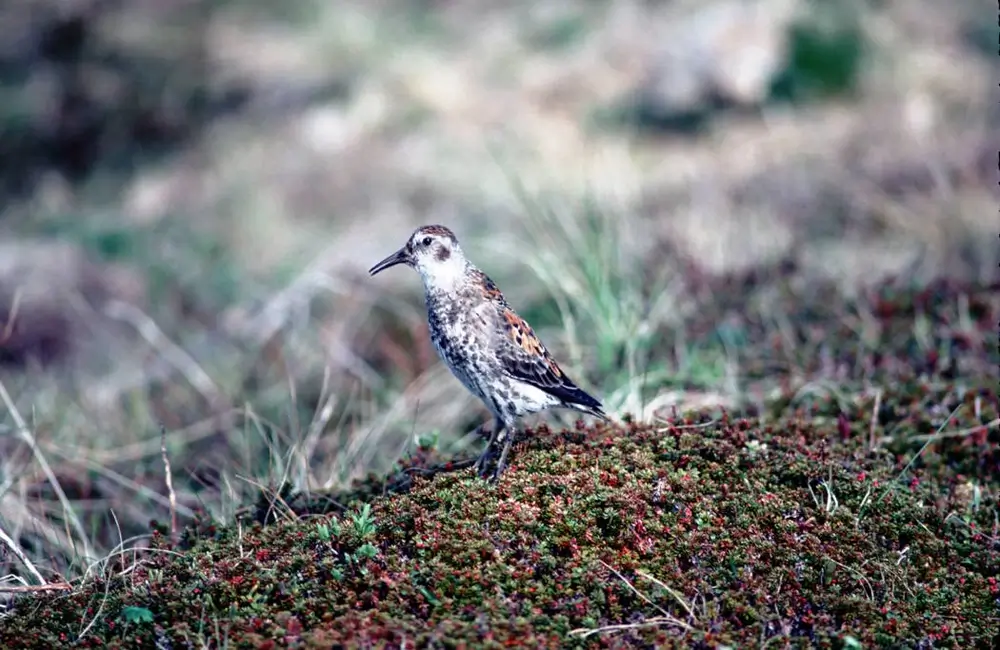
During the breeding season, it is rusty-red on its uppersides and has a white head and throat, a reddish-brown crown, a reddish-brown patch on the side of its face, and a black patch on its breast.
Males and females look alike, but females are slightly larger. The rock sandpiper’s coloring keeps it well camouflaged in its environment.
Habitat
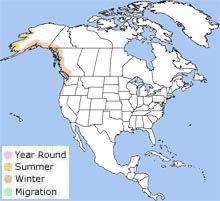
During the breeding season, the rock sandpiper is found on mossy coastal tundra in Alaska. In winter, it is found on rocky shores.
Diet
The rock sandpiper eats a wide variety of food, including seeds, berries, moss, and algae. In the winter, it eats mollusks, crustaceans, and marine worms
Life Cycle
The female rock sandpiper lays 2-4 eggs in a nest in a depression in the ground. Both parents incubate the eggs for about 20 days.
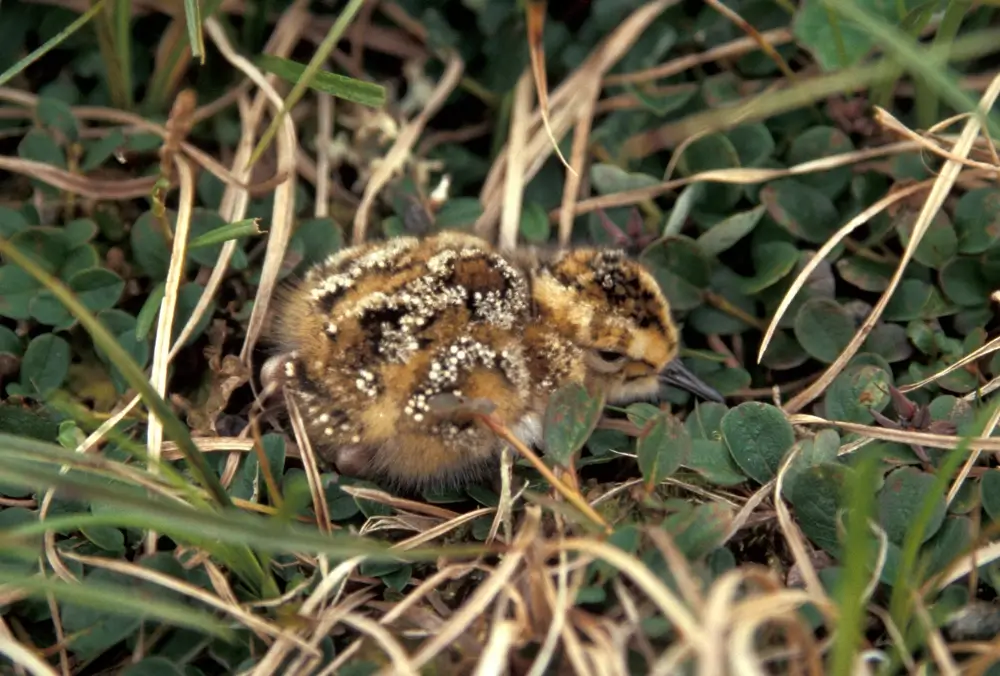
The chicks are precocial and leave the nest and feed themselves shortly after hatching. Both parents care for the young. The chicks fledge when they are about 21 days old.
The rock sandpiper has a lifespan of up to 11 years in the wild.
Behavior
The rock sandpiper breeds further north than most shore birds, and their breeding territory is often still frozen when they arrive.
The male protects its nesting territory from other males and will perform visual displays to attract a mate. He may hover over their territory while singing and land with its wings pointing toward the sky to show off for a female.